Table of Contents >> Show >> Hide
- What Is Liteboxer, Exactly?
- How Liteboxer “Gamifies” Boxing Without Turning It Into a Toy
- The Hardware Experience: What It Feels Like to Train on Liteboxer
- The Workouts: What You Actually Do (And Why You’ll Keep Doing It)
- Why Liteboxer Works Psychologically (No Jedi Mind Tricks Required)
- Who Liteboxer Is For (And Who Might Want Something Else)
- Liteboxer vs. a Regular Heavy Bag
- Liteboxer vs. Other Connected Boxing Systems
- How to Get the Most Out of Liteboxer
- Common Questions People Ask Before Buying
- Final Take: Liteboxer Makes Boxing Feel Like Play (So You’ll Actually Show Up)
- Experience Section: What It’s Like When Liteboxer “Clicks” (A 7-Day, Realistic Composite)
If you’ve ever stared at a heavy bag and thought, “Cool. Now what? Just… punch it until time means nothing?” you’re not alone.
Traditional boxing training is effective, but it can also feel like doing homework with your fists. Liteboxer flips that script by
treating your workout like a playable experience: lights cue your targets, music drives your timing, and scoring turns every round
into a tiny, sweaty competition with yourself.
In other words, Liteboxer isn’t asking you to “find motivation.” It’s handing you a game controller made of gloves and adrenaline.
Let’s break down how it works, why the gamification is more than a gimmick, and how to decide if this at-home boxing system belongs
in your life (and your living room).
What Is Liteboxer, Exactly?
Liteboxer is an interactive boxing workout platform designed to make striking training feel structured, rhythmic, andcruciallyfun.
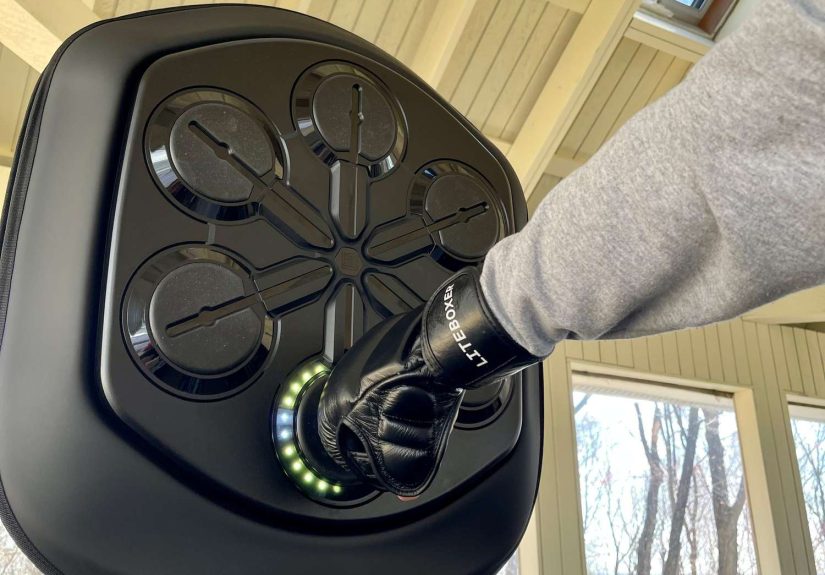
Instead of a dangling bag, you punch a target surface with multiple strike zones that light up in patterns. Sensors track how hard
and how accurately you hit, while the app delivers coach-led classes and music-driven routines.
The result is a hybrid of boxing fundamentals and rhythm gaming: think “boxing meets arcade,” except the high score you’re chasing is
also improved cardio, coordination, and stress relief.
How Liteboxer “Gamifies” Boxing Without Turning It Into a Toy
1) Immediate feedback: the brain’s favorite kind
Gamification works best when you get instant feedback. Liteboxer nails this by showing you, in real time, whether you hit the right
target at the right momentand with enough pop. That feedback loop is addictive in the best way: you learn faster because you’re not
guessing.
2) Timing + targets = a built-in challenge curve
Hitting a heavy bag is satisfying, but it’s also unstructured unless you bring your own plan. Liteboxer gives you a moving “plan”
through lighting cues. As routines progress, patterns speed up, combos get trickier, and you naturally level uplike a game that
quietly makes you better while you’re busy trying to beat your previous score.
3) Music as a metronome (and a hype person)
Beat-driven training is a cheat code for consistency. When a workout is synced to music, time passes faster, your pacing improves,
and your effort tends to rise to match the track’s energy. Liteboxer leans into that by pairing punch patterns with songs so your
hands learn rhythm and flownot just power.
4) Scoring that rewards accuracy, not just brute force
Boxing is technique first, power second. A system that only praises “harder” punches can teach sloppy habits. Liteboxer’s scoring
typically balances accuracy and timing with strength so you’re nudged toward clean strikes instead of wild swings. It’s like having a
coach who also happens to be a scoreboard.
The Hardware Experience: What It Feels Like to Train on Liteboxer
The most important thing to understand is that Liteboxer is not trying to replicate sparring. It’s replicating the part of boxing
most people need at home: structured rounds, coached combinations, high reps, and measurable progress.
Targets and strike zones
Liteboxer uses multiple lit targets so you’re not just punching straight ahead. Patterns can move you across zones, encouraging
different punch types and anglesmore like hitting mitts than mindlessly smashing a bag.
Space and setup considerations
This is not a “tuck it behind a plant” device. Plan for enough room to move, rotate your hips, and step in and out safely.
Depending on the configuration (floor stand vs. wall mount), you’ll also want easy access to power and a stable, unobstructed
training area. Your knuckles will thank you for not boxing next to a coffee table.
Sound, screen, and the “coach in the room” effect
Liteboxer workouts run through an app, where trainers guide rounds, demonstrate combos, and cue intensity shifts. This matters:
people stick with fitness when it feels guided. A timer alone is a lonely place. A coach yelling “hands up” is strangely comforting.
The Workouts: What You Actually Do (And Why You’ll Keep Doing It)
Trainer-led classes
These are structured sessions where a coach teaches combinations, explains form cues, and progresses through rounds like a real class.
You’ll typically see warm-ups, technique segments, punch rounds, and conditioning blocks. The advantage is coaching: you’re not just
“playing lights,” you’re learning how to punch with better mechanics.
Punch Tracks
Punch Tracks are where Liteboxer leans hardest into the “workout as game” idea. Instead of a traditional class format, you punch to
the rhythm of music. The lights become the choreography, and your goal is to keep timing and accuracy high while your heart rate
climbs. It’s the fitness version of “just one more round,” except “one more round” is what people say right before they start
sweating through their shirt.
Freestyle and skill-building modes
Many users like mixing guided content with freestyle rounds for stress reliefespecially after a long day. Freestyle is also useful
for practicing form at your own pace. The best routines often combine both: learn technique with a trainer, then apply it in a more
game-like mode.
Why Liteboxer Works Psychologically (No Jedi Mind Tricks Required)
Liteboxer succeeds because it uses proven motivation mechanics without feeling manipulative:
- Clear goals: hit this target now, then that oneno guessing what to do.
- Progress markers: scores, stats, and improvement you can see, not just “I think I got fitter?”
- Flow state: rhythm + challenge + feedback = you get absorbed, and time moves faster.
- Low friction: you don’t need to plan a workout; you just press play and start punching.
That last point is huge. Consistency isn’t usually about willpowerit’s about removing “decision fatigue.” Liteboxer makes the next
workout obvious, and obvious workouts get done.
Who Liteboxer Is For (And Who Might Want Something Else)
Great fit if you want:
- Cardio that doesn’t feel like cardio (because you’re busy chasing timing and targets).
- Stress relief that feels productive, not like doom-scrolling with extra guilt.
- Structured training without commuting to a gym or booking classes.
- Measurable progress from scores and stats that nudge you to improve.
Not the best fit if you want:
- Real fight training with sparring, defense drills, and coaching feedback on every micro-movement.
- A traditional heavy bag feel with swinging impact and bag movement (Liteboxer is a different sensation).
- No ongoing membership (many interactive platforms gate most content behind subscription access).
Liteboxer vs. a Regular Heavy Bag
A heavy bag is classic for a reason: it’s durable, simple, and can be brutally effective. But it asks you to bring your own program,
your own pacing, and your own accountability. Liteboxer, by design, supplies those missing pieces.
If a heavy bag is like owning a guitar, Liteboxer is like having Guitar Hero plus a virtual instructor. You can still learn either
waybut one option is built to keep you practicing.
Liteboxer vs. Other Connected Boxing Systems
Connected boxing isn’t a one-brand world. Some systems focus on a “smart bag” that tracks punches, while others emphasize coaching
and technique. Liteboxer’s signature advantage is its rhythm-and-light approach: it’s less about “hit a bag a thousand times” and
more about “perform a pattern cleanly, quickly, and consistently.”
If you’re choosing between systems, think about what you’ll actually do on a tired Tuesday night. If the answer is “I’ll show up if
it feels like a game,” Liteboxer’s style may be the right nudge.
How to Get the Most Out of Liteboxer
Start slower than your ego wants
Rhythm workouts can make beginners swing early or overreach. Begin with basic punch tracks or beginner classes and focus on clean
mechanicsespecially wrist alignment and hip rotation.
Wrap your hands and use proper gloves
Boxing is fun until your knuckles complain. Hand wraps and supportive gloves help protect your wrists and keep you training
consistently. If your hands hurt, you won’t play the gameand the whole point is to keep playing.
Treat it like rounds, not random effort
A simple approach: 3 sessions per week, 20–40 minutes, mixing one trainer-led class with one punch track round. Add a short
cooldown and you’ve built a sustainable routine.
Use the stats as a coach, not a judge
If your accuracy drops as intensity rises, that’s useful information. It means you’ve found your edge. Train there. That’s how
coordination improves and how “workouts” turn into “skills.”
Common Questions People Ask Before Buying
Is Liteboxer good for beginners?
Yesespecially for people who need structure and motivation. The best path is starting with beginner-focused classes that teach
basic punches and stance, then layering in punch tracks once you’re comfortable.
Will it help with weight loss?
Boxing-style workouts can be high-intensity, full-body cardio, which may support fat loss when combined with appropriate nutrition
and consistency. The bigger advantage is adherence: if you enjoy it, you’ll do it more oftenand consistency is the real fat-loss
“secret.”
Do you need a subscription?
Most interactive content libraries rely on a membership model. In practice, the “magic” of Liteboxervariety, music tracks,
structured classesusually lives behind the subscription. If you prefer one-time purchases only, that’s an important factor.
Final Take: Liteboxer Makes Boxing Feel Like Play (So You’ll Actually Show Up)
Liteboxer’s biggest achievement isn’t the lights or the sensorsit’s the way it removes the hardest part of fitness: getting
started, again and again, without negotiating with your own brain.
By turning combos into patterns, rounds into scores, and effort into something you can measure, Liteboxer transforms boxing from
“I should work out” into “I want to beat my last run.” That’s the difference between owning equipment and using it.
If you love boxing, you’ll appreciate the structure. If you hate working out, you’ll appreciate that it doesn’t feel like working
out. And if you’re somewhere in the middlewelcome to the club. The first rule is: don’t overthink it. Put on the wraps. Press play.
Hit the lights.
Experience Section: What It’s Like When Liteboxer “Clicks” (A 7-Day, Realistic Composite)
The first day with Liteboxer is usually a mix of excitement and mild confusionlike the first time you tried a dance game and
discovered you have two left feet, except your feet are your fists. You step in, throw a jab at the first light, miss it by half an
inch, and immediately realize: “Oh. This is coordination. This is not just punching.”
By day two, you start noticing small wins. Maybe your shoulders relax, or you stop holding your breath like you’re underwater.
The lights feel less like a surprise attack and more like a conversation: cue, strike, reset. You might even find yourself smiling
mid-roundpartly because the music is doing its job, and partly because the feedback is strangely satisfying. A clean hit at the
right time is a tiny dopamine “ding,” like making a perfect shot in a game.
Around day three or four, the “game” aspect becomes obvious in the best way: you finish a session and your brain says, “Do another.”
Not because you’re a fitness superhero, but because the workout doesn’t feel like punishment. It feels like a challenge you can
improve at. You start chasing accuracy instead of swinging harder. You experiment with pacing: faster hands, calmer shoulders,
tighter core. Your score becomes less about ego and more about information.
Day five is where a lot of people notice the stress relief. Not the dramatic kindmore like the quiet kind where your brain stops
buzzing for 30 minutes because it’s too busy tracking lights and timing. There’s something almost meditative about being “locked in”
to a rhythm. You can’t doom-scroll while you’re trying to hit a left-right-hook pattern on beat. Your world shrinks down to the next
target, the next breath, the next strike. That focus is a break.
Day six often introduces the “humbling but useful” moment: fatigue makes your form messy. Your accuracy dips. Your timing slips.
And instead of feeling like failure, it feels like a coaching note. You learn what tired looks like in your body. You learn how to
slow down without quitting. You learn that “intensity” doesn’t have to mean “chaos.” Sometimes intensity is staying clean when your
arms want to turn into noodles.
By day seven, the biggest shift isn’t physicalit’s behavioral. Liteboxer becomes an option you actually consider. You don’t have to
psych yourself up for a long run or bargain with your couch. You can just do a short punch track, get your heart rate up, and leave
feeling like you accomplished something. That’s the sneaky power of gamified training: it turns “exercise” into “a thing you do”
instead of “a thing you avoid.”
And if you stick with it for a few weeks, the skills stack. Your hands move faster. Your timing improves. Your combos feel less
like memorized steps and more like flow. The best part is that the game keeps giving you new levelsnew tracks, new patterns, new
goalsso you don’t have to rely on motivation. You rely on momentum. Which, frankly, is the more dependable training partner.