Table of Contents >> Show >> Hide
- What Makes Lime Marmalade Different From Lime Jam?
- The Three Ingredients
- Lime Marmalade Recipe (Three Ingredients)
- Storage Options (And What’s Actually Safe)
- Why This Recipe Works (Quick Food Science, No Lab Coat Required)
- Troubleshooting: Fixes for Common Marmalade Drama
- Serving Ideas (Beyond Toast)
- Experiences With Three-Ingredient Lime Marmalade (The Real-Life Stuff)
- Conclusion
Lime marmalade is what happens when a lime decides it’s done being “just a garnish” and finally gets top billing.
It’s bright, bittersweet, and just fancy enough to make plain toast feel like it has a reservation.
And yesthis version uses three ingredients: limes, sugar, and water.
No commercial pectin. No mystery powders. No 47-step “rustic” ritual that somehow requires a full moon.
The magic of marmalade is that the citrus peel brings the fragrance (hello, lime perfume), the fruit brings acidity,
and the sugar turns the whole thing into a glossy spread that sets up beautifully when cooked to the right point.
If you’ve ever wanted a preserve that tastes like sunshine with a tiny bit of attitudethis is it.
What Makes Lime Marmalade Different From Lime Jam?
Jam is mostly fruit (often mashed) and tends to be softer and more uniform. Marmalade is a gelled spread with
bits of citrus peel suspended in it. That peel is the whole personality: aromatic, slightly bitter,
and bold enough to stand up to buttery toast, yogurt, or even a savory glaze.
The Three Ingredients
1) Limes
Use fresh, firm limes with smooth skin. Thin-skinned limes are usually easier to slice and less aggressively bitter.
If you can, choose limes that feel heavy for their size (more juice).
2) Sugar
Plain granulated sugar is ideal here. It sweetens, helps the gel set, and improves shelf life. If you reduce sugar
too much in a traditional no-pectin preserve, it may not set properly and can spoil fasterso this is not the moment
to freestyle a “barely sweet” marmalade.
3) Water
Water softens the peel and helps extract flavor and natural pectin. Think of it as the “opening act” that makes the
headliner (lime) shine.
Lime Marmalade Recipe (Three Ingredients)
This is a small-batch, no-pectin recipe designed for refrigerator storage (with a freezer option). You’ll get a
flavorful set without buying anything extrajust rely on careful slicing, simmering, and cooking to the gel point.
Yield
About 2 to 2 1/2 cups (roughly 1 pint + a little extra)
Time
- Active: 45–70 minutes
- Optional resting/soak: 8–24 hours (recommended for better peel texture and less bitterness)
Ingredients
- 6 medium limes (about 1 pound total)
- 2 cups water (plus a splash more if needed while cooking)
- 2 cups granulated sugar
Equipment
- Cutting board + sharp knife
- Vegetable peeler (helpful, not mandatory)
- Heavy-bottomed pot or Dutch oven (4–6 quarts is ideal)
- Wooden spoon or heatproof spatula
- Candy/jelly thermometer (helpful) or a chilled plate for the wrinkle test
- Clean jars with lids (for fridge or freezer storage)
Step 1: Wash and Prep the Limes
Scrub the limes well under warm water (you’re using the peel, so this matters).
Trim off the stem ends.
How to cut for less bitterness: The white pith can be very bitter. You want some because it contains
natural pectin that helps setting, but you don’t want a thick, spongy layer on every strip.
Aim for mostly green zest with a thin veil of white.
Step 2: Slice the Peel Into Thin Strips
Use a vegetable peeler to remove strips of peel (try to keep the pith minimal). Stack strips and slice into thin matchsticks.
If you don’t have a peeler, you can thinly slice the whole lime and then cut slices into slender sliversjust remove seeds.
Step 3: Chop the Lime Flesh
After peeling, remove as much remaining white pith as you reasonably can (this is where bitterness likes to hide).
Chop the lime flesh (and any juice) into small pieces. Remove seeds as you go.
Step 4 (Optional but Recommended): Rest the Fruit Overnight
Combine the sliced peel, chopped lime flesh, and water in your pot. Cover and let rest 8–24 hours at room temperature.
This softens peel, mellows bitterness, and helps extract natural pectinbasically, it does some of the hard work while you live your life.
Step 5: Simmer Until the Peel Is Tender
Bring the lime mixture (peel + flesh + water) to a boil, then reduce to a steady simmer.
Simmer uncovered 20–30 minutes, stirring occasionally, until the peel feels tender when you bite a piece.
If the pot looks dry at any point, add a small splash of water.
Step 6: Add Sugar and Cook to Set
Stir in the sugar until dissolved. Bring the mixture to a rolling boil over medium-high heat.
Cook, stirring often to prevent scorching, until it reaches the gel stage.
How to Know It’s Done (Choose One)
-
Temperature method: At sea level, gel stage is about 220°F. If you’re at a higher elevation,
the target temp drops (water boils at a lower temperature). A common rule is subtracting about 2°F for every 1,000 feet of elevation. -
Wrinkle test: Spoon a small amount onto a chilled plate. Wait 30–60 seconds, then push it with your finger.
If it wrinkles and holds a line, you’re there. -
Spoon/sheet test: Lift a spoonful and let it fall. If it “sheets” off the spoon in a thicker curtain (not drippy droplets),
it’s close to set.
Once it hits gel stage, remove from heat. Let it sit 3–5 minutes (this helps bubbles settle), then stir gently to distribute peel evenly.
Step 7: Jar It Up
Ladle into clean jars. Cool to room temperature, then refrigerate.
The marmalade will thicken more as it cools (so don’t panic if it seems a touch loose while hot).
Storage Options (And What’s Actually Safe)
Refrigerator Storage
Store tightly covered in the refrigerator for about 3–4 weeks for best flavor and quality.
Always use a clean spoon to avoid introducing anything that can grow.
Freezer Storage
Marmalade freezes well. Use freezer-safe jars and leave generous headspace for expansion.
Label and date. For best quality, use within 6–8 months, then thaw in the refrigerator and use within about 2 weeks.
Water-Bath Canning (Shelf-Stable)
If you want shelf-stable jars, follow a tested canning recipe from a research-based source and use proper jar prep, headspace,
and processing times. Citrus marmalade is generally high-acid and can be safely processed in a boiling water canner when made and processed correctly,
but the exact processing time depends on the tested recipe, jar size, and your altitude.
For example, many tested sweet-spread guidelines use 1/4-inch headspace and require boiling-water processing,
with time adjustments for altitude. Some classic marmalade tables list short processing times (e.g., 5 minutes at lower altitudes for certain
marmalades when using sterile jars), while other trusted recipes use 10 minutes and include a brief rest in the canner after processing.
If you’re new to canning, choose a tested recipe with clear, modern directions and follow it exactlyno improvising ratios.
Why This Recipe Works (Quick Food Science, No Lab Coat Required)
Natural Pectin + Acid + Sugar = Set
Citrus peel and the white layer under it contain natural pectin. The limes supply acidity. The sugar helps bind the structure.
Cook long enough to concentrate, and the mixture gels as it cools.
Thin Slices = Better Texture
Thin peel strips soften faster and suspend nicely throughout the jar. Thick chunks can stay chewy in a “I’m working on it” way.
The Optional Rest = Less Bitter, More Elegant
Resting the peel in water helps mellow harsh bitterness and improves the final texture.
It’s like letting a loud party guest calm down before you introduce them to the rest of the group.
Troubleshooting: Fixes for Common Marmalade Drama
“It’s runny.”
- It may just need more time to coolmarmalade thickens as it chills.
- If it’s still loose after 24 hours in the fridge, reheat and boil a bit longer, then retest the set point.
- Use a wider pot next time; faster evaporation helps reach gel stage.
“It’s too bitter.”
- Use less pith next time (keep mostly green zest, not thick white layers).
- Do the overnight rest (or even a longer rest) and simmer peel until truly tender.
- Choose thinner-skinned limes if possible; thick-skinned fruit often carries more bitterness.
“It crystallized.”
- Crystals can form if sugar doesn’t fully dissolve or if the mixture is overcooked and agitated.
- Stir until dissolved before boiling hard, then stir often enough to prevent scorchingbut not obsessively like you’re whisking for the Olympics.
“It tastes flat.”
- Sometimes a longer simmer before adding sugar pulls more lime flavor from the peel.
- Also: limes vary. Some batches are bright and floral; others are shy and need a little extra cook time to show up.
Serving Ideas (Beyond Toast)
- Breakfast upgrade: Swirl into Greek yogurt, oatmeal, or cottage cheese.
- Baking shortcut: Brush onto pound cake, stir into muffin batter, or spoon between cake layers.
- Cheese-board MVP: Pair with brie, goat cheese, or sharp cheddar (yes, really).
- Quick glaze: Warm a few spoonfuls with a splash of water and brush over chicken, shrimp, or roasted carrots.
- Cocktail helper: Shake a teaspoon into a margarita or gin fizz for a fragrant twist.
Experiences With Three-Ingredient Lime Marmalade (The Real-Life Stuff)
Making lime marmalade is a very specific kind of kitchen adventure: it starts out feeling innocent (“I’m just slicing a few limes!”),
then suddenly your cutting board looks like a tiny citrus lumberyard and your hands smell like a tropical vacation that won’t wash off
(in the best way). If you’ve never made marmalade before, the first “experience” you’ll notice is how powerful the aroma is.
Unlike many jams where the fruit scent blooms slowly, lime hits fastsharp, floral, and brightespecially once the peel warms in water.
It smells like clean sunshine with a wink.
The second experience is the “peel learning curve.” Your first batch might have peel that’s a little too thick because it’s tempting to
rush and call it rustic. But marmalade is one of those foods where thin slicing pays you back immediately: thinner strips soften into
tender little ribbons instead of chewy shoelaces. Once you see how those ribbons suspend in the glossy jellylike confetti in a jaryou’ll
understand why marmalade people get… passionate.
Then comes the oddly satisfying simmer stage. You’ll watch the peel go from stiff and bossy to relaxed and bendy. The liquid turns slightly
cloudy as flavor and natural pectin move into the pot. If you do the optional overnight rest, you’ll also experience the joy of “future you”
doing “present you” a favor: the peel is softer, the bitterness is calmer, and the whole batch feels more polishedlike it went to finishing school.
Another very real experience: the moment you realize marmalade has a personality different from jam. Jam is mostly sweet-fruity; lime marmalade
is bittersweet-bright. That means you’ll probably taste it and think, “Whoathat’s intense,” and then ten seconds later you’ll want another bite.
It’s the same logic as salted caramel or dark chocolate: that little edge is what makes it addictive. A lot of home cooks end up using lime marmalade
in more than just breakfast because it behaves like a condiment. Stirred into a pan sauce, it turns into a quick glaze. Spread under roast chicken skin,
it’s a cheat-code for flavor. Added to salad dressing, it makes greens taste like they’re wearing something tailored.
And let’s talk about the set point experienceaka the “Is it done? Is it done now? How about now?” phase. The first time you do the wrinkle test,
it feels like a magic trick. You put hot liquid on a cold plate, wait a moment, nudge it, and suddenly it wrinkles like it’s got somewhere to be.
That’s your cue that the marmalade will thicken as it cools. If you overshoot the set, you’ll learn another experience: marmalade can go from
“luxuriously thick” to “gummy candy” if boiled too long. The good news is that even a firm set is still deliciousjust use it as a filling, glaze,
or a “stir-into-hot-tea” situation where it melts back into something silky.
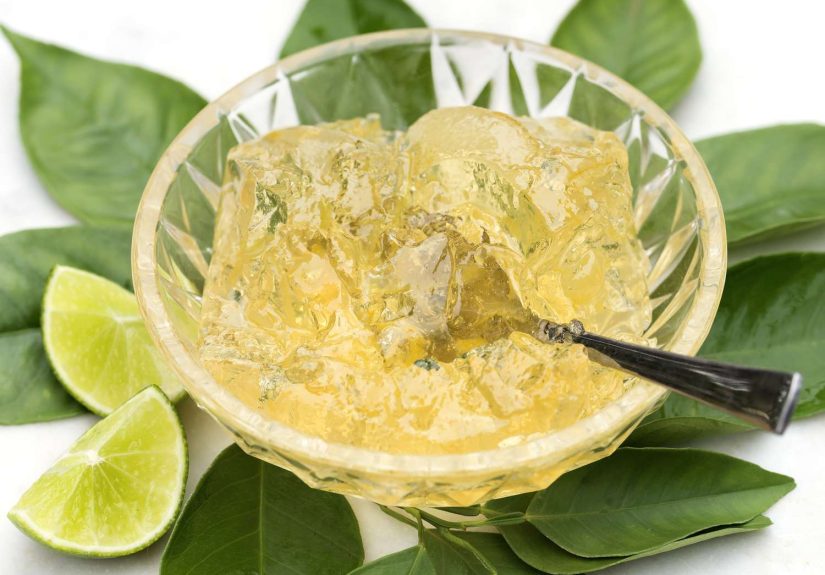
Finally, there’s the gift experience. Few homemade foods look as instantly impressive as marmalade. The jewel-green flecks of peel in a golden
gel make it look expensive, even though it’s just fruit, sugar, and water. Tie a ribbon around a jar and suddenly you’re the kind of person
who “makes preserves,” which is a charming vibe whether or not you also ate cereal for dinner last night. (No judgment. Marmalade people contain multitudes.)
Conclusion
Three-ingredient lime marmalade proves that you don’t need a complicated pantry to make something special.
With good limes, enough sugar, and patient cooking, you get a bright, bittersweet spread that’s equally at home on toast,
in baking, and as a surprisingly great savory glaze. Slice the peel thin, simmer until tender, cook to the gel point, and you’ll have a jar
of “wow” that tastes like citrus season showed up dressed to impress.