Table of Contents >> Show >> Hide
- What Even Counts as a “Fast Food Hack”?
- Why TikTok Menu Hacks Spread So Fast
- The “Best Hack” Scorecard: 5 Tests That Separate Genius From Goofy
- Fast Food Hack Hall of Fame: The Viral Ideas That Actually (Mostly) Work
- The Employee Factor: A Hack Isn’t “Best” If It Creates a Bad Shift
- How to Order TikTok Hacks Without Becoming the Main Character (Derogatory)
- Real-World Experiences: What Trying Viral Fast Food Hacks Is Actually Like (500+ Words)
- Conclusion: So… Is the Viral TikTok the Best Fast Food Hack?
Somewhere between your third scroll and your fourth “Wait… that can’t be real,” TikTok serves up a fast food “hack”
that promises everything America loves: more food, less money, and zero consequences. It’s the digital-age
version of your cousin whispering, “Trust meorder it like this,” except now your cousin has 2.3 million views and
a ring light.
But here’s the real question: is that viral TikTok actually the best fast food hack… or just the
best way to confuse a drive-thru speaker, annoy a kitchen, and end up eating a sandwich in your lap like a raccoon
with a driver’s license?
Let’s break it down like a combo meal: what counts as a “hack,” which viral tricks really work, and how to tell the
difference between a clever customization and a chaos order that should come with a waiver.
What Even Counts as a “Fast Food Hack”?
A real TikTok fast food hack isn’t just “no pickles” (congrats on your bold culinary journey).
A hack is usually one of these:
- A value upgrade: a cheaper way to mimic a more expensive item (without summoning a manager).
- A texture or flavor boost: adding crunch, sauce, or a smart swap using things already in the store.
- A remix meal: combining standard items into a new “off-menu” vibeoften assembled by you.
- An app or ordering workaround: sometimes clever, sometimes a loophole that gets shut down fast.
The best hacks feel like a shortcut. The worst hacks feel like a group project where nobody asked to be assigned.
Why TikTok Menu Hacks Spread So Fast
TikTok isn’t just entertainmentit’s basically a second menu board that updates hourly. Restaurants notice the same
thing you do: one viral order can flip a sleepy item into a star overnight. Some chains even lean in by spotlighting
fan-created combinations as a “thing” customers can order (often with the important detail that you assemble it).[1]
At the same time, the viral nature of “secret menu” culture can put workers in a tough spotespecially when the hack
is vague (“the TikTok burrito thing”) or complicated enough to require interpretive dance. Worker-focused coverage has
pointed out that hacks can become a daily operational headache when customers expect staff to know every internet trend
by name.[4]
Translation: TikTok makes hacks famous. Real life decides if they’re practical.
The “Best Hack” Scorecard: 5 Tests That Separate Genius From Goofy
If you want to know whether a viral hack is actually the best, run it through these five tests:
1) Does it actually save money (or just add steps)?
A classic example: hacks that recreate a premium sandwich using a cheaper base item plus a couple add-ons. The internet’s
favorite “value dupe” approach is basically: “Order a simpler burger, add one or two signature ingredients, and boomclose enough.”[6]
If the hack requires buying three separate items at full price, it’s not a hack. It’s a shopping cart.
2) Is it easy to order without a TED Talk?
The more a hack relies on secret phrases, the less reliable it becomes. The best hacks can be ordered with clear,
normal-language modifications. “No ketchup, add lettuce and special sauce” is understandable. “Make it like the one
on TikTok with the thing” is how you end up with a pause so long you can hear the kitchen clock ticking.
3) Can it be made using what the store already does well?
Fast food kitchens are engineered for speed. A hack that fits their flow tends to succeed. A hack that hijacks the flow
tends to get deniedor worse, made with the emotional energy of someone assembling furniture at 2 a.m.
4) Is it kind to the people making it?
“Secret menu” culture is fun until it turns workers into your personal test kitchen. Coverage of TikTok order hacks has
highlighted a growing tension: customers want customization; workers want sanity.[4] The best hack is one that
doesn’t require extra prep, weird containers, or a new training manual.
5) Does it pass the “I’ll feel okay afterward” check?
Not every hack has to be health foodbut some viral trends drift into “this will fix your entire life” territory.
When a hack is framed as a remedy (for stress, headaches, or migraines), experts typically urge caution and note that
viral comfort combos aren’t the same as evidence-based treatment.[8]
Fast Food Hack Hall of Fame: The Viral Ideas That Actually (Mostly) Work
Let’s look at the types of hacks that tend to score high on the “best hack” scalebecause they’re simple, orderable,
and don’t require a physics degree.
A) The “Value Dupe” Burger
This is the classic: a cheaper burger customized to mimic a pricier one. One widely discussed example is the
“Big Mac-ish” approachorder a double burger, remove a couple standard condiments, add shredded lettuce and the signature-style
sauce. It’s popular because the request is clear and the ingredients are typical in-store add-ons.[6]
Is it identical to the original? No. But “best hack” doesn’t mean “perfect clone.” It means “high satisfaction per dollar,”
and this category usually delivers.
B) Official “Menu Hacks” You Assemble Yourself
When a chain officially acknowledges fan mashups, that’s a sign the hack is operationally survivable. For example, one major
brand spotlighted four fan-inspired combinations and sold the components so customers could build them themselveskeeping
the kitchen’s job simple while letting customers play food Jenga in the parking lot.[1]
The key lesson: the best hacks often involve you doing the final assembly. If a hack can be completed by
opening a wrapper and stacking items, it has a fighting chance.
C) TikTok-Inspired Items That Became Real Menu Options
The strongest proof a hack “works” is when it stops being a hack. A famous example is when a fast-casual chain turned a
viral customization into an official digital-only itemmaking it orderable in the app and standardized across locations.[2]
When brands do this, it solves the biggest hack problem: inconsistency. You’re no longer relying on whether a specific
employee recognizes your request. You’re ordering something the system can handle.
D) The “Bowl” Remix That Uses Regular Items
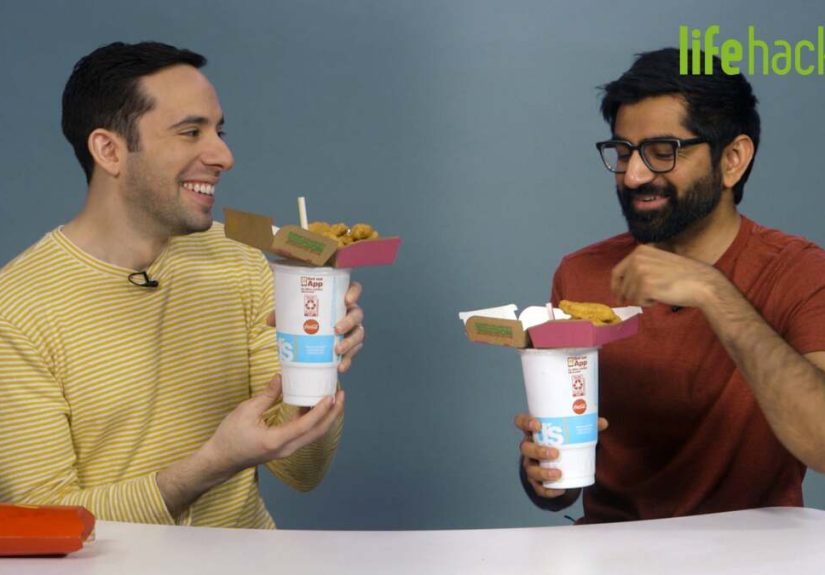
Some of the most practical hacks are basically “buy common items and combine them.” A viral example from a chicken chain
mixes nuggets, fries, and mac and cheese in a single container, then shakes it with sauces. It’s popular because it uses
standard items and lets customers customize the sauce combo easily.[9]
The caveat: containers. If the hack depends on staff giving you a special bowl you didn’t purchase, it can get messy.
The best version of this idea is “order the items and combine them yourself.”
E) The “Fun Drink” Customization (When It’s Easy and Available)
Not all hacks are about valuesome are pure novelty. A viral soft drink customization, for instance, involves adding a few
pumps of flavored syrup to a standard soda to create a new flavor profile. It’s an easy request if the location has
the syrup and can add it without slowing service.[7]
This kind of hack is best treated like a “nice if possible” request, not a demand. Availability varies.
F) The Rare “Off-Menu” Item a Restaurant Actually Endorses
Some restaurants publicly push back on complicated TikTok ordersthen quietly endorse a simpler off-menu combo that fits their
workflow. One diner chain shared an off-menu sandwich build that’s straightforward, uses existing ingredients, and avoids the
most chaotic TikTok-style customizations.[10]
If the restaurant’s own social team is basically saying, “Yes, this one,” that’s a strong signal you’ve found a hack that won’t
trigger a sigh in the kitchen.
The Employee Factor: A Hack Isn’t “Best” If It Creates a Bad Shift
Here’s the part TikTok rarely shows: the person making your order is doing it in a system optimized for speed, consistency,
and not having to interpret your phone screen through a foggy drive-thru window.
Worker-centered reporting and analysis have described how “secret menu” expectations can spiral: customers request off-menu items
by name, get frustrated when staff don’t recognize them, and slow down lines while everyone tries to decode what “the viral one”
actually means.[4] Even restaurants that embrace hacks often do it by simplifying the processselling components, limiting
options, or moving the item into official channels.[2]
So if you’re hunting for the “best fast food hack,” consider this part of the score: the best hack should be easy for staff to
execute and easy for you to explain.
How to Order TikTok Hacks Without Becoming the Main Character (Derogatory)
- Describe ingredients, not internet names. “Add X, no Y” beats “the TikTok burger.”
- Pick hacks with normal substitutions. If it needs a paragraph, it’s not a hackit’s fan fiction.
- Use the app when possible. If it’s supported digitally, it’s usually more consistent.[2]
- Expect variability. Syrups, sauces, and staff discretion can differ by location.[7]
- Don’t film workers without consent. The hack isn’t worth making someone uncomfortable.
- Be ready to take “no” gracefully. That’s not a personal attack. That’s operations.
Real-World Experiences: What Trying Viral Fast Food Hacks Is Actually Like (500+ Words)
The internet version of a fast food hack is always cinematic: crisp audio, perfect lighting, a magical close-up of sauce
dripping in slow motion. The real-life version? You, in a car, trying to balance a burger stack while your receipt flutters
into the passenger seat like it’s auditioning for a soap opera.
In practice, the first “experience” most people have with a viral hack is the ordering momentthe tiny window
where your confidence either shines or collapses. Hacks that are phrased like standard modifications tend to go smoothly:
“No mustard, add lettuce, add special sauce.” Clean, understandable, quick. That’s why value-dupe hacks remain popular: they
feel like normal customization, not a scavenger hunt.[6]
The second big experience is the assembly problem. A lot of viral hacks are designed to keep kitchens fast by
pushing the final step onto customersintentionally or not. When major brands have spotlighted hacks, they’ve often sold the
components and left the “build” to you, which is fun in theory and mildly chaotic in a car in reality.[1] If you’ve
ever tried to insert something crunchy into a sandwich while steering, you understand why humans invented tables.
Then comes the taste test reality check. Some hacks are genuinely delightful because they lean into simple wins:
sweet + smoky sauces on a chicken sandwich, extra crunch on a burger, or a remix bowl that turns side items into a full meal.
Articles that actually test TikTok fast food hacks often find a mixed bagsome are “why didn’t I do this sooner,” and others are
“I cannot believe I spent money to invent sadness.”[5] This is normal. TikTok is optimized for surprise; your mouth is
optimized for preferences.
A surprisingly common experience is the availability lottery. The viral drink that needs flavored syrup? It might
be easy at one location and impossible at another. Even when a hack is simple, it can depend on whether the store has the right
ingredient, whether it’s allowed to add it, and whether the staff can do it without slowing service.[7] The best mindset
is “cool if they can,” not “I saw it online so you must.”
Another real-world layer: the ethics vibe. Many people don’t want their snack to come with someone else’s bad day.
Coverage of secret menus and order hacks has pointed out how quickly “fun customizations” can turn into recurring stress for workers,
especially when customers assume employees should know every trend by name.[4] In real life, the most satisfying “hack
experience” often includes being polite, ordering clearly, and choosing a hack that doesn’t force staff into extra steps.
Finally, there’s the experience TikTok rarely highlights: the after-effect. Some hacks are just indulgent (fine),
but others drift into “this will fix your migraine / cure your life” claims. When viral combos are framed as remedies, experts
frequently emphasize caution and remind people that anecdotal comfort is not the same as reliable medical guidance.[8]
The best experience is enjoying a treat as a treatno miracle marketing required.
So what does “trying hacks” feel like overall? A little playful, a little chaotic, and occasionally brilliant. The best ones
make you think, “Wow, that was easy.” The worst ones make you think, “I just engineered a snack I can’t eat with dignity.”
Choose accordingly.
Conclusion: So… Is the Viral TikTok the Best Fast Food Hack?
Sometimes, yesbut not because it’s viral. The best fast food hack is usually the one that’s
simple, orderable, consistent, and respectful.
In other words, the “best” hack usually looks boring on paper:
a clear modification, a smart add-on, a value-minded swap, or a build-it-yourself combo that doesn’t derail the kitchen.
That’s why the strongest hacks are often the ones restaurants quietly tolerate, officially highlight, or turn into real
menu items once the internet proves they’re popular.[1][2]
If you want a foolproof rule: if you can explain it in one sentence and it uses normal ingredients, it’s probably a winner.
If it requires a script, a spreadsheet, and spiritual preparation… it’s content, not a hack.