Table of Contents >> Show >> Hide
- Why Washing Lettuce Matters (Even When It Looks “Clean”)
- First: Identify What You’ve Got (Because Labels Matter)
- The Best All-Purpose Method: Swish, Settle, Lift (Works With or Without a Spinner)
- How to Wash Lettuce With a Salad Spinner
- How to Wash Lettuce Without a Salad Spinner
- Myth-Busting: Soap, Produce Washes, and “Magic” Soaks
- How to Keep Lettuce Crisp After Washing
- Troubleshooting: Common Lettuce-Washing Problems
- Quick Reference: Best Method by Lettuce Type
- Conclusion: Clean Greens, Better Salads, Happier Teeth
- Extra: Real-World Lettuce-Washing “Experiences” (The Stuff Nobody Mentions Until It Happens)
- SEO Tags
There are two kinds of salad people: the “crunch, crunch, ahh” crowd…and the “why does my Caesar taste like the beach?” survivors. If you’ve ever bitten into lettuce and found surprise sand, you already know why washing lettuce matters. The good news: you don’t need fancy gadgets or a laboratory. You just need a solid method, a little patience, and the willingness to stop rinsing lettuce like it’s a single ceramic plate.
This guide shows you how to wash lettuce the right waywith a salad spinner and without a salad spinnerso your greens come out clean, crisp, and ready to actually hold dressing instead of watering it down.
Why Washing Lettuce Matters (Even When It Looks “Clean”)
Lettuce grows close to the ground, which means it’s basically a magnet for dirt and grit. Add in the fact that lettuce is usually eaten raw (no heat to back you up), and washing becomes less of an optional spa day and more of a basic life skill.
- Grit removal: The #1 reason people “hate salad” is actually “hate crunchy soil.”
- Food safety: Washing helps remove dirt and can reduce some germs, though it won’t sterilize lettuce like a superhero laser.
- Better texture: Clean, well-dried leaves stay crisp and don’t turn your bowl into salad soup.
First: Identify What You’ve Got (Because Labels Matter)
Not all lettuce needs the same treatment. Before you start, do a quick check: whole head, loose leaf, or bagged greens?
Whole heads (romaine, iceberg, butter lettuce)
These often hide grit in the folds near the core. You’ll usually want to separate leaves and wash thoroughly.
Loose leaf or bunch greens (red leaf, green leaf, frisée)
These can carry dirt in curly edges and “leaf elbows.” Great hair, questionable cleanliness.
Bagged greens (spring mix, chopped romaine, “washed/triple-washed/ready-to-eat”)
If the bag says “washed,” “triple-washed,” or “ready-to-eat,” it’s generally intended to be eaten without rewashing. Rewashing can introduce contamination from sinks, hands, spinners, or cutting boards. If it looks slimy, smells off, or has obvious dirt, it’s safer to toss it than to try to rescue it with a heroic rinse.
The Best All-Purpose Method: Swish, Settle, Lift (Works With or Without a Spinner)
If you remember nothing else, remember this: rinsing is not the same as washing. For lettuce, especially sandy greens, the best approach is a cold-water bath that lets grit fall away from the leaves.
Step-by-step: Swish, settle, lift
- Wash your hands and make sure your sink/bowl/colander is clean.
- Remove the core (for romaine/iceberg) and separate the leaves. Tear or chop laterwhole leaves are easier to clean thoroughly.
- Fill a large bowl (or a very clean sink) with cold water. Cold water helps lettuce stay crisp.
- Submerge lettuce in batches so it isn’t crowded. Give it a gentle swish and loosen with your hands.
- Let it sit for 1–3 minutes. Dirt and sand will sink like tiny rocks of betrayal.
- Lift lettuce out with your hands or tongs into a colander. Don’t dump the bowlyou’ll just pour grit back onto your leaves.
- Repeat if needed with fresh cold water until the bottom of the bowl looks clean (or at least less like a terrarium).
Pro tip: If your water looks like a snow globe after the first swish, you’re doing it right. That dirt was going somewherebetter the bowl than your teeth.
How to Wash Lettuce With a Salad Spinner
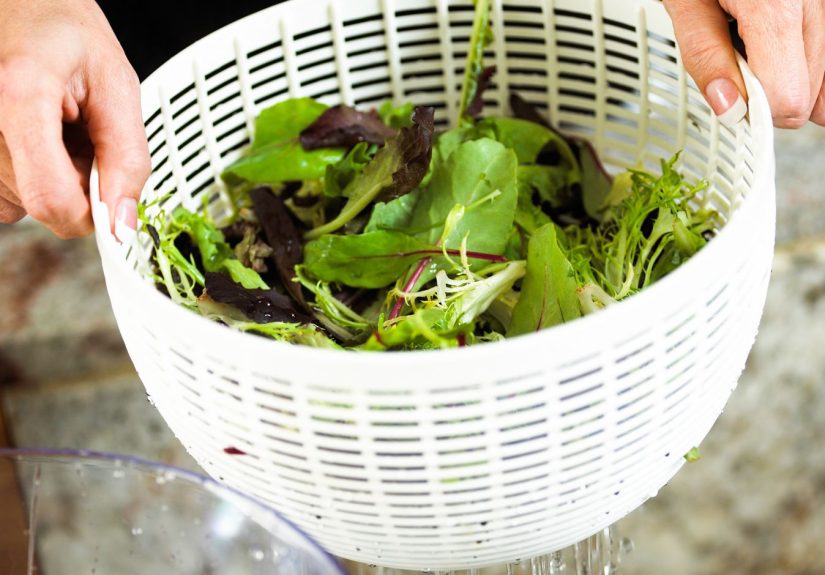
A salad spinner isn’t just for drying. Many spinners work as a mini wash station: a basket inside a bowl that lets you lift greens out of dirty water fast. Less mess, less drama.
Method A: Use the spinner as a wash basin (fast and effective)
- Put the basket in the spinner bowl and add your lettuce (don’t cram it).
- Fill with cold water until the leaves are submerged.
- Swish gently with your hand to loosen grit.
- Lift the basket out and let the dirty water remain in the bowl.
- Dump the water, rinse the bowl, and repeat if the greens were extra sandy.
Method B: Rinse + spin (great for delicate greens)
- Rinse leaves under cool running water, rubbing gently where dirt sticks.
- Transfer wet greens into the spinner basket.
- Spin in batches (overfilling leads to bruised lettuce and sad salads).
How to spin without destroying your lettuce
- Don’t overfill: Leaves need room to move so water can fling outward.
- Short bursts work: Spin 10–15 seconds, pause, rearrange lightly, spin again.
- Extra-dry hack: Line the basket with a couple paper towels for the final spin if you want ultra-dry greens for creamy dressings.
Why drying matters: Dressing clings to dry leaves. Wet leaves repel dressing like they’re late for a meeting.
How to Wash Lettuce Without a Salad Spinner
No spinner? No problem. People washed lettuce for centuries before the Great Plastic Basket Revolution. Your goal is the same: clean leaves, then remove excess water.
Option 1: Bowl wash + colander drain (the classic)
Use the swish, settle, lift method above, then drain in a colander for a few minutes. For many salads, that’s enoughespecially if you’re using hearty lettuce like romaine.
Option 2: The towel roll (shockingly effective)
- Lay a clean kitchen towel (or several paper towels) on the counter.
- Spread lettuce in a single layer.
- Roll it up like a sleeping bag for vegetables.
- Press gently, then unroll and let it air-dry 5–10 minutes.
Option 3: The sheet-pan air-dry (low effort, high payoff)
Line a rimmed baking sheet with paper towels or a clean towel. Spread lettuce out. Let it sit 15–30 minutes. This is ideal when you’re prepping ahead and want crisp greens without bruising.
Option 4: The “paper towel bag shake” (when you need dry lettuce ASAP)
- Drain washed lettuce well in a colander.
- Transfer to a large zip-top bag.
- Add 1–2 paper towels.
- Seal and gently shake/spin the bag in a controlled manner (think: polite tornado, not rage tornado).
- Remove towels once they feel damp.
Note: This won’t be as powerful as a spinner, but it’s surprisingly decent for small batches.
Myth-Busting: Soap, Produce Washes, and “Magic” Soaks
Let’s keep this simple: for home kitchens, the safest mainstream guidance is cool running water and clean hands/tools. Washing lettuce with soap or detergent isn’t recommended. Commercial produce washes generally aren’t necessary for routine cleaning either.
- Skip soap on lettuce: Leaves are porous and can hold residues you do not want in your lunch.
- Keep your sink clean: If you wash in the sink, treat it like food-contact equipmentclean it first.
- Dry with clean towels: A towel that smells like last night’s garlic bread is not a “freshening” tool.
How to Keep Lettuce Crisp After Washing
Clean lettuce is great. Clean, crisp lettuce tomorrow is even better. Moisture is the main enemy of stored greens, so drying and storage matter.
Best practices for storing washed lettuce
- Dry thoroughly before refrigerating (spinner or towel method).
- Store with a paper towel in a container or bag to absorb moisture.
- Don’t crush it: Give greens space so they don’t bruise and turn slimy.
- Use within a few days for best texture.
Should you wash lettuce before storing?
If you want maximum longevity, many food safety and storage guides recommend washing produce closer to when you’ll use it, because moisture can speed spoilage. But if your lifestyle requires “washed and ready,” just dry it extremely well and store it with paper towels to manage moisture.
Troubleshooting: Common Lettuce-Washing Problems
“My lettuce is still gritty.”
Do another cold-water bath. Some greens (especially curly ones) need two or even three rounds. Also, make sure you’re lifting leaves outnot dumping them with the dirty water.
“My lettuce got limp after washing.”
Try a 5–10 minute soak in ice-cold water, then dry well. Cold water can perk up tired leaves. (If it’s slimy, though, it’s past the point of motivational speeches.)
“My salad is watery.”
Dry longer. Spin twice. Use the sheet-pan air-dry method. Watery salad is usually a drying issue, not a washing issue.
“Do I wash the outside of iceberg or romaine?”
Remove and discard the outer leaves if they’re damaged. Then separate the rest and wash. Dirt tends to hide near the core, so don’t just rinse the outside and call it a day.
Quick Reference: Best Method by Lettuce Type
- Romaine: Separate leaves, swish-and-settle wash, then spin or towel-dry.
- Iceberg: Remove core, separate layers, quick soak, thorough dry (it holds water like a sponge).
- Butter lettuce: Gentle bath wash; avoid aggressive spinning (it bruises easily).
- Spring mix: If not labeled ready-to-eat, quick bath wash in batches; careful drying.
Conclusion: Clean Greens, Better Salads, Happier Teeth
Washing lettuce isn’t complicatedit’s just commonly done in a way that doesn’t actually work. Use cold water, give leaves room to move, let grit settle, and always lift greens out of the dirty water. If you have a salad spinner, you’ll dry faster and get better dressing cling. If you don’t, towels and a little air-drying can absolutely get you there.
And remember: the goal isn’t “perfectly sterile lettuce.” The goal is cleaner, grit-free lettuce that tastes like saladnot like the floor of a garden bed.
Extra: Real-World Lettuce-Washing “Experiences” (The Stuff Nobody Mentions Until It Happens)
Let’s talk about the reality of washing lettuce in an actual home kitchen, where time is fake, dinner is urgent, and the sink is somehow always full of something mysterious.
Scenario 1: The farmers’ market romaine that looks innocent. You bring home a gorgeous, gigantic head of romainepractically posing for a magazine cover. You rinse it under the faucet, chop it, toss it, serve it… and then someone at the table says, “Is this… crunchy?” That’s the farmers’ market grit tax. The fix is not “rinse harder.” The fix is a bath. Once you do the swish-and-settle method, you’ll see the water change from “clear” to “tiny mud latte” in seconds. The first time this happens, it’s equal parts gross and satisfying, like cleaning a vacuum canister. After that, you’ll never trust a quick rinse again.
Scenario 2: You own a salad spinner but still have watery salad. This is more common than people admit. The problem is usually one of two things: overfilling the spinner (leaves can’t move, water can’t escape) or spinning once and stopping too soon. In many kitchens, the winning move is to spin in two rounds: a first spin to remove most water, then a quick toss and a second spin. If you’re chasing a restaurant-level crisp salad, a final short spin with a paper towel in the basket can pull out that last bit of moisture that dilutes dressing.
Scenario 3: No spinner, guests coming, and your towel is doing cardio. When you’re hosting, towel-drying becomes a sport. The sheet-pan method is the unsung hero here: spread washed leaves on a towel-lined pan, walk away, do literally anything else, and come back to noticeably drier greens. It’s low-stress, low-bruising, and it frees you from standing over the sink like a salad bouncer. If you’re short on time, the towel roll is the “I need dry lettuce now” solutionfast, tidy, and oddly satisfying.
Scenario 4: The “triple-washed” bag that inspires anxiety. Many people buy ready-to-eat greens and still feel the urge to wash them because “more washing = more safe,” right? In practice, rewashing can backfire if your sink, spinner, hands, or towels aren’t perfectly clean. A common experience is buying a bagged spring mix for convenience, then turning it into a whole production that adds risk and removes convenience. A better pattern: trust the label when it says ready-to-eat, keep the bag cold, use clean hands and utensils, and focus your energy on washing the produce that actually needs it (like the sandy romaine from Scenario 1).
Scenario 5: The sink situation (aka: where good lettuce goes to get re-contaminated). A lot of lettuce-washing fails happen because the sink is treated like a neutral zone. It’s not. If you’ve recently rinsed raw chicken packaging, drained something questionable, or left dishes sitting, the sink needs a proper cleaning before it becomes your lettuce pool. In real kitchens, using a large bowl inside the sink is a smart compromise: it keeps the wash water contained and reduces the “my sink has a past” factor.
Scenario 6: The moment you realize drying is half the battle. People often discover this when they make a beautiful salad, add dressing, tossand the dressing slides right off, pooling at the bottom. That’s not a dressing problem. That’s wet lettuce. Once you experience the difference between properly dried greens (dressing clings, flavor pops) and damp greens (dressing disappears, sadness remains), you start treating drying like a real step, not an optional flourish.
In short: the “best” lettuce-washing method is the one you’ll actually do consistently. A salad spinner makes it easier. A clean bowl and a towel make it possible. And once you’ve eaten one truly grit-free salad, you’ll never go back.