Table of Contents >> Show >> Hide
- What “Straight Punch” Means in Kyokushin
- The 5 Steps to a Kyokushin Straight Punch
- Step 1: Build a Stable Base (Stance, Spine, and “Don’t Tip Over”)
- Step 2: Make a Strong Seiken (Your Fist Is Not a Bag of Grapes)
- Step 3: Launch on a Straight Line (Elbow In, Shoulder Quiet… Until It Isn’t)
- Step 4: Generate Power from the Floor (Hips, Pivot, and “Whole-Body Punching”)
- Step 5: Impact, Kime, and Recovery (Hit, Don’t Hug)
- Targeting in Kyokushin: Why Body Accuracy Matters
- 3 Drills to Make Your Straight Punch Better Fast
- Common Mistakes (And How to Fix Them Without Crying)
- Putting It Together: A Simple Kyokushin Combo
- Real-World Training Experiences: What It Feels Like to Build a Kyokushin Straight Punch
- Conclusion
Kyokushin has a reputation for tough conditioning, harder sparring, and the kind of seriousness that makes you bow straighter and say “osu” like it’s a full-time job.
But underneath the intensity is a simple truth: your straight punch is only “Kyokushin strong” when it’s clean, connected, and repeatablenot when it’s a wild arm swing powered by hope.
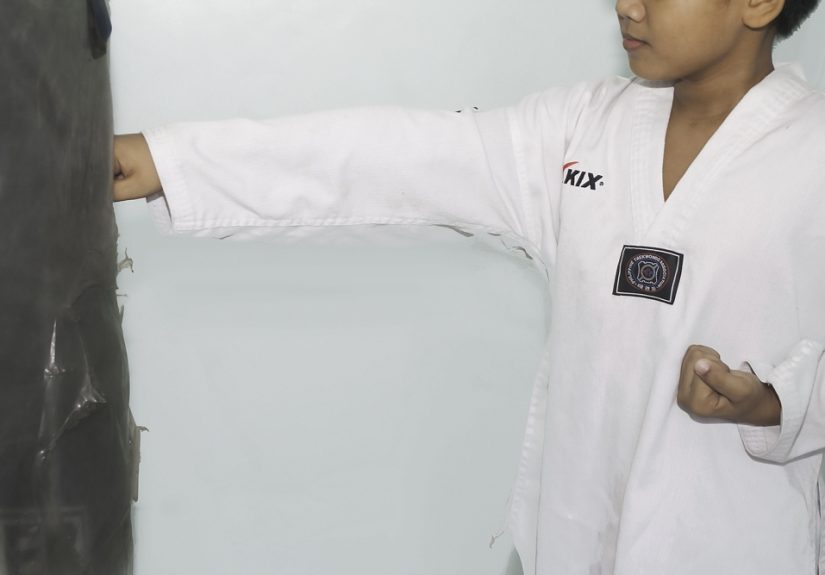
In Kyokushin, the straight punch (often trained as seiken chudan tsukia middle-level forefist punch) is a core building block in kihon, kata, and kumite.[12]
And because knockdown rulesets commonly emphasize body punches (and often prohibit punches to the face), your straight punch has to be accurate to the torso, structurally safe for your hands, and explosive from the ground up.[10][11]
This guide breaks the straight punch into five practical steps, plus drills, common mistakes, and a “what it actually feels like” section at the endbecause technique is one thing,
and getting it to show up when you’re tired and getting chopped in the thigh is another.
What “Straight Punch” Means in Kyokushin
“Straight punch” in karate can refer to several variations (standing, stepping, rear-hand, lead-hand). In Kyokushin basics you’ll commonly see:
- Seiken chudan tsuki: forefist punch to mid-level (solar plexus/ribs/body line).[12]
- Oi tsuki (lunge punch): punch with a step (often trained in basics and kata).[13]
- Gyaku tsuki (reverse punch): rear-hand punch from a stance, powered by hip rotation (very common across karate and useful in kumite mechanics).[6][9]
The mechanics overlap. If you can throw one straight punch correctly, you’re basically learning a “power delivery system” you can plug into different footwork and ranges.
The 5 Steps to a Kyokushin Straight Punch
Step 1: Build a Stable Base (Stance, Spine, and “Don’t Tip Over”)
A straight punch is only as straight as the platform launching it. Before your fist moves, set your base:
- Feet grounded: feel pressure through the floorespecially the ball of the rear foot.
- Knees soft: locked knees make you punch like a fence post (sturdy, but not very helpful).
- Hips under you: think “stacked” posturehead over ribs, ribs over hips.
- Chin tucked: not glued to your chest, just modestly tucked like you’re trying to hide a double chin on Zoom.
In kumite, Kyokushin stances can look higher and more mobile than deep kihon stances, but the principle is identical: stability without stiffness.
Good punchers don’t “lean into” punchesthey transfer into them.[2][3]
Step 2: Make a Strong Seiken (Your Fist Is Not a Bag of Grapes)
Kyokushin is famously comfortable with bareknuckle contact in training contexts, so fist structure matters. The classic guideline:
strike with the first two knuckles (index and middle finger knuckles) while keeping the wrist aligned behind them.[5][6][7]
Quick fist checklist:
- Thumb outside the fingers (not tucked inside where it can get crushed).
- Wrist straight: imagine your forearm and fist are one solid piece of wood.
- Knuckles aimed: the first two knuckles are the “front bumper.”[6][7]
Safety note (not the fun kind): wrist and hand injuries are common in striking sports when alignment breaks down, especially with repeated impact.
Use sensible protection (wraps/gloves when appropriate), progress gradually, and don’t try to “prove toughness” to a heavy bag on day one.[4][5]
Step 3: Launch on a Straight Line (Elbow In, Shoulder Quiet… Until It Isn’t)
The punch should travel from guard to target in a straight path, not in an arc. A clean straight punch is efficient: it wastes no motion and gives your opponent less “early warning.”
Boxing coaches describe the cross similarlystraight line, rotate the body, return to guard.[2][3]
Mechanical cues that work well for Kyokushin:
- Elbow tracks behind the fist (not flared outward). This keeps the shoulder from opening too early and helps protect your structure.[6]
- Shoulders relaxed at the start. Tension slows you down and makes your punch obvious.
- Rotate late: many karate descriptions emphasize that the fist can rotate near the end of the punch so alignment is clean at impact.[6]
About hikite (pulling hand): in kihon, you often pull the non-punching hand back to the hip to train coordination and power pathways.
In live sparring/self-defense contexts, you’ll commonly keep hands higher for protection and quick follow-ups. The “right” version depends on the training goal.
Step 4: Generate Power from the Floor (Hips, Pivot, and “Whole-Body Punching”)
Here’s the secret Kyokushin already teaches you, just not always in one sentence:
power starts in the ground, travels through the legs and hips, and expresses through the fist.
Straight punches in striking sports consistently emphasize rear-foot drive, hip/torso rotation, and coordinated weight transfer.[1][2][3]
Try this sequence (rear-hand straight / gyaku-style mechanics):
- Push the floor with the ball of the rear foot (think “drive,” not “jump”).[2]
- Pivot the rear foot slightly as the hip turns (your heel can lighten and rotate).[1][3]
- Rotate hips and torso togethernot just shoulders. Your hip is the engine; the shoulder is the steering wheel.
- Shoulder rolls forward at the end to add reach and protect the chin line, then you recover.[1][2]
If you want a nerdy performance boost: biomechanics research on karate punching commonly focuses on how lower-body power, trunk rotation, and sequencing affect punch speed/force.
You don’t need a lab to apply the lessonjust stop trying to do a leg-and-hip job with your triceps alone.[8][9]
Step 5: Impact, Kime, and Recovery (Hit, Don’t Hug)
The moment of impact should feel like a brief, crisp “snap”not a long push where you freeze at full extension like you’re posing for a statue.
Then: recover immediately. In both boxing and karate coaching, returning to guard quickly is a core principle of straight punches.[2][3]
Impact and recovery cues:
- Exhale on impact: short, sharp breath helps timing and tension control (don’t hold your breath like you’re opening a stuck pickle jar).
- Keep the wrist stacked at contact; don’t let it fold.[5][6][7]
- Don’t lock the elbow aggressively. Extend fully as needed, but avoid hyperextension “snapping” at the joint.[4][6]
- Return to guard on the same path: punch out, punch back. Your next technique starts the instant the first one ends.[2][3]
Targeting in Kyokushin: Why Body Accuracy Matters
In many knockdown-style Kyokushin competitions, punches to the face are not allowed, so straight punches often target the solar plexus, floating ribs, and body line.[10][11]
That changes the “game”: you need tight trajectories, good distance judgment, and the ability to punch hard without overcommitting.
Practical targeting tip: aim through the target, not at the surfacelike you’re trying to push your fist past the ribs and into the space behind them.
(Politely. With respect. In the Kyokushin spirit. Also: still hard.)
3 Drills to Make Your Straight Punch Better Fast
1) Kihon “Slow-Fast” Reps
Do 10 slow reps focusing on alignment (stance, elbow path, wrist, hip turn), then 10 fast reps focusing on snap and recovery.
Repeat 3 rounds. Slow reps teach correctness; fast reps teach timing.
2) Wall-Line Drill (No-Arc Proof)
Stand an arm’s length from a wall. Punch forward without letting your knuckles scrape sideways or your elbow flare into the wall.
If your fist “draws a rainbow,” the wall will snitch on you immediately.
3) Pad or Bag: “Touch-Return” Rounds
On a focus mitt or heavy bag (with appropriate hand protection), throw single straight punches with a strict rule:
as soon as you touch, you’re already returning. Build the habit that power does not require lingering.
Coaches in striking sports emphasize straight-line delivery and immediate recovery as fundamentals for jab/cross mechanics.[2][3]
Common Mistakes (And How to Fix Them Without Crying)
-
Mistake: Arm-only punching
Fix: Practice slow punches where the hip begins the motion. If your hip doesn’t move, your punch is basically a strongly worded suggestion.[1][2] -
Mistake: Wrist collapses
Fix: Reduce power, check fist formation, strike with first two knuckles, and keep wrist stacked. Add wraps/gloves as needed while building strength and technique.[4][5][6] -
Mistake: Elbow flares
Fix: Think “zipper line” up the center. Keep the elbow behind the fist. Use the wall-line drill to self-correct.[6] -
Mistake: Overreaching and falling in
Fix: Shorten the punch. Step to range first, then punch. Your stance should support the punch, not chase it.[2][3] -
Mistake: You forget the other hand exists
Fix: Decide the goal. In kihon, train coordinated hikite. In sparring, keep hands higher and recover fast. Either way, don’t donate your chin to the universe.[2][10]
Putting It Together: A Simple Kyokushin Combo
Try this basic sequence on pads or bag work:
- Jab/lead straight to measure distance (light, fast)
- Rear straight to the solar plexus (drive + hip rotation)
- Immediate recovery to guard
- Optional follow-up: low kick (if your training context allows), or step out safely
The striking-sports logic is the same: straight punches build off each other, and the best ones return to guard like a rubber band.[2][3]
Real-World Training Experiences: What It Feels Like to Build a Kyokushin Straight Punch
If you’re new to Kyokushin, your first straight punches often feel “busy.” You’re thinking about your stance, your fist, your elbow, your hips,
your breathing, your other hand, your teacher’s eyebrow (the most powerful weapon in the dojo), and whether “osu” is supposed to be loud enough to rattle windows.
That mental traffic jam is normal.
Most students hit the same early milestone: the day they realize their arms are not the engine. You throw a punch the way you’ve always thrown a punchmostly shoulder and arm.
It feels fast. It feels strong. Then a senior belt puts a pad in front of you, says “again,” and suddenly you notice something embarrassing:
your punch is loud, but the pad doesn’t move. It’s like slapping a mattress and expecting it to file a complaint.
The next phase is “discovering the floor.” Someone tells you to push off the rear foot and rotate the hip.
The first time you do it right, it’s weirdlike learning to write with your other hand. But then it clicks. The punch doesn’t just feel stronger; it feels easier.
Not easy like “no effort,” but easy like “the body is cooperating instead of arguing.”
That’s when people start using phrases like “connected” and “grounded,” and you realize martial arts is basically a lifelong hunt for better synonyms for “that felt awesome.”
Then comes the wrist lesson. Kyokushin culture can tempt you into “toughness first, technique later,” especially when you see people conditioning knuckles.
But most long-term practitioners learn the grown-up version: structure beats bravado.
If your wrist folds even a little on impact, your body will invoice you laterusually with interest.
People who stay healthy tend to scale impact gradually, use protection when appropriate, and obsess over alignment (first two knuckles, wrist stacked, elbow tracking clean).[4][5][6]
It’s not glamorous, but neither is sitting out training because your hand hurts when you open a door.
In sparring, the experience shifts again. You’ll notice that a perfect kihon punch from a deep stance is not the same as a fight punch.
In kumite you’re moving, adjusting range, reacting, and getting hit back. The straight punch you land most often is the one you can throw without “loading.”
That’s where recovery becomes king: touch, snap, back to guard. The best straight punches feel like they’re on a springout and back before your opponent finishes blinking.[2][3]
And finally, there’s the Kyokushin-specific reality: tournament rules can shape habits.
Because many knockdown formats emphasize body punching and disallow face punches, it’s common to see lower guards and heavy body exchanges.[10][11]
But good dojos separate “sport tactics” from “complete skill.” The experienced folks can fight under the rulesand still keep intelligent hand position, distance awareness,
and defensive responsibility when the context changes.
The straight punch becomes more than a technique; it becomes a reliable tool you can adapt: body shot in knockdown, head shot in self-defense practice (when trained safely),
or a fast line to create space when you’re under pressure.
That’s the quiet magic of the straight punch in Kyokushin: it starts as a basic drill, and ends up as a lifelong calibration tool.
When your punch is off, it usually means something else is offstance, breath, tension, timing, confidence.
Fix the punch, and you often fix the person throwing it. (No pressure. Just… osu.)
Conclusion
A Kyokushin straight punch isn’t mysteriousit’s disciplined. Set your base, build a safe fist, punch on a straight line, drive from the floor, and recover like your next move depends on it (because it does).
Practice the steps slowly, then bring them to life with drills. Over time, your punch stops being “something you do” and becomes “something you can trust.”