Table of Contents >> Show >> Hide
- Before You Start: Choose the Best Way to Sell
- Step 1: Price Your Car Like a Pro (Not Like a Wish)
- Step 2: Get Your Car “Buyer-Ready” (You’re Selling Confidence)
- Step 3: Collect the Paperwork California Buyers Expect
- Step 4: Write a Listing That Attracts Real Buyers (Not Weird Bots)
- Step 5: Screen Buyers and Set Safe Meetups
- Step 6: Negotiate Without Getting “Negotiated”
- Step 7: Get Paid Safely (Because Scammers Love Cars Too)
- Step 8: Sign the Title Correctly (Tiny Mistakes = Big DMV Headaches)
- Step 9: Hand Off the Car (And Keep Proof You Did)
- Step 10: File the Notice of Transfer and Release of Liability (NRL) Within 5 Days
- Step 11: Cancel or Update Insurance and Keep Your Records
- Quick “Don’t Forget” Checklist
- FAQ: Fast Answers to Common California Selling Questions
- Conclusion: Sell Smart, Stay Protected
- Experiences From the California Car-Selling Trenches (The Extra )
Selling a car in California is a little like ordering a burrito: there are options, there are add-ons,
and if you forget one key ingredient, you’ll regret it later (hello, DMV paperwork). The good news?
Once you know the stepsprice it right, prep it well, handle the smog/title details, and file the right forms
you can sell your car smoothly and legally without turning your driveway into a stress festival.
This guide walks you through the whole process in plain English, with real-world tips to help you avoid
common mistakes, scams, and those awkward “uhh… I thought you were bringing the title” moments.
Let’s get you paid and get that car officially off your plate (sometimes literally).
Before You Start: Choose the Best Way to Sell
In California, you generally have three practical routes. Picking the right one can save you days of back-and-forth.
1) Private party sale (most money, most effort)
You sell directly to a buyer from Facebook Marketplace, Craigslist, OfferUp, neighborhood groups, or word of mouth.
This usually nets the highest price, but you’ll do the marketing, meetups, and paperwork coordination.
2) Sell to a dealer or “instant offer”/online retailer (fastest, less money)
Dealers and online buyers can be quick and convenient. You’ll typically get less than a strong private-party sale,
but you’re buying back your time and reducing stranger-meetups.
3) Trade-in (easiest, lowest hassle)
Trading in is the “I value my weekend” option. It’s simple, but not always the top dollar moveespecially if your
car is in great shape and in-demand.
Step 1: Price Your Car Like a Pro (Not Like a Wish)
Pricing is where most sellers either lose money or lose weeks. Use multiple valuation tools and compare listings
for similar cars in your area (same year, trim, mileage, condition). Then adjust for:
- Mileage: high mileage lowers value; low mileage can justify a premium.
- Condition: dents, worn tires, cracked windshields, and warning lights are negotiation magnets.
- Maintenance history: documented service can make buyers more confident.
- Timing: convertibles sell better in spring/summer; 4WD/AWD can pop in winter or mountain areas.
Pro tip: build in a little negotiation room. If you want $12,500, list at $13,200 and be ready to
“meet in the middle” without actually meeting in the middle.
Step 2: Get Your Car “Buyer-Ready” (You’re Selling Confidence)
A clean car sells faster and for more. You don’t need a museum restorationjust remove reasons to hesitate.
Quick prep that actually pays off
- Wash and wax the exterior; clean wheels and tires.
- Vacuum and wipe down interior surfaces (yes, the cupholders too).
- Remove personal items (buyers don’t want to find your 2019 parking receipt collection).
- Replace cheap, high-impact items: wiper blades, missing floor mats, burnt bulbs.
- Gather maintenance records and receipts in one folder (physical or digital).
Photos that sell
Take photos in daylight, in a clean location, and include:
exterior angles, interior (front and back), dashboard with mileage, tires, VIN plate (or door jamb),
and any flaws. Honest photos prevent time-wasting meetups.
Step 3: Collect the Paperwork California Buyers Expect
California has a few “must-do” items that protect you legally. Get these lined up early so you’re not scrambling
while someone is standing in your driveway saying, “So… can I take it today?”
California title (a.k.a. “pink slip”)
You’ll sign the title over to the buyer. If the title is lost or damaged, you may need a replacement/transfer form
before the sale can be completed cleanly.
Smog certification (often required)
If your car needs a smog check for transfer, handle it before listing. Buyers love “recent smog” because it removes
uncertainty. In California, many private-party transfers require the seller to provide a valid smog certification,
with some exemptions (for example, certain newer vehicles don’t need a smog inspection for transfer, but the buyer
may pay a smog transfer fee).
Odometer disclosure (for many vehicles)
Odometer reporting often applies to vehicles under a certain age threshold. If the title doesn’t have the right spot
or you need the specific reassignment form, plan aheadsome forms are controlled documents and not downloadable.
Bill of sale (smart even when not strictly required)
Even when the title is the main ownership document, a bill of sale is extra protection. It should include:
buyer and seller names, date, sale price, VIN, mileage, and “sold as-is” language (unless you’re offering something
in writing).
If you still have a loan (lien)
This is commonand totally sellablebut it adds steps. If the lender holds the title or is listed on it, you’ll need
a payoff process and proof the lien is released. The easiest way is meeting the buyer at the lender/bank so payoff
and paperwork happen in one place.
Step 4: Write a Listing That Attracts Real Buyers (Not Weird Bots)
A strong listing answers the buyer’s top questions before they ask them. Keep it detailed, readable, and honest.
What to include
- The basics: year, make, model, trim, mileage, title status, clean title/salvage, and how long you’ve owned it.
- Why someone should care: “dealer-maintained,” “new tires,” “single owner,” “recent brakes,” etc.
- What’s not perfect: small dents, cracked windshield, intermittent sensorbe upfront.
- Smog status: “smogged on [month/year]” or “smog in progress.”
- Price and terms: firm/negotiable, accepted payment methods, and meetup location preference.
Humor, lightly: You can be fun (“Cold A/C that could refrigerate a small sandwich.”), but don’t write
a novel. Buyers want clarity, not stand-up comedysave that for the test drive.
Step 5: Screen Buyers and Set Safe Meetups
Selling privately means meeting strangers. Most are normal humans. Some are… less normal. Use a few basic rules:
- Meet in a public place during daylight (busy parking lots are your friend).
- Bring a friend if you can.
- Don’t share personal info (home address, workplace, extra phone numbers) unless necessary.
- If someone is rushing you, overpaying, or asking you to click random linkswalk away.
Test drives without stress
- Confirm the driver has a valid license.
- Go with them (or bring a friend) and plan a short, known route.
- Hold onto the keys or ID during the drive if you’re comfortable doing so.
Step 6: Negotiate Without Getting “Negotiated”
Expect buyers to negotiatethis is America. The trick is knowing your floor price and not negotiating against yourself.
A simple negotiation structure
- Have your minimum: the lowest you’ll accept.
- Trade facts, not feelings: “New tires last month” beats “I love this car.”
- Don’t discount for imaginary problems: if they say “the market is down,” ask for a comparable listing.
- Be ready to say no: silence is a negotiation tool; so is “I’m going to pass.”
Step 7: Get Paid Safely (Because Scammers Love Cars Too)
The safest deal is the one where you actually receive real money. In private car sales, be cautious with checks and
strangers who create complicated stories.
Safer payment options
- Cash: simple, but meet at a bank to verify and avoid safety risks.
- Cashier’s check: can be safe if verified at the issuing bank (fake checks exist).
- Bank transfer: can work, but confirm funds are truly settled before handing over keys/title.
Safety move: meet at your bank or the buyer’s bank. If the funds are issued or verified there,
the whole deal gets calmer instantly.
Step 8: Sign the Title Correctly (Tiny Mistakes = Big DMV Headaches)
California title paperwork needs to be clean. Use blue or black ink, write legibly, and don’t freestyle the form
like it’s an art project.
Typically you’ll handle
- Seller signature(s) where required
- Buyer information
- Sale date and price
- Odometer reading and disclosure if required
If you make a mistake, don’t scribble it out and hope the DMV won’t notice. Fix it the right waybecause the DMV
absolutely notices.
Step 9: Hand Off the Car (And Keep Proof You Did)
When the deal is done, give the buyer:
- The properly signed title
- Smog certification documentation (if required for your vehicle)
- Keys, fobs, and any wheel-lock keys
- Maintenance records (copies are fine)
- A bill of sale (each of you keeps a signed copy)
What about license plates in California?
In California, plates generally stay with the vehicle. The big exception is personalized or certain special plates,
which you can often retain under the proper process. If you have personalized plates and want to keep them,
plan that before the buyer shows up expecting a ready-to-go car.
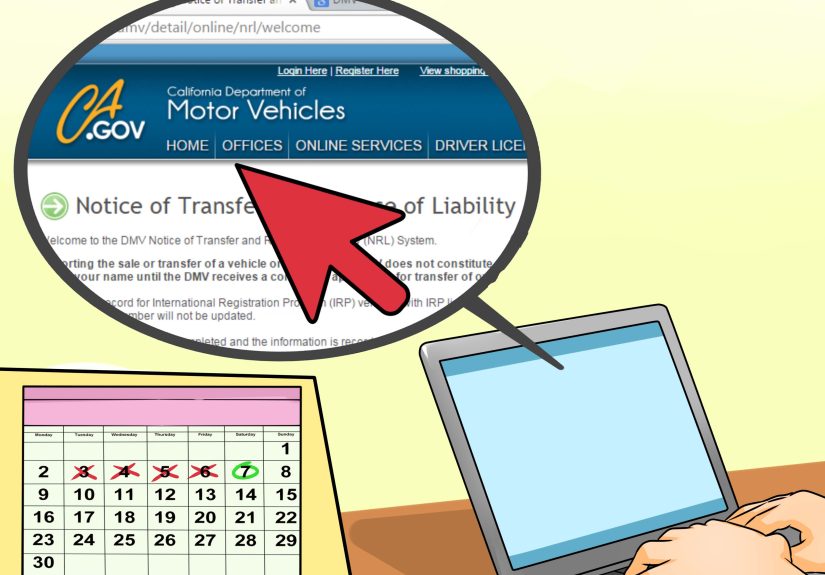
Step 10: File the Notice of Transfer and Release of Liability (NRL) Within 5 Days
This is the step that protects you after the sale. In California, sellers are required to submit a Notice of Transfer
and Release of Liability shortly after selling or transferring the vehicle. This helps protect you from tickets,
tolls, and liability if the buyer takes their sweet time transferring ownership.
Make it painless
- File the NRL online when possible.
- Save your confirmation or a copy for your records.
- Double-check names, address, VIN, and sale datemissing info can cause problems.
Step 11: Cancel or Update Insurance and Keep Your Records
After the sale:
- Contact your insurance company to cancel or transfer coverage.
- Keep copies of the bill of sale, NRL confirmation, and any buyer communications.
- If you removed personalized plates, confirm your retention steps are correct.
Quick “Don’t Forget” Checklist
- Price the car using multiple sources and local comps
- Detail the car and take clear photos
- Have the title ready (replace it if missing)
- Get smog certification if required
- Prepare a bill of sale and “as-is” language
- Meet buyers safely; control the test drive
- Use secure payment and verify funds
- Sign title/odometer disclosures cleanly
- File the NRL within 5 days
- Update/cancel insurance and keep records
FAQ: Fast Answers to Common California Selling Questions
Do I have to provide a smog check when selling my car in California?
Often, yesmany private-party sales require the seller to provide a valid smog certification, though certain vehicles
can be exempt (for example, some newer vehicles). If you’re unsure, confirm your vehicle’s situation before listing.
How long does the buyer have to transfer ownership?
California buyers generally have a limited window to transfer ownership after purchase. You still should file your NRL
promptly so the record shows you’re no longer responsible once possession is delivered.
Do I need a bill of sale?
Even if the title is the main ownership document, a bill of sale is a smart extra layer of protectionespecially if
any details are disputed later.
Can I sell a car if I still owe money on it?
Yes, but you’ll need a lien payoff process. Many sellers meet the buyer at the lender or bank to pay off the loan and
coordinate title release properly.
Conclusion: Sell Smart, Stay Protected
Selling a car in California isn’t complicated once you treat it like a project: prep, price, paperwork, payment, and
post-sale protection. Do the smog/title steps early, meet safely, verify funds like a grown-up, and file the NRL on time.
You’ll walk away with money in your account, fewer headaches, and the sweet satisfaction of never seeing that “Is this still available?”
message again.
Experiences From the California Car-Selling Trenches (The Extra )
The first time I sold a car in California, I learned a magical truth: the buyer will always arrive exactly when your
neighbor decides to mow their lawn. Consider it a state traditionlike sunshine, traffic, and someone cutting across
four lanes to make an exit.
Here’s what actually happened. I listed the car on a Saturday morning, thinking I’d get “a few messages.” I got
forty-seven. About thirty were some variation of “What’s your lowest?” (Translation: “Please negotiate with yourself.”)
A few were suspiciously eager and wanted me to pay for a “vehicle verification report” from a link I’d never heard of.
That’s a hard no. Real buyers either show up ready to look at the car or they pull their own history report.
The second lesson was smog timing. I thought, “I’ll do smog after I find a buyer.” Wrong. The best buyers treat a recent
smog like a golden ticketit signals the car can pass a basic emissions hurdle and that you’re not hiding something.
Once I got it smogged, the tone of conversations changed. Suddenly, people weren’t asking “Will it pass?” and started
asking “When can I see it?” That’s the difference between uncertainty and confidence, and confidence is what sells cars.
Then there’s the test drive dance. One buyer showed up with flip-flops and the energy of a man who has never met a
speed bump he didn’t want to launch off. I learned to set a route in advance: a few city streets, a short stretch of
faster road, and back. If someone insists on “taking it around for a while,” that’s not a test drive; that’s a joyride
audition. Keep it reasonable, keep it safe, and always verify they have a valid license.
Payment is where California sellers either feel like geniuses or feel like they’re starring in a cautionary documentary.
The cleanest transaction I ever did was at a bank: the buyer got a cashier’s check issued right there, the teller
verified it, and we signed the paperwork in the parking lot like responsible adults. Compare that to the time a buyer
wanted to “send a driver” with a check for more than the asking price. That’s not a buyerthat’s a scam with a
steering wheel.
Finally, the underrated hero of the whole process: filing the Notice of Transfer and Release of Liability. People skip
it because it feels like “extra admin.” But it’s the thing that can save you from future tickets and toll headaches
if the buyer drags their feet. The best feeling is hitting submit, saving the confirmation, and knowing that car is
officially someone else’s responsibility.
If I could sum up the California selling experience in one sentence: do the boring steps early, and the exciting part
(getting paid) becomes dramatically less excitingin the best possible way.