Table of Contents >> Show >> Hide
- Why Mixing Metals Works (and Why Designers Love It)
- Step One: Know Your Metal “Temperatures”
- A Foolproof Formula for Mixing Metals Without Clashing
- Room-by-Room Ideas for Mixing Metals
- Don’t Forget About Finish: Polished, Brushed, or Matte
- Common Mistakes When Mixing Metals (and How to Fix Them)
- How to Start Small If You’re Nervous
- Conclusion: Curated, Not Chaotic
- Real-Life Experiences: What It’s Really Like to Mix Metals at Home
Once upon a time, mixing metals at home was considered a decorating crime on par with putting socks on over your shoes. Gold and silver together? Brass and chrome in the same room? Absolutely not. Thankfully, that rule went out with avocado-colored appliances. Today, designers actually encourage mixing metal finishes because it adds depth, texture, and a collected, high-end look to your space.
The catch? When you first try to mix metals in your home, it can feel risky. One wrong faucet or light fixture and suddenly you’re wondering if your bathroom looks “eclectic” or just… confused. This guide walks you through exactly how to mix metals in your home the smart way, from choosing a palette to avoiding common mistakes, with plenty of real-life examples you can copy.
Why Mixing Metals Works (and Why Designers Love It)
Mixed metals are having a moment in interior design, especially in kitchens and bathrooms, where hardware and fixtures really stand out. Designers like those featured in Better Homes & Gardens, House Beautiful, and The Spruce all agree that mixing finishes:
- Adds visual interest: A room full of one finish can look flat or “builder basic,” while two or three coordinated metals create layers and dimension.
- Makes your home feel collected over time: Instead of looking like everything came from a single shopping trip, mixed metals read as thoughtful and curated.
- Helps you balance trends and longevity: You can keep the big-ticket items classic (like a stainless-steel sink) while sprinkling in trendier tones like brushed gold on cabinet hardware.
- Works with almost any style: From farmhouse and coastal to modern and industrial, mixed metals can be tailored to fit your vibe rather than a single “look.”
In other words, mixing metal finishes isn’t about breaking rules just to be edgy. It’s a practical way to make your rooms look richer and more intentional, even if you’re working with what you already have.
Step One: Know Your Metal “Temperatures”
Before you start mixing metals, it helps to understand how designers categorize them. Most finishes fall into one of three “temperature” families:
Warm Metals
Warm metals have yellow, red, or brown undertones and instantly cozy up a space. Common warm finishes include:
- Brass (polished, satin, or antique)
- Gold and champagne gold
- Copper and rose gold
- Bronze and oil-rubbed bronze
These show up a lot in traditional, glam, or boho spaces and pair beautifully with warm woods and earthy paint colors.
Cool Metals
Cool metals lean blue or gray and feel clean and modern:
- Chrome
- Polished nickel
- Brushed nickel
- Stainless steel
These metals are common in appliances, faucets, and contemporary lighting. Designers often use them as a base, then warm things up with brass or bronze accents.
Neutral or “Chameleon” Metals
Blackened steel, matte black, and iron are the peacemakers of the metal world. They play nicely with both warm and cool tones and add a crisp graphic edge. Many designers treat matte black like a neutral that can go with just about anything.
Understanding these families makes it easier to build a simple, cohesive palette instead of randomly grabbing whatever knobs happen to be on sale.
A Foolproof Formula for Mixing Metals Without Clashing
If you remember nothing else from this article, remember this simple formula many designers recommend:
- Choose 2–3 metal finishes total.
- Pick one dominant metal (about 60–70%).
- Use the other metals as accents (30–40% combined).
This “majority + minor accents” approach is echoed by brands and designers who specialize in kitchens and baths, as well as hardware and plumbing manufacturers.
1. Choose Your Palette
Start by deciding whether you want your space to skew warmer, cooler, or balanced:
- Warm-leaning palette: Brass + bronze + black
- Cool-leaning palette: Chrome + stainless + black
- Balanced palette: Brass + chrome + black
A popular designer-approved combo right now is brass + polished nickel with stainless-steel appliances. It feels sophisticated and timeless but still current.
2. Pick a Dominant Metal
Your dominant metal is the one that shows up the most in a room. Think of it as your “main character.” Examples:
- In a kitchen, stainless steel might be dominant through appliances and sink.
- In a bathroom, polished nickel or chrome might dominate via the faucet and shower fixtures.
- In a living room, black metal could lead in curtain rods and lighting.
Once you choose that lead finish, everything else should be planned around it, not fighting it.
3. Assign Metals by “Zone”
Designers often assign specific metals to specific categories to keep the look intentional:
- Kitchen: One finish for plumbing (faucet, pot filler), another for cabinet hardware and lighting, with appliances treated as a neutral stainless “background.”
- Bathroom: One finish for the main fixtures, another for mirrors, sconces, and accessories.
- Living spaces: One finish in main lighting and curtain rods, others in side tables, frames, and décor.
This structure helps your eye read the room as cohesive instead of chaotic.
Room-by-Room Ideas for Mixing Metals
Kitchen: The Mixed-Metal Superstar
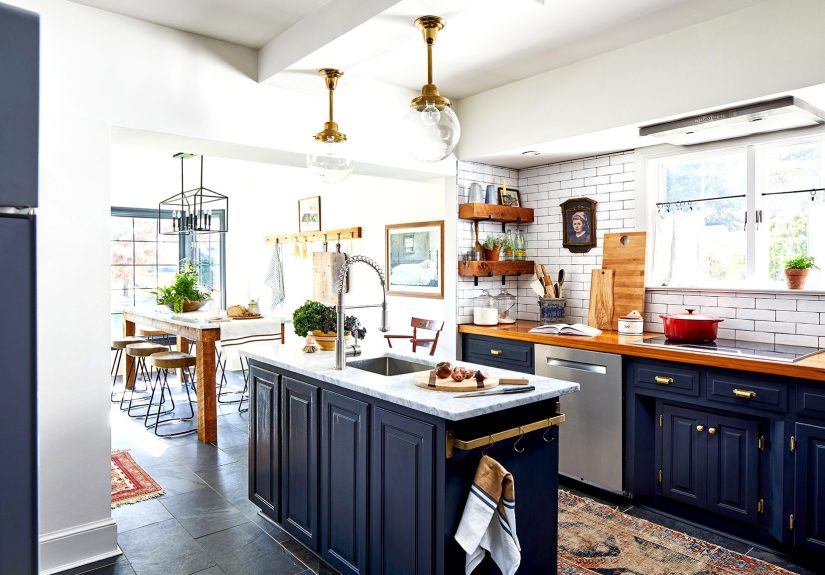
Kitchens are the easiest place to experiment because you naturally have a lot of metal already: appliances, sinks, hardware, lighting, and sometimes shelving. Designers and trend reports show that mixed metals in the kitchen are not just a fadthey’re a long-term look.
Try these combinations:
- Stainless appliances + brass hardware + black lighting: Stainless keeps things classic, brass adds warmth, and black grounds the space.
- Polished nickel faucet + brass pulls + chrome pendants: Slightly varied cool finishes with a warm accent feel layered and designer-y.
- Matte black faucet + brushed nickel hardware + stainless appliances: Great for modern or industrial-leaning homes.
To pull it together, repeat every finish at least twice. For example, if you do brass on cabinet pulls, add it again on a tray, picture frame, or light fixture.
Bathroom: Small Room, Big Impact
Bathrooms are small but metal-heavy, which means a few smart choices go a long way. Recent design guides suggest keeping plumbing fixtures mostly one temperature, while using the second metal on mirrors, lighting, and accessories.
Some winning bathroom pairings:
- Chrome faucet + black shower frame + brass sconces
- Brushed nickel fixtures + matte black cabinet hardware + stainless accessories
- Brass fixtures + black towel bars + chrome door hardware
Because bathrooms are often full of glossy surfaces (tile, glass, mirrors), consider including at least one softer finishlike brushed brass or satin nickelto keep things from feeling too “shiny.”
Living and Dining Rooms: Subtle but Stylish
In living and dining spaces, mixed metals tend to show up in lighting, furniture bases, curtain rods, and decorative accents. Designers often mix:
- Gold-toned chandeliers with black curtain rods and silver-framed artwork
- Steel coffee table bases with brass table lamps
- Bronze cabinet hardware with chrome picture frames
Celebrity homes and high-end projects frequently showcase this kind of blend: a gold pendant over a steel table, a silver-framed mirror over a dark metal fireplace, and black chairs tying it all together.
Entryway and Bedroom: Low-Risk Testing Grounds
Not ready to commit in the kitchen? Start where metals are mostly decorative:
- Entryway: A black console table with brass knobs, a chrome-framed mirror, and a metal tray in yet another finish.
- Bedroom: Black curtain rods, brass bedside lamps, and a nickel picture frame or drawer pulls.
These rooms are great for experimenting because mistakes are easier (and cheaper) to fixswap a lamp or frame, and you’re done.
Don’t Forget About Finish: Polished, Brushed, or Matte
Temperature isn’t the only thing that matters. The finish of your metalspolished, brushed, satin, or mattechanges how bold they feel. Designers frequently suggest mixing finishes for texture:
- Polished + brushed: A polished brass light fixture with brushed brass hardware feels layered instead of matchy-matchy.
- Matte + shiny: Matte black next to chrome creates contrast and drama.
- All brushed: If you’re nervous, keeping everything brushed or satin can make mixing colors feel more subtle.
As a rule of thumb, let one finish be the “star” (often polished) and the others play supporting roles in softer satin or brushed versions.
Common Mistakes When Mixing Metals (and How to Fix Them)
Mistake 1: Using Too Many Finishes
The quickest way to make a room look chaotic is to have every single item in a different metal: chrome faucet, brass pulls, black knobs, copper pendants, silver mirror, bronze curtain rod… you get the idea. Most pros suggest sticking to two, maybe three, carefully chosen metals per room.
Fix it: Decide which metals you’ll keep, then slowly swap out the extras until you’re back to your chosen palette.
Mistake 2: Mixing Metals with Almost-Identical Shades
Surprisingly, metals that are too similarlike stainless steel and brushed nickelcan look like you tried to match and missed. Several design guides recommend either clearly contrasting metals or grouping similar tones with intention.
Fix it: If two finishes are nearly the same, make one clearly different (for example, introduce black, or go for a warmer brass).
Mistake 3: Ignoring Your Non-Metal Surfaces
Metals don’t live in a vacuumthey bounce off your countertops, cabinets, wall colors, and flooring. That’s why some faucet and hardware brands suggest coordinating your metals with these materials, just like you would with a color palette.
Fix it: Lay samples together: metals, wood tones, countertop swatches, and paint chips. If something feels off, adjust before installing anything.
Mistake 4: Forgetting to Repeat a Finish
A single random metallike one lonely copper pendant in a sea of chromecan feel accidental. Your eye needs repetition to read something as intentional.
Fix it: Aim to repeat each metal at least twice in the room: a light fixture and cabinet pulls, or a faucet and a mirror frame, for example.
How to Start Small If You’re Nervous
If the idea of changing all your hardware gives you commitment anxiety, you can absolutely ease into the mixed-metal trend.
- Create a tabletop vignette: Try a brass bowl, a black picture frame, and a silver candleholder on your coffee table.
- Swap just the knobs or pulls: In the kitchen or bathroom, replacing hardware is relatively inexpensive but makes a big visual impact.
- Change only your lighting: Add a bold brass or black chandelier while leaving other metals as-is.
- Use accessories: Think metal-framed mirrors, bar carts, table lamps, or metallic planters to introduce a new finish without touching the hardwired stuff.
Once you see how much more interesting your space looks, it becomes easier to commit to bigger upgrades.
Conclusion: Curated, Not Chaotic
Mixing metals in your home isn’t about breaking all the rulesit’s about following a few smart ones. Choose a dominant finish, limit your palette, mix temperatures and finishes thoughtfully, and repeat each metal so nothing feels random. Whether you’re refreshing a builder-basic bathroom or giving your kitchen a 2025-worthy upgrade, a well-balanced mix of metals can make your home feel more custom, more stylish, and more “you.”
And if anyone tells you that gold and silver don’t belong together? Just smile, gesture at your beautifully layered home, and let your décor do the talking.
sapo:
Mixing metal finishes at home is no longer a decorating don’tit’s one of the easiest ways to make any room look more stylish and intentionally designed. In this in-depth guide, you’ll learn how to combine brass, chrome, black, and other metal finishes without clashing, using simple formulas designers rely on every day. From choosing a dominant metal and building a warm or cool palette to planning room-by-room combinations in your kitchen, bathroom, and living spaces, you’ll get practical tips, real-life examples, and common mistakes to avoid. Whether you’re starting small with hardware and accessories or planning a full renovation, this article shows you exactly how to mix metals in your home with confidence.
Real-Life Experiences: What It’s Really Like to Mix Metals at Home
Theory is great, but most of us don’t live in staged show homes. We live in spaces with inherited furniture, a fridge that’s older than some family members, and a random brushed-nickel floor lamp we bought at 11:47 p.m. on sale. So what does mixing metals look like in real life?
One common experience homeowners share is the “accidental mix.” Maybe you start with standard stainless-steel appliances. Years later, you fall in love with brass cabinet pulls. Then a matte-black faucet pops up in your social feed and suddenly your kitchen has three different finishes. At first, it might feel like you’ve broken a rule, but with a few intentional tweakslike repeating the black in a light fixture or adding a brass-framed piece of artthe whole room can suddenly look as if it was designed that way from day one.
Another frequent scenario happens in bathrooms. A lot of homes come with chrome fixtures as the default. Over time, people upgrade one thing at a time: a new black-framed shower door here, a brass mirror there. At the halfway point, the space can look choppy, and it’s easy to decide that mixing metals “doesn’t work.” But once you step back and map out a planchrome for plumbing, black for the shower and hardware, brass for lighting and accessoriesthe same room looks dramatically better without replacing everything.
Many homeowners also describe a mindset shift when they start mixing metals on purpose. Instead of feeling boxed in by existing finishes (“I can’t buy that lamp because it’s brass and everything else is silver”), they feel freed to choose what they truly like. That freedom often leads to more personal, less “catalog” spaces. A brushed-gold picture frame picked up on vacation, a vintage chrome floor lamp from a flea market, and a black metal bookshelf from an online retailer can happily coexist once you understand how to repeat and balance each metal.
There’s also the budget factor. Mixing metals is incredibly friendly to real-world wallets. Instead of ripping out perfectly good stainless appliances because brass is trending, you can simply layer in warmer hardware and lighting. Instead of replacing every faucet in your house, you might upgrade one hero piece (like a kitchen faucet) and echo that finish in smaller accessories. Many people find that after a weekend of swapping cabinet pulls and installing a new fixture or two, their space feels refreshed in a way that rivals a larger, more expensive renovation.
A fun side effect of embracing mixed metals is how adaptable your home becomes over time. Trends shiftrose gold in, rose gold out, black hardware in, then softened golds take overbut a well-balanced mix means you rarely have to start from scratch. You can phase in new finishes slowly: add a modern black pendant above a dining table with chrome legs, or introduce warm brass picture frames to a room with nickel hardware. Because your space already blends multiple tones, each tweak feels intentional rather than jarring.
Finally, people often report that mixed metals simply make their home feel more “grown up.” That may sound funny, but there’s a difference between a room where everything matches because it came in a set, and a room where pieces work together but clearly entered your life at different times. Mixed metals help tell that story. They suggest that you collected your décor thoughtfully, that you made decisions based on what you love, not just what came in the box.
So if you’re standing in your kitchen or bathroom, nervously eyeing that brass faucet you’ve been eyeing online, consider this your nudge. Start small. Repeat your metals. Trust that a little contrast can bring your whole home to life. Before long, you’ll catch yourself saying what designers have been saying for years: “Yes, you can mix metals”and you’ll have the stylish, layered rooms to prove it.