Table of Contents >> Show >> Hide
- Why People Love Cucumber Juice
- What You Need
- Pick the Right Cucumbers (Yes, It Matters)
- How to Make Cucumber Juice (3 Methods)
- A Simple, Reliable Cucumber Juice Recipe (Blender Version)
- Flavor Upgrades (Because Plain Is Not Everyone’s Love Language)
- Nutrition & Health Notes (Helpful, Not Hype-y)
- Food Safety & Storage (How to Keep It Fresh and Safe)
- Common Mistakes (And How to Avoid Them)
- FAQs
- Experience-Based Tips: What You’ll Notice After Making Cucumber Juice a Few Times (500+ Words)
Cucumber juice is what happens when “I should drink more water” meets “I want it to taste like something.”
It’s crisp, cooling, and ridiculously easy to makeno wellness retreat, matching athleisure set, or mysterious
powder required. Whether you’re using a fancy juicer or a humble blender that’s seen some things, you can get a
bright, refreshing drink in minutes.
In this guide, you’ll learn exactly how to make cucumber juice (multiple ways), how to keep it from tasting
bitter or grassy, what to add for flavor, and how to store it safely. We’ll also talk about what cucumber juice
can realistically do for you (spoiler: it’s hydrating and tasty, not a magical spell).
Why People Love Cucumber Juice
Cucumbers are mostly water, which is basically the whole vibe of cucumber juice: light, refreshing, and not
trying too hard. They also bring small amounts of nutrients like potassium and vitamin K, especially if you keep
some peel in the mix. The result is a drink that feels like a spa day for your mouthwithout the awkward cucumber
slices sliding off your face.
Quick reality check (because your body deserves the truth)
- Great for hydration: It’s a flavorful way to drink more fluids.
- Not a “detox” button: Your liver and kidneys already do that job.
- Best as a habit: A simple, refreshing drink you actually enjoy is the win.
What You Need
Ingredients (base recipe)
- 2 large cucumbers (or 5–6 Persian cucumbers)
- 1/2 to 1 cup cold water (optional, helps blending)
- 1–2 teaspoons fresh lemon or lime juice (optional, brightens flavor)
- Pinch of salt (optional, makes the flavor “pop”)
- Ice (optional, but highly encouraged)
Equipment
- Option A: Juicer (fastest, smoothest “juice” texture)
- Option B: Blender or food processor + fine-mesh strainer / nut milk bag (most common)
- Cutting board + knife
- Pitcher or jar with lid (for chilling)
Pick the Right Cucumbers (Yes, It Matters)
If your cucumber juice tastes watery and perfect, you’ll feel like a kitchen wizard. If it tastes bitter, you’ll
wonder if your blender is mad at you. Start here:
Best cucumber types for juicing
- English cucumbers: Thin skin, fewer seeds, mild flavor. The “easy mode” choice.
- Persian cucumbers: Small, crisp, sweet, and less bitter. Great if you can grab a bunch.
- Standard garden cucumbers: Totally fine, but you may want to peel and/or seed if bitter.
How to avoid bitterness
- Choose firm cucumbers with unwrinkled skin and no soft spots.
- If the ends smell strong or taste bitter, trim more off both ends.
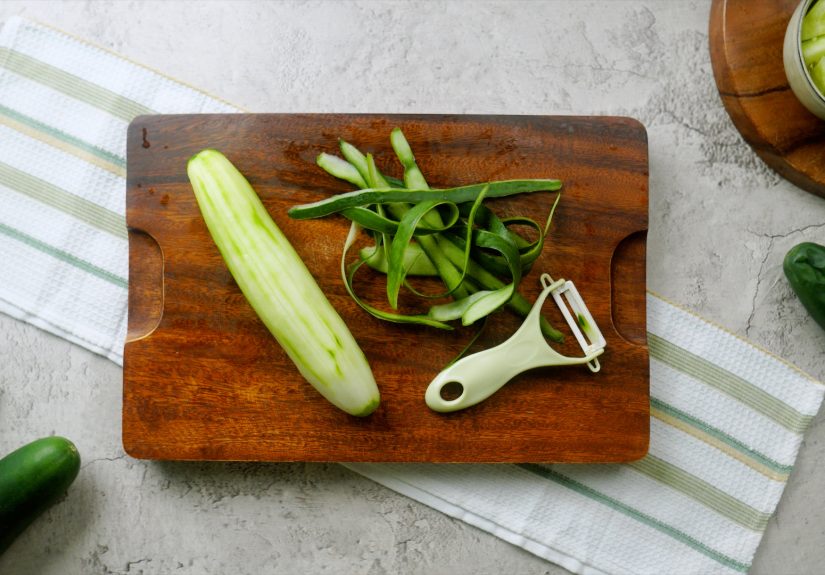
- If the peel tastes bitter, peel it (or peel in stripes so you keep some color without the drama).
How to Make Cucumber Juice (3 Methods)
Method 1: Juicer (the “press and flex” approach)
- Wash cucumbers well under running water.
- Trim the ends. Peel only if the skin tastes bitter or waxy-feeling.
- Cut into lengths that fit your juicer chute.
- Juice the cucumbers.
- Taste and adjust: add a squeeze of lemon/lime and a tiny pinch of salt if you want it brighter.
- Serve immediately over ice, or chill for 20–30 minutes for max refreshment.
Texture: Smooth and light. Bonus: Minimal foam. Trade-off: Less fiber.
Method 2: Blender + Strain (the classic home-kitchen method)
- Wash and trim cucumbers. Chop into chunks.
- Add cucumber to a blender. Add 1/2 cup cold water to start (more if needed to blend).
- Blend on high until completely liquefied (30–60 seconds).
- Strain through a fine-mesh sieve into a bowl or pitcher. Press with a spoon to extract more liquid.
- For super-smooth juice, strain again or use a nut milk bag and squeeze gently.
- Stir in lemon/lime juice (optional) and a pinch of salt (optional).
- Serve over ice or refrigerate until cold.
Texture: Clean and “juice-like” after straining. Bonus: No juicer needed.
Pro tip: Save the leftover pulp for smoothies, tzatziki-style dips, or adding to salads.
Method 3: Blender “No-Strain” (the fiber-friendly shortcut)
- Blend chopped cucumber with a splash of water until very smooth.
- Add lemon/lime, a few mint leaves, and ice.
- Blend again for 10–15 seconds.
This is closer to a thin smoothie than classic juicestill refreshing, just cloudier and more filling.
A Simple, Reliable Cucumber Juice Recipe (Blender Version)
Ingredients
- 2 English cucumbers (or 5–6 Persian cucumbers)
- 1/2 cup cold water (adjust as needed)
- 1 tablespoon fresh lemon juice
- Pinch of salt
- Ice, to serve
Directions
- Wash cucumbers and chop into chunks.
- Blend cucumber + water until fully liquefied.
- Strain into a pitcher (optional but recommended for a true “juice” texture).
- Stir in lemon juice and salt.
- Serve over ice. Optional: garnish with cucumber slices or mint.
Flavor Upgrades (Because Plain Is Not Everyone’s Love Language)
Cucumber is a team player. It’s mild, so it plays nicely with citrus, herbs, and fruit. Here are combinations that
taste like you paid $11 at a juice barwithout actually doing that.
1) Cucumber + Lemon + Mint
Bright, classic, and “spa water, but with ambition.” Add 6–8 mint leaves and an extra squeeze of lemon.
2) Cucumber + Lime + Ginger
Zingy and refreshing. Start with 1/2 teaspoon freshly grated ginger (or a few thin slices) and adjust slowly.
Ginger has main-character energy.
3) Cucumber + Green Apple
Tart-sweet and super drinkable. Blend 1 chopped green apple with cucumber, then strain. Great for people who want
“less vegetable vibes.”
4) Cucumber + Pineapple (tropical refresh)
Add 1 cup pineapple chunks for sweetness. It’s cheerful, sunny, and still feels light.
5) Cucumber Agua Fresca Style
Blend cucumber with water, lime juice, and a small amount of sweetener (sugar, honey, or agave). Serve very cold.
This is summer in a pitcher.
Nutrition & Health Notes (Helpful, Not Hype-y)
Cucumber juice is primarily water, so it’s a refreshing way to support hydrationespecially if plain water feels
boring. Cucumbers also contribute small amounts of vitamins and minerals like vitamin K and potassium. If you keep
some peel (and your cucumbers aren’t bitter), you may retain a bit more of those nutrients.
Who should be cautious?
-
People with kidney disease or potassium restrictions: Cucumbers contain potassium, and juice can
concentrate intake if you drink a lot. -
Anyone on blood thinners: Cucumbers contain vitamin K; consistency matters more than avoidance.
If you’re on medication, check with a clinician about big diet changes. -
Kids and anyone with a weakened immune system: Fresh, unpasteurized juice needs extra care with
cleaning and storage.
Food Safety & Storage (How to Keep It Fresh and Safe)
Fresh cucumber juice is perishable. Treat it like a fresh food, not a “leave it on the counter and hope” situation.
Wash produce well, use clean equipment, and refrigerate promptly.
How long does cucumber juice last?
- Best quality: Drink within 24 hours (flavor is brightest).
- Common safety window: 24–72 hours refrigerated in a sealed container.
- Do not leave out: More than 2 hours at room temperature (less if it’s very hot).
Storage tips that actually work
- Use a clean, airtight glass jar or bottle and fill it close to the top to reduce air exposure.
- Add lemon or lime juice to help keep flavor bright.
- Shake or stir before serving (natural separation is normal).
- Freeze leftovers in small portions if you won’t drink it soon (leave space for expansion).
Signs it’s time to toss it
- Fizzing (when it shouldn’t), sour smell, or a “fermented” taste
- Slimey texture or dramatic color changes
- Anything that makes you say, “Hmm… should I?” (Answer: no.)
Common Mistakes (And How to Avoid Them)
Mistake 1: Not tasting the cucumber first
If the peel tastes bitter, your juice will taste bitter. Fix it by peeling, trimming more off the ends, or using
English/Persian cucumbers next time.
Mistake 2: Over-diluting
Start with less water. You can always add more, but you can’t un-water your juice (not without crying).
Mistake 3: Forgetting acid + salt
A tiny squeeze of lemon/lime and a pinch of salt can turn “meh” into “wow.” It’s not about making it saltyit’s
about making it taste more like itself.
Mistake 4: Making a huge batch “for the week”
Fresh juice is best fresh. If you want convenience, prep cucumbers ahead of time (wash, dry, chop) and juice daily
in 3 minutes. Your future self will still be impressed.
FAQs
Do I need to peel cucumbers for juice?
Not always. English and Persian cucumbers usually don’t need peeling. For standard cucumbers, peel if the skin is
thick, waxy-feeling, or bitter.
Do I need to remove seeds?
If you’re blending and straining, seeds usually aren’t a problem. If you’re going no-strain and you dislike
“gritty,” scoop out large seeds in standard garden cucumbers.
Can I make cucumber juice without a juicer?
Absolutely. A blender + strainer is the most common method and works great.
Is cucumber juice good after workouts?
It’s refreshing and hydrating, and it pairs well with a pinch of salt and citrus. But if you’ve done a long,
sweaty workout, you may also need a full meal and more electrolytesnot just a green drink with good intentions.
Experience-Based Tips: What You’ll Notice After Making Cucumber Juice a Few Times (500+ Words)
The first time you make cucumber juice, it feels almost suspiciously easylike you’re cheating at “healthy.”
Then you make it again and start noticing tiny details that separate “pretty good” from “why is this so good?”
Here are the real-world lessons most people run into (and how to use them to your advantage).
Foam happensand it’s not a crime. If you blend cucumbers, you’ll often get a foamy layer on top,
especially if you blend on high or add ice directly to the blender. The foam is mostly air and plant fibers. It’s
harmless, but if it annoys you, let the juice sit in the fridge for 10–15 minutes. The foam will calm down, and you
can skim it off with a spoon like a very casual barista. Straining also reduces foam a lot.
The “watery” problem is usually a dilution problem. Cucumbers are already water-rich, so adding a
full cup of water “because smoothies do that” can make the final drink taste like a rumor of cucumber. Start with a
smaller splash (1/4 to 1/2 cup), blend, then decide. If you want a lighter drink, add more water at the end. This
one tweak alone upgrades the flavor.
Acid is your best friend. A squeeze of lemon or lime doesn’t just add tangit makes cucumber taste
fresher and cleaner. It also helps if your cucumbers are slightly bland (which happens out of season). If you want
a more “grown-up” flavor, add lime and a few mint leaves; if you want a brighter “morning” flavor, lemon is the move.
Once you get used to adding a little citrus, plain cucumber juice can taste oddly flatlike a song missing a chorus.
Salt is the secret handshake. People sometimes hear “add a pinch of salt” and think you’re trying to
turn cucumber juice into soup. But a tiny pinch doesn’t make it saltyit makes it taste more cucumber-y. It’s the
same reason watermelon tastes better with a sprinkle of salt. If you’re nervous, start with the tiniest pinch,
stir, taste, and repeat. You’ll find the exact moment it goes from “nice” to “wow.”
Temperature is basically an ingredient. Cucumber juice tastes best very cold. If it’s lukewarm, it
can lean “vegetal” in a way that makes some people hesitate. Chill your cucumbers before juicing, or refrigerate the
juice for 20–30 minutes. Serving over ice helps, but if you’re a slow sipper, ice can dilute over timeso chilling
first keeps the flavor stable.
Bitterness is usually preventable. If your juice tastes bitter, it’s often the cucumber skin (or
sometimes the ends). Next time, taste a small slice of peel before blending. If it’s bitter, peel the cucumber or
switch to English/Persian cucumbers. Also, don’t be shy about trimming the ends a bit moremany people cut off a
polite little sliver when the cucumber needed a more decisive haircut.
Leftover pulp is a bonus, not trash. After straining, you’ll have pale green pulp that’s full of
moisture and mild flavor. Mix it into yogurt with garlic and dill for a quick tzatziki-style dip, stir into a
smoothie for extra fiber, or toss into a salad dressing to thicken it naturally. When you start using the pulp,
cucumber juice feels less like a one-trick drink and more like a “smart kitchen” habit.
After a few rounds, you’ll also develop your “house style.” Some people want their cucumber juice crystal-smooth,
strained twice, served in a fancy glass. Others want it rustic, cloudy, and blended with mint like a quick
breakfast refresher. Either way, once you nail your preferred cucumber type, your citrus level, and your chill
strategy, cucumber juice becomes one of the easiest “I’m taking care of myself” routines you can actually stick to.