Table of Contents >> Show >> Hide
- What Makes Angel Food Cake So Fluffy?
- Equipment You’ll Want (and Why It Matters)
- Ingredients for a Tall, Cloud-Like Angel Food Cake
- Step-by-Step: How to Make Angel Food Cake That’s Fluffy and Light
- Step 1: Prep the oven and pan
- Step 2: Make the dry “snow” mixture
- Step 3: Whip the egg whites into a glossy, stable meringue
- How to tell you’re at the right peak stage
- Step 4: Fold gently (this is where fluffiness is won or lost)
- Step 5: Pan the batter without deflating it
- Step 6: Bake until set (and don’t open the oven early)
- Step 7: Cool upside down (the anti-collapse move)
- Step 8: Release cleanly and slice without squishing
- Common Angel Food Cake Problems (and How to Fix Them)
- Flavor Ideas That Keep It Light
- Serving and Storage Tips
- FAQ: Angel Food Cake That Actually Turns Out Right
- Extra Experiences: What Bakers Learn After a Few Angel Food Cakes (500+ Words)
- Conclusion
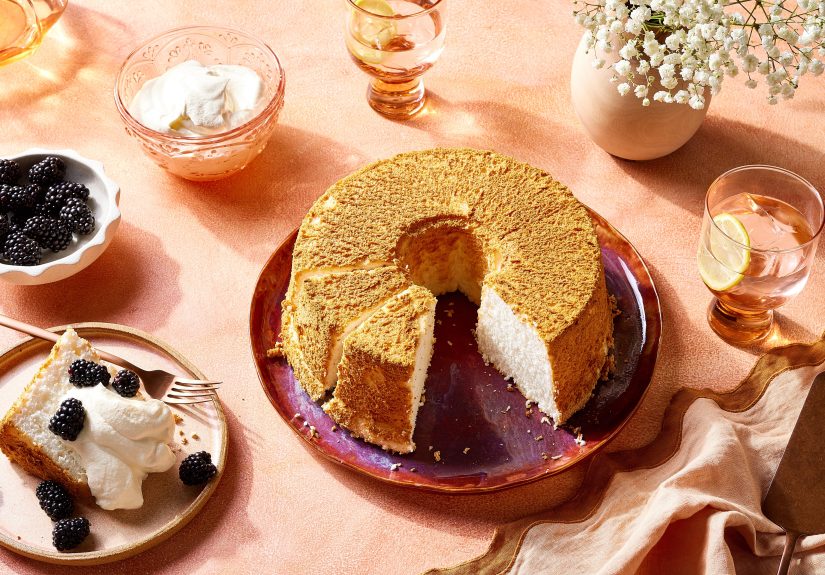
Angel food cake is the dessert equivalent of a perfectly fluffed pillow: airy, bright, and somehow both
“barely there” and “how did I eat half of this?” If you’ve ever baked one that turned out squat, rubbery,
or (tragically) collapsed like a sad balloon, don’t worryangel food cake is less about luck and more about
a few specific rules that the cake absolutely refuses to negotiate.
In this guide, you’ll get an in-depth, from-scratch method that produces a tall, cloud-like crumb, plus
the why behind every step (so you can troubleshoot like a pastry pro). We’ll keep it fun, but the cake
itself will stay serious about being fluffy.
What Makes Angel Food Cake So Fluffy?
Angel food cake gets its lift from whipped egg whites (a meringue), not from butter, oil, or heavy leaveners.
Those egg whites trap air bubbles, and the oven heat “sets” that structure into a delicate sponge.
Because there’s almost no fat, the texture can be exceptionally lightif you protect those air bubbles.
The Three Non-Negotiables
- No grease: Fat keeps egg whites from whipping to full volume and can make the cake slip instead of climb.
- An ungreased tube pan: The batter needs traction to rise up the sides.
- Upside-down cooling: The cake’s structure is still setting as it cools; inversion helps prevent collapse.
Equipment You’ll Want (and Why It Matters)
1) A 10-inch aluminum tube pan (ungreased, not nonstick)
Use a standard 10-inch tube/angel food pan with straight sidesideally aluminum and not nonstick.
Nonstick coatings are the “ice rink” version of a pan: your cake can’t grip and climb.
A removable bottom is helpful for clean release.
2) A clean metal or glass mixing bowl
Egg whites are dramatic. A tiny smear of grease can keep them from whipping properly.
Wash your bowl and beaters well, then dry thoroughly.
3) A fine-mesh sieve (or sifter) and a big spatula
Sifting keeps your flour/sugar mixture light, lump-free, and easier to fold in without deflating the batter.
A large silicone spatula helps you fold gently and efficiently.
4) Optional but amazing: an instant-read thermometer
If you want near-zero guesswork, use temperature: angel food cake is reliably done when the center hits
about 206°F. It’s like a “you can stop hovering now” signal from the universe.
Ingredients for a Tall, Cloud-Like Angel Food Cake
This recipe aims for a classic vanilla-forward cake with a hint of almond (optional), plus a stable,
fine crumb.
Ingredient list (makes 1 cake, about 12–14 servings)
- Cake flour: 1 cup (about 120 g), sifted (spooned and leveled)
- Granulated sugar: 1 1/2 cups (about 300 g), divided
- Fine salt: 1/4 teaspoon
- Egg whites: 12 large (about 1 1/2 cups / 360 g), free of yolk
- Cream of tartar: 1 1/2 teaspoons
- Vanilla extract: 1 1/2 teaspoons
- Optional flavor boost: 1 tablespoon lemon juice or 1/2 teaspoon almond extract
Quick ingredient notes (so you don’t get betrayed by groceries)
- Cake flour matters: Its lower protein helps keep the crumb tender. All-purpose can work in a pinch, but cake flour is the “floaty” choice.
-
Superfine sugar helps: Finer crystals dissolve faster, giving you a smoother, more stable meringue.
No superfine sugar? Pulse granulated sugar in a food processor for a few secondsdon’t turn it into powdered sugar. - Egg whites: Separate eggs while cold (easier), then let whites sit 20–30 minutes to take the chill off for easier whipping.
Step-by-Step: How to Make Angel Food Cake That’s Fluffy and Light
Step 1: Prep the oven and pan
- Move an oven rack to the lower-middle position.
- Preheat to 325°F.
- Do not grease the tube pan. Not even a little. Not even “just on the bottom.” Angel food cake needs friction, not slip-n-slide vibes.
Step 2: Make the dry “snow” mixture
- In a bowl, whisk together the cake flour, salt, and 3/4 cup of the sugar.
- Sift the mixture once (twice if your cake flour looks clumpy). Set aside.
Step 3: Whip the egg whites into a glossy, stable meringue
- Place egg whites in a clean bowl. Beat on medium speed until foamy (like cappuccino foam).
- Add cream of tartar. Continue beating until soft peaks form (the peak droops gently).
-
With the mixer running, slowly “rain” in the remaining 3/4 cup sugar.
Increase to medium-high and beat until you get stiff, glossy peaks. - Beat in vanilla and any optional flavor (lemon juice or almond extract) just until combined.
How to tell you’re at the right peak stage
- Too soft: The batter won’t hold enough structure and may collapse.
- Just right: Peaks stand tall; the meringue looks glossy and smooth.
- Too far: Meringue looks dry, chunky, or “styrofoamy.” That can lead to a coarse texture and weak rise.
Step 4: Fold gently (this is where fluffiness is won or lost)
Folding is not stirring. Folding is “I am carrying fragile air bubbles across a canyon using only vibes and a spatula.”
- Sift about 1/3 of the flour-sugar mixture over the meringue.
-
Fold gently: cut down the center with your spatula, sweep along the bottom, and lift up and over.
Rotate the bowl and repeat just until you don’t see dry pockets. - Repeat with the remaining dry mix in 2 more additions.
Step 5: Pan the batter without deflating it
- Spoon the batter into the ungreased tube pan in big, gentle scoops (don’t pour from high above).
- Run a thin knife or skewer through the batter in a loose spiral to pop hidden air tunnels.
- Smooth the top lightly.
- Give the pan a small, careful tap on the counter to settle major gapsdon’t slam it like you’re mad at physics.
Step 6: Bake until set (and don’t open the oven early)
- Bake at 325°F for 40–50 minutes (timing varies by oven and pan).
-
The cake is done when the top is golden, springs back when lightly touched,
and a skewer inserted halfway between the center tube and outer wall comes out clean. - Best test: If using a thermometer, pull the cake when the center reads about 206°F.
Step 7: Cool upside down (the anti-collapse move)
- Remove the cake from the oven.
- Immediately invert the pan (most tube pans have feet; otherwise, invert over the neck of a sturdy bottle).
- Cool completelyat least 1–2 hours. If there’s any warmth, it’s not ready to unmold.
Step 8: Release cleanly and slice without squishing
- Run a thin knife or offset spatula around the outer edge and center tube.
- Lift out the removable bottom (if your pan has one), then loosen the cake from the base.
-
Slice with a serrated knife using a gentle sawing motion.
Pressing straight down is how you turn your cloud into a pancakedelicious, but emotionally confusing.
Common Angel Food Cake Problems (and How to Fix Them)
Problem: The cake collapsed
- Likely cause: Underbaked center, cooling right-side up, or weak meringue.
- Fix: Bake until fully set (thermometer helps), invert immediately, and whip to glossy stiff peaks (not dry).
Problem: Dense or rubbery texture
- Likely cause: Over-folding, deflating the batter, or not enough air in the whites.
- Fix: Fold in 3 additions, stop as soon as flour disappears, and keep everything grease-free.
Problem: Sticky or gummy top
- Likely cause: Undercooked top/center or humid storage.
- Fix: Bake until the top feels dry and springy; cool fully; store loosely covered at room temp.
Problem: Cake won’t come out of the pan
- Likely cause: Not fully cooled, or not loosened thoroughly.
- Fix: Cool completely upside down; use a thin knife around all contact points; be patient and methodical.
Flavor Ideas That Keep It Light
Angel food cake is a great blank canvas. Keep add-ins light so you don’t weigh down the foam.
Easy upgrades
- Citrus cloud: Add 1–2 teaspoons finely grated lemon or orange zest with the vanilla.
- Berry shortcake mode: Serve with macerated strawberries and softly whipped cream.
- Toasted sugar vibe: Swap some sugar with lightly toasted sugar for a mellow caramel note.
What to avoid
- Heavy mix-ins (chocolate chunks, lots of nuts) unless finely chopped and used sparingly.
- Greasy extracts or additions that introduce fat into the whites.
Serving and Storage Tips
- Best same day: The crumb is peak-fluffy within the first 24 hours.
- Room temperature storage: Wrap loosely or keep in a cake dome for 1–2 days.
- Make-ahead trick: If serving later, bake the cake and prep toppings separately (berries, cream, lemon curd).
FAQ: Angel Food Cake That Actually Turns Out Right
Do egg whites really need to be room temperature?
Slightly warmed whites whip more easily to good volume. If you separated them cold, letting them sit
20–30 minutes usually does the trick. The bigger rule is: no yolk, no grease.
Can I use a Bundt pan?
It’s not ideal. Many Bundt pans are nonstick and heavily patterned, which makes it hard for the cake to climb and release.
A straight-sided tube pan is the reliable option.
Why do I have to cool it upside down?
The cake’s structure is delicate when hot. Cooling inverted helps the crumb set without collapsing under its own weight.
Think of it like letting a soufflé keep its confidence.
Extra Experiences: What Bakers Learn After a Few Angel Food Cakes (500+ Words)
Angel food cake has a funny way of teaching humility. Not in a mean waymore like a kindly professor who
still gives pop quizzes. People often go into it thinking, “No butter, no oil, mostly egg whites… how hard
can it be?” And honestly, the batter is simple. The behavior of the batter is what makes it feel like
you’re negotiating with a cloud.
One of the most common “aha” moments comes from realizing how little things matter a lot. For example:
separating eggs. It’s easy to think you can rush it. But seasoned home bakers learn to separate each egg
white into a small bowl first, then add it to the big mixing bowl only after it’s confirmed “yolk-free.”
Because if you drop one speck of yolk into the entire batch, you’re not just having a small problemyou’re
having a 12-egg problem. That’s the kind of math nobody wants to do at 9 p.m. in a sticky kitchen.
Another learned experience: the mixer stage is less about “beat it forever” and more about “stop at the right moment.”
Beginners often under-whip (because they’re afraid of over-whipping), and then they get a cake that rises,
but settles sadly. Then the next time they overcorrect and whip until the whites look dry and clumpy.
That batch may rise fast, but it can bake up coarse, fragile, or oddly chewy. The sweet spot is glossy stiff peaks
the meringue should look smooth enough that you’d trust it to hold a tiny paperclip like a proud Olympic champion.
Folding is the skill that makes people feel like they finally “earned” their angel food cake badge. The first time,
many bakers stir too aggressively because they’re trying to get rid of flour streaks quickly. The batter deflates,
and the finished cake tastes finebut it’s more “nice sponge” than “heavenly cloud.” With practice, you learn
to accept a slower pace: sift, fold, rotate, repeat. You also learn the value of stopping early. If you keep folding
until the batter looks perfectly uniform and silky, you’ve probably folded out the magic. Experienced bakers aim for
“just combined,” even if it means trusting a couple faint streaks will finish blending as you pan the batter.
There’s also a very specific emotional journey the first time you flip the hot cake upside down. Your brain says,
“This is wrong. Cakes do not do yoga poses immediately after leaving the oven.” But once you’ve watched a cake collapse
from cooling upright, you become an upside-down believer. Tube pans with little feet suddenly feel like a brilliant invention.
And if you’re using the bottle method, you learn to pick a bottle that’s sturdy, heat-safe, and not your favorite thing in the cabinet.
(Nobody wants to explain why the vanilla extract bottle is now a structural support beam.)
Finally, experienced angel food cake makers develop a sense for timing and environment. On humid days,
sugar can behave differently, and the top of the cake may feel a touch sticky. Some bakers also notice that
opening the oven early is basically asking the cake to panic. So they set a timer, resist the urge to peek,
and let the cake finish its transformation in peace. The payoff is a tall, feather-light cake that slices cleanly,
springs softly under a fork, and makes berries and whipped cream taste even brighter. And yesafter you nail it,
you will absolutely consider eating a slice standing at the counter. That’s not lack of manners. That’s tradition.
Conclusion
A fluffy, light angel food cake isn’t about fancy ingredientsit’s about protecting air: whip clean whites to glossy peaks,
fold gently, bake until set, and cool upside down. Once you respect those rules, angel food cake becomes one of the most
satisfying “wow, I made that” desserts you can pull off with a bowl, a whisk, and a little patience.