Table of Contents >> Show >> Hide
- The Real Reason Your Car Gets Dirty So Fast
- Start With the Two-Bin Rule (Yes, This Changes Everything)
- The 5-Minute Daily Reset (The “Don’t Let It Snowball” Routine)
- The 20-Minute Weekly Clean (A Realistic Schedule)
- Monthly Deep Clean (When You Want It to Feel New Again)
- Stain Triage: What to Do When Life Spills
- Odor Removal: Make Your Car Smell Normal Again
- Kid, Pet, and Road-Trip Proofing (Because Reality Exists)
- Tools That Make Car Interior Cleaning So Much Easier
- Common Mistakes That Make Your Interior Worse
- A Simple Checklist You’ll Actually Follow
- of Real-World “Keeping It Clean” Experience (So You Don’t Lose Your Mind)
- Conclusion: Clean Enough to Feel Good (Not Perfect Enough to Stress)
A clean car interior is one of life’s underrated flexes. Not “museum-clean” (you’re not running a velvet-rope exhibit called
Historic Crumbs of 2026), but clean enough that you can offer someone a ride without apologizing to the floor mats.
The good news: you don’t need fancy detailing tools, a free weekend, or the patience of a saint. You need a simple system,
a few smart habits, and a realistic definition of “clean.”
This guide breaks down car interior cleaning into bite-size routines that actually fit real lifecoffee runs, kids,
pets, gym bags, and that mysterious sticky spot that appears like a jump scare. We’ll cover daily resets, weekly cleans,
monthly deep-clean tactics, stain triage, odor removal, and the “please don’t do this” mistakes that make messes worse.
The Real Reason Your Car Gets Dirty So Fast
If your car looks like it loses a small battle every time you drive, you’re not alone. A car interior collects grime quickly
because it’s basically a tiny room that:
- Gets constant foot traffic (and everything on your shoes comes along for the ride).
- Has lots of textured surfaces (fabric, seams, vents) that trap dust and crumbs.
- Lives in temperature swings (heat bakes in odors; cold makes spills clingy).
- Is a snack zone (even “I only eat sometimes” becomes “why is there granola in the seat track?”).
The solution isn’t cleaning harderit’s cleaning smarter, with a routine that stops mess from turning into a
full-blown interior ecosystem.
Start With the Two-Bin Rule (Yes, This Changes Everything)
Before you buy anything, do this: keep two containers in your carone for trash, one for “stuff that doesn’t belong.”
This is the simplest way to keep your car interior clean because most “dirty cars” are really “clutter cars.”
What to use
- Trash bin: a small lined bin, a hanging bag, or even a cereal container with a liner.
- Catch-all bin: a tote, a small crate, or a sturdy bag that lives in the trunk.
Every time you park at home, do a 30-second sweep: trash in the trash, random items in the catch-all. That’s it. You just
prevented 70% of the chaos.
The 5-Minute Daily Reset (The “Don’t Let It Snowball” Routine)
This is how you keep a clean car interior without sacrificing your weekends. Think of it like brushing your teeth:
small effort, huge payoff.
Minute 1: Trash grab
Toss receipts, cups, wrappers, and “I’ll deal with it later” items. Later is how cars become folklore.
Minute 2: Shake out the mats (or at least the front one)
If you can’t do all mats, do the driver’s mat. It’s the epicenter of dirt, sand, salt, and whatever your shoes encountered today.
Minute 3: Quick console wipe
Keep a small pack of interior-safe wipes or a microfiber cloth in the glove box. Hit the cupholders and the center console
the two places that always look worse than the rest of the car.
Minute 4: Put items “in their homes”
Sunglasses go in the holder, cords get wrapped, loose change goes in a cup. Your future self deserves fewer rattles.
Minute 5: One “weird spot” check
If you notice something sticky, dusty, or suspicious, address it now. Fresh mess is easy. Old mess becomes a project.
The 20-Minute Weekly Clean (A Realistic Schedule)
Once a weekor once every two weeks if life is doing lifedo a focused clean. You’re not detailing; you’re maintaining.
Step 1: Remove the clutter (2 minutes)
Empty the catch-all bin into your house. Reset it. Your car should not be your second closet.
Step 2: Vacuum the right way (8 minutes)
Vacuuming isn’t just “wave the nozzle and hope.” For better results:
- Slide seats all the way forward and back to reach the tracks.
- Use a crevice tool for seams, seat rails, and between console and seat.
- Hit the floor first, then seats, then the cargo area.
If you don’t have a vacuum at home, a small handheld vacuum (even a basic one) makes consistent car upholstery cleaning way easier.
Step 3: Wipe high-touch surfaces (7 minutes)
Use a microfiber cloth slightly dampened with a gentle interior cleaner (or water for light dust) for:
- Steering wheel (it holds more grime than you think)
- Door handles and armrests
- Center console and shifter area
- Dashboard (lightlyno soaking)
Pro tip: avoid greasy “shine” products on the steering wheel and pedals area. Slippery is not a vibe.
Step 4: Glass cleanup (3 minutes)
Use a lint-free cloth for windows. If you have tinted windows, skip ammonia-based products and use a tint-safe cleaner.
Clean the inside of the windshield lastit’s where haze loves to hang out.
Monthly Deep Clean (When You Want It to Feel New Again)
Once a month (or every other month), do a deeper pass. This is where you handle the “invisible” dirt: embedded dust, odors,
and the grime in crevices that makes the whole interior feel off.
Deep-clean the mats
- Rubber mats: rinse, scrub with mild soap, rinse again, air dry.
- Carpet mats: vacuum, spot clean, and let them fully dry before putting them back.
Refresh vents and cracks
Use a soft detailing brush (or a clean makeup brush) to loosen dust in vents, then vacuum it up. A quick pass makes the car feel cleaner
even if nothing else changed. Magic.
Upholstery and fabric seat care
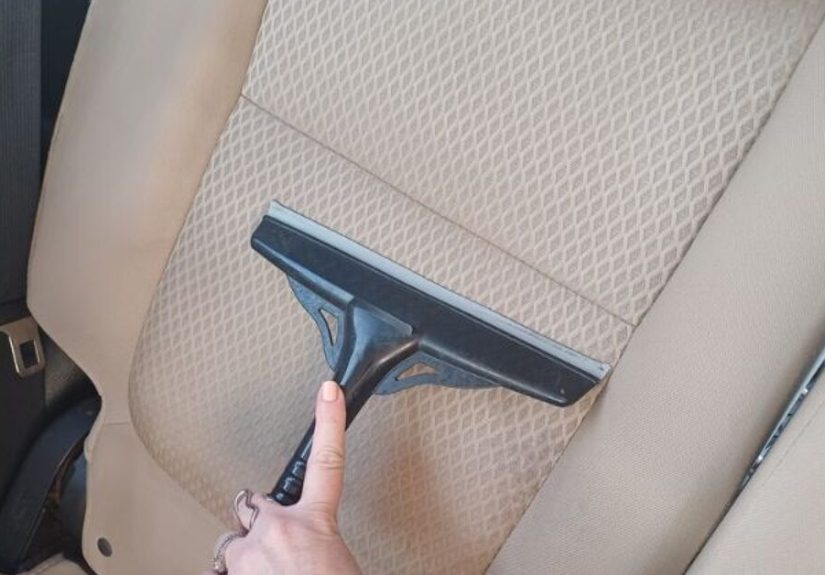
For fabric seats: use a fabric-safe upholstery cleaner and blot stainsdon’t aggressively scrub like you’re trying to erase your past.
Over-wetting fabric can leave odors and slow drying.
Leather seat care (without ruining it)
For leather seat care, stick with a pH-balanced leather cleaner and a conditioner used sparingly. Too much product can leave residue
that attracts dust. Also: test in a hidden spot first, because leather finishes vary.
Don’t forget the cabin air filter
If your car smells “off” even after cleaning, a dirty cabin air filter can be part of the problem. Replacing it (as your car’s manual recommends)
can improve airflow and reduce lingering odors.
Stain Triage: What to Do When Life Spills
Spills happen. The key is responding quickly and matching the method to the mess. Here are practical approaches that work for most
car upholstery cleaning situations.
Coffee, soda, juice
- Blot immediately (press down; don’t rub).
- Use a damp cloth with mild soap, then blot with clean water.
- Finish by blotting dry with a towel to pull moisture out.
Grease or oily stains (fast food, lotion, etc.)
- Blot excess.
- Use a small amount of a fabric-safe degreaser or upholstery cleaner designed for oils.
- Rinse lightly (don’t soak), then blot dry.
Mud and dirt
- Let it dry first (yes, really).
- Vacuum the dried debris.
- Spot clean what remains with a damp cloth and mild cleaner.
“Mystery smells” from life events
When something unpleasant happens (motion sickness, wet gym clothes, forgotten snacks), the rule is: remove the source first,
then clean the surface, then deodorize. Odor sprays alone are like lighting a candle next to a garbage canbold, but not effective.
Odor Removal: Make Your Car Smell Normal Again
A fresh-smelling interior is part of a truly clean car interior. Here’s a step-by-step way to remove odors instead of masking them:
- Find the source: check under seats, door pockets, trunk corners, and cupholders.
- Clean the area: wipe hard surfaces and spot-clean fabric.
- Dry it out: moisture = odor. Use airflow, sunlight, or a fan when possible.
- Absorb odors: baking soda (for carpets), activated charcoal bags, or odor-absorbing gels can help.
If you’re battling persistent smells, cleaning the carpets and fabric thoroughlyand checking that cabin air filteroften makes the biggest difference.
Kid, Pet, and Road-Trip Proofing (Because Reality Exists)
If you regularly drive kids, pets, or a rotating cast of snack enthusiasts, prevention is your best friend.
For kids
- Keep a “snack rule” (low-crumb options in the car; crumb chaos at home).
- Use a backseat organizer for wipes, tissues, and small toys.
- Pack a small spill kit: paper towels, a microfiber cloth, and a travel-size upholstery cleaner.
For pets
- Use a washable seat cover or cargo liner.
- Keep a rubber grooming glove for quick fur removal.
- Vacuum hair before it becomes part of the upholstery’s identity.
Tools That Make Car Interior Cleaning So Much Easier
You don’t need a garage full of gadgets, but a few basics make it painless to keep your car interior clean:
- Microfiber cloths: for dusting and wiping without scratching.
- Handheld vacuum: consistency beats power if you use it often.
- Soft detailing brush: vents, buttons, seams.
- Gentle interior cleaner: made for automotive surfaces (not kitchen spray).
- Fabric/upholstery cleaner: for seats and carpets.
- Trash bag/bin: the unsung hero of a clean car interior.
Common Mistakes That Make Your Interior Worse
A few “helpful” habits can backfire quickly:
- Over-wetting seats and carpets: can cause lingering odors and slow drying.
- Using harsh household chemicals: can discolor surfaces or damage coatings.
- Ignoring the steering wheel: it collects oils and grime fast.
- Making everything shiny: greasy residue attracts dust and can create glare.
- Skipping regular maintenance: waiting too long turns a quick wipe into a deep-clean marathon.
A Simple Checklist You’ll Actually Follow
If you want the shortest possible plan to keep your car interior clean, here it is:
Daily (2–5 minutes)
- Trash out
- Quick wipe of console/cupholders
- One mat shake (at least the driver’s)
Weekly (15–25 minutes)
- Vacuum floors and seats
- Wipe steering wheel and high-touch spots
- Clean inside windows
Monthly (45–90 minutes)
- Deep clean mats
- Brush/clean vents and cracks
- Spot clean upholstery; condition leather if needed
- Odor reset (source check + absorbent)
of Real-World “Keeping It Clean” Experience (So You Don’t Lose Your Mind)
The first time I tried to “keep my car spotless,” I approached it like a home cleaning spree: big ambition, big supplies,
and exactly one afternoon of motivation. By day three, I was right back to a passenger seat full of receipts and a cupholder
hosting a sticky ring like it paid rent. That’s when I learned the truth: the best car interior cleaning routine is the one
you’ll actually do when you’re tired, busy, and already thinking about dinner.
What finally worked was treating my car like a tiny space with tiny rules. I started with the trash system: one small bin,
always lined, always within reach. It felt almost too simpleuntil I realized most of my mess wasn’t “dirt,” it was “stuff.”
Coffee sleeves, mail, random packaging, and the occasional “I’ll bring that inside later” item were the real villains.
Once trash had a home, the interior instantly looked 50% cleaner, even before I touched a vacuum.
Next came the five-minute reset. Not every daybecause lifebut often enough that it never got out of control. The moment I
parked at home, I’d do a quick sweep: trash out, one microfiber wipe, and a glance under the seats like I was checking for
stowaway crumbs. The key was momentum. If I tried to do a full clean, I’d procrastinate. If I promised myself “just five minutes,”
I’d actually startand sometimes that five minutes turned into ten, which felt like winning the lottery.
Road trips taught me another lesson: prevention beats cleaning. I used to bring every snack known to humanity, then wonder why
my upholstery looked like it survived a granola explosion. Switching to lower-crumb snacks and keeping a small “spill kit” (paper towels,
a cloth, and a gentle cleaner) made a ridiculous difference. Spills stopped being disasters and became minor inconveniences.
Also, I learned to stop using random household sprays on everything. Automotive surfaces are picky; some cleaners leave residue,
and residue is basically a magnet for dust, fingerprints, and regret.
The biggest mindset shift was redefining “clean.” My goal is not perfectionit’s comfort. I want to sit down without sticking to anything,
breathe without smelling yesterday’s drive-thru, and find my sunglasses without rummaging like an archaeologist. When I aim for
“pleasant and functional,” the routine feels doable. And weirdly, once the system is in place, the car stays cleaner with less effort.
It’s almost like the car senses your new boundaries and behaves. Almost.
Conclusion: Clean Enough to Feel Good (Not Perfect Enough to Stress)
Keeping your car interior clean isn’t about turning into a full-time detailer. It’s about building a low-effort routine that prevents
mess from stacking up. Start with the two-bin rule, do a quick daily reset, commit to a realistic weekly clean, and deep clean monthly
when you want that “new car” feeling. Handle stains quickly, remove odors at the source, and avoid the common mistakes that create
residue, damage, or extra work.
With a simple system, a couple of basic tools, and a little consistency, you can have a clean car interior that feels calmeven if your life isn’t.