Table of Contents >> Show >> Hide
- First Things First: Know Your Air Mattress and Valve Type
- How to Inflate an Air Mattress with a Pump
- How to Inflate an Air Mattress without a Pump
- Safety Tips When Inflating an Air Mattress
- Common Issues and Quick Fixes
- Choosing the Right Inflation Method for Different Situations
- Real-World Experiences: What You Learn After a Few Air Mattress Nights
- 1. Inflate, Then Let It “Settle” Before Final Adjustments
- 2. Temperature Swings Can Trick You into Thinking There’s a Leak
- 3. A Protective Layer Under and Over the Mattress Makes a Huge Difference
- 4. Noise Is Real (Especially with Elevated Air Beds)
- 5. Don’t Wait Until You’re Exhausted to Inflate
- 6. Have a Backup Inflation Plan
- 7. Your Ideal Firmness May Surprise You
- 8. Practice Once Before You Really Need It
- Conclusion
You’ve finally wrangled the tent poles, located the missing sheet set, and convinced everyone
that camping/overnight guests are “fun.” Then you pull out the air mattress and realize… you
have no idea how to inflate it. Or worse, you have an air mattress and no pump.
Don’t panic (or start Googling hotels just yet). Whether you’re at home, at a campsite, or
crashing on a friend’s floor, there are plenty of ways to inflate an air mattresswith a pump
or with whatever you’ve got lying around. This guide walks you through safe, practical methods,
plus some smart tricks and hard-earned lessons so you don’t end up sleeping on a half-deflated
tortilla of sadness.
First Things First: Know Your Air Mattress and Valve Type
Before you start pumping air like a superhero, take 30 seconds to look at your mattress and its
valve. That little plastic piece determines which pumps and DIY tricks will work best.
Common Air Mattress Valve Types
-
Boston valve (two-part valve): A larger, two-piece valve often seen on
camping mattresses and rafts. One part controls inflation, the other deflation. -
Pinch (inflatable toy-style) valve: A small tube you pinch open with your
fingers. Common on budget air beds and pool floats. -
Double-lock or 2-in-1 valve: A larger opening for quick inflation with a
pump and a smaller opening for fine-tuning or topping off. -
Built-in pump port: Some mattresses have an internal electric pump with a
dial or switch built into the side, plus a separate port for manual pumps.
Check your mattress manual if you have it. Many manufacturers, like Intex, recommend inflating
to a relatively low pressure (around 0.3–0.4 psi) and warn against overinflating because it can
stress seams and shorten the life of the bed.
How to Inflate an Air Mattress with a Pump
If you’ve got a pump, you’re already winning. Here’s how to get the most out of itwithout
waking the neighbors or popping the mattress.
1. Using a Built-In Electric Pump
Many modern air mattresses come with a built-in electric pump. These are designed to make
inflation nearly foolproof:
-
Clear the area. Lay the mattress flat on a clean, smooth surfaceno rocks,
Lego bricks, or rogue pinecones. -
Plug in the pump. Connect it to a standard outlet (indoors) or a generator
/ power station if you’re camping with power. -
Open the pump cover and turn the dial or switch to “inflate.” You’ll hear
the motor kick on and the mattress start to rise. -
Watch the sides. Stop when the mattress feels firm but not rock hard; the
surface should still depress slightly when you sit on it. -
Turn off and close the cover. Make sure the pump opening is sealed completely
to avoid slow air leaks.
Tip: Air expands in warm temps and contracts in cold ones. If you inflate a mattress in the
heat of the afternoon and then sleep on it in chilly night air, it’ll feel softer. That doesn’t
necessarily mean it’s leakingsometimes it’s just physics.
2. Using an External Electric Pump
If your mattress doesn’t have a built-in pump, a standalone electric pump is your next best
friend. These may plug into:
- Standard wall outlets (great for home use)
- Car 12V sockets (perfect for drive-in camping)
- Rechargeable battery packs (more flexible but limited runtime)
To inflate:
-
Select the right nozzle. Most electric pumps come with several nozzle
adapters. Choose the one that fits snugly into your mattress valve without being forced. -
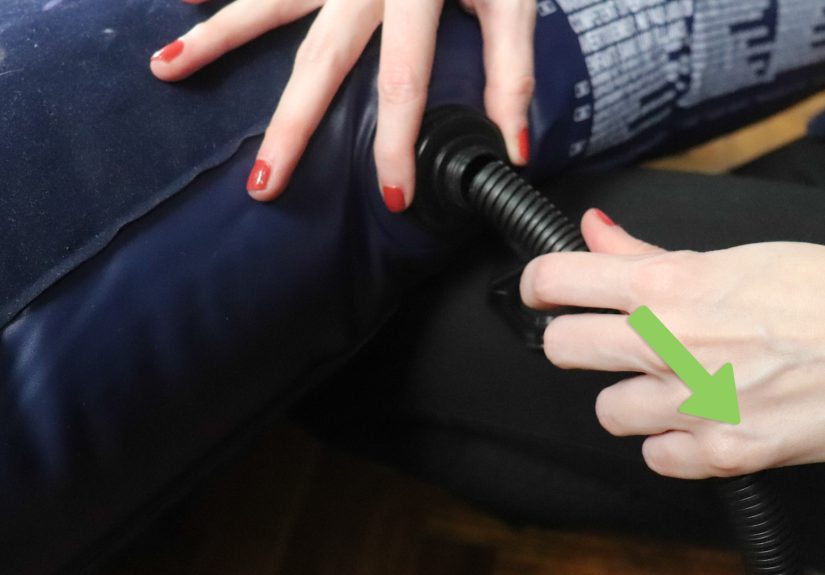
Attach the pump to the valve. Hold it firmly or twist it into place, depending
on the valve style. -
Switch the pump to “inflate.” Let it run while you keep a hand on the
mattress to monitor firmness. -
Stop before it’s rock solid. Slight give = comfortable; rock hard = noisy
and more likely to leak over time. - Seal the valve quickly. Close caps firmly and double-check for hissing.
3. Using a Manual Hand Pump or Foot Pump
No electricity? No problemjust maybe a light workout.
-
Attach the hose to the pump and the mattress valve. Again, use the nozzle
that fits best and prevents leaks. -
Stabilize the pump. For a foot pump, place it on flat ground and stand with
one foot on the edge. For a hand pump, hold it upright or use the base to keep it steady. -
Start pumping. Use smooth, steady strokes. It will feel slow at first, but
the mattress will rise faster than you think. -
Check firmness periodically. Don’t just pump until you can’t anymorepause,
sit on the mattress, and stop when it feels supportive. - Secure the valve. Once you’re done, close everything tightly to avoid losing air.
Bonus: Manual pumps are quieter than many electric models, which is helpful when you’re setting
up sleeping arrangements late at night with people already dozing nearby.
How to Inflate an Air Mattress without a Pump
No pump? You’re not doomed to a night on the floor. You just need a little creativity and some
household tools. These methods work best on mattresses with larger valves, but you can improvise
adapters using tape, plastic bottles, or flexible tubing.
1. Using a Vacuum Cleaner (Exhaust Mode)
Many shop vacs and some household vacuums can blow air as well as suck it. If yours has an
exhaust port:
-
Switch the hose to the exhaust port. Check your vacuum’s manual to see how
to do this safely. -
Create a makeshift adapter. Use a plastic bottle top, cardboard tube, or
duct tape to connect the vacuum hose tightly to the mattress valve. - Turn on the vacuum. Hold everything in place and watch the mattress fill.
-
Stop before it’s overinflated. Vacuums can move a lot of air quickly, so
check firmness often. - Seal the valve. As soon as it’s full, close the valve and unplug the vacuum.
Important: Keep the vacuum motor and cord clear of the bed and flammable items, and don’t leave
it running longer than necessaryit’s not designed to be a permanent air pump.
2. Using a Hair Dryer (Cool Setting Only)
A hair dryer can work in a pinch, but there’s one big rule: use the cool setting.
Hot air can damage the vinyl or seams of your mattress.
- Set the dryer to “cool” or the lowest heat. High heat + plastic = bad.
-
Hold the nozzle over the valve. You can use a cardboard cone or rolled-up
paper to focus airflow. -
Turn on the dryer. It’ll take longer than a real pump, but it will slowly
fill the mattress. - Check firmness and stop when it’s comfortable.
-
Seal the valve. Close it quickly to avoid losing too much air while you
reposition your hand.
3. Using a Trash Bag (The “Giant Bellows” Method)
This method looks ridiculous but works surprisingly welland it doesn’t require electricity.
- Grab a large, sturdy trash bag. Contractor bags or heavy-duty bags work best.
-
Open the bag and scoop air into it. Hold the opening wide, then close it
quickly to trap as much air as possible. -
Attach the bag to the mattress valve. Place the opening over the valve and
hold or tape it tightly so air doesn’t escape. -
Push down on the bag. As you press, the trapped air will be forced into the
mattress. -
Repeat. This is a bit of a workout, but it’s surprisingly efficient after a
few rounds.
4. Using a Leaf Blower
If you’re at home or car camping and have a leaf blower, it can inflate a mattress very quickly.
Just be gentle.
-
Set the blower to a low or moderate power setting. You don’t need hurricane
force. -
Aim the nozzle at the valve. Use your hand or a piece of cloth to help seal
the gap. -
Turn it on briefly. Watch the mattress expand and stop every few seconds to
check firmness. - Close the valve. Once full, seal it quickly.
Again, avoid putting hot or heavy tools directly on the mattress surface and keep cords and
motors away from bedding.
5. Old School: Inflating by Mouth
This is the “I am stubborn and mildly athletic” method. It’s more realistic for small camping
pads than full-sized raised air beds, but in an emergency:
- Wipe the valve clean.
- Place your mouth over the opening and blow steadily.
- Pause to rest and avoid getting dizzy.
- Stop when the mattress feels supportive and seal the valve.
For larger air mattresses, consider using mouth inflation just to top off after a partial fill
with another method.
Safety Tips When Inflating an Air Mattress
Air mattresses seem simple, but there are a few safety and durability rules worth following:
-
Don’t overinflate. Overfilling stresses seams and can cause sudden leaks or
splits. The mattress should compress slightly under your weight. -
Keep heat sources away. Avoid placing hair dryers (on hot), heaters, space
heaters, candles, or electric blankets directly on the mattress. Excessive heat can weaken
the material and increase fire risk. -
Watch for sharp objects and pet claws. Place a rug, tarp, or ground cloth
under the mattress and keep pets with sharp claws off the bed if possible. -
Don’t jump or stand on the mattress. It’s designed for lying, not parkour.
Jumping creates pressure spikes that can damage internal beams. -
Check for slow leaks. If it seems to deflate overnight, inspect seams and the
valve with soapy water to spot bubbles.
Common Issues and Quick Fixes
The Mattress Keeps Deflating
A little softening overnight is normal, especially with temperature drops. But if you’re waking
up on the floor:
- Check that the valve is fully closed and caps are tight.
- Inspect seams and the bottom of the mattress for tiny holes.
-
Use a spray bottle with soapy water to find leaksbubbles indicate escaping air. Let it dry
and use a vinyl patch kit if recommended by the manufacturer.
The Mattress Is Too Firm or Too Soft
Finding the right firmness can be a game changer for your back:
-
Too firm? Briefly open the valve and release a small amount of air, then
close and test again. - Too soft? Top off with a few seconds of pump time or a few breaths by mouth.
-
Sharing the bed? Heavier sleepers may need slightly more air for support, but
still avoid rock-hard inflation.
Choosing the Right Inflation Method for Different Situations
The “best” method often depends on where you are:
-
At home: Built-in or external electric pumps are easiest. A vacuum or leaf
blower can back you up if the pump dies. -
Car camping: A 12V electric pump, rechargeable pump, or foot pump is ideal.
You’ll have more room to pack gear. -
Backpacking: You’re more likely to have a compact pad than a big air mattress,
but if you do carry an air bed, a lightweight manual pump or self-inflating mat is best. -
Emergency guest situations: Whatever workstrash bag, hair dryer on cool,
or vacuum exhaustjust keep it safe and avoid overheating the mattress.
Real-World Experiences: What You Learn After a Few Air Mattress Nights
After a few overnights with an air mattress, you start collecting little tricks and “never
again” moments that don’t always show up in the instruction manual. Here are some practical
experience-based tips that can save your backand your sanity.
1. Inflate, Then Let It “Settle” Before Final Adjustments
One thing many people notice: if you inflate your air mattress and lie down right away, it feels
perfectuntil an hour later when it suddenly seems softer. That’s because the vinyl stretches a
bit with the first use or after being stored. A smart trick is to:
- Inflate the mattress fully.
- Leave it for 20–30 minutes while you unpack or set up the rest of camp.
- Then check the firmness and top off if needed.
This gives the material time to adjust so you don’t have to climb out of your sleeping bag at
midnight to add more air.
2. Temperature Swings Can Trick You into Thinking There’s a Leak
Many people are convinced their mattress is leaking because it sags overnight, especially when
camping. Often it’s just colder outside at night. As the air cools, it contracts, and the bed
feels softer. If it firms back up a bit when the sun hits the tent in the morning, you’re
dealing with temperature, not a puncture.
Experienced campers often inflate the mattress near full in the evening, then add a small top-off
right before bed once the temps start to drop.
3. A Protective Layer Under and Over the Mattress Makes a Huge Difference
You learn very quickly that air mattresses are not fans of rough ground or splintery floors.
Putting something under the mattressa tarp, ground cloth, area rug, or even a thick blanketcan
protect it from tiny punctures and help with insulation.
On top, a simple mattress pad or fitted quilt can transform the feel. It helps with warmth,
reduces that sticky-plastic feeling in summer, and sometimes even muffles the squeaky noises
when you move around.
4. Noise Is Real (Especially with Elevated Air Beds)
If you’ve ever rolled over on a tall air mattress and heard a symphony of squeaks, you’re not
alone. Elevated beds tend to flex more, and any friction between the underside and the flooror
between the top and your sheetsturns into noise. Using:
- A non-slip rug pad or blanket underneath
- Softer cotton sheets instead of slick synthetics
can cut down on noise. It’s not technically about inflation, but it definitely affects how much
you like the mattress once it’s inflated.
5. Don’t Wait Until You’re Exhausted to Inflate
One of the most common “beginner mistakes” is waiting until you’re half-asleep to start wrestling
with the pump. It always seems like a small taskuntil you’re in the dark, trying to hold a
nozzle in place with one knee while plugging the pump in behind a couch.
If you can, inflate right after you arrive or early in the evening. That way, if a DIY method
like the trash-bag trick is slower than expected, you’re not running out of patience (or
flashlight battery) before bed.
6. Have a Backup Inflation Plan
Air mattress owners quickly learn to have a “Plan B.” Maybe the pump battery dies, the outlet
doesn’t work, or you realize someone borrowed your only nozzle adapter and never gave it back.
That’s where knowing the vacuum, hair dryer (cool setting), trash bag, or leaf blower tricks
really pays off. Even a partial inflation with a DIY method followed by mouth inflation to
finish can be the difference between a decent night’s sleep and trying to nap on a blanket on
the floor.
7. Your Ideal Firmness May Surprise You
Many people assume “the firmer, the better,” but a completely rigid air mattress can actually
feel less comfortableespecially if you’re a side sleeper. With some trial and error, most
people discover they prefer:
- A slightly softer fill if they sleep on their side (to let shoulders and hips sink in a bit)
- A moderately firm fill if they sleep on their back or stomach
- A little extra air if two people are sharing the bed and one is significantly heavier
Once you find your “sweet spot,” you’ll get faster at inflating to that level: you’ll recognize
it by feel long before you ever need a pressure gauge.
8. Practice Once Before You Really Need It
If you bought a new air mattress for an upcoming trip or holiday guests, do a test run. Inflate
it at home, sleep on it one night, and see how it behavesdoes it stretch a bit, lose some air,
or feel colder than expected? This small trial gives you time to:
- Learn which inflation method is easiest with your setup
- Spot any manufacturing defects or leaks early
- Adjust your bedding and padding so guests (or you) are actually comfortable
That way, when it’s time for the “real” overnight, you’ll be the calm, competent person who
knows exactly how to inflate the air mattresspump or no pumpwhile everyone else is still
searching for the spare sheets.
Conclusion
Inflating an air mattress doesn’t need to be complicated or stressful. With a basic
understanding of your valve type, a safe pump method, and a couple of backup tricks (vacuum,
trash bag, hair dryer on cool), you can get a comfortable, supportive bed almost anywhere.
Treat the mattress kindly, avoid overinflation and heat, and add some insulation and padding,
and your “temporary” bed will feel a lot closer to a real one.
SEO Summary
for comfort, leaks, and overnight guests.
sapo:
Wondering how to inflate an air mattress when the pump is missing, broken, or still buried in a
camping bin? This in-depth guide walks you through simple ways to blow up an air bed with
built-in or external pumps, plus clever no-pump tricks using a vacuum, hair dryer, trash bag,
and more. You’ll also get real-world tips on avoiding leaks, preventing overinflation, dealing
with temperature changes, and dialing in the perfect firmness so you (or your guests) can
actually sleep comfortably instead of rolling onto the floor at 3 a.m.