Table of Contents >> Show >> Hide
- What Is a Smoke Bush Plant?
- Why Gardeners Love Smoke Bush
- Best Growing Conditions for Smoke Bush
- How to Plant Smoke Bush
- How to Water Smoke Bush
- Fertilizer and Feeding
- How to Prune Smoke Bush
- Seasonal Care Tips
- Common Problems and How to Fix Them
- Best Uses in the Landscape
- Popular Smoke Bush Varieties
- Mistakes to Avoid
- Final Thoughts on Growing Smoke Bush
- Real-World Growing Experiences With Smoke Bush
If your garden feels a little too polite, a smoke bush is the plant equivalent of showing up in a velvet jacket and stealing the scene. With its hazy, cloud-like plumes, dramatic foliage, and fall color that looks like it was edited by a movie studio, smoke bush earns attention without demanding endless babysitting. That is the dream, right? Big personality, low drama.
Known botanically as Cotinus coggygria, smoke bush is a deciduous shrub or small tree grown for its colorful leaves and airy flower clusters that mature into the famous “smoke” effect. Depending on the cultivar, leaves can be green, chartreuse, burgundy, plum, or nearly black. In autumn, many varieties turn shades of orange, scarlet, or wine red. In other words, this plant has range.
If you want to grow smoke bush successfully, the formula is refreshingly simple: give it sun, give it drainage, and resist the urge to fuss over it like an overprotective stage parent. Below is a complete guide to planting, watering, pruning, and caring for smoke bush so it looks spectacular season after season.
What Is a Smoke Bush Plant?
Smoke bush, sometimes called smoke tree or smokebush, is a woody ornamental that usually grows between 10 and 15 feet tall and wide, though compact cultivars stay much smaller. It can be grown as a large shrub, trained into a multi-trunk small tree, or shaped into a bold specimen in a mixed border.
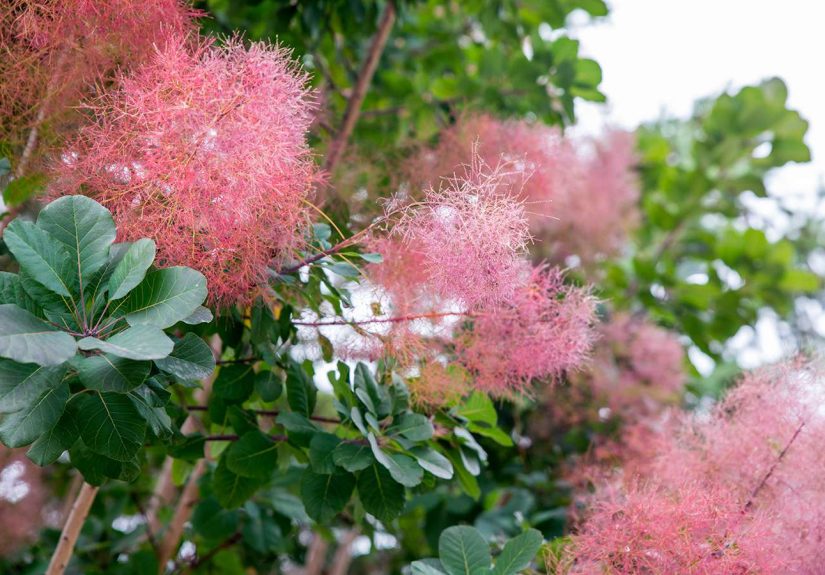
The “smoke” is not actually a flower cloud in the usual sense. After blooming, the flower stalks develop soft, feathery hairs that create a misty plume over the plant. From a distance, it looks like the shrub is smoldering in the most charming, non-emergency way possible.
Most garden varieties sold in the United States are Cotinus coggygria. You may also hear about American smoketree, Cotinus obovatus, a related species native to parts of the southeastern United States. Both are ornamental, but the common landscape favorite is usually the European-Asian species and its cultivars.
Why Gardeners Love Smoke Bush
Smoke bush earns its keep in more than one season. In spring and summer, the foliage provides color even before the plumes appear. In summer, the smoky flower clusters float above the branches like a botanical special effect. In fall, the leaves often shift into fiery shades that can outshine plants that were bragging all summer.
It is also a useful landscape plant because it tolerates heat, dry conditions once established, and less-than-perfect soil, as long as the site drains well. Deer tend to leave it alone more often than many other ornamentals, and it works as a specimen plant, informal hedge, or background anchor in a perennial border.
Best Growing Conditions for Smoke Bush
Light
Smoke bush performs best in full sun. That means at least six hours of direct sunlight per day, and more is often better. Full sun encourages stronger branching, better foliage color, and fuller flowering. Purple-leaved cultivars especially need ample light to keep their rich color. In too much shade, growth becomes looser and leaf color may fade or revert toward green.
Soil
This plant is flexible about soil texture and pH, which is good news for gardeners who are not working with picture-perfect loam. It can adapt to sandy, rocky, clay-based, or average garden soil. The non-negotiable detail is drainage. Smoke bush dislikes soggy roots and performs poorly in wet, compacted ground.
If your soil stays damp after rain or turns into a sticky brick in summer, amend the planting area generously or plant on a raised mound. A smoke bush can forgive mediocre soil. It is far less forgiving about sitting in a swamp.
Climate and Hardiness
Most smoke bush cultivars grow well in USDA Zones 5 through 8, with some varieties hardy into Zone 4. In colder climates, choose hardy cultivars and plant in a sheltered but sunny location. In hot regions, smoke bush usually performs well if it has good drainage and decent air circulation.
How to Plant Smoke Bush
The best times to plant smoke bush are spring and fall, when temperatures are moderate and roots can settle in before weather becomes extreme. Choose a site where the plant has enough room to mature. Many varieties eventually become broad and airy, so do not tuck one into a tiny corner and act surprised when it starts taking over the scene.
Step-by-Step Planting
- Dig a hole about twice as wide as the root ball and roughly as deep.
- Set the plant so the top of the root ball sits level with or slightly above the surrounding soil.
- Backfill with the native soil unless the site is severely compacted or poorly drained.
- Water thoroughly after planting to settle the soil around the roots.
- Add a layer of mulch 2 to 3 inches deep, keeping it a few inches away from the stems.
If you are planting a larger cultivar near a patio, walkway, or foundation, give it breathing room from day one. If you want a compact smoke bush for smaller spaces, look for dwarf or semi-dwarf options such as ‘Lilla’ or ‘Winecraft Black.’ If you want maximum drama, ‘Royal Purple,’ ‘Velvet Cloak,’ and ‘Golden Spirit’ are popular choices.
How to Water Smoke Bush
Newly planted smoke bush needs regular watering while it establishes. Think deep watering, not daily sprinkles. The goal is to encourage roots to grow downward rather than lounging around near the soil surface waiting for another misting.
During the first growing season, water deeply whenever the top few inches of soil begin to dry out. In hot weather, this may mean once or twice a week depending on rainfall and soil type. After the plant is established, smoke bush becomes fairly drought tolerant and generally prefers deep, occasional watering over frequent shallow watering.
Too much water causes more trouble than too little. Chronically wet soil can lead to root stress and fungal disease, especially verticillium wilt in vulnerable conditions. If leaves yellow, wilt, or look unhappy while the soil stays damp, the plant may be getting more love than it wants.
Fertilizer and Feeding
Smoke bush is not a heavy feeder. In fact, excessive fertilizer can push weak, overly lush growth and reduce the plant’s natural toughness. In average garden soil, a spring layer of compost or a light application of a balanced fertilizer is usually enough.
If the plant is growing reasonably well and the foliage color looks healthy, you probably do not need to do much. This is not a shrub that wakes up every spring asking for an elaborate breakfast. A little compost, good mulch, and decent soil structure usually cover the basics.
How to Prune Smoke Bush
Pruning smoke bush is where many gardeners get confused, mostly because the plant can be grown for two different looks. One style emphasizes flowers and the smoky plumes. The other emphasizes oversized foliage and a more dramatic leaf display. Both are valid. Your pruners just need to know which vision board you are following.
For Flowers and Natural Form
If you want the airy smoke effect, prune lightly. Remove dead, damaged, or crossing branches in late winter or early spring. You can also thin a few of the oldest stems to improve shape and airflow. This keeps the shrub looking graceful and allows it to flower normally.
For Bigger Leaves and Smaller Size
If you care more about huge leaves than flowers, you can cut the plant back hard in late winter or early spring, sometimes to 6 to 8 inches above the ground. This rejuvenation pruning encourages vigorous new shoots and large foliage, but it usually sacrifices the smoky blooms for that season. It is a tradeoff, not a tragedy.
For Tree Form
To train smoke bush into a small tree, gradually remove lower branches over time and keep a few strong trunks. Do not try to force a dramatic makeover in one afternoon with a pair of pruning shears and excessive confidence. Slow shaping produces a healthier, better-balanced plant.
Seasonal Care Tips
Spring
Spring is the time to prune, plant, mulch, and check for winter damage. Add compost if needed, refresh mulch, and make sure the plant is not buried too deeply under accumulated debris.
Summer
During summer, the main jobs are watering young plants and enjoying the show. Established smoke bush usually handles heat well, especially in sunny, dry sites. In humid regions, good airflow helps limit leaf diseases.
Fall
Fall is when smoke bush often goes full theater mode, with foliage turning brilliant shades of orange, scarlet, and burgundy. This is also a good season for planting in many climates. Keep watering new plants until the ground freezes if rainfall is light.
Winter
Once dormant, smoke bush generally needs very little attention. In colder regions, a winter mulch can help moderate soil temperature and protect young roots. Avoid late-season fertilizing, which can encourage tender growth that is vulnerable to cold.
Common Problems and How to Fix Them
Poor Color
If a purple or gold smoke bush looks dull, the first suspect is usually insufficient sun. Move the plant only if necessary, but know that more sunlight almost always improves color performance.
Wilting in Wet Soil
Smoke bush hates poor drainage. Wilting combined with soggy soil may point to root stress or disease. Improve drainage, avoid overwatering, and keep mulch from piling against the base.
Leaf Spot, Rust, or Powdery Mildew
These issues can appear, especially in humid conditions or crowded plantings. Improve airflow, avoid overhead watering late in the day, and prune out heavily affected growth if needed. Smoke bush is often relatively trouble-free, but not invincible.
Verticillium Wilt
This is the disease gardeners take most seriously with smoke bush. It is soil-borne and difficult to cure. Branch dieback, wilting, or sudden decline can be symptoms. Prevention matters most: plant in well-drained soil, avoid root stress, and do not overwater. If a plant declines severely, removal may be necessary.
Best Uses in the Landscape
Smoke bush works beautifully as a focal point near a patio, at the back of a mixed border, or as a contrast plant among green shrubs and silver perennials. Dark-leaved cultivars look especially striking next to lime-green foliage, ornamental grasses, or pale flowering perennials.
It also pairs well with yarrow, catmint, salvia, ninebark, ornamental alliums, and viburnum. If your garden leans modern, smoke bush can act as a sculptural anchor. If your garden leans cottage style, it adds height, haze, and a little wild elegance.
Popular Smoke Bush Varieties
- ‘Royal Purple’ A classic with dark burgundy foliage and strong fall color.
- ‘Golden Spirit’ Bright chartreuse to golden foliage that lights up a border.
- ‘Velvet Cloak’ Rich purple foliage and a broad, dramatic habit.
- ‘Winecraft Black’ A more compact form with very dark foliage, useful in smaller gardens.
- ‘Lilla’ A dwarf cultivar that fits tighter spaces while still delivering smoky flair.
Mistakes to Avoid
- Planting in heavy, constantly wet soil.
- Giving a colorful cultivar too much shade.
- Overwatering an established plant.
- Hard-pruning every year and then wondering where the smoke went.
- Choosing a large cultivar for a tiny bed without checking mature size.
Final Thoughts on Growing Smoke Bush
If you want a shrub that looks expensive, behaves mostly well, and brings color from spring into fall, smoke bush is an excellent choice. It is not a needy plant, but it does have a few clear preferences: sun, drainage, and a gardener willing to prune with purpose rather than panic.
Give smoke bush a bright location and room to grow, water it properly while young, and decide early whether you want flowers, foliage, or a bit of both. Do that, and you will have a plant that earns compliments for months and makes the rest of the border look like it needs to step up its game.
Real-World Growing Experiences With Smoke Bush
Gardeners who grow smoke bush for several years tend to report the same lesson over and over: the plant is far easier to care for once you stop trying to make it behave like a thirsty flowering shrub. The happiest smoke bushes are usually the ones planted in bright, open sites where the soil drains quickly and nobody insists on daily watering. In many home landscapes, the roughest first year happens when a smoke bush is tucked into rich but soggy soil beside plants that want constant moisture. It may survive, but it rarely looks thrilled about the arrangement.
A common experience is surprise at how much the plant changes with age. A young smoke bush can look upright, sparse, or even a little awkward, like a teenager who has not figured out sleeves yet. Then, after a couple of seasons, it starts to fill out and develop the airy structure that gives it real presence. Gardeners who stay patient usually get rewarded. Those who panic-prune every branch the first year often delay the plant’s best performance.
Another frequent observation is how much sunlight affects color. Many people buy a purple or golden smoke bush expecting nonstop drama, only to plant it where afternoon shade is heavy. The plant grows, but the color loses some of its magic. Once moved to a sunnier spot, or once nearby trees are thinned, the foliage often improves noticeably. That is why experienced growers talk about sun exposure as if it is the plant’s love language.
Pruning also creates two very different smoke bush stories. Gardeners who cut the plant back hard every late winter usually rave about the giant leaves and bold new shoots. The plant looks lush, architectural, and modern. The catch is that they do not get much of the famous smoke that season. Meanwhile, gardeners who prune lightly often enjoy the plumes but accept a looser, more natural form. Neither approach is wrong. It simply depends on whether your heart belongs to oversized foliage or the smoky haze.
People growing smoke bush near patios or entryways often mention that it works best when given space to be itself. Cramming it between a wall and a walkway usually leads to awkward pruning battles. But place it where the branches can spread naturally, and it becomes a graceful focal point that needs very little intervention. In mixed borders, growers often say smoke bush earns its keep by bridging styles. It can look sophisticated near clipped evergreens, but it also blends beautifully into looser plantings with grasses and perennials.
Gardeners in humid regions sometimes report more disease pressure than gardeners in dry climates. Leaf spots, mildew, or general sulking are more likely when airflow is poor and soil stays wet. In those cases, the most helpful changes are usually simple ones: thinning crowded growth, watering at the base instead of overhead, and making sure mulch does not smother the crown. It is rarely about buying a miracle product. It is more often about correcting conditions.
One of the most satisfying long-term experiences with smoke bush is fall color. Plenty of plants promise autumn fireworks, but smoke bush often delivers them with very little extra work. Gardeners who were initially drawn in by the smoky plumes often end up staying loyal because of the rich oranges, reds, and burgundy tones later in the season. In that sense, smoke bush feels like a plant that keeps revealing new reasons to appreciate it.
The bottom line from real gardens is simple: smoke bush rewards a hands-off gardener with good instincts. Plant it in the right place, do not drown it in kindness, prune with intention, and let it develop character over time. That is usually when it goes from “nice shrub” to “why does this plant look like it belongs in a magazine?”