Table of Contents >> Show >> Hide
- Meet Inaba Shidare: Size, Shape, and Why Gardeners Love It
- Best Climate and Light for Inaba Shidare Japanese Maple
- Soil Requirements: Drainage First, Richness Second
- How to Plant Inaba Shidare (Step-by-Step)
- Watering: The #1 Factor Behind “Happy Leaves”
- Mulching and Root Care: Keep It Cool, Keep It Calm
- Fertilizing Inaba Shidare: Less Is More
- Pruning and Training: Keep the Waterfall Shape (Without the Drama)
- Growing Inaba Shidare Japanese Maple in Containers
- Seasonal Care Calendar
- Troubleshooting: Brown, Crispy, or Spotty Leaves
- Pests and Diseases: What to Watch For
- Landscape Design Ideas for Inaba Shidare
- Quick Care Cheat Sheet
- Real-World Grower Notes: 500+ Words of Practical Experiences and “What Usually Happens”
- Experience #1: The tree looks smaller than expected… until it doesn’t
- Experience #2: Leaf scorch scares people, but it’s usually a site/water issue
- Experience #3: People overwater when they see brown leaves
- Experience #4: Container growing is gorgeousbut it’s higher maintenance
- Experience #5: Minimal pruning gives the best long-term look
- Experience #6: Year two is often the glow-up
- Conclusion
If you’ve ever wanted a tree that looks like it’s politely bowing to your garden (while showing off
dramatic burgundy lace sleeves), Inaba Shidare Japanese maple might be your new favorite
plant. Officially known as Acer palmatum var. dissectum ‘Inaba-shidare,’ this weeping,
laceleaf Japanese maple is prized for its cascading habit, finely cut foliage, and standout fall color.
It’s also a classic “small tree with big main-character energy”perfect for courtyards, foundation beds,
ponds, and anywhere you want an elegant focal point without committing to a 40-foot giant.
This guide covers what Inaba Shidare needs to thrive: where to plant it, how to water it, what kind of
soil makes it happiest, and how to avoid the common “why are the leaves crispy?” panic. We’ll also dig
into pruning, container growing, seasonal care, pests and diseases, and practical examples so your tree
can grow up healthy, colorful, and unapologetically fancy.
Meet Inaba Shidare: Size, Shape, and Why Gardeners Love It
What it looks like (and how big it gets)
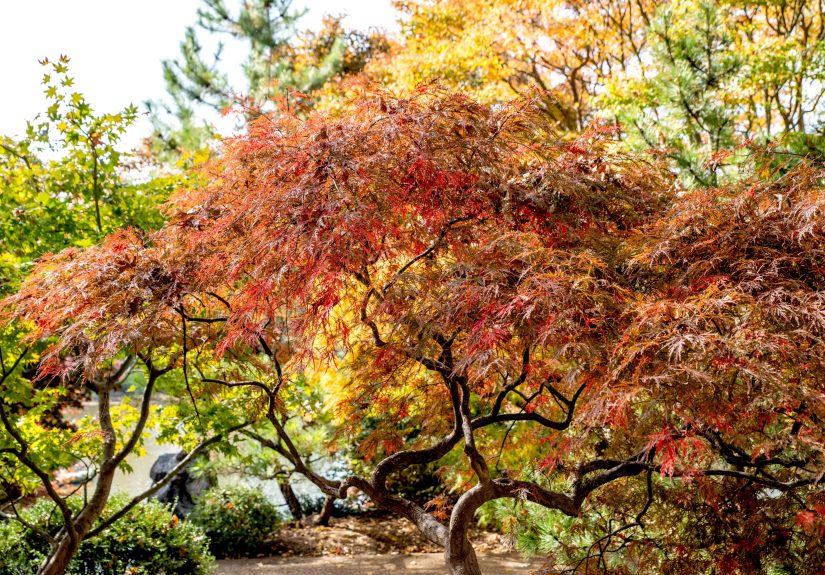
Inaba Shidare is a weeping laceleaf Japanese maple that forms an upright, rounded crown
with cascading branches. It’s slow-growing and stays friendly-sized for most landscapes. Expect
roughly 4–6 feet tall in about 10 years, eventually maturing around
6–10 feet tall with a wider spread (often 8–15 feet depending on
site conditions and training). The silhouette is part umbrella, part waterfalllike a living garden
sculpture.
Foliage color and seasonal show
The leaves are deeply dissected (that “lace” look) and typically emerge deep purple-red in spring,
hold purple-red tones through summer, and then turn brighter red in fall. In other words: it’s not just
a “fall color” treeit’s a full-season performer when grown in the right spot.
Best Climate and Light for Inaba Shidare Japanese Maple
USDA hardiness zones
Inaba Shidare is commonly grown in USDA Zones 5–9. In colder areas, late frosts and
winter winds matter more. In hotter areas, afternoon sun and heat stress become the big storyline.
Sun vs. shade: the “Goldilocks” rule
The sweet spot is usually morning sun + afternoon shade (or bright dappled shade).
In cooler climates, it can handle more sun. In warm or intense-sun regions, filtered light
helps prevent leaf scorch and keeps the foliage looking lush instead of toasted.
- Cooler climates: More sun is often fine, especially with consistent moisture.
- Hotter climates: Give afternoon shade; avoid reflected heat from pavement and walls.
- Windy sites: Choose a protected location (wind + sun is the crisp-leaf combo meal).
Soil Requirements: Drainage First, Richness Second
The ideal soil mix
Inaba Shidare prefers moist, organically rich, slightly acidic, well-drained soil.
Think “forest edge” conditions: humus, leaf mold, compost, and soil that drains well but doesn’t dry
out instantly.
Drainage is non-negotiable
Japanese maples dislike “wet feet.” If water sits around the roots, the tree can slide into stress and
root rot territory. If you have heavy clay, plant slightly elevated, amend thoughtfully, and focus on
improving drainage rather than turning the planting hole into a water-holding bowl.
Soil pH matters more than people expect
Higher pH soils can cause chlorosis (yellowing leaves due to reduced chlorophyll).
If your area tends alkaline, a soil test is worth it. Often, building organic matter and using mulch
helps moderate conditions over time.
How to Plant Inaba Shidare (Step-by-Step)
When to plant
Plant when the ground isn’t frozen. Many gardeners prefer spring because it gives roots
time to establish before winter. In mild climates, fall planting can also work well (cool soil, less heat
stress).
Pick the right location (your future self will thank you)
- Bright shade or morning sun/afternoon shade
- Protection from strong winds
- Avoid heat traps: south-facing brick walls, blacktop driveways, tight corners that radiate heat
- Room to spread: plan for width, not just height
Planting steps
- Dig a wide hole (about twice the width of the root ball) and only as deep as the root ball.
- Check for circling roots in container plants. If roots are wrapped tightly, gently loosen
or make careful corrective cuts so roots grow outward instead of strangling the tree later. - Set the tree so the top of the root ball sits level with (or slightly above) the surrounding soil.
- Backfill with the native soil you dug out; mix in compost lightly if your soil is poor, but avoid over-amending.
- Water deeply to settle soil and remove air pockets.
- Mulch with 2–4 inches of organic mulch, keeping it a few inches away from the trunk
(mulch volcanoes are not a love language).
Watering: The #1 Factor Behind “Happy Leaves”
Newly planted trees (first 1–2 years)
Consistent moisture is crucial while roots establish. Water deeply, then let the top inch or so of soil
begin to dry before watering again. The goal is even moisture, not swamp conditions.
Established trees
Once established, Japanese maples can handle short dry spells better, but Inaba Shidare still performs
best with steady moistureespecially during heat waves. Drought stress often shows up as browning
leaf edges, crispy tips, and early leaf drop.
A practical watering example
If you’re in a hot week with no rain, an established tree might need a deep soak about once a week (soil
type and sun exposure change this a lot). A newly planted tree may need deep watering multiple times
per week during extreme heat. Always adjust to your conditions: sandy soils dry faster; clay holds water longer.
Mulching and Root Care: Keep It Cool, Keep It Calm
Mulch is basically a Japanese maple’s favorite accessory. It helps retain soil moisture, keeps roots
cooler in summer, and protects shallow roots from temperature swings. A 2–4 inch layer is typically
helpful. Replenish as it breaks down, but keep mulch pulled back from direct trunk contact to reduce rot risk.
Fertilizing Inaba Shidare: Less Is More
Do you need fertilizer at all?
If the soil is reasonably healthy and you top-dress with compost, you may not need fertilizer.
Japanese maples aren’t heavy feeders, and pushing too much growth can reduce leaf quality and increase
stress.
If you do fertilize, do it gently
- When: Spring is usually the best time.
- What: A slow-release fertilizer is typically preferred.
- How much: Follow label rates; avoid “because I love you” overfeeding.
If growth is extremely slow or leaves look persistently pale, a soil test is the smart move. It’s cheaper
than buying random products and hoping the tree “gets the hint.”
Pruning and Training: Keep the Waterfall Shape (Without the Drama)
Do you have to prune?
Not much. Inaba Shidare is naturally graceful, and heavy pruning can ruin its form. Most pruning is
about removing dead, damaged, or crossing branches and improving airflow.
When to prune
Many experts recommend pruning during dormancy (late fall through winter) when structure is visible.
Maples can “bleed” sap if pruned in late winter/early spring; it’s usually not fatal, but it can be messy.
Light touch-ups can also be done after leaf-out, depending on your goals and climate.
How to prune without regrets
- Use clean, sharp tools.
- Remove deadwood first.
- Cut out branches that rub or cross.
- Step back oftenyour eyes are the best measuring tape.
- Avoid removing a huge portion of the canopy in one session.
Growing Inaba Shidare Japanese Maple in Containers
Yes, it can be done (and it looks amazing)
Inaba Shidare can do very well in a large container, which is great for patios, courtyards, and small
gardens. The tradeoff: containers dry out faster and roots are more exposed to temperature extremes.
Container tips that matter
- Choose a big pot with drainage holesbigger soil volume buffers heat and moisture swings.
- Use quality potting mix with added compost and drainage-friendly components.
- Water more often than in-ground trees, especially in summer.
- Protect in winter in very cold climates (insulate the pot, move to a sheltered spot, or use wind protection).
Seasonal Care Calendar
Spring
- Watch for late frosts (new foliage can be sensitive).
- Refresh mulch and check soil moisture.
- If fertilizing, apply slow-release in spring.
Summer
- Prioritize deep, consistent watering during heat.
- Provide afternoon shade in hot climates (shade cloth can be a lifesaver for young trees).
- Check for pests (aphids, scale, mites) and treat early if needed.
Fall
- Enjoy the color show (this is the tree’s victory lap).
- Keep watering until the ground coolsdry fall soil can increase winter stress.
- In windy regions, plan protection for winter.
Winter
- In colder climates, protect young trunks from sunscald and freeze-thaw cycles if needed.
- Prune selectively during dormancy if shaping or cleanup is required.
- Avoid salt spray from roads/sidewalks where possible.
Troubleshooting: Brown, Crispy, or Spotty Leaves
Leaf scorch (the most common complaint)
Leaf scorch typically shows up as brown margins and crispy tips. The usual causes are heat, drought,
wind, and intense sunsometimes amplified by reflected heat from pavement or walls. The best “treatment”
is prevention: better siting, steady moisture, mulch, and protection from harsh afternoon sun.
Underwatering vs. overwatering
- Underwatering: crisp leaf edges, curling, dry soil several inches down.
- Overwatering/poor drainage: yellowing, limp growth, sour-smelling soil, slow decline.
Transplant shock
A newly planted Inaba Shidare may look a little grumpy its first seasonespecially during heat spikes.
Keep watering consistent, avoid heavy fertilizing, and focus on root establishment. Many trees improve
dramatically in year two.
Pests and Diseases: What to Watch For
Common pests
- Aphids: can cause leaf curling and sticky residue (honeydew).
- Scale insects: can weaken branches over time; some species are hard to spot because they blend into bark.
- Mites: may cause stippling or bronzing in hot, dry weather.
- Borers/root weevils: less common but possible, especially on stressed trees.
Integrated pest approach (smart and practical)
Start with the basics: reduce stress (water + siting), improve airflow, and monitor regularly. Spot-treat
when necessary and follow label directions. Some products can injure Japanese maples, especially when
applied during heatso timing and temperature matter.
Diseases you’ll hear about
- Verticillium wilt: can cause sudden wilting or dieback on one side/branch; confirmation often requires lab testing.
- Anthracnose/leaf spots: cosmetic spotting that may worsen in wet weather.
- Root rots: usually linked to poor drainage and overwatering.
- Stem cankers: can cause localized dieback and decline.
Landscape Design Ideas for Inaba Shidare
Where it shines
- Specimen tree: center of a small bed, front yard focal point, or near an entry.
- Water features: the cascading form looks fantastic near ponds and streams.
- Japanese-inspired gardens: pair with stone, gravel, lanterns, and mossy textures.
- Containers: patios and courtyards where you can control light and soil.
Companion plant examples
Because Japanese maples have shallow roots and dislike competition, choose companions that behave:
dwarf conifers, azaleas/rhododendrons (in suitable regions), ferns, hostas (where deer pressure is low),
and low, non-invasive groundcovers that won’t bully the root zone.
Quick Care Cheat Sheet
- Light: Morning sun + afternoon shade (especially in hot climates)
- Soil: Moist, well-drained, organic-rich, slightly acidic
- Water: Consistent moisture; deep watering during heat/drought
- Mulch: 2–4 inches, kept away from the trunk
- Fertilizer: Optional; slow-release in spring if needed
- Pruning: Minimal; dormancy cleanup and gentle shaping
- Biggest risk: Heat + wind + dry soil = crispy leaves
Real-World Grower Notes: 500+ Words of Practical Experiences and “What Usually Happens”
Gardeners’ experiences with Inaba Shidare often follow a predictable arc: excitement, a small moment of
panic, and then long-term satisfaction once the tree settles in. Here are the most common “field notes”
people run intoand how to interpret them like someone who totally has their life together (even if you
are currently Googling “why is my maple crunchy” at 1 a.m.).
Experience #1: The tree looks smaller than expected… until it doesn’t
Inaba Shidare is slow-growing, and that can fool you. A young tree might look like a delicate little
fountain for the first few years. Then one day you realize it’s quietly expanded sideways and is now
taking up real space. The lesson: plan for width. Many gardeners say the “weeping skirt” becomes the
star featureespecially when you let it cascade naturally rather than trying to prune it into a tight
ball. If you’re planting near a walkway, you may eventually want to limb up a few low branches for
clearance, but do it gradually so the shape stays elegant.
Experience #2: Leaf scorch scares people, but it’s usually a site/water issue
A common summer surprise is browning leaf edgesespecially after a heat wave or a week of hot wind.
Many growers report that the tree is happiest with consistent moisture and some afternoon protection.
The most useful “experience-based” fix is microclimate tweaking: adding mulch, adjusting irrigation,
and providing temporary shade for young trees during extreme heat. Gardeners near reflective surfaces
(driveways, patios, south-facing walls) often notice scorch first there, and moving a potted tree a few
feetor shading the west sidecan make a dramatic difference.
Experience #3: People overwater when they see brown leaves
The instinct is understandable: brown leaves must mean “more water,” right? Sometimes yes, sometimes no.
Many gardeners learn (the hard way) that poor drainage can mimic drought stress. If a tree is planted in
heavy clay or a low spot, adding more water can worsen root stress. A more reliable approach is checking
moisture a few inches down and observing the pattern: scorching often starts at leaf edges on the sunniest
side; root problems often come with a slower, broader decline. The practical habit that experienced growers
develop is deep watering on a schedule adjusted to weather, rather than daily sprinkling.
Experience #4: Container growing is gorgeousbut it’s higher maintenance
Patio growers love Inaba Shidare because it looks like a living sculpture in a pot. The shared experience,
though, is that containers dry fast. People often report a “perfect” tree in spring that suddenly looks stressed
in the first serious heat of summer. The fix is consistent deep watering and a larger pot than you think you
need. Another widely shared insight: container trees may need winter protection in cold climates because roots
are more exposed than in-ground plantings. Moving the pot into a sheltered corner, insulating it, or protecting
from wind can reduce winter damage.
Experience #5: Minimal pruning gives the best long-term look
Gardeners new to Japanese maples sometimes prune too much too soon, trying to force symmetry. Over time,
many discover that the best-looking Inaba Shidare trees are shaped lightlymostly to remove deadwood or
crossing brancheswhile letting the natural layered structure develop. A common “aha” moment is learning
to prune with pauses: make a cut, step back, and look at the silhouette from multiple angles before doing more.
If you want a more open, airy canopy, selective thinning (not shearing) is the technique people end up loving.
Experience #6: Year two is often the glow-up
A lot of gardeners report that the first year is about survival and root establishment, and the second year is
when the tree starts showing its true color retention and vigor. That’s why experienced growers emphasize
patience: focus on siting, drainage, mulch, and steady moisture rather than trying to “fix” everything with
fertilizer or constant pruning. Once established, Inaba Shidare often becomes one of the easiest “high impact,
low drama” ornamental trees in the yardassuming you don’t plant it in full blast furnace sun and forget to water.
Conclusion
Growing Inaba Shidare Japanese maple is mostly about getting the fundamentals right:
choose the right light (especially afternoon shade in hot areas), prioritize well-drained soil with organic
matter, keep moisture consistent, and mulch to protect shallow roots. Prune lightly and thoughtfully, avoid
over-fertilizing, and treat leaf scorch as a clue to adjust site and wateringnot a reason to panic. Do those
things, and this laceleaf beauty can reward you for years with graceful structure, rich foliage color, and a
fall display that makes other plants look like they didn’t even try.