Table of Contents >> Show >> Hide
- Step 1: Rebuild the Moment (Without Overthinking It)
- Step 2: Check the Places You Already Connected
- Step 3: Search Smarter (Google Like a Detective, Not a Chaos Goblin)
- Step 4: Use the Platform Where You’re Most Likely to Find Them
- Step 5: Ask Mutual Connections (Politely, Briefly, and Without Making It Weird)
- Step 6: Create a “Missed Connection” Message That Respects Privacy
- Step 7: Verify It’s Really Them (Because Scammers Love a Good Love Story)
- Step 8: Reach Out With Good Vibesand Even Better Boundaries
- Real-Life “I Met Them Once” Stories and What Worked (500+ Words)
- Conclusion
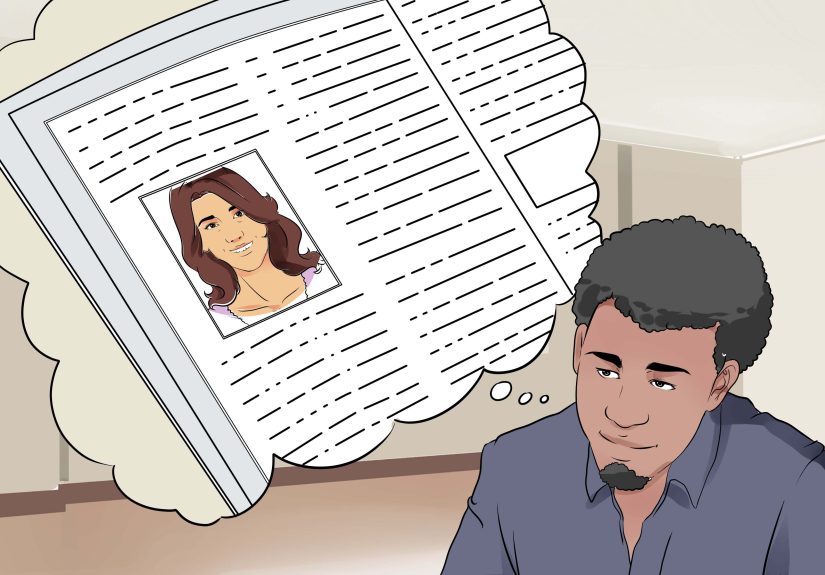
You met someone once. The conversation was easy, the vibe was good, and thenpooflife happened.
No number. No last name. No Instagram handle. Just a memory and a vague mental sticky note that says,
“Find them… somehow.”
The good news: finding a “one-time connection” is often possible. The better news: you can do it without
turning into the main character of a true-crime podcast. This guide walks you through eight practical,
respectful steps to track down someone you met onceusing the information you already have, smart searching,
and a strong commitment to boundaries (yours and theirs).
One important ground rule before we begin: the goal is reconnection, not surveillance.
Use only information they shared with you or posted publicly. Avoid invasive tactics, and if they’re not interested,
you stop. That’s not just politeit’s the whole point of being a decent human.
Step 1: Rebuild the Moment (Without Overthinking It)
Before you search the internet like it owes you answers, start with the best search engine you already have:
your brain (yes, it’s glitchy, but it’s still useful).
Write down every detail you remember
- Where you met (coffee shop, concert, conference, airport gate, friend’s party).
- When you met (day of week, month, season, “right before finals,” “during a holiday trip”).
- Why you were both there (event name, class, meetup group, volunteer shift, work training).
- What you talked about (their job, school, hometown, hobbies, a specific story).
- Any identifiers they volunteered (first name, nickname, company, university, team, favorite band).
Make a “likely spelling” list
“Maya” could be Maia. “John” could be Jon. “Kristen” has about 17 spellings, and they’re all valid and all inconvenient.
Create a short list of realistic variations nowyou’ll use it later.
Pro tip: If you barely remember their name, focus on the context. People are easier to find
when you search for “Jake + salsa class + Austin” than when you search “Jake” and meet the entire population of the Western Hemisphere.
Step 2: Check the Places You Already Connected
Start where the connection actually happenedbecause a lot of “lost” people are hiding in plain sight inside your own apps.
Look through your digital breadcrumbs
- Text/call logs: If you exchanged numbers briefly, search your messages for keywords like the venue name or event.
- Email: Did you share an email for “sending that link”? Search your inbox for the venue, topic, or date.
- DMs: Check message requests and “hidden” inbox folders on social apps.
- Photos: If you took group photos, check timestamps and location tags (if you use them).
Re-open event tools
If you met at an organized event, you may have clues in:
ticketing confirmations, event apps, group chats, or calendar invites.
Even a screenshot of a schedule can help you search the right terms later.
Safety note: Don’t share private screenshots publicly (like attendee lists with full names or emails).
Keep sensitive info in your notes, not on the internet.
Step 3: Search Smarter (Google Like a Detective, Not a Chaos Goblin)
General searches work best when you combine name + context. And when you don’t have a full name,
you can still search using details like the event, city, or organization.
Use simple search operators
Try these patterns (swap the details for your situation):
- Quotes for exact phrases:
"Westside Volunteer Day" "Mia" - Site searches for specific platforms:
site:linkedin.com "Mia" "Denver" "Marketing" - Minus to remove irrelevant results:
"Sam Taylor" "Chicago" -actor -football - OR for spelling variations:
("Jon" OR "John") "surf club" "San Diego"
Search the location + the moment
If you met at a specific venue or event, search for posts from that day or week:
"Bluebird Coffee" open mic April 2025"Downtown 10K" volunteer check-in team lead"Spring Art Walk" "met someone" (your city)
Keep your searches grounded in what’s reasonable. If you find yourself typing
“mysterious person with green jacket near me,” take a breath. The internet is powerful,
but it is not telepathic. Yet.
Step 4: Use the Platform Where You’re Most Likely to Find Them
Different people “live” on different platforms. Your job is to pick the right digital neighborhood.
LinkedIn (best for professional or school-related meetings)
If you met at a conference, networking event, training, or campus-related setting, LinkedIn is your MVP.
Search their first name plus company, school, industry, or city. Filters can narrow results fast.
Instagram (best for creative scenes, events, and mutual tags)
If you met at a concert, art show, festival, restaurant pop-up, or hobby community, Instagram can help.
Search the venue name, event hashtag, or the organizer’s account, then scan tagged posts and attendees.
Facebook (best for local communities and groups)
If you met through a community group, neighborhood event, sports league, or volunteer activity, check Facebook groups and event pages.
Many local communities coordinate there, and people often comment or RSVP.
Boundary check: Only use what’s public or willingly shared. If someone’s profile is private,
treat that as a clear signal they value privacy. Don’t try to “outsmart” it.
Step 5: Ask Mutual Connections (Politely, Briefly, and Without Making It Weird)
The fastest path is often a shared connectionbecause humans are the original social network.
Start with the soft ask
A good message to a mutual friend or organizer is short and non-creepy:
- “Hey! At the book club last Thursday, I chatted with someone named Jordan who mentioned hiking at Red Ridge. Do you happen to know their last name or handle? No worries if not.”
Let them opt out
If the mutual person seems hesitant, drop it. And if they offer to pass along your info instead,
that’s usually the best option. It keeps the other person in control.
If you’re under 18: stick to asking through trusted adults, coaches, teachers, club leaders,
or family friendsespecially if meeting up is a possibility later. Safety first, always.
Step 6: Create a “Missed Connection” Message That Respects Privacy
Sometimes the person isn’t searchableor you don’t have enough to identify them confidently. In that case,
a “missed connection” post can work if you do it thoughtfully.
Where to post (choose low-drama, relevant places)
- A community group tied to the event (official Facebook group, local forum, alumni community).
- An event page comment section (if appropriate and allowed).
- A community classifieds “missed connections” section (use caution and keep details minimal).
How to write it safely
- Do: include the general time/place and a specific conversation detail only they would recognize.
- Don’t: include identifying info like workplace schedules, home neighborhoods, license plates, or full names.
- Do: give them an easy way to respond without revealing their identity publicly (e.g., “message me privately”).
- Don’t: describe their body in detail. It can feel objectifyingand it can attract the wrong attention.
Example:
“To the Alex who recommended the spicy ramen at the Saturday night street marketthank you, my taste buds survived and I owe you a rematch. If this is you, message me with the name of the stall we talked about.”
Step 7: Verify It’s Really Them (Because Scammers Love a Good Love Story)
Reconnecting is exciting. It’s also exactly when people lower their guardand that’s when scammers thrive.
So do a quick reality check before you jump from “Hi!” to “Here’s my entire life story and home address.”
Use a “shared memory” question
Ask something that confirms identity without giving the answer away:
- “What was the book title you mentioned?”
- “Which band were we talking about?”
- “What was the name of the coffee drink you recommended?”
Keep communication on-platform at first
Stick to the platform where you connected until you’re confident it’s the right person.
Be cautious with links, “urgent” requests, or anything that asks for personal info.
Watch for red flags
- They dodge basic verification questions.
- They push you to move to a different app immediately.
- They ask for money, gift cards, or sensitive details.
- They send links and want you to “log in” somewhere.
If any of that pops up, you don’t need to “be nice.” You need to be safe. Block and move on.
Step 8: Reach Out With Good Vibesand Even Better Boundaries
Found a likely match? Great. Now the reconnection message matters. Your goal is to be clear, kind, and low-pressure.
A solid first message formula
- Remind them where you met.
- Reference one small shared detail.
- Invite a response without demanding it.
Example:
“Hey! We talked at the community clean-up last monthI’m the one who kept losing the trash grabber like it was a competitive sport. You mentioned a local hiking trail I’ve been meaning to try. If you’re up for it, I’d love to reconnect. No worries if not!”
Know when to stop
If they don’t respond, send at most one gentle follow-up a week laterthen let it go. If they respond with disinterest,
thank them and stop. Persistence is charming in movies. In real life, it’s how you get blocked.
Meet safely (if it gets that far)
- Meet in a public place.
- Tell a friend (or parent/guardian, especially if you’re a teen) where you’ll be.
- Don’t share personal information too soon.
Reconnection should feel comfortable, not stressful. If it starts feeling stressful, that’s your cue to step back.
Real-Life “I Met Them Once” Stories and What Worked (500+ Words)
Below are illustrative scenarios based on common situations people describenot a promise that every search will end in a movie-worthy reunion.
Think of them like training wheels for your brain: you can borrow the strategy, then ride off into the sunset on your own.
1) The Coffee Shop Conversation That Vanished Into the Foam
Scenario: You chatted with someone in line at a café. You remember their first name (maybe), the drink they ordered (“oat milk latte, extra cinnamon”),
and the fact that they were headed to a museum exhibit.
What worked: Instead of searching the entire internet for “Chris + cinnamon,” you focused on the museum exhibit and the date.
You checked the museum’s event page, searched Instagram for the exhibit hashtag, and looked at tagged posts from that weekend. You didn’t comment on people’s photos like,
“ARE YOU CHRIS???” (excellent choice). You simply found a post mentioning the café nearby and recognized the conversation detail in a caption. A polite DM followed:
“Hi! Random questiondid we talk in line at Bluebird Café about the exhibit? If not, please ignore me and have a great day.”
2) The Conference Buddy Who Had the Best Snack Opinions
Scenario: You met at a professional event, bonded over the suspiciously tiny muffins, and promised to connect “after the keynote.”
Then you both got swept away like tumbleweeds in a networking storm.
What worked: You searched LinkedIn using the conference name plus the city and industry keywords. You also checked the conference speakers’ posts for attendee comments.
When you found someone with the right first name and company, you verified with a friendly message referencing the shared moment:
“We met at the conference and debated whether the muffins counted as food or decor. If that was you, I’d love to connect.”
The humor made it warm, and the detail made it specific. No pressure. No weirdness. Just a clean, human reach-out.
3) The “We Sat Next to Each Other on a Plane” Mystery
Scenario: You talked for two hours in the air, then the seatbelt sign turned off and you both disappeared into different terminals like secret agents.
You remember their destination city and a hobby they mentioned.
What worked: You didn’t post their flight number and seat row on the internet (thank you for not choosing chaos).
Instead, you used a low-detail missed-connection post in a local community space related to the hobby:
“Met someone on a flight to Seattle who recommended a beginner climbing gym and a specific trail. If this was you, message me the trail name.”
It gave the right person a way to confirm, without exposing personal travel details.
4) The Friend-of-a-Friend at a Party
Scenario: You met at a party, talked for 20 minutes, and then got stuck in a kitchen conversation about whether pineapple belongs on pizza.
(It does. I said what I said.)
What worked: You asked the host with a calm, respectful message:
“Hey, I enjoyed talking with your friend Taylor about camping and, apparently, controversial pizza topics. If you’re comfortable, could you pass along my Instagram? Totally okay if not.”
Notice the magic ingredients: permission, low pressure, and letting the host act as a buffer. The host passed your handle along, Taylor followed you,
and the internet remained free of accidental oversharing.
The common thread in all these scenarios isn’t “be a genius investigator.” It’s be specific, be respectful, and be safe.
Use context instead of creeping. Use buffers instead of blasting. And remember: the best reconnections happen when the other person
feels like they still have a choicebecause they do.
Conclusion
Finding someone you met once is part memory game, part research project, and part social grace. Start with what you know, search with context,
use the platforms that fit the setting, and lean on mutual connections when possible. If you post a missed connection, keep it privacy-first.
When you do reach out, keep it kind, clear, and low-pressure.
And if it doesn’t work out? That doesn’t erase the moment. Sometimes the encounter did its job: it reminded you there are good, interesting people out there.
You’re allowed to keep the memoryand keep meeting new peoplewithout forcing the universe to give you a sequel.