Table of Contents >> Show >> Hide
- What “Declutter in 30 Minutes” Really Means (and What It Doesn’t)
- The Pro 30-Minute Declutter Plan (Minute-by-Minute)
- Minute 0–3: Set the Rules (and the Timer)
- Minute 3–8: Trash Sweep (Fast Wins First)
- Minute 8–15: The “Elsewhere Bin” Pass (Stop Roaming)
- Minute 15–22: Quick Sort (Keep / Donate / Toss)
- Minute 22–28: Put Away “Keep” Items (Make Surfaces Look Calm)
- Minute 28–30: Close the Loop (Don’t Leave Loose Ends)
- The Pro Rules That Make 30 Minutes Enough
- Room-by-Room: 30-Minute Declutter Cheat Sheets
- What to Do With “I Don’t Know” Items (Without Derailing)
- Common Mistakes That Make Decluttering Take Forever
- How to Keep It Tidy After Your 30-Minute Reset
- Extra: 5 Real-World 30-Minute Declutter Experiences Pros See All the Time (and What Works)
- Conclusion
If your room currently looks like it hosted a tiny tornadoand then the tornado invited friendsgood news: professional organizers don’t start with “buy 37 matching bins” or “take the day off work.” They start with a timer, a plan, and a ruthless commitment to visible progress.
This is the pro approach to decluttering a room in 30 minutes: quick decisions, simple categories, and a fast reset that makes the space feel calmer right now. Not perfect. Not Pinterest. Just noticeably betterlike the difference between “I can’t find my phone” and “Oh, there it is.”
What “Declutter in 30 Minutes” Really Means (and What It Doesn’t)
Pros define a 30-minute declutter as a focused reset. You’re removing obvious trash, returning out-of-place items, and reducing visual clutter so the room functions again.
It’s not:
- Deep cleaning baseboards
- Reorganizing your entire closet by color season and emotional era
- Sorting sentimental items like old letters (that’s a separate project)
- Building a new storage system from scratch
Think of it like triage: you stabilize the space first. Once the room can breathe, you can do deeper organizing laterif you even need to.
The Pro 30-Minute Declutter Plan (Minute-by-Minute)
Before you start, gather these supplies (don’t overthink it):
- Trash bag (or grocery bag)
- Donate bag/box (paper bag works)
- “Elsewhere” bin (laundry basket, tote, or any bin)
- Timer (phone is finejust don’t open apps)
Minute 0–3: Set the Rules (and the Timer)
- Set a timer for 30 minutes.
- Put your phone on Do Not Disturb. (Yes, even you.)
- Pick one zone to start: the floor, the bed, the desk, or the main surface.
Pro mindset: You are not “organizing.” You are clearing decision traffic so your room stops honking at you.
Minute 3–8: Trash Sweep (Fast Wins First)
Start with what requires the least brainpower:
- Wrappers, receipts, junk mail
- Empty cups, plates, takeout containers
- Obvious recycling
- Anything broken that you’re realistically not fixing this week
Don’t leave the room. If dishes belong in the kitchen, stack them neatly by the door or drop them into the “elsewhere” bin.
Minute 8–15: The “Elsewhere Bin” Pass (Stop Roaming)
This is where most people lose time: they pick up a water bottle, walk to the kitchen, notice the mail, start sorting coupons, andtwo hours laterare Googling “how to organize Tupperware lids.”
A pro trick: anything that belongs in another room goes into the elsewhere bin. Keep moving. Your goal is speed, not scenic detours.
Examples of “elsewhere” items:
- Clothes headed to laundry
- Mugs and dishes
- Random chargers
- Kids’ toys
- Bathroom items stranded in the bedroom (how did a hair tie get here?)
Minute 15–22: Quick Sort (Keep / Donate / Toss)
Now you’ll do fast decision-making. Pros often use a simple 3-category system:
- Keep: used, loved, needed, and belongs here
- Donate: good condition, but not serving your current life
- Toss/Recycle: broken, expired, stained, unusable
Speed questions pros use:
- Would I buy this again today?
- Have I used this recently (or will I soon)?
- Is this here because I need itor because I don’t know where else to put it?
Don’t debate every item like it’s on trial. If you feel stuck, put it in a “maybe” pile only if you can decide later without derailing the session (more on that below).
Minute 22–28: Put Away “Keep” Items (Make Surfaces Look Calm)
Pros prioritize what changes a room fastest: clear surfaces and open floor space.
- Return “keep” items to their home (drawer, shelf, bin).
- If something doesn’t have a home, give it a temporary one (a labeled basket, a tray, or one drawer).
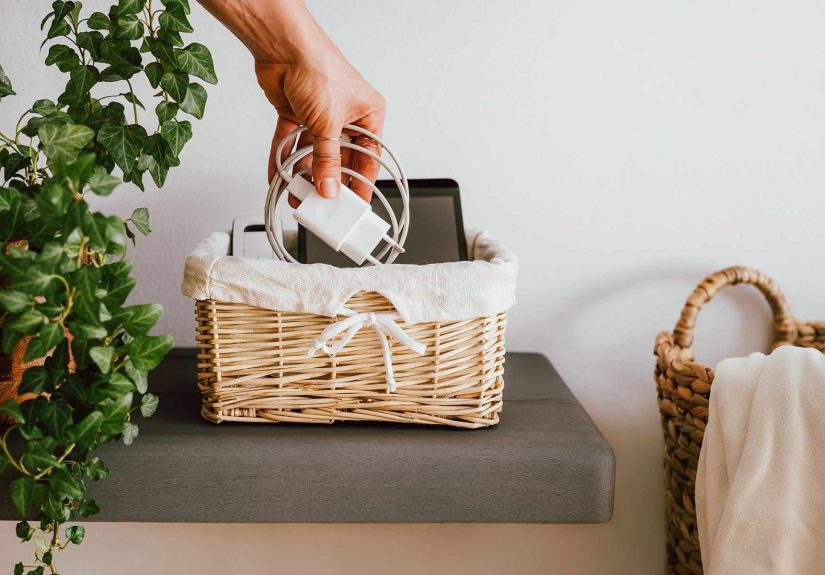
- Group small items (remotes, cords, lip balm) into one container so they stop spreading like glitter.
Pro rule: If you’re stuffing items into random piles “for later,” you’re not declutteringyou’re just relocating chaos.
Minute 28–30: Close the Loop (Don’t Leave Loose Ends)
This is the difference between “nice try” and “wow, it actually worked.”
- Take the trash out (or tie the bag shut).
- Put donations by the door or in your car trunk.
- Carry the “elsewhere” bin to the next roombut don’t start another declutter session.
- Write down 1–3 next steps for later (example: “sort nightstand drawer,” “set up hooks by entry”).
The Pro Rules That Make 30 Minutes Enough
Rule 1: Stay in One Room (No Side Quests)
Professional organizers know momentum is fragile. The moment you leave the room, your brain starts negotiating. Use the elsewhere bin so you can stay locked in.
Rule 2: Work in “Zones,” Not the Whole Room at Once
Pick a visible zone: coffee table, couch area, desk, bed, dresser top, or floor by the door. Finish it. Then move to the next. Completed zones feel like progress, which fuels more progress.
Rule 3: Don’t Buy Containers Mid-Declutter
Pros typically declutter first, then contain what’s left. Buying storage too early often means you’re building fancy parking garages for stuff you don’t even need.
Rule 4: Use “Easy Systems,” Not Perfect Systems
Hooks beat hangers for daily-use items. Open bins beat complicated lids. A tray beats a “pile with aspirations.” The best system is the one you’ll actually use when you’re tired.
Rule 5: Make Decisions, Not Piles
A pile is not a solution. It’s a time capsule of procrastination. Keep/donate/toss decisions are what reduce clutter.
Room-by-Room: 30-Minute Declutter Cheat Sheets
Living Room: The “Company Is Coming” Reset
- Trash sweep first (cups, wrappers, mail)
- Collect “elsewhere” items (toys, shoes, laundry)
- Corral small clutter into one basket (remotes, chargers)
- Clear the coffee table: leave only 1–3 intentional items
- Fold blankets, fluff pillows, and free the floor
Example: If toys are everywhere, set a rule: “All toys into one bin in 3 minutes.” Not sorted. Not curated. Just contained.
Bedroom: The “Floor Is Not a Closet” Plan
- Put laundry in the hamper (or one pile in the corner if you’re between hampers)
- Clear the nightstand surface (cup + cords + random bobby pins)
- Return skincare and makeup to one container
- Hang up 5–10 items maxdon’t start a closet overhaul
- Make the bed (instant visual win)
Pro tip: Keep a small donation bag in your closet. If something doesn’t fit, it goes straight inno dramatic goodbye montage required.
Kitchen: The Countertop Rescue
- Clear counters into categories: dishes, food, papers, “elsewhere”
- Deal with dishes fast (sink or dishwasher)
- Toss expired leftovers or obvious trash
- Return appliances to “homes” (or pick one “appliance zone”)
- Create a mail landing spot (one tray or basket)
Example: If the counter becomes a “stuff shelf,” set one rule: counters are for cooking. Everything else gets a container or a new home.
Bathroom: The Quick Calm Reset
- Toss empties and expired products
- Group daily items into one caddy/tray
- Clear the sink area (wipe if you have time, but declutter first)
- Limit the shower to what you actually use
- Put backups together in one bin (not scattered everywhere)
Home Office: The Paper + Cable Triage
- Trash sweep (old notes, packaging, random pens)
- Gather papers into one stackdon’t “file” during the 30 minutes
- Create 3 paper categories: Action, To File, Recycle
- Corral cords with one tie or one bin
- Clear the desk surface to just the essentials
Pro tip: If paper is your kryptonite, you’re not alone. The fastest fix is a simple “inbox tray” so paper stops migrating across every flat surface.
Entryway: The Clutter Hotspot Fix
- Put shoes into one zone (rack, mat, or bin)
- Hang coats/bags on hooks (hooks are faster than hangers)
- Sort mail into “action” vs “recycle”
- Create a small drop zone for keys (tray or bowl)
What to Do With “I Don’t Know” Items (Without Derailing)
Indecision is the silent time thief. Pros often use a “maybe box” or “clutter purgatory” approach:
- Put uncertain items in one box
- Label it with today’s date
- Store it out of sight
- If you don’t open it in 30–90 days, you have your answer
This keeps the 30-minute session moving while still honoring the fact that some decisions take time.
Common Mistakes That Make Decluttering Take Forever
- Mistake: Deep-cleaning first. Fix: Declutter first, then wipe quickly if time remains.
- Mistake: Starting with sentimental items. Fix: Start with trash and obvious “elsewhere” stuff.
- Mistake: Making “organizing piles.” Fix: Make decisions: keep/donate/toss.
- Mistake: Trying to do the whole room. Fix: Zones create momentum.
- Mistake: Leaving donation bags in the room. Fix: Put them by the door immediately.
How to Keep It Tidy After Your 30-Minute Reset
Pros love short routines because they’re realistic. Try one of these:
- The nightly “closing shift” (5–10 minutes): reset the main surface and floor before bed.
- The daily mini-burst (10–15 minutes): pick one hotspotentryway, kitchen counter, desk.
- The donation bin habit: keep an ongoing donation bag in a closet so decluttering becomes continuous, not dramatic.
The secret isn’t more motivation. It’s fewer places for clutter to landand fewer steps to put things away.
Extra: 5 Real-World 30-Minute Declutter Experiences Pros See All the Time (and What Works)
Professional organizers often talk about how the hardest part of decluttering isn’t the physical effortit’s the mental traffic: decisions, distractions, and the feeling that you have to do it “right.” Here are five common, real-life scenarios where the 30-minute method shines, plus the small tweaks that make it stick.
1) The “Guests Are 20 Minutes Away” Living Room Panic
This is the classic: the couch is covered in unfolded laundry, the coffee table is holding three days of life admin, and there’s a mysterious sock under a chair. In this situation, pros focus on what reads visually: open floor, clear surfaces, and contained clutter. The move that changes everything is the “elsewhere bin” sweeplaundry, kids’ items, and random stuff gets contained in minutes. The second pro trick is a “one-basket rule” for small clutter (remotes, chargers, hair ties). Suddenly the room looks intentional, even if the bin is doing a lot of emotional labor behind the scenes.
2) The Homework Desk Avalanche
In home offices and student desks, clutter multiplies like it’s earning commission: paper stacks, dried-up pens, cords, snack wrappers, and that one notebook you swear you’ll reference again. Pros don’t try to file papers in 30 minutes. They create a simple paper triage: Action (needs attention this week), To File (important), and Recycle (everything else). That alone clears the desk surface fast. The “win” isn’t perfect filingit’s restoring a usable workspace. Once the desk is functional, it’s easier to maintain with a single inbox tray and a quick daily reset.
3) The Kitchen Counter That Became a “Stuff Shelf”
Many kitchens don’t get cluttered because people are messythey get cluttered because the counter becomes the easiest landing zone for everything that doesn’t have a home. Pros tackle this by reducing categories: dishes go to the sink/dishwasher, food goes back to storage, and papers go into one tray. The most effective long-term fix is creating a small, intentional “landing pad” (a tray or basket) for mail and keys away from food prep space. Once there’s a designated spot, the counter stops being the default.
4) The Bedroom Floor That Functions as a Chair
Bedroom clutter often isn’t randomit’s decision avoidance. Clothes that are “not dirty enough to wash but not clean enough to put away” pile up fast. Pros solve this with a two-zone rule: one hamper for laundry, one hook or small bin for “re-wear” items. During a 30-minute declutter, the goal is to clear the floor and simplify the next decision. Even one hook behind a door can prevent the “clothes chair” from becoming a clothes throne.
5) The Kids’ Room Toy Takeover
Pros rarely recommend sorting every toy during a quick declutter. They recommend containment and limits. One fast method is: pick a single bin for building toys, one bin for dolls/action figures, and one bin for art supplies. Anything that doesn’t fit becomes a “choose what stays” moment. The real trick is labeling (words or pictures), so kids can actually put things back without needing a parent to translate. In 30 minutes, the objective is a clear floor and toys that are grouped enough to be usablebecause “organized” doesn’t matter if nobody can find the pieces to play.
Across all these scenarios, the takeaway is the same: the pro method isn’t magic. It’s constraints. A timer. Simple categories. A focus on what changes the room fastest. And a clear finish line, so you stop while you’re winning.
Conclusion
Decluttering a room in 30 minutes is less about speed-cleaning superpowers and more about doing the right actions in the right order: trash first, contain “elsewhere” items, make quick keep/donate/toss decisions, then reset the surfaces and floor. Pros know that small, repeatable sessions beat all-day marathonsbecause the best declutter is the one you’ll actually do again next week.