Table of Contents >> Show >> Hide
- Pick the Right Pumpkin (Because Not All Pumpkins Want to Be Pie)
- Tools That Make Pumpkin Cutting Safer (and Less Dramatic)
- Safety First: Set Up So the Pumpkin Can’t Surprise You
- How to Cut a Pumpkin for Cooking (Step-by-Step)
- Step 1: Trim the stem area (or remove the stem)
- Step 2: Create a stable base
- Step 3: Cut the pumpkin in half
- Step 4: Scoop out seeds and stringy pulp
- Step 5: Decide your end goal (cubes, wedges, or purée)
- Step 6: Cut into wedges
- Step 7: Peel the wedges (the safest peeling method)
- Step 8: Cube, slice, or shave
- If You Want Pumpkin Purée, Roast First (It’s Easier Than Peeling Raw Pumpkin)
- How to Cut a Pumpkin for Carving (Without Visiting Urgent Care)
- Don’t Waste the Seeds: How to Handle Pumpkin Seeds Like a Snack Genius
- Storage and Food Safety: Keep Pumpkin Delicious (Not Suspicious)
- Troubleshooting: Common Pumpkin-Cutting Problems (and Fixes)
- Real-World Pumpkin-Cutting Experiences (What Usually Happens in Actual Kitchens)
- Final Slice: The Pumpkin Doesn’t Win If You Don’t Rush
Pumpkin season is magical: sweaters, cinnamon, and one very round vegetable that can feel like it’s actively
resisting your dinner plans. The good news? Cutting a pumpkin doesn’t have to be a wrestling match (or a
bandage budget line item). With the right pumpkin, the right tools, and a few chef-style habits, you can break
it down cleanlywhether you’re cooking a cozy soup or carving a spooky grin.
This guide covers the safest, most practical ways to cut a pumpkin for cooking and for carving, plus how
to handle seeds, storage, and the little “oh no” moments that happen when a pumpkin decides to roll at the worst
possible time.
Pick the Right Pumpkin (Because Not All Pumpkins Want to Be Pie)
Before you even touch a knife, decide what you’re doing with the pumpkin. For cooking, you’ll usually have a
better time (and better flavor) with smaller “pie” or “sugar” pumpkins. They tend to be firmer, sweeter, and less
watery than the large carving pumpkins that are bred for size and curb appeal.
Quick buying checklist
- For cooking: choose a smaller pumpkin that feels heavy for its size.
- For carving: choose a pumpkin with a flat, stable base and a sturdy stem.
- For either: skip soft spots, deep bruises, cracks, or any sign of mold.
If you’re doing both (decor + dinner), consider two pumpkins: one built like a billboard for carving, and one built
like dinner for cooking. Your taste buds will thank you, and your knife will stop giving you that judgmental look.
Tools That Make Pumpkin Cutting Safer (and Less Dramatic)
Cutting pumpkin is easier when the tools do the work instead of your wrists. Here’s what helps the most:
- A stable cutting board (big enough that the pumpkin isn’t teetering on the edge).
- A damp towel or non-slip mat under the board to keep it from sliding.
- A sharp, sturdy chef’s knife (a dull knife is more likely to slip).
- A serrated knife (optional, but helpful for thick skins or starting a cut).
- A heavy spoon or ice cream scoop to remove seeds and stringy pulp.
- A Y-peeler for peeling wedges cleanly.
- Kitchen towel or cut-resistant glove (especially if you’re new to handling hard squash).
For carving, use a pumpkin carving kit (small saws and pokers) instead of a big kitchen knife. It’s not just
about precisionthose kits encourage smaller, controlled motions.
Safety First: Set Up So the Pumpkin Can’t Surprise You
1) Wash the outside (yes, even if you’re “not eating the skin”)
Pumpkins grow on the ground, and their rinds can carry dirt and microbes. When a knife cuts through the rind,
it can drag surface gunk into the flesh. Rinse under cool running water and scrub the rindno soap, no bleach,
no “mystery produce potion.” Dry it well so it isn’t slippery.
2) Make it stable before you cut
A rolling pumpkin is a pumpkin plotting your downfall. If the pumpkin wobbles, slice a thin “landing pad” off the
bottom to create a flat, stable base. Cut just enough to stop the rockingthink “tiny pancake,” not “half the pumpkin.”
3) Cut away from your hand, not toward it
Keep your non-knife hand out of the blade’s path. Use slow, controlled pressure, and reposition the pumpkin instead
of forcing awkward angles. If you feel like you need to “power through,” pause and reset.
4) Optional: soften the pumpkin slightly
If the pumpkin is very hard, a short microwave burst can take the edge off (especially for cooking pumpkins).
Pierce the rind a few times, microwave briefly, then let it rest so heat and steam settle down. The goal is a
slightly more cooperative rindnot a cooked pumpkin grenade. Always handle with a towel and watch for steam when
you cut into it.
How to Cut a Pumpkin for Cooking (Step-by-Step)
This is the classic “breakdown” method that sets you up for cubes, wedges, roasting, soups, or purée.
Read through once before you startpumpkins reward a plan.
Step 1: Trim the stem area (or remove the stem)
Place the pumpkin on its side. If the stem is tall or awkward, trim around it to create a flatter surface you can
cut through. Don’t aim your knife directly at the thickest part of the stem like it owes you moneywork around it.
Step 2: Create a stable base
If your pumpkin rolls, slice a thin piece off the bottom. Then set the pumpkin upright on that flat base.
Stability is the entire game.
Step 3: Cut the pumpkin in half
Start at the top and cut straight down through the center. If the rind is thick, make a shallow cut to “score”
a line first, then deepen it with repeated, controlled strokes. If you’re using a serrated knife to start, switch
to a chef’s knife once the cut is established.
When you reach resistance, don’t twist wildlyrock the knife gently or pull it out and continue from another angle.
If you can’t finish the cut in one go, rotate the pumpkin and cut from the opposite side to meet your first line.
Step 4: Scoop out seeds and stringy pulp
Use a sturdy spoon or ice cream scoop to scrape out the seeds and the fibrous “strings.” Save the seeds if you want
to roast them (and you dofuture you will want crunchy snacks).
Step 5: Decide your end goal (cubes, wedges, or purée)
- For roasting cubes: cut halves into wedges, peel, then cube.
- For soup: cubes roast faster and blend smoother, but wedges work too.
- For purée: skip peeling nowroast halves first and scoop the flesh out later.
Step 6: Cut into wedges
Lay each half cut-side down (flat side down is safer and more stable). Slice into thick wedgesusually 1 to 2 inches wide,
depending on the size of your pumpkin and what you’re cooking.
Step 7: Peel the wedges (the safest peeling method)
Peeling a whole pumpkin is… ambitious. Peeling wedges is smarter.
With each wedge flat on the board, use a Y-peeler to remove the skin. If the skin is too tough, use a paring knife:
keep the wedge flat, and shave the skin off in thin strips while your fingers stay above the blade line.
Step 8: Cube, slice, or shave
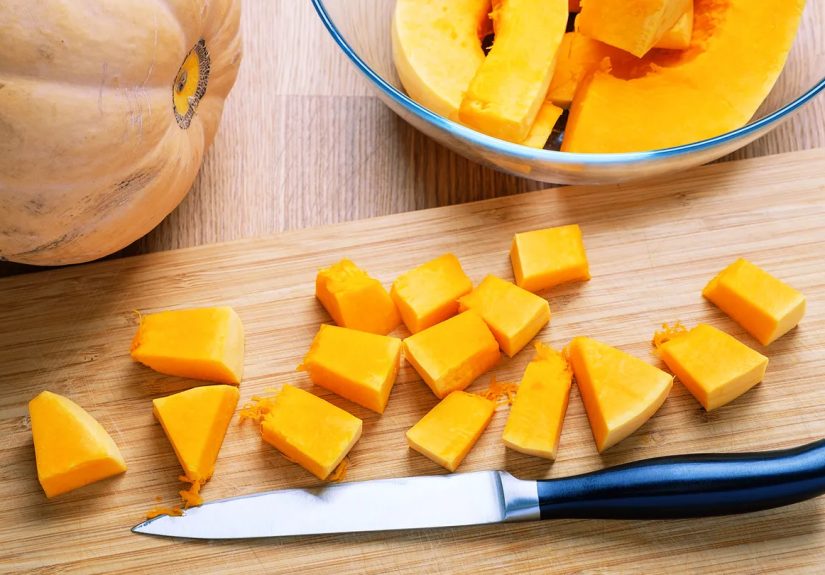
- Cubes: great for roasting, curries, stews, and sheet-pan dinners.
- Thin slices: ideal for gratins or quick sautéing.
- Shaved ribbons: use a peeler for quick salads (best with younger, tender cooking pumpkins).
Example: If you’re roasting for salads or grain bowls, aim for 1-inch cubes so they brown on the outside and turn
tender inside without taking all evening. Toss with oil, salt, and spices, then roast until easily pierced.
If You Want Pumpkin Purée, Roast First (It’s Easier Than Peeling Raw Pumpkin)
Homemade pumpkin purée is basically the “work smarter, not harder” option. Instead of peeling raw pumpkin, roast the halves and
scoop out the soft flesh. This method is popular for pies, muffins, pancakes, soupsanything that wants that cozy pumpkin flavor.
Purée method (simple version)
- Cut pumpkin in half and scoop out seeds.
- Place halves on a baking sheet (many cooks roast cut-side down for even softening).
- Roast until the flesh is fork-tender.
- Cool slightly, scoop flesh from the skin, then blend until smooth.
One practical note: homemade purée can be wetter than canned. If you’re baking and your batter seems loose,
you can strain the purée or cook it down gently to evaporate excess water.
How to Cut a Pumpkin for Carving (Without Visiting Urgent Care)
Carving is fun. Carving while holding a slippery pumpkin in your lap is… a Halloween horror story.
Set up at a table, stabilize the pumpkin, and keep your hands out of the blade’s path.
Safer carving approach
- Consider cutting a hole in the bottom instead of the top. It reduces awkward angles and makes lighting easier.
- If you cut a lid, cut at an angle so it rests back in place instead of dropping inside as the pumpkin dries.
- Use small tools and small strokes. Controlled cuts beat force every time.
- Never carve toward your hand. Reposition the pumpkin so the cutting motion moves away from your fingers.
Keep it cleaner (and longer-lasting)
Before carving, clean the pumpkin’s exterior and consider cleaning/sterilizing toolsespecially if you’re carving multiple pumpkins.
The cleaner the process, the better your odds that your jack-o’-lantern lasts more than a weekend.
Don’t Waste the Seeds: How to Handle Pumpkin Seeds Like a Snack Genius
Pumpkin seeds are the best “bonus item” in the produce aisle. After scooping:
- Separate seeds from stringy pulp (some pulp will clingno big deal).
- Rinse, then pat dry.
- Toss with a little oil and salt (and any seasoning you love).
- Roast until crisp, stirring once or twice.
Want extra crunch? Drying the seeds a bit more before roasting helps. Want extra flavor? Add spices after roasting so
they don’t burn. Either way, your pumpkin just became two recipes.
Storage and Food Safety: Keep Pumpkin Delicious (Not Suspicious)
Whole pumpkins
Whole pumpkins store best in a cool, dry spot with good ventilation. Many extension programs recommend around
50–55°F and moderate humidity. Avoid storing pumpkins near apples or pears because ethylene gas can shorten storage life.
Cut pumpkin and cooked pumpkin
Once you cut pumpkin, treat it like a perishable food: refrigerate promptly. For homemade pumpkin purée (and similar cooked pumpkin),
a smart, conservative plan is to use it within about 3–4 days, or freeze for longer storage.
Freeze like a pro
- Cubes: freeze in portions for soups and roasting later.
- Purée: freeze flat in bags for easy thawing (label with date and amount).
- Seeds: store roasted seeds airtight once fully cooled.
If anything develops off odors, visible mold, or a slimy texture, don’t “brave it.” Pumpkins are not a place to practice optimism.
Troubleshooting: Common Pumpkin-Cutting Problems (and Fixes)
“My knife keeps getting stuck.”
Pull the knife out carefully and continue with shorter strokes. Rotate the pumpkin and cut from the opposite side.
If you’re forcing it, you’re increasing slip riskslow down and reset.
“The pumpkin won’t stop rolling.”
Make a thin flat base, and secure your cutting board with a damp towel underneath.
Stable pumpkin + stable board = fewer surprises.
“The skin is too hard to peel.”
Peel wedges instead of whole pumpkin. Or roast halves and scoop the flesh for puréeno peeling needed.
“My pumpkin is watery.”
That’s common with large carving pumpkins. If you must cook it, roast to drive off moisture and consider draining or cooking down
the purée before baking.
Real-World Pumpkin-Cutting Experiences (What Usually Happens in Actual Kitchens)
If pumpkin cutting looked effortless on the internet, it’s because the messy parts got edited out. In real kitchens, the most common
“experience” is discovering that pumpkins don’t behave like onions. They’re round, hard, and convinced they should still be growing
on a vine somewhere. The biggest lesson home cooks share is this: the setup matters more than brute strength. Once you anchor the
cutting board, dry the pumpkin, and give it a flat base, everything gets calmerlike the pumpkin suddenly realized you’re in charge.
Another classic scenario: someone tries to peel a whole pumpkin like it’s a potato. Ten minutes later, they’ve invented new words,
the pumpkin is still wearing most of its rind, and the peeler is begging for retirement. The “aha” moment is switching to wedges:
cut first, peel second. When a wedge lies flat, the peeling motion becomes controlled and predictable. It feels less like a contest
and more like prep. That’s usually when people start saying things like, “Oh… this is actually doable,” which is the highest honor a
pumpkin can receive.
The microwave trick also shows up in a lot of pumpkin success storiesespecially when someone’s working with a particularly stubborn
cooking pumpkin. A short warm-up can make the rind slightly less rigid, but the real win is confidence: when the first cut starts
smoothly, people stop rushing. And rushing is where slips happen. The best “experienced cook” habit isn’t fancy knife workit’s
patience. Small strokes. Repositioning. Taking a breath. Treating the pumpkin like a project, not an emergency.
Carving nights have their own recurring plot. Someone grabs a big kitchen knife because “it’s sharper,” and then everyone spends the
evening saying, “Careful!” every 12 seconds. The smoother nights tend to involve carving tools, a table-height setup, and a plan:
draw the face first, cut with small strokes, and keep hands out of the line of fire. People also learn quickly that cutting a hole in
the bottom is a game-changerit’s easier to scoop, easier to light, and you’re not constantly wrestling the stem.
And then there’s the seed momentwhen someone finally roasts the seeds and realizes they’ve been throwing away the best part for years.
The “experience” here is usually delight mixed with disbelief: crunchy, salty, snackable goodness that costs nothing extra. Many cooks
start saving seeds every time, experimenting with seasonings (smoked paprika, cinnamon sugar, chili-lime), and suddenly pumpkin becomes
less of a one-hit seasonal wonder and more of a repeat customer.
The common thread across these real-life pumpkin encounters is simple: the safest cooks aren’t the strongest; they’re the most
methodical. They stabilize, dry, cut in stages, and choose the method that fits the end goal (wedges for cubes, roast halves for purée,
carving tools for jack-o’-lanterns). Once you cut pumpkin with that mindset, it stops being intimidating and starts being… kind of fun.
Like solving a puzzle you can eat afterward.
Final Slice: The Pumpkin Doesn’t Win If You Don’t Rush
Cutting a pumpkin is a skill, not a strength test. Choose the right pumpkin for your goal, stabilize it, use sharp tools, and cut in
stages. Whether you’re roasting cubes for dinner, blending silky purée for baking, or carving a masterpiece that scares the neighbors’
teenagers, the best technique is the same: slow, steady, and safely away from your fingers.