Table of Contents >> Show >> Hide
- Before You Start: Identify Your Grate Type (This Changes Everything)
- Quick Safety & Setup Checklist
- The Grime Scale: Pick Your Method Faster
- Method 1: Hot Soapy Water + Gentle Scrub (The Weekly Reset)
- Method 2: Baking Soda Paste (The “Gentle Grit” Spot Cleaner)
- Method 3: Degreasing Soak (For Coated Grates or Well-Seasoned Cast Iron)
- Method 4: Ammonia Fume Method (The “No-Scrub” Heavy-Duty Rescue)
- Method 5: Dishwasher (Only If Your Manual Says It’s Allowed)
- How to Prevent Rust (And Keep Grates Looking Black)
- Common Mistakes That Make Cleaning Harder
- FAQ: Cast Iron Stove Grates Cleaning Questions
- Conclusion: Clean Grates, Happier Kitchen (And Less Smoke Drama)
- Real-Life Lessons from the Stove-Grate Trenches (Experience & Stories)
Cast iron stove grates are the “bouncers” of your kitchen: tough, reliable, and always catching the mess when things get rowdy.
The downside? They also collect baked-on grease like it’s a hobby.
The good news: you don’t need witchcraft, a pressure washer, or a dramatic monologue to get them clean.
You just need the right method for the level of grime you’re dealing withplus a few habits that keep rust away.
Below are five practical, real-world ways to clean cast iron stove grates (from “weekly reset” to “what happened here?”),
with clear steps, safety notes, and a couple of tricks to make them look black and beautiful again.
Before You Start: Identify Your Grate Type (This Changes Everything)
“Cast iron” stove grates usually fall into two camps:
uncoated cast iron (matte, slightly rough) or coated cast iron (often enamel/porcelain-coated, smoother and glossier).
The cleaning rulebook depends on which one you have.
- Uncoated cast iron: Avoid long soaks. Water is not your friend, rust is not your roommate.
- Coated/enamel cast iron: You can usually soak longer and scrub a little harder (still avoid metal tools that scratch).
- Dishwasher-safe cast iron grates: Some brands/models allow it. Some absolutely don’t. Your owner’s manual is the final boss here.
If you’re unsure, look for a glossy finish (coated) vs. a more raw, textured finish (uncoated).
When in doubt, choose the gentler method first.
Quick Safety & Setup Checklist
- Turn off all burners and let the grates cool completely.
- Work in a well-ventilated areaespecially if using ammonia.
- Never mix ammonia with bleach (or anything “mystery-cleaner” that might contain bleach).
- Use gloves if you’re dealing with strong cleaners, heavy grease, or hot water.
- Plan a drying station: clean towels plus (optionally) a warm oven or stovetop burner for quick moisture removal.
The Grime Scale: Pick Your Method Faster
Not every mess deserves the “overnight chemical spa treatment.” Use this quick guide:
- Light grime / weekly maintenance: Method 1
- Stuck-on spots and greasy corners: Method 2
- Overall grease film and dullness: Method 3
- Thick, baked-on, blackened mystery buildup: Method 4
- You want the easiest option (and your manual allows it): Method 5
Method 1: Hot Soapy Water + Gentle Scrub (The Weekly Reset)
Best for
Routine cleaning, light grease, and “I cook a lot but I’m not running a barbecue pit in here.”
What you’ll need
- Hot water
- Mild dish soap
- Nylon scrub brush or non-scratch sponge
- Old toothbrush (optional, for corners)
- Clean towels
Steps
- Remove grates and shake off loose crumbs into the trash (congrats, you just prevented “crunchy sponge syndrome”).
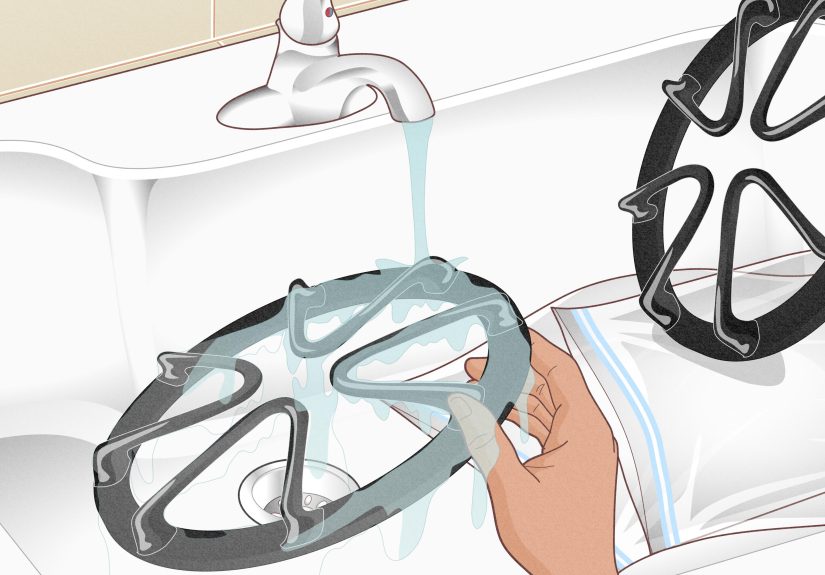
- Rinse with hot water to soften surface grease. Add a small amount of dish soap.
- Scrub with a nylon brush/sponge. Focus on the underside and the “bridge” bars where spills burn on.
- Rinse thoroughly with hot water.
-
Dry immediately with towels. If your grates are uncoated cast iron, consider warming them in a low oven
(or over a burner on low) for a few minutes to chase off hidden moisture.
Make it work harder
- If you hit a stubborn patch, switch to Method 2 for spot treatment instead of scrubbing until your arm files for PTO.
- For uncoated cast iron, finish with a whisper-thin wipe of neutral oil to discourage rust (details in the “Prevent Rust” section).
Method 2: Baking Soda Paste (The “Gentle Grit” Spot Cleaner)
Best for
Stuck-on residue, grease patches, and the crusty bits that laugh at soap.
What you’ll need
- Baking soda
- Water
- Nylon brush or non-scratch sponge
- Damp cloth for wiping
Steps
-
Mix a thick paste: about 3 parts baking soda to 1 part water.
You want “spreadable frosting,” not “watery soup.” - Coat the dirty areas generously. Get into grooves and corners.
- Let it sit for 20–30 minutes.
- Scrub with a nylon brush. Add a tiny splash of water if the paste dries too hard.
- Rinse thoroughly and dry completely.
Why it works
Baking soda is mildly abrasive and helps lift grime without the “sandpaper situation” that can damage finishes.
It’s a great middle ground: stronger than soap alone, gentler than heavy-duty chemical cleaners.
Funny-but-true warning
Don’t go full Wolverine with a metal scouring pad. Cast iron is tough, but coatings and finishes are not immortal.
Also, your knuckles deserve better.
Method 3: Degreasing Soak (For Coated Grates or Well-Seasoned Cast Iron)
Best for
A layer of greasy film across the whole grate, moderate messes, and the “everything looks slightly brown” vibe.
This is especially useful for enamel-coated cast iron grates.
What you’ll need
- Hot water
- Degreasing dish soap (or a mild kitchen degreaser)
- Large sink, tub, or a sturdy plastic bin
- Nylon brush or non-scratch pad
- Towels
Steps
- Fill a sink or bin with hot water and a squirt of degreasing dish soap.
-
Add grates and soak for 15–20 minutes.
(If your grates are uncoated cast iron, keep the soak shortor skip soaking and use Method 1 + Method 2.) - Scrub with a nylon brush. Use a toothbrush for corners and feet.
- Rinse well and dry completely.
Upgrade option
If the grease is stubborn, do a quick pass with baking soda paste after soaking (Method 2). The soak softens the gunk,
the paste lifts it. Teamwork makes the grate work.
Method 4: Ammonia Fume Method (The “No-Scrub” Heavy-Duty Rescue)
Best for
Thick baked-on grease, black crust, and that moment you wonder if your stove grates have been quietly training for a coal-mining career.
What you’ll need
- Household ammonia
- Heavy-duty trash bag or large sealable plastic bags (one per grate if possible)
- Gloves
- Outdoor space or very well-ventilated area (garage with door open works)
- Nylon brush or sponge
Steps
- Place each grate in its own large bag (or use a big trash bag for multiple grates).
- Add ammonia: about 1/4 cup is often enough. You’re not soaking themthe fumes do the work.
- Seal the bag tightly and leave it for 3 hours up to overnight.
- Open the bag carefully in fresh air (your nose will thank you). Rinse the grates thoroughly with cool-to-warm water.
- Lightly scrub any remaining residue, then rinse again.
- Dry completely. Finish with a thin oil wipe if your grates are uncoated cast iron.
Safety notes (non-negotiable)
- Never mix ammonia with bleach.
- Don’t inhale fumes. Use ventilation and keep kids/pets away.
- Rinse extremely well before bringing grates back inside.
Why it works
Ammonia fumes break down stubborn grease and baked-on residue with minimal scrubbing.
It’s one of the most effective “hands-off” options when you’ve got serious buildup.
Method 5: Dishwasher (Only If Your Manual Says It’s Allowed)
Best for
The easiest option when your manufacturer explicitly says the grates are dishwasher-safe.
Some brands/models allow dishwasher cleaning for certain cast iron grates, especially if coated or designed for it.
What you’ll need
- Dishwasher
- Towels
- Neutral cooking oil (optional but smart)
Steps
-
Confirm in your owner’s manual that your grates are dishwasher-safe.
If your manual doesn’t say yes, assume it means no. - Remove any rubber feet/bumpers if your grate design includes them (and if your manual recommends removing them).
- Run an aggressive cycle if recommended. Avoid crowding so water can circulate.
- Dry immediately after the cycle finishesdon’t let them air-dry.
- For cast iron: wipe on a very thin layer of oil and warm in the oven briefly if you notice dryness or faint rust spots.
Reality check
Dishwashers are humid, and humidity loves making iron oxidize. That’s why immediate drying (and a tiny oil wipe) matters.
If you’ve ever opened your dishwasher to find “mystery orange freckles,” that’s rust trying to start a new hobby.
How to Prevent Rust (And Keep Grates Looking Black)
Cleaning is half the battle. The other half is not letting water and oxygen throw a rust party on your grates.
Here’s the simplest rust-prevention routine:
- Dry immediately: towels first, then optional low heat for a few minutes.
-
Oil lightly (uncoated cast iron): put a few drops of neutral oil on a paper towel and wipe the grates.
Then buff until they look almost dryno oily puddles. -
Heat briefly: 10 minutes in a warm oven can help set the oil and drive off leftover moisture.
Keep it light; you’re not forging a sword.
If you already have rust: scrub it off with a non-scratch pad (or fine steel wool very gently if needed), wash, dry,
then oil and heat. Rust looks dramatic, but it’s usually fixable.
Common Mistakes That Make Cleaning Harder
- Letting spills “bake in” repeatedly: a quick wipe after cooking saves hours later.
- Using metal tools on coated grates: scratches become grime magnets.
- Soaking uncoated cast iron too long: it’s basically a rust invitation.
- Skipping the dry step: “air-dry” is just “rust later” wearing a trench coat.
- Over-oiling: too much oil can turn sticky and attract more gunk. Thin is the win.
FAQ: Cast Iron Stove Grates Cleaning Questions
Can I use soap on cast iron stove grates?
Yes. Mild dish soap is commonly recommended for cleaning cast iron and cast iron grates.
The key is thorough rinsing and drying afterward.
Can I use vinegar on cast iron grates?
Vinegar can help cut grease and loosen residue, but it’s acidicso avoid long soaks on uncoated cast iron.
If you use it, keep it brief, rinse well, and dry immediately.
How often should I clean my stove grates?
If you cook often, a weekly quick clean prevents heavy buildup. Deep-clean as needed when you see grease layers,
smoke, or stubborn burnt-on spots.
Can I put cast iron grates in the oven’s self-clean cycle?
Only do this if your manufacturer explicitly allows it for your model. Some manuals support oven-based cleaning for certain grates,
while other manufacturers warn against putting grates in a self-clean cycle. When instructions conflict, your stove’s manual wins.
Conclusion: Clean Grates, Happier Kitchen (And Less Smoke Drama)
The best way to clean cast iron stove grates is the one you’ll actually do regularly.
For most people, that’s a simple hot soapy scrub (Method 1), baking soda paste for the stubborn stuff (Method 2),
and the ammonia fume method (Method 4) for the occasional “help” moment.
If your grates are coated, a short degreasing soak (Method 3) makes life easier.
And if your manufacturer says “dishwasher-safe,” Method 5 is basically cheatingin the best way.
Whatever method you choose, the real secret is the finish: dry thoroughly and use a light oil wipe for uncoated cast iron.
That’s how you keep rust away and your grates looking like they belong on a cooking show instead of a crime scene reenactment.
Real-Life Lessons from the Stove-Grate Trenches (Experience & Stories)
The first time I “cleaned” cast iron stove grates, I made the classic mistake: I soaked them like they were ordinary utensils,
walked away, and came back to a surprise cameo from Rust. It wasn’t catastrophic, but it was a memorable lesson:
cast iron doesn’t mind getting wetit minds staying wet.
That’s when I started treating grates like outdoor gear: they can handle weather, but you still dry them and maintain them.
Another hard-earned truth: the underside matters. Most people scrub the top until it’s presentable, then reinstall the grates and call it done.
But the underside is where grease quietly collects, then slowly turns into smoke and burnt smells every time you cook.
Once I started flipping the grates over and giving the bottom bars equal attention, the “why does my kitchen smell like last Tuesday?” problem
practically disappeared.
The baking soda paste became my go-to because it’s forgiving. You can apply it, answer a few emails, get distracted,
wonder why you walked into the kitchen, and still come back to a paste that’s doing useful work.
It’s not magic, but it’s consistently effective for the gummy, half-burnt grease spots that soap alone struggles with.
The trick is giving it time. When people say “baking soda didn’t work,” nine times out of ten they scrubbed immediately and expected miracles.
Let the paste sit and it performs like a responsible adult.
Then there’s the ammonia methodthe one that feels like a cleaning myth until you try it. I resisted it for a while because,
frankly, “seal your stove parts in a bag of fumes overnight” sounds like something you’d hear at a family reunion
right before someone offers you a suspicious homemade remedy. But used carefully (outdoors, sealed, never mixed with bleach),
it’s the closest thing to a “minimal scrubbing” reset for grates with years of baked-on buildup.
The first time I did it, I expected a small improvement. What I got was a rinse-and-wipe finish that made the grates look
like they’d been replaced. That’s the moment you realize: sometimes the easiest method is just the one with the most patience.
One more practical tip from real kitchens: keep a “grate brush” that never touches dishes. A cheap nylon brush dedicated to grates
keeps you from wrecking your sponges on gritty residue and makes quick weekly cleans far more likely to happen.
Pair that habit with a fast dry-and-warm routine (towel dry, then a few minutes of gentle heat),
and you’ll spend less time deep-cleaning and more time cooking without smoke alarms offering unsolicited feedback.
Finally, don’t chase perfection. Grates are hardworking parts, not decorative throw pillows.
Clean enough that grease doesn’t smoke, food doesn’t char onto them, and rust doesn’t start a colony.
If they’re darker in spots after years of use, that’s normal. The goal is a safer, cleaner stovenot a museum exhibit.