Table of Contents >> Show >> Hide
- First things first: What are people actually spending in 2022?
- Can we talk about the “three months’ salary” rule?
- A better way: The 4-step smart engagement ring budget
- Should you talk to your partner about the ring budget?
- How much is too much for an engagement ring?
- Sample budgets: Putting numbers to real situations
- Extra : Real-world experiences and what they teach us
- So… how much should you really spend?
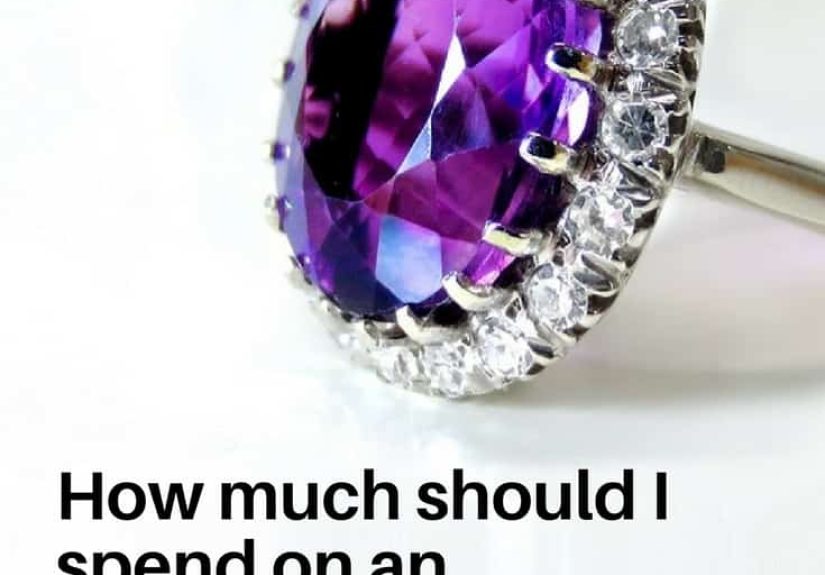
If you’ve ever tried to Google “how much should I spend on an engagement ring,” you’ve probably gone down a rabbit hole so deep you started reconsidering marriage and looking up cat adoption instead. One article says three months’ salary, another says one month, and your friend swears they “got a great deal” that still somehow cost more than your car.
The truth? There’s no magic number. But there are real data, smart rules of thumb, and a few money traps you absolutely want to avoid if you’re proposing in 2022. Let’s break it all down in a way that’s actually helpful (and won’t leave your bank account crying).
First things first: What are people actually spending in 2022?
Let’s start with reality, not marketing myths. Major wedding-industry surveys in the United States report that couples spent an average of about $5,800 on an engagement ring in 2022, with roughly one-third spending between $1,000 and $4,000. In 2021, the average was closer to $6,000, and it’s been inching slightly down since then as couples prioritize other financial goals like housing and debt payoff.
That “average” hides a huge range:
- Some couples spend under $1,000 and are perfectly happy.
- Many land in the $2,000–$6,000 zone.
- A smaller group goes into $10,000+ territory (often higher incomes or serious diamond enthusiasts).
So if you’re not sitting on a secret trust fund, don’t panic. You are not “cheap” because you don’t hit the national average. You’re normal.
Can we talk about the “three months’ salary” rule?
Where that rule actually came from
The legendary “three months’ salary” engagement ring rule did not fall from the sky on stone tablets. It came from a very clever 20th-century advertising campaign by a major diamond company that essentially said:
“If you really love her, you’ll spend at least one, then two, then three months’ salary on a diamond.”
Translation: it’s marketing, not a moral law of the universe.
Why the rule doesn’t work in 2022
In 2022, people’s financial lives look nothing like they did when that slogan was invented:
- Student loans and credit card debt are common.
- Housing costs are high in many cities.
- Inflation has made everyday spending more expensive.
- Many couples share expenses long before marriage.
The idea that a teacher making $50,000 a year “should” drop $12,500 on a ring just to prove commitment is… let’s be gentle and say outdated.
Your partner wants a future with you, not a diamond that comes with a side of financial anxiety. Most money experts agree: tying your ring budget to salary months is arbitrary at best and financially reckless at worst.
A better way: The 4-step smart engagement ring budget
Instead of asking “What am I supposed to spend?” ask “What can I realistically afford without sabotaging our future?” Here’s a simple framework.
Step 1: Check your financial foundation
Before you even look at ring styles, look at your money:
- Emergency fund: Do you have at least 1–3 months of basic expenses saved?
- High-interest debt: Are you carrying big balances on credit cards at 18–25% APR?
- Upcoming goals: Are you trying to move, buy a car, or save for immigration or relocation?
If your emergency savings are close to zero and you’re drowning in high-interest debt, tossing thousands at a ring is like ordering champagne when the kitchen is literally on fire.
In that case, it’s totally reasonable to:
- Choose a more modest ring now.
- Plan a future upgrade for a milestone anniversary.
- Prioritize getting your finances stable first.
Step 2: Pick a total wedding-and-ring budget
In 2022, it’s more useful to think of the engagement ring as part of your bigger “getting married” budget:
- The ring
- The wedding or elopement
- Honeymoon
- Moving costs or furniture if you’re combining homes
For example, if you and your partner can reasonably put aside $15,000 total over the next couple of years, you might choose:
- $4,000–$5,000 for the ring
- $8,000–$9,000 for a small wedding
- $1,000–$3,000 for a modest honeymoon
Or you might flip that and go for a very simple ceremony and a ring that matters a lot to your partner. The point is: the ring shouldn’t crowd out everything else.
Step 3: Set a comfort number, not a “flex if necessary” number
Decide on a number that:
- You can save for within a realistic timeline (say 6–18 months).
- Doesn’t require credit card debt or raiding your emergency fund.
- Still lets you make progress on other goals (debt payoff, retirement, travel, etc.).
For many people in 2022, that ends up somewhere like:
- $1,000–$2,500: tighter budgets, higher expenses, or other bigger priorities.
- $2,500–$5,000: middle-of-the-road, solid quality without going overboard.
- $5,000–$8,000+: higher incomes, fewer debts, or someone who really values fine jewelry.
There’s no wrong bucket as long as it’s sustainable for you.
Step 4: Use ring design to stretch your budget
The secret sauce is that “how much you spend” and “how nice the ring looks” are related… but not in a straight line. Design choices can make a huge impact:
- Lab-grown vs. natural diamonds: Lab-grown diamonds are chemically identical to mined ones but usually cost far less. In 2022, younger buyers were increasingly choosing lab-grown stones so they could afford larger or higher-quality diamonds without blowing their budget.
- Stone shape: Oval, marquise, and pear shapes often look larger than rounds of the same carat weight.
- Carat vs. cut: A well-cut 0.7–0.9 carat diamond can look far brighter than a poorly cut 1.1 carat stone.
- Halo settings: Surrounding a center stone with tiny diamonds creates a bigger visual impact for much less money.
- Alternative stones: Gemstones like sapphires, morganite, or moissanite can be beautiful and significantly cheaper than a comparable diamond.
All of this means your $3,000 ring can absolutely “outshine” someone’s $7,000 ring if you make smart choices.
Should you talk to your partner about the ring budget?
Short answer: In 2022, many couples are saying yes, and it’s not unromanticit’s responsible.
More people are:
- Shopping together for the ring (or at least narrowing down styles).
- Discussing a max budget so no one secretly panics later.
- Deciding to prioritize a home down payment or travel over a huge rock.
You can still keep the proposal timing and exact design a surprise. But having a conversation like:
“Hey, when the time comes, what matters more to you: a fancy ring, a big wedding, or saving for our future?”
…can save you from spending thousands on something your partner didn’t actually want.
How much is too much for an engagement ring?
Here’s a blunt rule: If paying for the ring means you will:
- Carry high-interest credit card debt for years, or
- Delay important bills or minimum payments, or
- Feel serious regret or stress every time you look at it
…you’re probably spending too much.
The ring is supposed to symbolize commitment and stabilitynot the moment you started losing sleep over your credit score. In real life, most partners would rather have a smaller ring and a less stressed fiancé.
Sample budgets: Putting numbers to real situations
Example 1: The “paycheck is already spoken for” couple
You make $55,000 a year, have some student loans, and are paying rising rent. You can squeeze out maybe $200 a month toward a ring without hurting your other goals. Over a year, that’s around $2,400.
In 2022, that’s enough for:
- A lab-grown or smaller natural diamond in a classic solitaire or halo setting.
- A gorgeous moissanite ring that sparkles like crazy.
- A gemstone center stone (like sapphire) with a diamond-accent band.
You’re not “under-spending.” You’re building your future and still giving a meaningful ring.
Example 2: The “solidly stable” couple
You and your partner both work, have minimal high-interest debt, and already have a small emergency fund. You can set aside $400–$500 a month for a year without stress, so your comfort budget lands around $4,800–$6,000.
Now you’re in the average 2022 range, and you can:
- Get a nicely sized lab-grown diamond with excellent cut and clarity.
- Explore designer settings or custom details.
- Choose a natural diamond with strong sparkle in the 0.7–1.0 carat range (depending on quality and setting).
Example 3: The “ring is the big splurge” couple
Maybe you both agree you want a courthouse wedding or elopement and will skip a big reception. You’re okay with allocating more of your marriage budget to the ringsay $8,000 or morebecause your other costs will be low and your income can comfortably handle it.
Also fine! As long as you’re not sacrificing essentials or taking on painful debt, that’s a valid choice too.
Extra : Real-world experiences and what they teach us
Numbers are helpful, but stories are where things really click. Here are some experience-based scenarios (drawn from common patterns you’ll see in real couples’ stories, financial forums, and jeweler anecdotes) that show how different people in 2022 handled the big “How much should I spend?” question.
Experience 1: The “we upgraded later” strategy
Think of a couple in their mid-20slet’s call them Alex and Jordan. In 2022, they were both early in their careers, living in a high-cost city, and juggling student loans. Alex originally felt pressure to spend around $5,000 because “that’s what everyone else seems to do.” After running the numbers, it became clear that $5,000 would mean pausing loan payments and draining their small savings.
Instead, they agreed on a budget around $1,500 for a simple but elegant ring with a smaller center stone and a classic setting. They even chose a design that could easily be upgraded later by swapping the stone or adding a decorative band. Five or ten years down the road, when their incomes are higher and the loans are gone, they plan to celebrate an anniversary with a bigger stone.
What this teaches: You don’t have to buy your “forever ring” on day one. You can start with a meaningful symbol that fits your current reality and evolve it as your life grows.
Experience 2: The “house before diamond” decision
Another couple, Priya and Noah, were both earning solid incomes in 2022, but they had a huge shared goal: buying a home within the next two years. Their original vision was a $7,000–$8,000 ring. After talking to a mortgage broker, they realized that putting an extra $5,000–$7,000 into their down payment instead of the ring would improve their loan options and lower their monthly payment for decades.
They pivoted. Noah chose a lab-grown diamond in a sleek, modern setting for about $3,000. The ring still looked “wow” in every photo, and they hit their home down payment goal faster. When friends asked if they felt like they “settled,” both of them said the same thing: the ring was gorgeous, and having their own place mattered more.
What this teaches: The “right” engagement ring price is whatever aligns with your biggest shared priorities, not what an ad or social media feed suggests.
Experience 3: The “small ring, big meaning” story
Then there’s someone like Miguel, who proposed in 2022 after a tough few years of career changes and family responsibilities. He didn’t have thousands to spare, but he did have his grandmother’s small vintage diamond ring. The stone wasn’t big, the band wasn’t flashy, and to a stranger it wouldn’t look “expensive.”
His partner? She cried as soon as she heard it was his grandmother’s ring. For her, the meaning and history outweighed any carat size. Later, they spent a few hundred dollars resizing and restoring the piece, and now it’s both a family heirloom and a symbol of their own story.
What this teaches: Emotional value can beat market value. A modest ring with a story can be more special than a brand-new rock with no meaning beyond the receipt.
Experience 4: The “we talked about everything” couple
Finally, picture Taylor and Morgan, a couple who took the least dramatic path: they talked through everything openly. In 2022, before any secret shopping happened, they sat down and covered:
- Whether they were okay with lab-grown stones.
- The maximum either of them would feel comfortable spending.
- How quickly they wanted to pay off some lingering credit card balances.
- What kind of wedding or elopement they envisioned.
They agreed on a budget of about $4,000, picked out some ring styles together online, and then Taylor handled the final purchase and the surprise proposal details. The ring fit both their style and their spreadsheet.
What this teaches: Clear communication can turn a stressful “Am I spending enough?” spiral into a joint decision that feels good to both of you.
So… how much should you really spend?
In 2022, a sane answer looks something like this:
- Ignore the “three months’ salary” myth.
- Look honestly at your income, savings, and debt.
- Decide how important the ring is compared with your other goals.
- Pick a number you can reach without high-interest debt.
- Use smart design choices (lab-grown, shape, setting) to get the most beauty per dollar.
Whether that number ends up being $1,000, $3,000, or $10,000, the best engagement ring is the one that fits your partner’s style and your shared future. Your relationship is the real investmentthe ring is just the very shiny receipt.