Table of Contents >> Show >> Hide
- What Is Home Key Art?
- Inspired by Hometalk: The Classic Home Key Art Look
- How to Make Home Key Art Step by Step
- Turning Home Key Art into Functional Key Storage
- Design Ideas and Variations
- Where to Display Your Home Key Art
- Thoughtful Gift Ideas Using Home Key Art
- Common Questions About Home Key Art
- Real-Life Experiences with Home Key Art
- Conclusion
What if the keys from your old apartments and first homes didn’t have to live in a dusty junk drawer forever?
That’s the idea behind home key arta simple, sentimental DIY project popularized on sites like
Hometalk and The DIY Playbook, where everyday house keys become framed art that tells the story of everywhere
you’ve lived.
Instead of another generic print, you end up with a piece that quietly says, “Here’s our journey.” It’s budget-friendly,
beginner-friendly, and very Pinterest-friendly. Let’s walk through what home key art is, how to create your own Hometalk-style
version step by step, and smart ideas for displaying it so your keys are no longer lostor forgotten.
What Is Home Key Art?
Home key art is exactly what it sounds like: you gather the keys from your current and former homes
and display them in a frame or on a plaque as meaningful wall art. The popular Hometalk version features a simple white
frame, a clean background, and a row of keys, each labeled with the street name and the year you lived there. It looks
minimal and modern but carries a ton of emotional weight.
DIY bloggers have run with this idea in all kinds of waysfrom shadow boxes filled with vintage skeleton keys to
specimen-style art where identical house keys are lined up in neat rows. Many makers say they’d kept old keys in a
jar for years, waiting for “something” to do with them, only to discover that framing them was a fast, inexpensive way
to decorate shelves and entryways with personal history instead of random décor.
Why People Love Home Key Art
- It’s incredibly sentimental. Each key represents a chapter: your first apartment, college dorm,
starter home, or the place where you brought home a new baby or pet. - It costs next to nothing. You probably already have the keys. Add an inexpensive frame, some
cardstock or fabric, and a bit of glue, and you’re done. - It’s renter- and beginner-friendly. No power tools required. If you can use hot glue and write
a label, you can make this project. - It fits into almost any décor style. Change the frame, background, or font style and it works
with farmhouse, modern, traditional, or eclectic interiors.
Inspired by Hometalk: The Classic Home Key Art Look
On Hometalk and related DIY blogs, the beloved version of home key art usually starts with a simple white frame and a
thick mat. A few keys are spaced evenly across the mat, and underneath each one the maker handwrites the street name
and the year or “Est.” date. The overall effect is clean and gallery-like, but the story behind it is deeply personal.
Many crafters say they were inspired by this project after realizing they’d kept every old house key from each move.
Instead of tossing them, they turned those once-practical objects into art that sparks conversation every time someone
spots the frame near the front door or on a styled shelf.
What You’ll Need
- Old house or apartment keys (2–6 keys look great in a standard frame)
- A frame with a wide mat or a shallow shadow box
- Cardstock, linen, or scrapbook paper for the backing
- Hot glue gun or strong craft glue
- Pencil first, then archival pen or paint marker for labeling
- Ruler and light pencil marks to keep everything straight
How to Make Home Key Art Step by Step
Step 1: Gather and Curate Your Keys
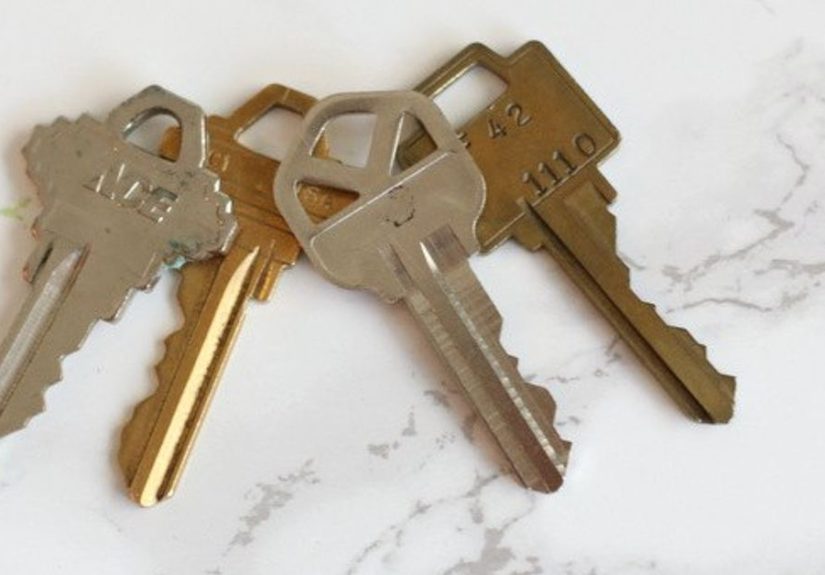
Dig through that bowl, drawer, or box where random keys go to retire. Pull out the keys from homes that mattered to you
your first solo apartment, the place you lived with roommates, the home you bought with a partner, or even a beloved
vacation cottage. If you have more than six or seven, choose the most important ones so your frame doesn’t look crowded.
If you don’t have the original keys anymore, don’t panic. Many hardware stores can make inexpensive blank copies. They
won’t open any doors, but they’ll stand in beautifully as visual placeholders.
Step 2: Choose a Frame and Background
For a look similar to the Hometalk project, use a simple frame with a wide matwhite on white is clean and modern.
A deep mat keeps the keys from pressing against the glass, so you don’t have to upgrade to a big, bulky shadow box.
Want more texture or farmhouse charm? Wrap the backing board in linen, burlap, or a piece of neutral fabric and secure it
with tape or spray adhesive. You can also use a scrap of wallpaper, a paint-chip collage, or even a printed map of the
city where you lived as a subtle background.
Step 3: Plan Your Layout
Lay the keys on the mat or backing before gluing anything. Play with:
- A straight row: All keys lined up horizontally for a minimal, modern look.
- A timeline: Keys arranged left to right from oldest home to newest.
- A cluster: Keys angled toward one another in the center like a little metal bouquet.
Gently mark light pencil guidelines on the backing so your labels and keys stay straight. This tiny step is the
difference between “handmade” and “I eyeballed it and now it’s slightly crooked forever.”
Step 4: Glue the Keys
Use small dots of hot glue or a strong craft adhesive on the back of each key. Press it firmly onto the backing and hold
for a few seconds. Avoid globs of glue near the edges of the keys, which can squeeze out and show when you tilt the frame.
Let the glue set completely before moving on. This is a good time to practice your lettering on a scrap piece of paper.
Step 5: Add Labels and Dates
Under each key, write the street name or neighborhood and the year you moved in or the years you lived therefor example:
- “50th Ave, Wausau — Est. 2010”
- “Locust St., St. Louis — 2011–2013”
- “Indiana Ave, Chicago — Est. 2013”
If you’re nervous about your handwriting, lightly sketch the words in pencil first. You can also ask the friend with
the prettiest penmanship to be your in-house calligrapher. (Pay them in coffee, snacks, or future DIY help.)
Step 6: Assemble and Hang
Pop your finished backing into the frame, secure it, and hold it up to the light. If everything looks straight and the
keys aren’t touching the glass, you’re good to go. Hang your home key art in the entryway, on a built-in shelf, or on a
gallery wall. It also looks great on a console table, leaning casually against the wall.
Turning Home Key Art into Functional Key Storage
If you love the look of framed keys but also desperately need a place to hang your current keys, you can blend the two
ideas. Many DIYers create key holder wall art by attaching small hooks beneath or beside the frame.
That way, your keepsake keys are on display while your everyday keys stay organized and easy to grab.
Simple Ways to Add Storage
-
Hooks under a shelf: Combine your framed key art with a small wall shelf. Mount the art above and
add key hooks beneath the shelf for a compact command center. -
Framed art with hooks: Attach decorative hooks directly to the bottom of a wooden frame, or use a
thrifted sign and screw hooks across the lower edge for a farmhouse-style key rack. -
Mini entry organizer: Pair a small mail slot or basket with your key art and a small dish for coins
or sunglasses. This mirrors the “hooks + surface + catchall + storage” formula many designers recommend for an organized
entryway.
Design Ideas and Variations
Once you’ve made the classic Hometalk-inspired version, it’s easy to riff on the idea. Crafters and home bloggers have
shared dozens of creative twists, from resin key holders and colorful wood racks to specimen art featuring rows of
identical keys. Here are a few variations to try:
1. Specimen-Style Key Grid
Arrange six to twelve keys in a perfect gridthree rows of four, for exampleand mount them on a plain background.
This style feels similar to butterfly specimen art or stamp displays. It works especially well if you have a collection
of old or decorative keys, each slightly different from the next.
2. Vintage Skeleton Key Shadow Box
Love antique style? Hunt for old skeleton keys at flea markets, online marketplaces, or antique shops. Line a shadow box
with linen or burlap and hot glue the keys in a pattern or grid. The aged metal against a textured fabric instantly
adds depth and character to traditional or rustic spaces.
3. Key Art with a Map Background
For a travel-loving household, mount the keys over a map of the city or neighborhood they belong to. Print small map
sections or use an old atlas page, then glue the key over the exact area. It’s a fun way to honor a first job in one
city, a big move across the country, or the hometown you still miss.
4. Colorful Modern Key Art
Spray-paint your old keys in a single bold colorlike black, brass, or even neonor paint each one a different shade
for a playful, pop-art feel. Pair them with a crisp white frame for contrast. This approach looks great in a modern loft,
kids’ space, or creative studio.
Where to Display Your Home Key Art
The entryway is a natural spot for home key art. Designers often say the entry sets the tone for the rest of your home,
and key-themed art feels both symbolic and practical. You can hang your frame:
- Above a small bench or shoe rack
- Next to a row of hooks for coats and bags
- Over a console table with a lamp and catchall dish
- Inside a mudroom, laundry room, or side entrance
If you don’t have a distinct entryway, hang your key art on the wall closest to your main door and treat that area as a
mini landing zone. Add one or two hooks and a small tray for keys, wallets, and earbudssuddenly your once-random wall
becomes a tiny, functional foyer.
Thoughtful Gift Ideas Using Home Key Art
This project isn’t just a sweet idea for your own wallsit also makes a heartfelt gift. A few ideas:
- Housewarming gift: Ask the new homeowners for a spare key (or have one cut) and frame it with their
address and “Est. 2025.” - Wedding or anniversary art: Mount the keys from each partner’s first place together and their new,
shared home, labeled with dates and cities. - Going-away present: For someone moving across the country, frame the key to their old place with a
note: “So you’ll always have a key to home.”
Because the materials are inexpensive, you can create a meaningful, custom gift without blowing your budgetand it
won’t look like a last-minute store run.
Common Questions About Home Key Art
Is it safe to display real house keys?
If you’re nervous about security, you can use old keys that no longer work, have duplicates made with slightly different
cuts, or hang the art in a less visible area (like a bedroom or hall) rather than directly in a street-facing window.
Many homeowners feel comfortable displaying keys once locks have been changed and older keys are no longer active.
What if my keys don’t match?
That’s totally fineand honestly part of the charm. Different shapes and finishes create visual interest. If you want
a more cohesive look, you can spray-paint them all in the same metallic finish so the silhouette, not the color, stands
out.
Can I do this if I rent?
Absolutely. Use removable picture-hanging strips to avoid wall damage, or simply stand the frame on a dresser or shelf.
The point is to tell your story, whether you own, rent, or are still wondering where your forever home will be.
Real-Life Experiences with Home Key Art
People who’ve made home key art often say it sneaks up on them emotionally. At first it feels like just another
craft project. Then you line up the keys, write out each address, and suddenly you’re time-traveling through all the
seasons of your life: the cramped first place with hand-me-down furniture, the tiny city loft, the creaky old rental in
a fun neighborhood, the first house where you started building real traditions.
One common experience is realizing how many memories are attached to each key. That dented brass key might remind you
of lugging groceries up three flights of stairs, late-night pizza runs with roommates, or the first time you brought
home a pet. The next key might represent a promotion, a relationship, or a leap into a new city. When you mount those
keys in a frame and see them every day, they become little anchors of gratitude.
Makers also say home key art is a great icebreaker. Guests notice it immediately and ask about the different cities or
dates. Instead of generic “Where did you get that?” conversations about store-bought art, you end up talking about
the life you’ve actually lived: moves that were scary but worth it, homes you outgrew, and the small victories that
came with each chapter.
Another shared experience: relief at finally doing something with sentimental clutter. Keys are tiny, but a pile of them
can still feel like mental clutter when they’re rattling around in drawers. Once they’re framed, you’ve transformed a
handful of anonymous metal into a curated story. That shiftfrom stuff to storyoften inspires people to tackle other
sentimental items too, like ticket stubs, postcards, or old photos.
From a practical standpoint, people who mix home key art with a functional key holder say it changes their daily routine.
When the place you hang your keys is beautiful and intentional, you’re more likely to actually use it. That means fewer
frantic “Where are my keys?!” moments when you’re already three minutes late. The art becomes a small daily system that
quietly makes your life easier.
Finally, creating home key art can be a surprisingly grounding activity during big life transitions. Making the frame
after a move can help mark the end of one chapter and the start of another. You’re literally putting the past in a
frame and then giving it a place of honor in your new space. It’s a gentle reminder that every door that closed behind
you led you to the one you’re walking through now.
Conclusion
Home key art proves that meaningful décor doesn’t have to be expensive, complicated, or trendy. A handful of old keys,
a simple frame, and a little creativity are enough to create a piece that celebrates your journey from one doorstep to
the next. Whether you copy the classic Hometalk style or invent your own twist, you’ll end up with sentimental wall art
that makes your home feel even more like yours.
So go raid that junk drawer, gather the keys from your story so far, and give them a proper place on the wall. Your past
homes may be behind you, but thanks to home key art, the memoriesand the keysget to stay.