Table of Contents >> Show >> Hide
- The Spit You See Is the Tip of the Iceberg
- The Big Historical Culprit: Chewing Tobacco (and Its Long Shadow)
- The Spitball: When Spit Was Literally a Weapon
- Sunflower Seeds, Gum, and the Snack That Requires Spitting by Design
- Pitchers, Grip, and the Moisture Problem
- Dust, Dehydration, and the Unsexy Science of Dry Mouth
- Ritual, Routine, and the Psychology of “Something to Do”
- Health, Hygiene, and Why the Game Has Been Trying to Change
- So… Is It “Necessary,” or Is It Just Baseball Being Baseball?
- How It Might Look in the Future
- Extra Innings: Experiences Around Baseball’s Spitting Habit
- Conclusion
Baseball is the national pastimehot dogs, seventh-inning stretches, and a constant reminder that gravity works differently in the batter’s box. It’s also the only major sport where a perfectly normal sentence like “He really needs a better spitting routine” can be said with a straight face. If you’ve ever watched a game and wondered why players seem to treat the infield like a canvas for modern saliva art, you’re not imagining things. Baseball spitting is real, it’s frequent, and it has more reasons behind it than “because baseball is weird.”
The short version: a mashup of history (tobacco), mechanics (grip and dryness), snacks (sunflower seeds), psychology (ritual and nerves), and a rulebook that keeps trying to civilize a sport that still wears wool sometimes on purpose. Let’s break it downwithout stepping in anything.
The Spit You See Is the Tip of the Iceberg
Spitting in baseball isn’t one single behavior. It’s a whole ecosystem: a little “clear the mouth,” a little “get rid of sunflower seed salt,” a little “I’m thinking,” and sometimes “this is what my grandpa’s grandpa did and I’m honoring the family tradition.”
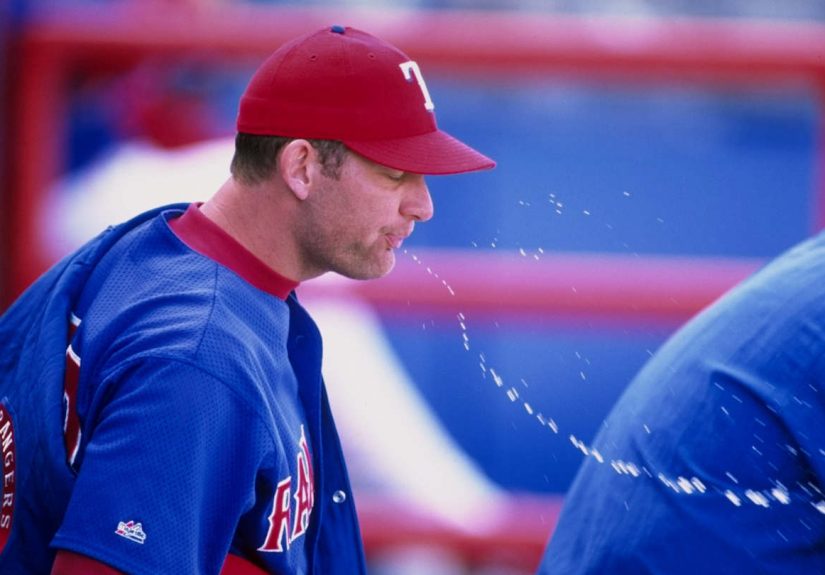
Players spit because their mouths are busy. Chewing creates saliva. Saliva needs somewhere to go. And in a sport that involves long pauses, bright sun, dry air, and constant micro-adjustments, “somewhere to go” often becomes “the ground approximately three feet in front of me.”
But to understand why it got so commonand why it stuckyou have to go back to baseball’s original accessory: the wad-in-the-cheek era.
The Big Historical Culprit: Chewing Tobacco (and Its Long Shadow)
For much of baseball history, chewing tobacco and the game were practically teammates. In the 1800s and early 1900s, smokeless tobacco was widely used in the U.S., and baseball players were no exception. It fit the rhythm of the sport: hands busy, mouth busy, brain trying to stay locked in for hours.
Why tobacco led to so much spitting
- It stimulates saliva. Chewing tobacco (and nicotine) increases salivation. More saliva = more spitting.
- You don’t want to swallow it. “Dip juice” is not a beverage, no matter how confident the dugout looks.
- It became a visible habit. Baseball’s slow pace made these routines easy to noticeand easy to copy.
Over time, the culture became self-reinforcing: rookies saw veterans chewing and spitting; they copied the ritual. And because baseball is deeply traditional, the behavior didn’t vanish just because health science got louder. It adapted.
And yes, spitting used to be “functional”
Early baseball was dusty, gloves were stiff, and equipment wasn’t always the soft, custom-fit luxury it is now. Spit could be used to moisten dry leathergloves, mitts, sometimes even hands. Not glamorous. Not hygienic. Extremely on brand for a sport that used to play in clouds of dirt.
The Spitball: When Spit Was Literally a Weapon
If you want proof that saliva has had an official role in baseball, meet the spitball: a pitch altered with moisture (often saliva) to change how the ball moved. It was a deadball-era trick that could make hitters miserable.
Major League Baseball moved to outlaw the spitball starting in 1920, while allowing a limited number of pitchers who already relied on it to keep throwing it until they retired (the original “grandfather clause,” but stickier). The pitch itself faded, but the association between baseball and spitting? That stayed.
Even if modern players aren’t secretly plotting a return of the wet one, the sport’s history wired spitting into the game’s visual language: baseball looks like spit. (That sentence is disgusting, but historically accurate.)
Sunflower Seeds, Gum, and the Snack That Requires Spitting by Design
As awareness of tobacco’s health risks grew and restrictions increased, players didn’t suddenly decide to sit perfectly still with politely empty mouths. Baseball has too much waiting for that. Instead, the oral habit shifted to something more socially acceptable: sunflower seeds, bubble gum, and other chewable dugout staples.
Why sunflower seeds are basically spitting fuel
- Cracking shells creates debris. You chew, crack, and spit out shellsrepeat for nine innings.
- Salt ramps up thirst. Salt + dry air + talking = more saliva management.
- It keeps hands and mind busy. Baseball’s downtime is real; seeds fill it.
Seeds also have a practical bonus: they can provide calories, fat, and sodiumhandy during long games in the heat. But the main reason they became a dugout icon is simpler: they replaced tobacco as the “I need something to do between pitches” solution.
Chewing gum and candy do the same thing: chew → saliva → spit (or swallow). Some players choose swallow. Many choose… the field, because habits are powerful and baseball is not known for subtlety.
Pitchers, Grip, and the Moisture Problem
Pitching is a precision job performed with fingers that are constantly at war with physics. A baseball is smooth, sweat is slippery, and humidity changes everything. Pitchers need consistent grip to throw safely and effectively.
The classic (gross) method: lick the fingers
For decades, you’d see pitchers lick their fingertips to improve feel. Saliva is quick, available, andunlike a rosin bagbuilt into the human body. That doesn’t mean it’s ideal. It just means it’s convenient.
The legal method: rosin
Rosin bags have been part of the sport for a long time. Under the rules, rosin is permitted for grip, but there are limits: pitchers aren’t supposed to deliberately apply foreign substances to the ball, and rosin isn’t meant to be combined with other materials to create super-sticky tack.
In the last few years, MLB has emphasized enforcement around “sticky stuff,” clarifying that rosin itself is allowed, while other substancesand intentional combinations designed to increase tackinessare not. That’s why you’ll see more visible rosin use, more umpire checks, and (sometimes) less finger-licking.
Bottom line: grip management is a real need. When rosin isn’t used (or isn’t enough), some pitchers fall back on instinctive habitslike saliva. And when your fingers get involved, spitting isn’t far behind.
Dust, Dehydration, and the Unsexy Science of Dry Mouth
Not all spitting is about chewing. Sometimes it’s about environment. Baseball is often played in heat, sun, wind, and low humidity. Players talk, shout, breathe hard, and run in bursts. Dry mouth happens. And when your mouth feels sticky, you do what humans do: you try to get comfortable.
Common (and very human) triggers
- Mouth breathing: Sprint to first, breathe through your mouth, and hello desert throat.
- Nerves: Stress can change saliva production and make your mouth feel weird.
- Salt and snacks: Seeds, gum, sports drinksanything flavored can alter how your mouth feels.
- Dust and dirt: Infield dirt gets everywhere; players constantly manage grit on lips and tongue.
In other sports, you can hide these adjustments because the action never stops. In baseball, the camera is basically a microscope with a scoreboard. Every little mouth movement becomes part of the broadcast experience.
Ritual, Routine, and the Psychology of “Something to Do”
Baseball is a sport of repetition. That’s not an insult; it’s the whole point. Same stance, same glove tap, same breath, same look at the sign. Spitting often fits into that rhythm as a tiny reset button.
Chewing and spitting can function like a metronome: a physical cue that says “focus now,” or “slow down,” or “next pitch.” For some players, it’s part of controlling adrenaline. For others, it’s simply a learned habit tied to standing around for long stretches and needing a release valve.
If you’ve ever clicked a pen during a meeting, you already understand the psychology. Baseball just does it on national televisionplus dirt.
Health, Hygiene, and Why the Game Has Been Trying to Change
Here’s the serious inning: smokeless tobacco is not harmless. Public health agencies have long linked it to cancers (including cancers of the mouth, esophagus, and pancreas), along with addiction and oral health problems. That’s one reason youth baseball organizations and public health campaigns have pushed hard to separate baseball’s image from dip culture.
MLB rules and policies have shifted
MLB and the players’ union agreed in the mid-2010s to prohibit smokeless tobacco for new players entering the league, while many existing players were allowed to continue under a grandfather structure. On top of that, a growing number of ballparks have become tobacco-free due to state and local laws. The direction is clear: less tobacco, fewer visible cans-in-the-pocket moments, and (eventually) fewer tobacco-driven spit sessions.
COVID made spitting a headline
During the 2020 season, health protocols explicitly prohibited spitting in club facilities, including on-field spitting specifically calling out saliva, seeds, shells, and tobacco. It was one of the most “baseball is adjusting to reality” moments imaginable: pitchers were even directed toward alternatives for finger moisture instead of licking.
Spitting didn’t vanish forever, but the pandemic proved something important: baseball habits are changeable when the stakes are high enough.
So… Is It “Necessary,” or Is It Just Baseball Being Baseball?
It’s both. Some spitting has practical roots: managing saliva from chewing, clearing grit, adjusting grip. Some is pure ritual: a learned behavior that signals comfort and routine. And some is simply the leftover echo of a tobacco-heavy past that the sport is still working to outgrow.
If you’re looking for one clean explanation, baseball will disappoint you. The game is a stew. Spitting is one of the ingredientsless “required,” more “inherited.”
How It Might Look in the Future
Expect the trend line to keep moving toward fewer tobacco-driven habits and more tobacco-free ballparks. Sunflower seeds will probably remain a dugout staple because they’re tradition, snack, and fidget tool all in one. And pitchers will keep searching for consistent grip within the boundaries of the rulesrosin, sweat, towels, whatever the league permits next.
But even if spitting decreases, baseball will always have little rituals. If it’s not spit, it’ll be the glove tap, the bat twirl, the stare into the middle distance like you’re remembering a past life as a shortstop in 1978. Baseball doesn’t just allow habits. It markets them.
Extra Innings: Experiences Around Baseball’s Spitting Habit
The best way to understand baseball spitting isn’t a laboratory explanationit’s seeing how it shows up in real baseball life. Not “I personally lived this,” but the kinds of experiences fans, players, coaches, and stadium workers regularly describe when you spend enough time around fields.
1) The first-row fan realization
If you’ve ever sat near the dugout, you learn quickly that baseball is not just a visual sportit’s a proximity sport. You notice how often players chew. You notice the paper cups. You notice the tiny pauses where a player looks down, spits, and resets like it’s part of the pre-pitch checklist. It’s not dramatic; it’s constant. And it’s usually not aimed at anyone, but it can feel like it’s aimed at your entire section. That’s when the average fan discovers the unspoken stadium skill: choosing seats with a good view and a safe “splash zone.”
2) The youth baseball imitation phase
At the amateur level, coaches will tell you there’s a predictable cycle: kids watch big leaguers chew and spit, and then they copy the body languageeven when they’re not chewing anything at all. It’s pure mimicry, like bat flips without the home run. Many teams actively correct it because (a) it’s unsanitary, (b) it looks bad, and (c) the field isn’t your personal spittoon. That momentwhen a coach has to explain to a 12-year-old that “big leaguers do it” isn’t the same as “you should do it” is one of the clearest signs that culture travels faster than common sense.
3) The dugout snack economy
Anyone who’s been around clubhouses knows the dugout has its own food logic. Sunflower seeds aren’t just a snack; they’re a timekeeping device. A reliever might start cracking seeds when he’s “getting close.” A hitter might chew gum to stay loose. A fielder might grab seeds between innings because the game is slow and hands need something to do. Once you realize the chewing is part of the mental management, the spitting becomes less mysterious: the mouth is busy on purpose, and the byproduct has to go somewhere.
4) The grounds crew and clubhouse staff perspective
Stadium staff see the unromantic side. Sunflower shells pile up in corners of dugouts. Sticky residue shows up where players stand and wait. Cleaning crews don’t have the luxury of pretending it’s “just tradition.” They treat it like any other mess: something to remove quickly and safely before the next game. This behind-the-scenes reality is part of why some venues and leagues have pushed tobacco-free policies and stronger hygiene expectationsless spit, fewer cans, fewer biofluid headaches.
5) The “post-2020 awareness” shift
One subtle change people noticed after the pandemic-era protocols was a heightened awareness of what used to be background behavior. When rules explicitly say “no spitting,” everyone suddenly realizes how often it happens. Even as restrictions eased, that awareness lingered. Some players adjusted routinesusing towels more, relying on rosin more deliberately, swallowing more often, or being choosier about when and where. Not everyone changed, but the collective consciousness did. It’s a reminder that baseball’s habits are traditional, yesbut they’re not immutable laws of nature.
In other words: spitting in baseball is part snack, part stress relief, part history lesson, and part “this is how the game has always looked.” If you want the sport to change it, you’re not just fighting biologyyou’re fighting ritual. And baseball loves ritual almost as much as it loves a one-run game in the ninth.