Table of Contents >> Show >> Hide
- Meet the Fredericia Canvas chair
- Design details: simple, structural, and surprisingly cozy
- Why the Canvas chair still feels so modern
- How to style a Fredericia Canvas chair at home
- Is the Fredericia Canvas chair worth the price?
- Caring for your Fredericia Canvas chair
- 500-word experience section: living with the Fredericia Canvas chair
- Conclusion
Some lounge chairs shout for attention. The Fredericia Canvas chair does the
exact opposite: it leans back (literally), takes a deep breath, and calmly
steals the show. With its solid oak frame and relaxed canvas sling, this
Danish design icon proves that quiet confidence beats flashy trends every
time.
If you’ve ever scrolled through beautifully minimal Scandinavian interiors
and thought, “Why doesn’t my living room look like that?”, there’s a good
chance a Fredericia Canvas chair was quietly sitting in the corner, doing
its thing. In this guide, we’ll break down what makes the chair special,
how it’s built, where it fits in a modern home, and whether it’s really
worth the investment.
Meet the Fredericia Canvas chair
The Canvas chair was designed in 1970 by celebrated Danish designer Børge
Mogensen, one of the key figures behind the Danish modern movement. It was
one of his final designs, and it reads almost like a manifesto: honest
materials, crisp geometry, and absolutely no unnecessary decoration.
At the time, the market was filling up with bold plastics and shiny
futuristic shapes. Mogensen went in the opposite direction. Instead of
neon-colored shells and chrome, he paired a solid oak frame with a seat and
back made from linen canvas. The result feels organic and grounded, like a
piece of architecture you can actually sit in.
Today the Fredericia Canvas chair is considered a modern classic: a low,
wide lounge chair that looks right at home in a pared-back Scandinavian
interior, a contemporary loft, or even a relaxed, rustic living room.
Design details: simple, structural, and surprisingly cozy
Materials that do the talking
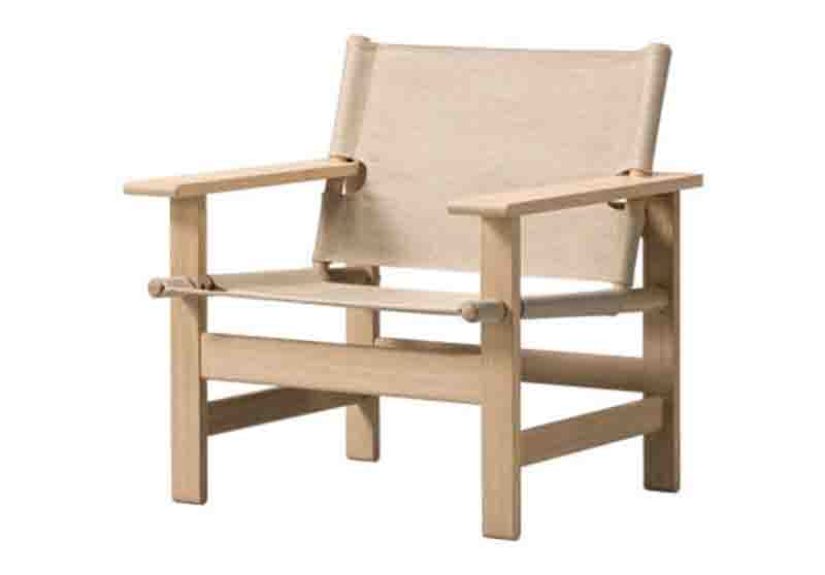
On paper, the chair’s material palette is minimal:
- Frame: Solid European oak, typically in soaped, light-oiled,
smoked, or black-lacquered finishes. - Seat and back: A flat linen canvas sling, often in natural,
sand, or black tones. - Hardware: Discreet fittings and dowels that keep the
construction clean and visually quiet.
That’s it. No plastic shells, no foam blocks molded into wild shapes. The
character comes from how the canvas wraps and suspends between the wooden
members, creating a soft surface that seems to float inside a rigid frame.
The contrast between upright structure and relaxed sling is where the magic
happens.
Proportions tuned for real-life lounging
The Canvas chair is wider than many traditional armchairs, with generous
armrests and a low, reclined posture that invites you to sink in. Typical
dimensions are roughly 74 cm wide by 76 cm high by 65.5 cm deep, with a
seat height in the low 40 cm range (around 16 inches). In plain English:
it’s low, boxy, and perfectly proportioned for reading, scrolling, or
sipping something nice in the evening.
The linen canvas gives a bit as you sit, gently hammocking your body. It’s
not a plush sink-into-oblivion recliner, but it offers a balanced, supportive
comfort that feels natural and relaxed rather than overstuffed.
Variants: Canvas 21, cushions, and outdoor editions
Over time, Fredericia has expanded the Canvas family while keeping the
original design language intact:
-
The original Canvas chair: Lounge chair with solid oak frame
and linen canvas seat/back, available with an optional seat cushion for
extra softness. -
Canvas 21 chair: A slightly more compact variation with
subtle tweaks to the frame and proportions, often paired with brass
details and refreshed canvas colors. -
Outdoor Canvas chair: A newer version that translates the
design into FSC-certified teak and weather-resistant fabric, so you can
bring that Mogensen calm out onto the patio or pool deck.
All versions share the same underlying idea: honest materials, clear lines,
and a balance between structure and softness.
Why the Canvas chair still feels so modern
Many designs from the 1970s feel very 1970s (and not always in a good way).
The Fredericia Canvas chair is different. It still looks fresh because it’s
rooted in fundamentals instead of trends.
Honest materials and “quiet luxury”
In an age of fast furniture and disposable décor, the Canvas chair sits at
the opposite end of the spectrum. Solid wood, natural fibers, and visible
joinery signal that this is a piece meant to last decades, not seasons. Its
look aligns with the “quiet luxury” trend: quality you can feel rather than
logos you can see.
The natural canvas and oak also play nicely with a wide range of interiors.
They warm up minimalist spaces, soften industrial ones, and provide a calm
counterpoint to colorful rugs or art.
Function-led design (with nothing to add or subtract)
Mogensen was famous for stripping designs down to their essentials. With
the Canvas chair, every element has a job:
- The horizontal rails hold the canvas and define the seat height.
- The vertical posts anchor the backrest and create a strong silhouette.
- The wide arms provide a place to rest a book, a hand, or a mug.
If you removed anything, the chair would stop working; if you added
anything, it would feel fussy. That “nothing to add, nothing to subtract”
quality is a big reason why design lovers keep coming back to it.
Sustainability built into the bones
The Canvas chair’s sustainability is not a marketing afterthought; it’s
built into the materials and construction. The use of FSC-certified oak in
many versions supports responsible forestry, while the replaceable canvas
sling and optional cushions can be renewed or repaired over time instead of
sending the entire chair to a landfill.
In other words, it’s the opposite of a “fast décor” purchase. You’re buying
something that’s designed to age gracefully, both aesthetically and
physically.
How to style a Fredericia Canvas chair at home
Yes, this is a design classic, but it’s not precious. One of the best things
about the Canvas chair is how easily it plays with different styles. Think
of it as a handsome supporting actor that quietly makes everyone else look
better.
In a living room
Place a Canvas chair opposite a sofa to anchor a conversation area. Because
it has a low, open profile, it won’t visually block off the room. Pair it
with:
- A small round side table in wood or metal.
- A wool or jute rug in warm neutrals.
- A reading lamp with a simple, sculptural form.
If your sofa is upholstered in a stronger colorforest green, rust, deep
bluethe natural canvas and oak will keep the whole setup from feeling too
heavy.
In a reading corner or home office
Slide a Canvas chair next to a low bookcase or floor-to-ceiling shelves to
create an instant reading nook. Add a small ottoman or pouf if you like to
put your feet up. A textured throw blanket and a linen pillow can soften
the look without covering the design.
In a home office, the Canvas chair reads as “I take design seriously but
I’m also a relaxed person who occasionally reads a printed book.” It’s
perfect for quick thinking breaks between video calls.
In a bedroom or guest space
Bedrooms often need a place to sit that isn’t the bed. The Canvas chair is
ideal for that corner by the window where clothes mysteriously pile up.
It’s sculptural enough to look good when empty, but comfortable enough that
you’ll actually use it for reading or getting dressed.
In a guest room, it quietly signals, “We like you enough to give you a
design icon, even if it’s only for a weekend.”
Is the Fredericia Canvas chair worth the price?
Let’s address the oak-framed elephant in the room: the Canvas chair is an
investment piece. Depending on finish and retailer, pricing typically lands
in the premium lounge-chair range rather than the flat-pack impulse-buy
range.
Whether it’s “worth it” depends on how you think about furniture:
-
If you like to switch styles every couple of years, something less
iconic (and less expensive) might make more sense. -
If you prefer to buy fewer things but buy them well, the Canvas chair
fits right into that philosophy.
Because it’s a recognized design classic with durable materials and
long-term relevance, the Canvas chair also tends to hold its value better
than trend-driven pieces. Think of it as part seat, part heirloom.
Caring for your Fredericia Canvas chair
One of the joys of this chair is that it’s not high-maintenance. It
actually looks better as it develops a gentle patina over time.
Caring for the oak frame
-
Soaped oak: This traditional Scandinavian finish gives a pale,
matte look. Wipe with a slightly damp cloth and use a mild soap solution
occasionally, following the manufacturer’s recommendations. -
Oiled oak: Dust regularly and re-oil as needed to keep the
wood nourished and protected. Avoid harsh cleaners. -
Smoked or black-lacquered oak: Treat gently; avoid abrasive
pads or cleaners that could scratch the surface.
Keeping the canvas comfortable and clean
Canvas is sturdy but benefits from a little care:
- Vacuum regularly using a soft brush attachment.
- Blot spills quickly with a clean, absorbent cloth.
-
Spot-clean with a mild fabric cleaner or soap solution recommended for
natural fibers, testing in an inconspicuous area first. -
For deeper cleaning or serious stains, consider professional upholstery
care, especially with dyed or darker canvases.
Outdoor versions with weather-resistant fabric should still be brought
under cover during harsh weather to prolong their life. Yes, they’re tough,
but even design icons appreciate a little shelter now and then.
500-word experience section: living with the Fredericia Canvas chair
So what is it actually like to live with a Fredericia Canvas chair day in
and day out? Imagine this as a composite of many design-conscious owners,
interior designers, and the occasional visitor who sits down and says,
“Okay, now I get it.”
First, there’s the unboxing moment. The chair rarely arrives flat-packed.
When it shows up, you immediately feel the weight and solidity of the oak
frame. It doesn’t wobble. It doesn’t squeak. If anything, it feels a bit
overbuilt in the best possible waylike it could survive a few decades of
house moves and still be ready for another.
Once it’s in place, something interesting happens: the Canvas chair starts
to quietly reorganize the room around it. Because the lines are so crisp
and the proportions are so balanced, everything nearby suddenly looks a
little more intentional. That basic floor lamp? Now it looks curated. The
side table you weren’t sure about? Suddenly it belongs.
Comfort-wise, the first sit can be a pleasant surprise. People expect it to
feel stiff because it looks so architectural. Then they sink into the
canvas sling and realize the fabric gives just enough to cradle the body
without swallowing it. The wide arms are another revelation: they’re at
just the right height for resting your forearms, setting down a slim book,
or balancing a cup (coaster highly recommended, your future self will
thank you).
Over time, small rituals form around the chair. Maybe it becomes your
weekend coffee spot, the place where you scroll through news, or the chair
where you always end phone calls with friends. Designers love to talk about
“programs” and “use cases,” but in daily life it boils down to this: you’ll
find yourself choosing the Canvas chair over the sofa more often than you
expected.
Guests notice it too. Some recognize it instantly“Is that the Mogensen
Canvas chair?”and you get to casually nod as if you didn’t spend three
weeks comparing finishes and prices. Others just sense that it feels
different from typical living room seating. They sit down, lean back, and
usually comment on how supportive it feels without being bulky.
Maintenance moments are low drama. A quick vacuum pass keeps the canvas
fresh, and any small marks from everyday life gradually blend into a gentle
patina. The oak frame dings less easily than softer woods, and minor scuffs
tend to disappear in the grain. Rather than feeling ruined by the first
scratch, the chair starts to tell a story, the way good leather shoes or a
favorite wooden cutting board do.
From a design-nerd perspective, living with the Canvas chair is also a
daily masterclass in proportion. You start to notice how the thickness of
the rails relates to the span of the canvas, how the armrests are just wide
enough without feeling chunky, how the legs land firmly without looking
clunky. It quietly raises your standards for every other piece of furniture
you own.
Is it perfect? No piece of furniture is. If you want a very upright chair
for typing or long desk work, this isn’t it. It’s a lounge chairhappiest
when used for relaxing, reading, or doing nothing in particular. But that’s
precisely its power: it creates a small, grounded pocket of calm in
whatever room it occupies.
In the end, owning a Fredericia Canvas chair feels less like buying a
trendy object and more like adding a steady, quiet presence to your home.
It doesn’t beg for attention, but it rewards attention with layers of
thoughtful detail. And if you’re the kind of person who appreciates design
that works just as hard as it looks, that experience is hard to beat.
Conclusion
The Fredericia Canvas chair isn’t about dramatic gestures or loud styling.
It’s about balance: between wood and fabric, structure and softness,
presence and subtlety. Designed in 1970 and still going strong, it proves
that when you get the fundamentals rightmaterials, proportions, comforta
chair can outlast trends, color fads, and algorithm-approved décor.
If you’re building a home around a “buy less, buy better” philosophy, this
is the kind of piece that earns its footprint. It supports your daily
rituals, elevates the look of the room, and quietly reminds you that good
design doesn’t have to shout to be heard.