Table of Contents >> Show >> Hide
- What Exactly Is the Frankenflair 58?
- Why Hack a Manual Espresso Machine at All?
- The UI Problem: When “Good Enough” Isn’t
- Inside the Frankenflair Build
- Manual Roots, Advanced Brew: What It Means in the Cup
- Espresso Hacking as a Culture
- Should You Build Your Own Frankenflair 58?
- Practical Tips for Aspiring Espresso Hackers
- Real-World Experiences from the Frankenflair Frontier
Some people wake up, push a single button, and let a machine do all the thinking. Others look at a perfectly good espresso maker and say, “Nice… but what if I added a custom PCB, a touchscreen, and my own control logic?” The Frankenflair 58 definitely belongs to the second group.
Featured on Hackaday, the Frankenflair 58 is a hacked version of the Flair 58 manual espresso machine, born from the mind of a maker named Janne. Instead of living with an optional, slightly clunky preheater and basic controls, he turned his lever machine into a precision brewing instrument with closed-loop temperature control, a sleek interface, and integration for an external scale.
This project lives at the intersection of manual roots and advanced brew: all the tactile joy of a lever machine, upgraded with the kind of brains and feedback usually reserved for high-end commercial gear. If you’ve ever looked at your coffee setup and thought “this needs more microcontrollers,” this is your moment.
What Exactly Is the Frankenflair 58?
At its core, the Frankenflair 58 starts with a Flair 58 manual espresso machine. The Flair 58 is a well-regarded lever-driven espresso press with an industry-standard 58 mm portafilter, a robust frame, and an optional electric preheat system to keep brew water and group temperatures in the sweet spot.
In its stock form, the Flair 58 gives you:
- Manual lever control over brew pressure
- An open, minimalist frame with exposed components
- A preheat control system (or a fully non-electric 58x variant)
- High-quality shots if you do your part with grind, dose, and technique
What it does not include out of the box is a polished, integrated digital control interface. The optional preheater historically felt a bit like an add-on rather than a fully integrated experience, and that’s exactly what bothered Janne enough to reach for KiCad and a soldering iron.
The Frankenflair 58 mod:
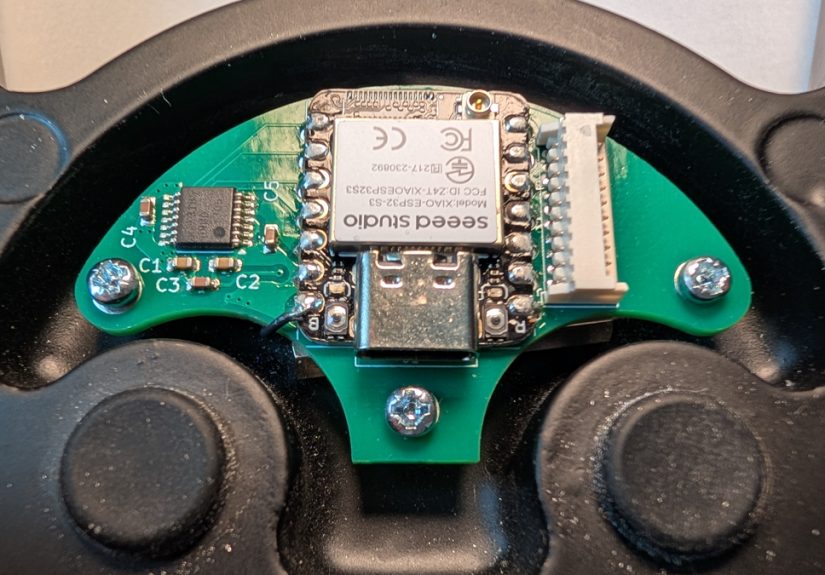
- Adds a custom heater control board with closed-loop temperature regulation
- Integrates a touchscreen display for configuration and feedback
- Provides connectivity for an external scale to tightly control shot yield
- Uses PCBs shaped to match the Flair’s curved frame so the electronics look like they belong there
The result is a machine that still demands you pull the lever yourself, but now gives you precise digital control over what’s happening behind the scenes.
Why Hack a Manual Espresso Machine at All?
On paper, a fully automatic machine sounds great: push a button, get espresso. In practice, a lot of coffee geeks quickly realize they miss the feel of real control. Manual and lever machines like the Flair 58, classic La Pavoni levers, or modded Gaggia Classics offer a deeper connection to the brewing processpressure, preinfusion, timing, grind, and temperature all become expressive tools, not fixed presets.
But manual machines have their drawbacks:
- Temperature management can be inconsistent without active control.
- Repeatability can be hard, especially when you’re still learning.
- There’s usually limited data about what’s actually happening in the shot.
That’s where projects like Frankenflair shine. By adding sensors, PIDs, and smart interfaces, hackers try to get the best of both worlds: the romantic, hands-on lever workflow with the precision and repeatability of high-end commercial gear.
The UI Problem: When “Good Enough” Isn’t
Hackaday’s write-up notes that the original Flair 58 preheater option felt a bit bolted on rather than fully integrated. The controls worked, but they didn’t match the elegance or clarity that a technical user might expect. For someone willing to tinker:
- The interface didn’t communicate enough about temperature and state.
- It lacked the kind of configurability hackers crave.
- Physically, there was room to integrate things more cleanly into the frame.
Janne’s response was essentially: “If the UI annoys you, build a better one.” That attitude is very on-brand for the Hackaday crowd, where “user interface” is as much a hackable component as a heater or pump.
Inside the Frankenflair Build
Custom Heater and Closed-Loop Temperature Control
The heart of the Frankenflair 58 is its custom heater board. Instead of simply powering a resistive element and hoping for the best, the mod relies on closed-loop temperature controlvery likely via PID-style logic, similar to countless DIY espresso upgrades in the hacking community.
Closed-loop control:
- Measures temperature via a thermocouple or thermistor
- Adjusts power delivery to hold a stable setpoint
- Reduces fluctuations that can otherwise muddy flavor and extraction
This approach echoes earlier PID upgrades seen on semi-automatic machines like modded Brasilia and Gaggia units, which injected precise temperature control into older hardware. The Frankenflair extends that logic into a lever environment, helping keep the brew path stable while the user focuses on grind and pressure.
PCBs as Industrial Design Elements
One of the clever touches in the Frankenflair 58 is how the PCBs themselves are shaped to follow the Flair’s swooping curves, so they tuck neatly into the frame instead of sitting in a generic box.
That matters for a few reasons:
- Aesthetics: The machine still looks like a piece of purposeful industrial design, not a science fair project.
- Ergonomics: Controls and display are positioned where the barista naturally looks during setup and extraction.
- Durability: Custom shapes can allow better mounting points and cable routing, which reduces stress and accidental damage.
It’s a nice reminder that “hacking” doesn’t have to mean “ugly.” With a bit of care, DIY electronics can elevate the look of a machine instead of cluttering it.
Scales, Data, and Shot Consistency
Another standout feature is the provision to plug in an external scale directly to the system. Instead of watching a separate LCD on the countertop, the Frankenflair can integrate shot mass and timing into the main interface.
Tying weight, time, and temperature together is a big deal:
- You can consistently hit a recipe like 18 g in, 40 g out in 28–32 seconds.
- You can experiment with different flow or pressure profiles and actually see how they change the yield.
- You can log your shots (if the firmware supports it) and iterate like an engineer instead of guessing like a sleepy human.
The broader espresso community has been experimenting with pressure and flow profiling for years, whether via clever “no-tool” pressure hacks on machines like the Profitec GO, or full-blown actuator-driven profiling mods on the Flair 58 using microcontrollers and linear actuators. Frankenflair taps into that same spirit: more data, more control, better coffee.
Manual Roots, Advanced Brew: What It Means in the Cup
Lever Feel Meets Modern Repeatability
Lever devotees love the physicality: you literally feel the resistance of the puck as you pull the shot. The Flair 58 has been praised for offering a “real espresso machine” workflow rather than a toy-like experience, thanks to its sturdy build and 58 mm portafilter.
With Frankenflair’s upgrades, that lever feel is still front and center, but:
- Preheat is smarter and more stable.
- Shot weight and timing can be monitored and controlled more precisely.
- Temperature fluctuations that used to be “part of the charm” are now tamed.
In practical terms, that means fewer wasted shots and a shorter path from “I just bought this” to “I can replicate this café’s Ethiopia natural.” You’re no longer fighting your hardware while learning; you’re collaborating with it.
The Ritual vs. the Results
Of course, all this tech doesn’t change the fact that a lever machine is still more demanding than, say, an Aeropress. One Hackaday commenter joked that they can’t imagine operating a lever machine before their first caffeine hit, and honestly, that’s fair.
A Frankenflair setup is for people who:
- Enjoy tinkering as much as they enjoy drinking coffee
- Think in graphs, profiles, and parameters
- Are willing to troubleshoot a PCB before 9 a.m. if something looks off
If your ideal morning is “tap button, drink coffee, walk away,” the Frankenflair 58 will look like an overengineered spaceship. If you’re the sort of person who reads brew curves for fun, it’s pure catnip.
Espresso Hacking as a Culture
Frankenflair isn’t happening in a vacuum. Sites like Hackaday are full of coffee-related hacks: PID upgrades on old commercial machines, fully automated Gaggias, and entirely home-built espresso rigs stitched together from multiple donor machines and custom electronics.
On the coffee side, forums like Home-Barista and Reddit’s r/espresso and r/FlairEspresso host long threads where people share pressure profiles, pre-infusion strategies, and wild brew experiments with manual machines. Combined with open-source hardware projects on GitHub, this ecosystem makes it easier than ever to build your own Franken-machine without starting from zero.
Frankenflair 58 fits perfectly in that world: open documentation, custom hardware, and a willingness to void warranties in the name of better coffee.
Should You Build Your Own Frankenflair 58?
Before you grab a soldering iron and a lever machine, it’s worth asking some practical questions.
Who This Is For
A Frankenflair-style project makes the most sense if:
- You’re already comfortable with mains electricity safety and basic electronics.
- You like the idea of owning a manual machine and don’t mind a learning curve.
- You value repeatability, data, and tinkering more than out-of-the-box simplicity.
What You’ll Need (Besides Coffee)
At a minimum, expect to need:
- A Flair 58 or similar manual machine as a donor platform
- Custom PCBs or at least a well-protected control board
- A temperature sensor, heater control hardware, and appropriate firmware
- Mechanical skills to mount everything safely within (or on) the frame
- Time and patience to test, calibrate, and refine
If that list makes you smile, Frankenflair territory might be right for you. If it makes you sweat, you might prefer a stock Flair 58 with a simple workflow and a good grinderalready capable of café-quality shots in skilled hands.
Practical Tips for Aspiring Espresso Hackers
Thinking about building your own Frankenflair or similar hack? A few guidelines from the broader coffee-hacking world can save you time (and fuses).
- Start with measurement, not modification. Get comfortable with your machine first. Log temperatures (even with a simple probe), shot times, and yields so you understand the baseline.
- Respect mains voltage. Heating elements and control boards often sit on dangerous voltages. Use proper enclosures, strain relief, fuses, and grounding. If you don’t fully understand what you’re doing, don’t improvise here.
- Prototype off the machine. Get your heater control, sensors, and display working on the bench before you cut metal or plastic on the real hardware.
- Test with water, not coffee. Early tests should be water-only, both for safety and cleanliness. Once temperatures and logic look stable, move on to real shots.
- Expect iteration. Even commercial machines go through revisions. Your first PCB or firmware version probably won’t be perfectand that’s fine.
- Share your work. Projects like Frankenflair are especially valuable because the creator released documentation and hardware details. The more you share, the better the community becomes.
Real-World Experiences from the Frankenflair Frontier
So what does living with a Frankenflair-style machine actually feel like day to day? While every build is unique, a lot of experiences echo what owners of highly modded Flair 58 setups and other hacked machines report.
Day 1: From “What Have I Done?” to First Drinkable Shot
The first time you power up a freshly wired Frankenflair, there’s usually a moment of quiet panic. You flip the switch, watch the screen light up, and listen for any suspicious noises. The heater ramps up to target temperature, and for a few minutes you hover like an overly protective barista-parent.
The first few shots are rarely perfect. Maybe the temperature overshoots, or the preheat time is too short. Maybe you’re still figuring out how the new interface maps to your old workflow. But once that first clearly “better than before” shot lands in the cupwith sweetness, clarity, and a more predictable flowyou understand why you put in the hours.
Week 1: Dialing In with Data
After a week, you start using the extra information aggressively. Instead of just eyeballing the shot, you watch how yield and time correlate. Maybe you notice your favorite light roast tastes best with a slightly lower brew temperature and a gentle preinfusion ramp. Having an integrated scale or at least a reliable timer makes it much easier to hit that same profile the next morning.
This is where the combination of lever control and digital assistance really clicks. You can treat your pressure curve like a musical performanceadjusting force on the leverwhile the heater and interface quietly ensure the stage lighting and sound are perfect every time.
Month 1: The New Normal
After a month, the Frankenflair stops feeling like a “project” and starts feeling like your normal machine. You stop thinking about the electronics and focus on beans, grind size, and shot style. Friends who come over either:
- Think it’s the coolest thing they’ve ever seen and immediately ask for a demo, or
- Back away slowly when they see the touchscreen and wiring and ask if you also build rockets in your spare time.
Practically speaking, you’ll probably notice that dialing in new coffees is faster. Instead of needing five or six wild shots to understand a new bag of beans, you can often land something tasty in two or three, because variables like temperature and preheat aren’t drifting randomly in the background.
Living with Maintenance and Upgrades
Any hacked machine is a living organism. Firmware might get tweaks, UI layouts might change, and you might add little featureslike shot logging, Bluetooth, or even pressure sensors for future profiling. The flip side is that you now own the responsibility: if something breaks, you can’t call a service center and pretend it’s stock.
The good news is that manual lever machines like the Flair 58 are inherently simple: less plumbing, fewer pumps, and a lot of mechanical robustness. Combine that with modular electronics and you end up with a rig that is surprisingly maintainable, as long as you keep reasonably good notes on what you’ve wired where.
The Payoff
In the end, running a Frankenflair 58-style setup is about more than just “better espresso.” It’s about making your morning ritual a small engineering project you get to revisit every day. You’re not just consuming coffeeyou’re experimenting, learning, and gradually crafting a machine that reflects exactly how you like to brew.
That’s the real heart of Frankenflair 58: Manual Roots, Advanced Brew: not replacing the barista with automation, but giving the barista superpowers.