Table of Contents >> Show >> Hide
- What Ford’s PowerShift Was Supposed to Be
- How the DPS6 Dual-Clutch Works (In Theory)
- Where It All Went Wrong: Shuddering, Slipping, and Sudden Neutral
- “We’ll Fix It in Software” Meets Reality
- Complaints, Investigations, and Political Pressure
- Class-Action Lawsuits and the PowerShift Settlement
- Extended Warranties and Technical Fixes
- Engineering Lessons from the PowerShift Mess
- Should You Buy a Used Fiesta or Focus with PowerShift?
- Real-World Experiences: Life with a PowerShift Car
- Conclusion: A Textbook Case of How Not to Ship Innovation
In theory, Ford’s PowerShift transmission was supposed to be the clever kid in the powertrain
classroom: a dual-clutch gearbox that delivered manual-like efficiency with automatic
convenience. In practice, it behaved more like a teenager learning stick shift on a hill:
shuddering, hesitating, and occasionally deciding that neutral sounded safer than “go.”
If you’ve ever driven a Ford Fiesta or Focus from the early 2010s and wondered why the car
felt like it was arguing with itself every time you pulled away from a stoplight, you’ve
already met the infamous DPS6 PowerShift transmission. What started as an engineering
moonshot to beat conventional automatics on fuel economy turned into one of Ford’s most
embarrassing and expensive product failures, spawning worldwide class-action lawsuits,
extended warranties, and a PR headache that just won’t quit.
What Ford’s PowerShift Was Supposed to Be
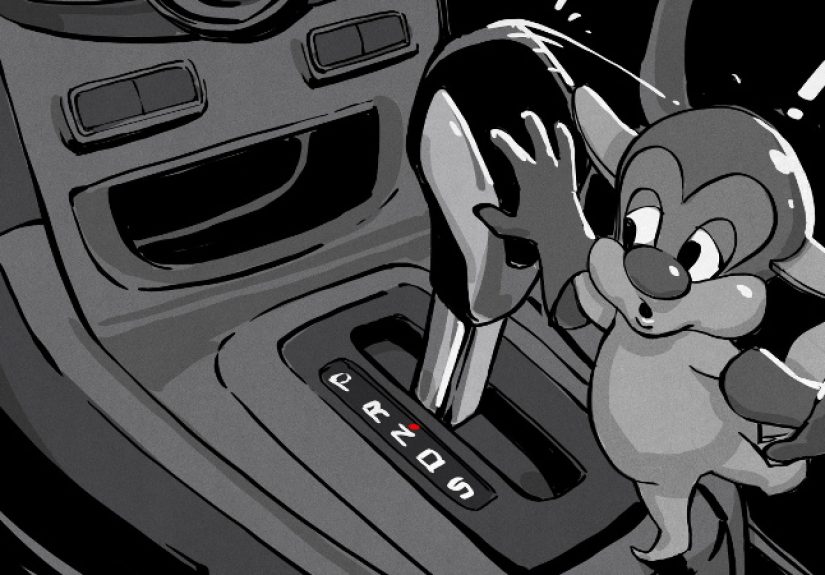
PowerShift is Ford’s brand name for a family of dual-clutch transmissions. The specific
troublemaker here is the DPS6, a six-speed, dry-clutch, automated manual gearbox used in
compact models like the Fiesta and Focus. Instead of a traditional
torque-converter automatic, the DPS6 uses two clutches and computer-controlled actuators to
pre-select gears. On paper, this gives you:
- Quicker, smoother shifts than a human can manage
- Better fuel economy than many conventional automatics
- Lighter weight and lower emissions
Other manufacturers have pulled off similar concepts successfully, especially with
wet dual-clutch designs bathed in oil. Ford, however, opted for a dry
dual-clutch setup in its lower-end cars to cut weight and cost. That decision is the root of
much of what went wrong.
How the DPS6 Dual-Clutch Works (In Theory)
To understand why the PowerShift debacle is so interesting from a Hackaday-style engineering
perspective, it helps to peek under the hood of the design.
The DPS6 is essentially a manual transmission with two computer-operated clutches and no
clutch pedal. One clutch handles the odd-numbered gears (1, 3, 5), and the other handles the
even gears (2, 4, 6). While you’re accelerating in first gear, the second clutch is already
lining up second gear. When the shift happens, the first clutch disengages, the second clutch
engages, and in a perfect world you glide forward with barely a twitch.
The transmission control module (TCM) is the brain that coordinates all of this. It reads
throttle position, wheel speed, engine load, and a laundry list of other signals, then
calculates when and how quickly to engage the clutches. When it’s calibrated correctly and
the hardware behaves, this can feel seamless.
In the DPS6, though, the real world rarely matched the lab simulations. Early internal
assessments reportedly showed serious drivability and reliability concerns including
situations where the transmission could kick itself into neutral to protect itself, leaving
drivers scrambling for a safe place to coast.
Where It All Went Wrong: Shuddering, Slipping, and Sudden Neutral
Once DPS6-equipped Fiestas and Focuses hit real customers, the complaint pattern became
depressingly consistent. Owners reported:
- Shuddering and vibrating on takeoff
- Jerky, uneven shifts, especially at low speeds
- Delayed acceleration followed by sudden surges
- “Bucking” in stop-and-go traffic
- Occasional loss of power or unexpected shifts to neutral
Many of these symptoms trace back to the choice of dry clutches and the difficulty of
controlling them smoothly in an automated system. Dry clutches don’t like being slipped;
they overheat and wear out quickly. In this design, leaking seals could let fluid contaminate
the clutch surfaces, causing even more erratic engagement and rapid wear.
Ford’s dealers often responded with software updates, repeated clutch replacements, or even
new transmission assemblies. In many cases, owners went through multiple repairs without ever
getting a car that felt “normal.”
“We’ll Fix It in Software” Meets Reality
A recurring theme in modern product failures is the idea that software can rescue a
marginal hardware design. The DPS6 story fits that pattern almost too well.
According to investigative reporting and court filings, Ford engineers struggled to find a
calibration that made the DPS6 both reliable and pleasant to drive. Some internal emails
reportedly described the system as having no “driveable” calibration at one stage of
development.
Software updates did help some owners for a while, but you can’t code your way around
fundamental friction, heat, and contamination issues. Once the clutches wore or the seals
failed, the TCM was stuck trying to manage inconsistent hardware with clever algorithms and
drivers felt the result as harsh engagement, gear hunting, or limp-home behavior.
There were also cases of TCM failures themselves, including bad connector pins, motor issues,
and grounding problems, each adding another layer of flakiness to an already sensitive
system.
Complaints, Investigations, and Political Pressure
As owner complaints piled up with Ford and the National Highway Traffic Safety Administration
(NHTSA), media outlets began digging into what Ford knew and when. A major newspaper
investigation concluded that Ford launched and continued selling DPS6-equipped cars despite
knowing about serious defects.
That reporting, combined with thousands of warranty claims and complaints, caught the
attention of U.S. lawmakers. Two U.S. senators publicly urged federal regulators to examine
Ford’s decisions around the Fiesta and Focus transmissions, focusing on whether the company
downplayed safety concerns while continuing to sell affected vehicles.
NHTSA opened reviews of the DPS6 situation, and while regulators didn’t force a sweeping
recall of every car with the transmission, the pressure contributed to extended warranties,
technical service bulletins, and eventually settlement agreements that offered compensation
and buyback options to many owners.
Class-Action Lawsuits and the PowerShift Settlement
In the United States, the PowerShift saga quickly moved from the service bay to the
courtroom. A series of class-action lawsuits alleged that Ford sold cars with a known
transmission defect and then failed to resolve it effectively.
The main U.S. settlement covering many 2011–2016 Fiesta and 2012–2016 Focus models equipped
with the DPS6 transmission became effective in April 2020.
Depending on repair history and how many times owners returned to the dealer for
transmission-related work, eligible drivers could receive:
- Cash payments for repeated repairs
- Discounts toward the purchase of a new Ford
- Repurchase (buyback) of the vehicle in some cases
- Reimbursement for certain out-of-pocket repair costs
Estimates of the settlement’s total cost vary, with some analyses suggesting tens of millions
of dollars or more when buybacks and repair reimbursements are included.
Importantly, the legal drama is not limited to the United States. Similar class-action cases
have appeared in Australia, South Africa, and other markets, focusing on Ford models using
the same or closely related DPS6 hardware. Courts abroad have also criticized the
drivability and safety implications of these transmissions.
Extended Warranties and Technical Fixes
In response to ongoing complaints and legal pressure, Ford issued a series of technical
service bulletins and extended warranty programs aimed at calming frustrated owners. One of
the more notable steps was extending warranty coverage on the DPS6 transmission control
module to 10 years or 150,000 miles for many vehicles, specifically to address symptoms like
intermittent loss of engagement, no-start situations, or lack of power.
Ford also rolled out revised clutch kits, updated seals, and software revisions in an effort
to tame the shuddering and slipping. While some owners reported improvement, many others
cycled through multiple repair attempts and still ended up with a car that never felt fully
sorted.
Engineering Lessons from the PowerShift Mess
From a Hackaday reader’s point of view, the PowerShift debacle is more than a consumer
horror story it’s a case study in how ambitious engineering, aggressive cost control, and
real-world variability can collide.
1. Hardware Limits Always Win
Dry clutches are inherently less forgiving in automated use than wet clutches. They don’t
tolerate prolonged slipping, and their friction characteristics can change significantly with
wear, temperature, and contamination. No amount of firmware wizardry can fully mask a design
that operates on such a narrow margin.
2. Safety Fall-Backs Must Consider Human Reality
An automated gearbox that decides to drop into neutral to save itself might look sensible in
a risk matrix, but to a driver trying to merge across traffic, it can feel terrifying. Any
safety-oriented fail-safe needs to account for how humans actually use the product, not just
how engineers hope they will.
3. “We’ll Fix It Later” Is a Dangerous Business Strategy
Internal documents and subsequent investigations suggest that Ford knew about major DPS6
drivability issues well before the cars hit showrooms, yet the program moved forward, with
the hope that refinements and updates would eventually catch up.
As the PowerShift saga shows, once early customers become unwilling beta testers, recovering
trust can be more expensive than getting the design right in the first place.
Should You Buy a Used Fiesta or Focus with PowerShift?
If you’re browsing used cars and spot an attractively priced Fiesta or Focus from the
PowerShift era, caution is definitely warranted.
Key questions to ask include:
- Is this particular car equipped with the DPS6 PowerShift transmission?
- How many times has it had transmission repairs, clutch replacements, or TCM replacements?
- Is the extended warranty still in effect, and is it transferable to you?
- Does the seller have complete service records from an authorized dealer?
A well-maintained car that has already received updated parts and software might be
reasonably serviceable, especially if you’re getting a bargain price and remaining warranty
coverage. But if you’re risk-averse or you just don’t want to gamble on whether your
“new-to-you” car will jerk and shudder every time you leave a parking lot it’s hard to
ignore the simpler appeal of a conventional automatic or a traditional manual gearbox.
Real-World Experiences: Life with a PowerShift Car
Beyond the legal language and engineering diagrams, the real weight of the PowerShift
debacle shows up in owner stories. Some drivers reported living with transmissions that felt
“off” from day one, improving just long enough after a repair to squeak by, then reverting to
their old tricks as soon as the honeymoon period ended.
Imagine this very common scenario, distilled from hundreds of complaints and owner
discussions:
You buy a new Fiesta or Focus because you’ve heard it gets great gas mileage and is fun to
drive. For the first few weeks, everything seems fine. Then you notice that starting from a
stop at a light feels weirdly like a nervous manual driver slipping the clutch too long.
There’s a shudder, a pause, and then a lunge. At first you chalk it up to “small car quirks.”
Over time, it gets worse. The car jerks in stop-and-go traffic. Pulling out of a side street
can be nerve-wracking because you’re not entirely sure whether the car will go or think about
going. Maybe you even experience a sudden loss of drive for a second or two, long enough to
make your heart rate spike.
You head to the dealer. They update the software, tell you the behavior is “normal” for a
dual-clutch transmission, and send you on your way. Things improve slightly, then slide back.
You return, get a clutch replacement, and the car is perfect for a few thousand miles.
Then the familiar shudder returns.
Multiply that experience by tens of thousands of owners. Some people reported three, four, or
more major repairs. Others said they avoided driving on highways or busy intersections
because they no longer trusted the car to respond predictably.
From the enthusiast angle, it’s especially frustrating because the underlying cars aren’t
bad. The Fiesta and Focus can be genuinely enjoyable to drive, with decent chassis tuning and
surprisingly lively steering. A traditional manual transmission version of these cars is
often praised, which makes the PowerShift misadventure feel like a self-inflicted wound:
great car, deeply compromised by one high-risk component choice.
Community forums and social media threads are filled with owners comparing notes about
settlement eligibility, extended warranty status, and whether to hang on or bail out. Some
report satisfactory outcomes successful buybacks, decent trade-in offers, or cars that
eventually settled into acceptable behavior after repairs. Others feel stuck with vehicles
that still act up but no longer qualify for coverage or compensation.
For DIY-minded drivers, the debacle also sparked a wave of technical curiosity. Videos and
write-ups dissect TCM fault codes, clutch pack wear patterns, and firmware versions, treating
the DPS6 as a case study in how complex and fragile a modern drivetrain can become when the
pursuit of efficiency outruns practical reliability.
In the end, living with a PowerShift car often comes down to your tolerance for risk and
hassle. If you happen to own a “good” one, you may see little more than the occasional
hiccup. If you own one of the “bad” ones, the transmission can dominate your entire
experience of the vehicle, overshadowing any positives. That emotional cost the loss of
confidence in a machine you depend on every day is harder to quantify than settlement
checks but just as real.
Conclusion: A Textbook Case of How Not to Ship Innovation
Ford’s PowerShift debacle is the automotive equivalent of deploying a complex firmware update
straight to production without enough beta testing except the product here weighs 2,800
pounds and shares the road with everyone else. The DPS6 transmission was bold in concept but
constrained by cost, rushed timelines, and the temptation to ship now and solve problems
later.
For engineers and tinkerers, there are plenty of lessons: respect hardware limits, never let a
safety strategy ignore human behavior, and be realistic about how much software can compensate
for marginal mechanical design. For car shoppers, the PowerShift story is a reminder to look
beyond mpg ratings and spec sheets and ask tough questions about long-term reliability.
And for Ford, it’s an expensive reminder that the real world has a way of exposing
optimistic assumptions one shuddering, lurching, warranty claim at a time.
SEO Summary & Metadata
owners.
sapo:
Ford’s PowerShift DPS6 transmission was supposed to make small cars like the Fiesta and Focus
more efficient and fun to drive. Instead, many owners got shuddering launches, jerky shifts,
and years of repair visits, investigations, and class-action lawsuits. This in-depth guide
breaks down how the dual-clutch design works, why dry clutches caused so many real-world
problems, what the major settlements and extended warranties cover, and what current and
future owners need to know before buying a used PowerShift-equipped Ford.