Table of Contents >> Show >> Hide
Walk into one room and you instantly exhale. Walk into another and you feel like your shoulders just signed up for a stress marathon. Feng shui lives in that difference. At its core, feng shui is the traditional Chinese practice of arranging space so it feels balanced, supportive, and alive. It is often described through ideas like qi (energy flow), yin and yang, and the five elements: wood, fire, earth, metal, and water.
Now, let’s be honest: not everyone believes furniture placement can change their destiny. Fair enough. But even skeptics tend to appreciate a room that is uncluttered, welcoming, easy to move through, and designed with intention. That is part of why feng shui still resonates today. It blends symbolism, design logic, habit-building, and plain old common sense. In other words, it is part philosophy, part decorating strategy, and part “maybe don’t keep a mountain of mystery cables by your front door.”
In this guide, you’ll learn what feng shui is, how the five elements work, and how to use practical feng shui tips in real life without turning your home into a themed stage set. You do not need a giant budget, a compass obsession, or a mystical waterfall in your hallway. You just need a little intention and a willingness to move that awkward chair that has been judging you for years.
What Is Feng Shui?
Feng shui literally translates to “wind” and “water,” two natural forces associated with movement, flow, and balance. Traditionally, feng shui is about arranging buildings, rooms, and objects in ways that harmonize people with their environment. The goal is to support a smoother flow of energy, often called qi, so the space feels better to live in and use.
In practice, feng shui often focuses on a few big ideas:
1. Energy should move, not get stuck
A home packed with clutter, blocked pathways, broken items, and awkward layouts tends to feel mentally heavy. Feng shui treats that sensation as stagnant energy. A more open, organized, thoughtfully arranged room usually feels calmer and easier to inhabit.
2. Balance matters
Feng shui draws from yin and yang, the idea that opposite qualities work best in balance. A bedroom that is too stimulating may not feel restful. A workspace that is too soft and sleepy may kill focus faster than an 8 a.m. group email. The best rooms support the purpose of the space.
3. Placement influences experience
One famous concept is the command position. This means placing important furniture, especially the bed, desk, or stove, where you can see the door without being directly in line with it. Whether you view that as energetic wisdom or environmental psychology, it often creates a stronger sense of comfort and control.
4. Your home reflects your habits
Feng shui is not just about objects. It is also about attention. A room full of neglected things can mirror neglected routines. A home that feels intentional often nudges you toward more intentional living.
That said, feng shui should not be treated like a magical guarantee of wealth, romance, or instant enlightenment. It works best as a thoughtful framework for creating a more supportive environment. Think of it as a design language for feeling better in your space, not a vending machine for the universe.
The Five Elements in Feng Shui
The five elements are one of the most recognizable parts of feng shui. Each element represents a type of energy and is often associated with colors, shapes, materials, and moods. A balanced room does not necessarily display all five in equal amounts, but it usually benefits from some thoughtful variety.
Wood
Keywords: growth, vitality, expansion, renewal
Common colors: green, blue-green
Shapes and materials: columns, rectangles, wood furniture, plants
Wood energy is about upward movement and fresh starts. It works well in spaces where you want creativity, development, and motivation. A healthy plant, a wood bookshelf, or green accents can introduce wood energy without making your room look like a forest audition.
Fire
Keywords: passion, visibility, energy, inspiration
Common colors: red, orange, strong warm tones
Shapes and materials: triangles, candles, lighting, anything radiant
Fire brings brightness and activation. It can help a dull room feel lively, but too much fire can make a space feel restless or intense. A pop of red, warm lighting, or a candle can be enough. This is not a license to turn your living room into a chili pepper convention.
Earth
Keywords: stability, grounding, nourishment, support
Common colors: beige, tan, yellow, brown, terracotta
Shapes and materials: squares, ceramics, stone, clay
Earth energy helps a home feel calm, anchored, and settled. It is especially useful if a room feels chaotic or emotionally noisy. Rugs, pottery, stone decor, or earthy color palettes can all help create that grounded feeling.
Metal
Keywords: clarity, precision, efficiency, refinement
Common colors: white, gray, metallic tones
Shapes and materials: circles, arcs, metal frames, brass, steel
Metal supports focus and order. It can be useful in an office, study space, or anywhere you want cleaner thinking and stronger boundaries. A metal lamp, round mirror, or simplified neutral palette can add this element without making your home feel like a laboratory.
Water
Keywords: flow, wisdom, depth, calm
Common colors: black, deep blue
Shapes and materials: wavy forms, mirrors, glass, fountains
Water energy is soft, reflective, and fluid. It can create a sense of ease and contemplation. In modern homes, water can be represented through mirrors, dark accents, reflective surfaces, or artwork with watery movement. You do not need a koi pond in the hallway. Your landlord would probably prefer that you did not.
How the Five Elements Work Together
Feng shui is not about picking your favorite element and letting it take over like a diva on tour. It is about balance. A room with too much metal may feel cold or rigid. Too much fire may feel overstimulating. Too much wood might feel busy. The point is to notice what a space seems to need.
For example, a home office that feels flat may benefit from wood for growth and a little fire for motivation. A frantic family room may need more earth and metal to create steadiness and order. A bedroom with too much visual noise might benefit from softer earth tones, less fire, and fewer reflective surfaces.
Real-Life Feng Shui Tips You Can Actually Use
Start with the entryway
In feng shui, the front door is often treated as the main place where energy enters the home. If your entryway looks like a backpack explosion followed by a shoe uprising, start there. Clear the clutter, improve lighting, add a clean mat, and make it feel welcoming. A tidy entrance sets the tone for the rest of the house.
Declutter with purpose
Decluttering is probably the most famous feng shui tip because it works. Remove broken items, things you actively dislike, and objects that create visual or emotional drag. You do not need an empty, personality-free home. You just need a space where your stuff is not staging a coup.
Use the command position
Whenever possible, place your bed, desk, or main seating area where you can see the door without being directly aligned with it. This often creates a stronger sense of ease. If the room layout is awkward, even a small adjustment can help. A mirror may sometimes be used as a workaround if direct placement is impossible.
Let people and energy move easily
Look at the pathways in your home. Can you walk through the room without sidestepping sharp corners, laundry baskets, or furniture that seems personally offended by your shins? Clear movement matters. Feng shui generally favors layouts that feel open and intuitive rather than cramped and obstacle-filled.
Support the room’s purpose
A bedroom should feel restful. A workspace should help you focus. A dining area should feel inviting. This sounds obvious, yet many homes mix signals. If your bedroom is half office, half storage unit, half doom-scrolling station, yes, that is three halves, and yes, that is a problem. Match the space to the life you want to live there.
Choose colors intentionally
You do not need to repaint your entire house according to an ancient spreadsheet. Just use color with intention. Soft earth tones can calm a space. Green can suggest growth. White and gray can sharpen clarity. Red works best as a controlled accent unless you are deliberately aiming for high energy.
Bring in healthy plants
Plants are commonly used to represent life, vitality, and wood energy. In many feng shui-inspired interiors, healthy plants help soften hard edges and bring freshness into stagnant corners. The key word here is healthy. A dying plant is less “abundance” and more “botanical cry for help.”
Watch the bedroom details
A sturdy headboard, limited under-bed storage, and fewer distractions can help a bedroom feel more settled. Many feng shui practitioners also prefer less visual busyness in the bedroom, especially around the bed, because the goal is rest rather than stimulation.
Balance hard and soft materials
If a room feels severe, add softness through textiles, rounded forms, or warmer finishes. If it feels shapeless or sleepy, add structure through metal accents, cleaner lines, or more intentional organization. Good feng shui often feels like a room has a backbone and a heartbeat.
Simple Room-by-Room Feng Shui Ideas
Living room
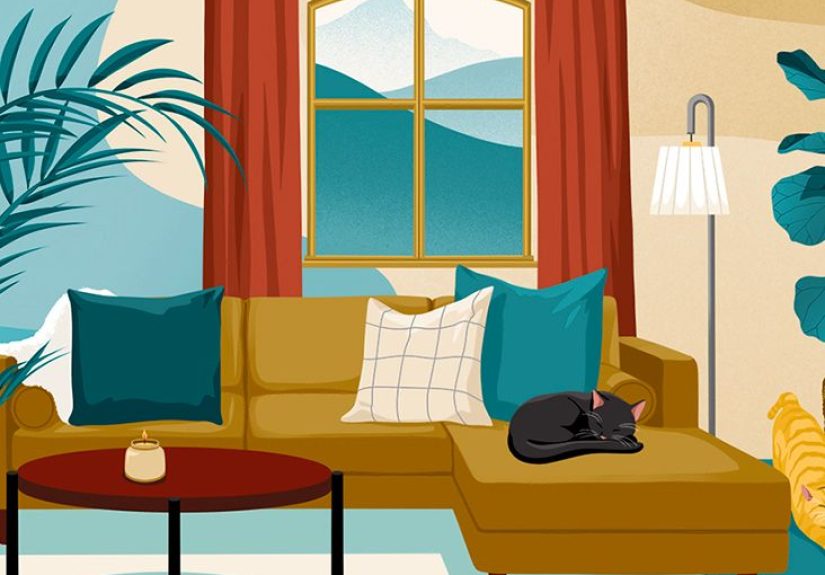
Arrange seating so conversation feels natural. Avoid blocking the main path through the room. Add a balanced mix of elements through plants, soft lighting, textured fabrics, and a few grounded decor pieces.
Bedroom
Prioritize calm. Keep clutter low, place the bed thoughtfully, and reduce anything that feels too busy, bright, or emotionally charged. The room should say “rest,” not “multitasking headquarters.”
Home office
Use the command position for your desk if possible. Support focus with good lighting, fewer distractions, and a blend of wood for growth and metal for clarity. Add one or two personal objects that make the space feel encouraging rather than sterile.
Kitchen
Keep counters relatively clear, fix broken items, and maintain a sense of cleanliness and order. Since the kitchen is tied to nourishment and daily rhythm, even small improvements here can make the whole home feel more functional.
Real-Life Experiences: What Feng Shui Feels Like in Practice
Here is where feng shui gets interesting. The biggest changes people notice are often not dramatic or mystical. They are subtle, practical, and surprisingly emotional. Someone clears the junk pile near the front door and suddenly coming home feels less irritating. A desk gets turned to face the room instead of the wall, and work feels a little less draining. A bedroom loses its random storage towers and starts feeling like a place where sleep is actually invited.
One of the most common experiences with feng shui is that people become more aware of how their environment has been affecting them all along. They realize the cramped walkway that annoyed them every morning was creating tension before the day even started. They notice that harsh overhead lighting made evenings feel wired instead of restful. They understand that broken decor, unused gadgets, and cluttered surfaces were quietly asking for attention every time they looked at them.
Another real-life lesson is that feng shui is rarely about perfection. It is usually about improvement. A small apartment can still feel balanced. A rented room can still feel intentional. A chaotic family home can still benefit from one calm corner, one organized entryway, or one bedroom that finally stops doubling as a storage locker for forgotten hobbies.
People also tend to discover that the emotional side of feng shui is very real, even if they are not interested in spiritual language. When you remove objects tied to bad memories, the room changes. When you display things that reflect your values and hopes, the room changes again. When you make space for movement, light, rest, or focus, your habits often shift right along with the layout.
For some, feng shui becomes a ritual of checking in with life. Is the office still supporting your goals, or has it become a pile of unopened mail and panic? Does your bedroom feel like recovery, or does it feel like unfinished business wearing pajamas? Does your home welcome you, or does it scold you with mess the second you walk in?
That is why feng shui continues to appeal to modern households. It gives people a practical way to ask better questions about their surroundings. Not just “Does this room look nice?” but “Does this room support the way I want to feel?” Sometimes the answer is a major redesign. More often, it is a lamp moved three feet to the left, a pile donated, a chair rotated, a plant added, or a habit interrupted.
Over time, those small shifts add up. The home begins to feel less accidental and more aligned. The office becomes easier to work in. The entryway becomes less chaotic. The bedroom becomes more breathable. And while feng shui does not promise a perfect life, it often reminds people of something valuable: the spaces we live in are not neutral. They shape mood, behavior, and attention every single day.
So if your experience with feng shui starts with cleaning one shelf, moving one desk, or finally letting go of the lamp you hated in 2019, that still counts. In fact, that is probably the most realistic feng shui experience of all. Not instant magic. Just a home that slowly starts feeling more like it is on your side.
Conclusion
Feng shui is ultimately about creating harmony between people and the spaces they live in. Its ideas around energy flow, balance, and the five elements offer a useful lens for making homes feel calmer, clearer, and more supportive. Whether you embrace feng shui as a cultural practice, a design philosophy, or a smart excuse to finally clear that chair covered in laundry, the most effective changes are often the simplest: reduce clutter, improve flow, place key furniture thoughtfully, and choose elements that match the feeling you want in each room.
You do not need to follow every rule rigidly to benefit from feng shui-inspired design. Start where you are. Adjust one room. Notice how it feels. The best feng shui is not about impressing anyone. It is about creating a home that helps you breathe easier, move more comfortably, and live with a little more intention.