Table of Contents >> Show >> Hide
- What Feltmark Actually Means (and Why the Name Fits)
- The Breakout Icon: The WALD Plug Lamp (a Floor Lamp Without the Floor)
- More Than a Pretty Stick: Feltmark’s Smart Side (Ellum & Ellum Solar)
- Why Feltmark’s Minimalism Feels Different
- How to Style Feltmark Lighting (Without Turning Your Home into a Showroom)
- Buying Considerations: The Practical Stuff People Forget Until It’s 9 p.m.
- Made-in-LA Energy: Small-Batch Craft in a World of Disposable Stuff
- Final Thoughts: Why Feltmark Belongs in the Minimal Lighting Conversation
- Extra: of “Living With It” Experiences (What It Feels Like in Real Rooms)
Some lights are born to be the center of attentioncrystal chandeliers that arrive with a personality and a cleaning schedule.
Feltmark is not that. Feltmark is the design-world equivalent of a perfectly timed eyebrow raise: quiet, confident, and somehow
the thing you keep thinking about later.
Based in Los Angeles, Feltmark is best known for lighting that looks almost impossibly stripped downuntil you live with it and
realize that what’s missing is exactly the point. Cords that snake across the floor? Gone. A big base hogging precious square
footage? Nope. Extra “look-at-me” parts that exist mainly to justify the price tag? Feltmark politely declines.
The studio’s work is closely tied to designer David Okum, who has been described as working out of a Lincoln Heights workshop
and approaching objects with a craft-first patiencereleasing designs one at a time and finishing pieces by hand. The result is
minimalist handmade lighting that feels more like a tool you’ll love for a long time than a trend you’ll regret by next spring.
What Feltmark Actually Means (and Why the Name Fits)
“Feltmark” is one of those names that sounds poetic until you learn it’s also sneakily literal: felt as in the sensation
you get when you touch and use something, and mark as in a meaningful stage or milestone. That definition pops up in a
profile of Okum and helps explain the studio’s north star: make everyday objects that feel good to use, then earn their place in
your lifeno spotlight required.
That philosophy shows up in the materials and the restraint. Feltmark lighting often pairs metal with woodcool structure plus warm
tactilityso even the most minimal fixture doesn’t come off as clinical. In other words: it’s minimal, not miserable.
The Breakout Icon: The WALD Plug Lamp (a Floor Lamp Without the Floor)
If you’ve ever tried to squeeze a floor lamp into a small apartment, you know the pain: the base competes with your chair, your
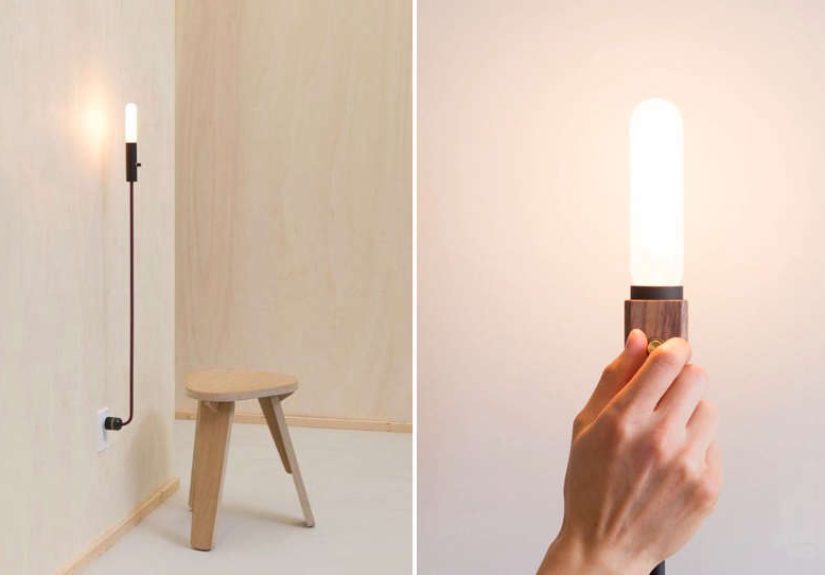
plant, and your ability to walk like a normal person. Feltmark’s answer is the WALDa plug lamp that uses the wall outlet as the
“base,” creating a vertical light that reads like a floor lamp while taking up essentially zero floor space.
How the Plug-Lamp Idea Solves Real Problems
The WALD is often described as a “stripped-down floor lamp,” and that’s not marketing fluff. The lamp extends upward from the outlet
along a rigid stem, positioning the bulb at a useful height without a stand. For renters, it can feel like cheating in the best way:
you get the function of a sconce or floor lamp without hardwiring, without a trailing cord, and without committing to anything your
landlord will email you about at 2 a.m.
One of the most practical touches is the way the plug can accommodate different outlet orientations. Writeups have noted that it can
rotate so it works with vertical or horizontal outletssmall engineering detail, huge daily-life win when your apartment’s outlets
are placed by someone who clearly hated lamps.
Materials: Minimal Doesn’t Mean “Cheap”
Feltmark’s WALD line has been highlighted for using lightweight aircraft aluminum alongside hardwood elementsoften white ash or black
walnutplus small brass details like a knob. Versions like the WALD Hi-Lo have been described as weighing under seven ounces and being
finished with bead-blasting and anodizing to achieve distinctive colorways such as neutral, dark plum, and olive drab.
That combination matters. Aluminum keeps the structure strong but light enough to be supported by the outlet. Wood adds warmth and
prevents the piece from feeling like an industrial bracket that wandered into your living room. And the brass accent functions like a
punctuation marktiny, intentional, and surprisingly expressive.
Where the WALD Works Best (with Specific Examples)
- Beside a bed in a tight bedroom: The lamp can provide focused light without a nightstand crowded by a lamp base.
If your nightstand is basically a coaster with ambition, the plug-lamp format is a gift. - Behind a sofa in a narrow living room: Because it hugs the wall, it won’t get kicked, tripped over, or slowly
“migrated” into the corner by annoyed roommates. - In a hallway that needs mood lighting: It can act as a low-drama accent lightclean enough to disappear, interesting
enough to earn compliments. - In a home office setup: The vertical line can frame a desk area and add presence without turning your workspace into
a jungle of cords.
Design-wise, WALD lamps look especially sharp against calm backdrops: matte paint, plaster, pale wood floors, and anything “quiet luxury”
without the luxury markup. They’re also surprisingly good with texturethink linen curtains, a wool rug, or a chunky knit throwbecause
the lamp’s clean geometry lets the softer stuff do the cozy talking.
More Than a Pretty Stick: Feltmark’s Smart Side (Ellum & Ellum Solar)
Feltmark didn’t stop at “minimal.” The studio also explored lighting that’s intuitivelights that behave the way you wish every light
behaved when you’re carrying groceries, half-asleep, or trying not to step on a LEGO.
Ellum: Motion-Sensing Light That’s Built for Real Life
Ellum has been described as an LED light that turns on when motion is detected in the dark, designed for practical places like hallways,
stair landings, closets, and cabinets. Some coverage notes that the lights are battery powered and can mount with magnetic hardware,
making them easier to install than traditional hardwired options.
Minimalism here isn’t just visualit’s behavioral. Ellum aims to reduce “steps” in your routine: no hunting for a switch, no fumbling,
no waking up fully just to get a glass of water. It’s a small quality-of-life upgrade that adds up fast, especially in homes where the
light switch is always exactly one step farther than it should be.
Ellum Solar: Portable, Renewable, and Genuinely Clever
Another notable concept is Ellum Solar, described as a solar-charged smart light with sensors that trigger illumination when motion is
detected. Coverage has emphasized the idea that a single day of charging can translate into long-term use in motion-sensing modean
example of Feltmark’s love of “set it up once, benefit forever” design thinking.
In at least one detailed product writeup, Ellum Solar is described as using magnets to attach to a wall base, allowing you to detach the
light and move it elsewhereessentially turning one object into multiple lighting roles across your home. Think: hallway guide light at
night, desk light in the afternoon, bedside glow later, then back on the wall like nothing happened.
Why Feltmark’s Minimalism Feels Different
Plenty of brands claim “minimal.” Sometimes that means “we removed the personality and replaced it with a rectangle.” Feltmark’s minimalism
is more disciplined: remove anything that doesn’t improve function or feeling, then make what’s left unusually well considered.
Form Follows Function… but Function Still Has Feelings
The WALD’s whole existence is a function-first decision: use the wall outlet as structure, eliminate the base, hide the wiring inside the
stem, keep the silhouette clean. Yet it doesn’t come off sterile because the material choices add warmth and the proportions feel human
tall enough to be useful, slim enough to be calm, detailed enough to be memorable.
Minimal Lighting That’s Actually Space-Smart
A lot of “minimalist lighting” still demands space: a big arc lamp footprint, a heavy shade, a wide sconce. Feltmark’s signature pieces
are space-smart in a literal way. They’re designed around constraintssmall rooms, rentals, weird outlet placementsand they treat those
constraints as the creative brief, not an inconvenience.
How to Style Feltmark Lighting (Without Turning Your Home into a Showroom)
Feltmark pieces can look editorial, but they don’t require an all-white house and a strict “no personality” policy. The easiest approach is
to let the lamp be the clean line in the room while everything else brings the softness.
Three Styling Formulas That Work
- Warm + Clean: Pair a WALD lamp with walnut tones, woven textures, and warm-white bulbs. The lamp becomes a vertical “spine”
that gives the corner structure. - Gallery Wall Assistant: Use the lamp near art to add a modern architectural line. Keep frames simple; let the lamp’s silhouette
act like visual punctuation. - Small-Space Hero: In studios or compact bedrooms, place the lamp near where you read or work. Because it occupies almost no
floor area, it makes the whole room feel less crowded.
Pro tip: the more minimal the fixture, the more the bulb matters. A harsh, cool bulb can make even the most beautiful design feel like a
dentist’s office. A warm, dimmable bulb can make the same lamp feel like you hired a lighting designer.
Buying Considerations: The Practical Stuff People Forget Until It’s 9 p.m.
Outlet Placement and Daily Use
Plug lamps are brilliant… as long as the outlet is where you need the light. Before you buy, look at your room the way the lamp will:
where do you actually read, relax, and walk at night? If your outlet is behind furniture, you may need to rethink placement so the lamp
can sit cleanly and safely.
Dimming, Bulbs, and Ambience
The WALD Hi-Lo has been described as fully dimmable, which is a big deal for daily comfort. Dimming turns a “cool object” into “the light you
choose every night.” If you’re outfitting a bedroom or living room, prioritize dimmable setups and warm color temperatures for that soft,
lived-in feel.
Kids, Pets, and the Real World
Minimal designs still have to survive real life. If you have curious pets or kids who treat everything as a potential toy, place lights where
they won’t be bumped or grabbed. The advantage of wall-adjacent lighting is that it’s already out of the main traffic flow, making it easier
to keep things tidy and calm.
Made-in-LA Energy: Small-Batch Craft in a World of Disposable Stuff
Feltmark’s appeal isn’t only the shapeit’s the sense that the object was actually made, not just produced. Profiles and coverage have
emphasized hand-finishing and a slower, more deliberate release rhythm: fewer products, more intention. That’s increasingly rare in home
goods, where the market often rewards “more launches” over “better objects.”
If you care about minimal handmade lighting, this matters. The difference shows up in the edges, the fit between materials, the way a switch
feels, the way the object ages. Feltmark pieces aren’t trying to impress you for five seconds on social media. They’re built to earn your
trust the boring way: by working well every day.
Final Thoughts: Why Feltmark Belongs in the Minimal Lighting Conversation
Feltmark sits in a sweet spot: design-forward but not fussy, minimalist but not cold, clever but not gimmicky. The WALD plug lamp turns an
ordinary outlet into architecture. The Ellum concept brings genuine convenience to the places where you actually need ithallways, closets,
late-night paths through the house.
If you want lighting that looks intentional, saves space, and feels handmade in the best waylike someone cared about the details you’ll
touch every dayFeltmark is the kind of studio you bookmark and quietly root for. Because sometimes the best design doesn’t shout. It just
works… and leaves a mark.
Extra: of “Living With It” Experiences (What It Feels Like in Real Rooms)
Here’s the funny thing about minimalist lighting: you don’t fully “get it” until you stop thinking about it. Feltmark’s plug-lamp concept,
for example, can seem like a clever design trickright up until you live in a space where every square foot is doing overtime. In a small
apartment, the WALD doesn’t just add light; it gives you back territory. That corner behind the sofa that used to be lamp-base land? Suddenly
it’s open again. You can slide a basket there, tuck in a plant, or simply enjoy not having to sidestep a tripod of metal every time you walk
by with laundry.
The day-to-day experience is quietly satisfying. You notice that the lamp is “there,” but it doesn’t feel like clutter. It reads more like a
clean vertical line that happens to make your space nicer. And because it stays close to the wall, you stop worrying about bumping it. That’s
a small mental load you didn’t realize you were carryinguntil it’s gone. Minimal design, maximum peace.
Then there’s the ritual side of lightinghow it changes the mood of a room when you’re winding down. A dimmable setup turns the WALD into a
nightly companion: bright enough when you’re cleaning up, softer when you’re reading, and just a gentle glow when you’re pretending you’ll go
to bed early. It’s also a surprisingly good “guest-proof” light. Visitors don’t have to ask, “Where’s the lamp switch?” because the control is
right there, and the lamp’s form basically gives them a visual hint: this is the light.
Motion-sensing lighting like Ellum-style ideas brings a different kind of comfort: the comfort of not being jolted awake. Picture that
midnight hallway trip where you don’t want overhead lights blasting your retinas into next week. A soft, automatic light turns the house into a
friendlier place after dark. It’s also the kind of upgrade you appreciate more on stressful dayswhen your hands are full, your brain is tired,
and you’d like at least one object in your home to anticipate your needs without a complicated app setup or a dramatic user manual.
The most “Feltmark” experience of all is when someone notices the lamp and you get to watch their brain do the math. There’s a pause. A
squint. Then: “Wait… where’s the base?” It’s a perfect design conversation starter because the object is calm, but the idea is bold. And in the
end, that’s the real win: lighting that makes your home feel more functional and more intentionalwithout turning your room into a showroom or
your life into a wiring project.