Table of Contents >> Show >> Hide
- What Happened in Rio: When a Heat Wave Meets a Packed Stadium
- How “Second-Degree Burns” Entered the Conversation
- What Fans Meant by “Inhumane Conditions”
- What Taylor Swift and the Event Team DidAnd Why It Still Became a Flashpoint
- Authorities Responded: Investigations, Water Access, and New Rules
- What This Teaches Us About Concert Safety in 2026 and Beyond
- The Bigger Picture: Fandom, Trust, and the New Reality of Live Events
- Experiences From the Crowd: A Composite of What Fans Described
- Conclusion
Stadium concerts are supposed to be a shared, sparkling memory: the lights, the confetti, the “wait, are we all singing the bridge in unison?” moment.
But in Rio de Janeiro during a brutal heat wave, some Eras Tour attendees say the venue felt less like a concert and more like a pressure test for the human body.
Reports and firsthand accounts described dehydration, crowd distress, and even burns after touching superheated metal surfacesconditions some fans bluntly called “inhumane.”
This story matters beyond one night and one artist, because it exposes a growing reality: live events are colliding with hotter temperatures, denser crowds,
and safety plans that weren’t built for climate extremes. And when the environment changes, “business as usual” becomes a risk.
What Happened in Rio: When a Heat Wave Meets a Packed Stadium
The concert at the center of the controversy took place in Rio de Janeiro at Estádio Nilton Santos during an intense heat wave.
Multiple major outlets reported heat-index readings in the dangerously high range, with fans spending hours in lines and tightly packed sections once inside.
In situations like that, the problem isn’t only the temperatureit’s the combination of heat, crowd density, limited airflow, and delayed access to water.
Heat Index Isn’t Just “Hot”It’s “Hot Enough to Change the Rules”
A heat index factors in humidity, which matters because sweat is your built-in cooling systemand humidity can make that system less effective.
Add thousands of bodies, stadium infrastructure that absorbs and radiates heat, and limited shade, and you get a setting where symptoms can stack fast:
dizziness, nausea, confusion, fainting, and panic are not dramatic overreactions; they’re classic warning signs that the body is struggling to regulate temperature.
“Water, Water”: Why Hydration Became the Headline
One of the most repeated complaints from attendees and reporting afterward: water access didn’t match the moment.
Fans described long waits, difficult movement through dense crowds, and frustration about bringing in water or obtaining it quickly once inside.
In a heat emergency, water isn’t a convenience itemit’s basic harm reduction.
How “Second-Degree Burns” Entered the Conversation
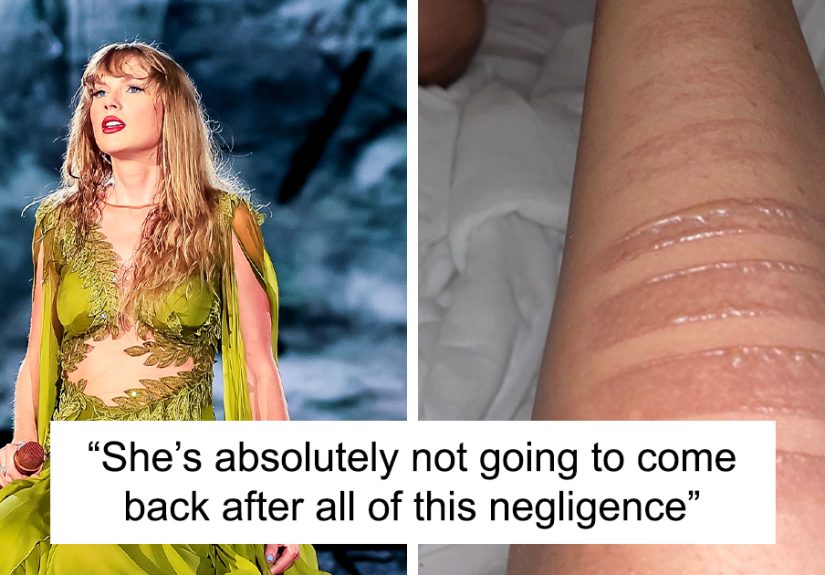
Beyond heat illness concerns, a separate detail ignited alarm online: some concertgoers reported burns after coming into contact with metal surfaces
that had been baking under intense sun and trapped heat.
The most common descriptions involved metal flooring or plates in certain areas, plus railings and barriers that can heat up quickly outdoors.
Importantly, the “second-degree burns” phrasing comes primarily from attendee accounts circulating on social media and amplified by entertainment coverage.
Medical professionals generally use burn “degrees” as a clinical classification, so a fan’s label may or may not match an official diagnosis.
Still, the underlying safety issue is real: hot metal can injure skin, especially when people stumble, sit, or brace themselves in a packed crowd.
Why Metal Turns Into a Problem (Fast)
- Metal absorbs and holds heat: In direct sun, it can become much hotter than the air temperature.
- Skin contact time matters: A quick touch may sting; a longer contactespecially after a fallcan cause a more serious injury.
- Crowds reduce choice: When space is tight, people can’t simply “move away from the hot part.”
Burns Were a Symptom of a Bigger System Failure
The burns narrative is shocking, but it’s also a warning light: when event conditions are so extreme that the ground becomes hazardous,
the safety plan needs more than minor tweaks. It needs a redesignstarting with heat risk as a primary threat, not an inconvenient detail.
What Fans Meant by “Inhumane Conditions”
“Inhumane” is a heavy word, and fans used it because they felt powerless inside a setting that didn’t adapt quickly enough.
Based on reporting and accounts, the core themes were consistent:
- Crushing heat exposure before and during the show, especially for people waiting outside for hours.
- Crowd compression in standing-room areas where movement was limited and airflow was poor.
- Water access frustrationsnot just price, but physical difficulty getting it in time.
- Delayed relief measures (more water points, clearer instructions, better entry timing) that many felt should have been in place from the start.
Put bluntly: if a venue is so hot that fans are chanting for water, and so packed that vendors can’t reach people reliably,
the environment has crossed from “uncomfortable” into “unsafe.”
What Taylor Swift and the Event Team DidAnd Why It Still Became a Flashpoint
Reporting from the night describes Swift pausing to acknowledge distressed fans and urging water to be delivered.
After the tragedy and intense scrutiny, the next scheduled Rio show was postponed due to extreme temperatures.
Event organizers also faced criticism, and later acknowledged that additional precautions could have been taken.
This is where public expectations collide:
Fans want artists to be safe leaders in the moment, but artists don’t control venue operations the way promoters and local organizers do.
Still, when your name is on the ticket, the public often expects you to be the loudest voiceeven if you don’t hold the keys.
The Real Accountability Map
- Venues control infrastructure: shade, airflow, water station placement, and emergency access routes.
- Promoters/organizers control operations: entry timing, staffing, medical presence, crowd flow, and contingency planning.
- Local authorities control rules and enforcement: safety codes, water policies, and emergency directives.
- Artists and touring teams can influence decisions, pause shows, and demand standardsbut they are not the sole operators.
Authorities Responded: Investigations, Water Access, and New Rules
Following the Rio incident, reporting described investigations into organizers and heightened pressure from public officials regarding crowd safety and hydration.
Coverage also described new or reinforced expectations around free water access and allowing fans to bring water into events under dangerous heat conditions.
Regardless of the specific legal outcomes, the policy direction was clear: extreme heat requires mandatory, accessible hydrationperiod.
What This Teaches Us About Concert Safety in 2026 and Beyond
Heat waves aren’t rare surprises anymorethey’re predictable seasonal threats. That means concert planning needs to treat heat like it treats lightning:
as a condition that can override the schedule.
A Heat-Safe Concert Checklist for Venues and Promoters
- Heat triggers and thresholds: Set clear “if-then” rules (more water stations, delayed entry, or rescheduling) based on heat index.
- Guaranteed free hydration: Not just “available to buy,” but free, accessible, and abundant in multiple locations.
- Shade and cooling: Pop-up shade structures, misting areas, and shaded queue zones for long lines.
- Queue redesign: Stagger entry times, reduce time in direct sun, and prevent “hours-long bake” conditions.
- Medical and extraction capacity: More trained staff, clear paths to pull people out quickly, and visible help points.
- Hot-surface audits: Identify metal flooring, rails, and barriers that can superheatthen cover, coat, shade, or restrict contact.
- Communication that works in a crowd: Big signage, loudspeaker messages, and simple rules repeated often.
Practical Heat Safety Tips for Fans
- Plan hydration like you plan your outfit: Start early in the day; don’t wait until you feel thirsty.
- Use a buddy system: Heat illness can sneak up; friends notice changes faster than you do.
- Know early warning signs: dizziness, confusion, nausea, pounding heartbeat, or feeling “weird” are reasons to get help.
- Dress for survival, not just selfies: Light clothing, breathable shoes, and sun protection if you’ll be in lines.
- Don’t tough it out: Leaving your spot to get water is not “missing the moment.” It’s protecting your ability to enjoy the rest of the night.
The Bigger Picture: Fandom, Trust, and the New Reality of Live Events
A stadium show is a giant promise: you’ll be safe enough to sing, cry, dance, and go home with your ears ringing in the happy way.
When that promise breaks, it doesn’t just create a bad nightit creates a trust gap that spreads through fandom at internet speed.
The Rio controversy also shows how quickly a single event can become a case study:
social media posts about burns and dehydration collided with reporting about water policies and emergency responses, and suddenly fans everywhere
started asking the same question: “If it can happen there, could it happen here?”
Experiences From the Crowd: A Composite of What Fans Described
Note: The following is a composite narrative built from widely reported attendee experiences and public accounts.
It’s not one person’s story, but a realistic “what it felt like” snapshot of the conditions fans said they faced.
You wake up excitedlike holiday-morning excitedbecause tonight is the night. The outfit is planned. The friendship bracelets are basically a second language.
You drink some water (good job!) and still somehow feel like you’re running on pure adrenaline and pop choruses.
Then the line happens. The sun is doing the most. The kind of “most” where your phone overheats and your makeup starts negotiating its resignation letter.
Time slows down the way it only can when you’re standing still, shoulder-to-shoulder, trying to save your energy because you’ll need it later.
People share fans, share sunscreen, share the tiny bits of shade like it’s a rare currency. Someone cracks a joke: “If we survive this, we’ll deserve VIP.”
Nobody laughs as hard as they want to, because laughing in extreme heat feels like cardio.
When entry finally moves, it’s not always smooth. The crowd compresses in wavessmall surges that don’t seem dramatic until you realize you can’t choose your speed anymore.
You’re trying to stay polite and calm, but your body is running a different program: “We are hot. We are thirsty. We are in a lot of people.”
You remind yourself you’re here for joy. You try to keep that at the center of your chest like a steady light.
Inside, the air can feel heavy. The kind of heavy that makes breathing feel slightly less automatic, like you have to remember to do it on purpose.
You look around and see people fanning themselves, sitting when they can, searching for any sign that water will be easy to get.
Someone points toward a station or a vendor, and it’s like spotting an oasisuntil you realize the “oasis” is far, and the crowd is dense, and moving there isn’t simple.
Now add the weirdest detail: surfaces you don’t normally think about start feeling dangerous. A rail that’s too hot to hold.
A patch of metal underfoot that’s been baking all day. People warn each other in the way crowds do when they’re forced to become a temporary community:
“Don’t touch that.” “Step here.” “Careful.” If someone stumbles, it’s not just embarrassingit’s scary, because the ground itself can bite back.
And then the show beginsbecause of course it does. The lights hit. The roar goes up. For a few minutes, your brain tries to pretend everything is normal.
But the body keeps sending messages: drink, cool down, breathe. When you hear fans chanting for water, it doesn’t feel like drama.
It feels like a survival request in the middle of a dream.
The emotional whiplash is intense: love for the music, worry for strangers, frustration at systems, hope that help is coming, and guilt for wanting to enjoy yourself anyway.
When you finally get wateror find a spot with slightly better airflowit feels less like a purchase and more like relief.
Later, on the way home, you replay everything: the songs, yes, but also the heat, the crowd, the moments when it felt like the plan didn’t match the reality.
And you think: this can’t be the new normal. Not for fans. Not for workers. Not for anyone.
Conclusion
The Rio show became a cautionary tale because it combined extreme heat, crowd density, and contested water accessthen added a detail nobody expects at a concert:
fans saying they were burned by superheated surfaces. Whether every account uses the perfect medical terminology isn’t the point.
The point is that concert conditions should never reach a level where basic contact with the environment can cause harm, or where fans have to beg for water in a crush of bodies.
Live music is supposed to be a joy engine. Keeping it that wayespecially as heat extremes become more commonrequires stronger standards, faster decisions,
and a safety culture that treats hydration and heat planning as non-negotiable. Because the best concert memory should be the encore, not the emergency.