Table of Contents >> Show >> Hide
- Why “Born” Is Such A Powerful Title Word
- The Long Life Of A Star Is Born
- War, Patriotism, And Disillusionment: Born on the Fourth of July
- Lions, Landscapes, And Freedom: Born Free
- Comedy, Class, And Civics: Born Yesterday
- Dark Side Of “Born”: Born to Kill And Natural Born Killers
- Family Adventures: Born to Be Wild
- Identity And Myth: American Born Chinese
- Reality TV And Representation: Born This Way
- Hard Truths: Born into Brothels
- So Is This Really “Every” Major Film And Show?
- Watching “Born” Stories: Experiences And Takeaways
Type the word “born” into a streaming search bar and you don’t just get baby stories. You get showbiz rises and falls, war trauma, outlaw lovers, talking gorillas, and a documentary that’ll leave you staring at the credits in silence. Titles with “Born” have become a surprisingly reliable shorthand for stories about identity, transformation, and starting over sometimes beautifully, sometimes violently.
Fan lists easily clear 150 movies and TV shows with “Born” in the title, but here we’ll tour the heavy hitters: the award winners, the cult favorites, and the series that actually changed conversations. Think of this as your curated guide to the biggest films and shows with “Born” in the title plus some ideas for what to watch next based on your mood.
Why “Born” Is Such A Powerful Title Word
“Born” is an action and a promise. It hints that someone (or something) is crossing a line: from unknown to famous, from innocent to dangerous, from captive to free. A title like A Star Is Born tells you immediately that fame is coming. Born on the Fourth of July wraps patriotism, politics, and personal identity into four little words. Born Free suggests a life that was never meant to be caged. Even a provocation like Natural Born Killers asks a dark question: are monsters made, or are they “born”?
Because of that built-in tension, “Born” titles are perfect for stories about big turning points. Whether it’s a singer stepping into the spotlight, a veteran turning against the war he fought, or a teenager navigating two cultures at once, the word quietly promises viewers that the character who walks into the story is not quite the same person who walks out.
The Long Life Of A Star Is Born
No list of “Born” titles can skip the most famous one: A Star Is Born. It’s not just a movie, it’s a Hollywood myth that studios keep retelling every few decades. Each version centers on a talented newcomer rising while an older, troubled star spirals downward, and each one reflects the era that produced it.
The 1937 Original
The 1937 film set the template: a young actress gets her big break thanks to a fading actor who sees her potential. It mixed romance and tragedy with a sharp look at how the studio system builds people up and tears them down, earning critical praise and early Academy recognition for its original story.
The 1954 Musical With Judy Garland
In 1954, the story returned as a lavish musical starring Judy Garland and James Mason. Many classic-film fans still consider this the definitive version, thanks to Garland’s powerhouse performance and musical numbers that double as emotional monologues. It didn’t win the Oscars many believed it deserved, but it cemented the story as a Hollywood staple.
The 1976 Rock Version
The 1976 adaptation with Barbra Streisand and Kris Kristofferson updated the plot for the rock era. The setting shifted from old-school studio Hollywood to the world of stadium concerts and guitar gods. It was very much a 70s time capsule big hair, big ballads, and a chart-topping soundtrack but the emotional core stayed the same: talent, addiction, and the cost of love in public.
The 2018 Bradley Cooper & Lady Gaga Revival
The most recent version, directed by and starring Bradley Cooper opposite Lady Gaga, proves the story still works in the age of viral fame and streaming. The film earned multiple Oscar nominations, a win for the song “Shallow,” and a long life on streaming platforms. It pairs modern pop-country music with a painfully intimate portrait of addiction, mental health, and the way one partner’s success can feel like another’s disappearance.
Across all four incarnations, A Star Is Born is the ultimate “born” story: someone’s career is born right as another person’s old life dies. If you want maximum emotional payoff for your “Born” marathon, start here.
War, Patriotism, And Disillusionment: Born on the Fourth of July
Oliver Stone’s Born on the Fourth of July is a very different kind of origin story. Based on Vietnam veteran Ron Kovic’s autobiography, it follows a patriotic small-town boy who enlists, is paralyzed in combat, and eventually becomes a leading anti-war activist. The casting of Tom Cruise then best known for charming blockbusters was a shock at the time, but his intense performance earned him an Academy Award nomination and helped the film win the Oscar for Best Director.
The title itself is a loaded phrase. Being “born” on Independence Day should mean a destiny wrapped in flags and fireworks. Instead, the film shows how someone raised on idealized patriotism can feel profoundly betrayed when reality doesn’t match the promise. For viewers, it turns a familiar holiday into a reminder that the people who fight under a flag don’t all come home to parades.
Lions, Landscapes, And Freedom: Born Free
If you want a “Born” story that’s more heartwarming (and a lot furrier), go for Born Free. The 1966 film dramatizes the real-life story of Joy and George Adamson, who raised an orphaned lion cub named Elsa and then faced the ethical choice of whether to keep her or return her to the wild.
Famous for its sweeping African scenery and its bittersweet theme song, Born Free helped shape a generation’s feelings about wildlife conservation. The movie’s success led to sequels, a documentary follow-up, and a 1970s TV series, all circling the same question: if an animal has been raised in captivity, can it still live the life it was “born” to have?
Comedy, Class, And Civics: Born Yesterday
Born Yesterday comes in two main flavors: the 1950 classic and the 1993 remake. Both center on a mobbed-up businessman who brings his seemingly ditzy girlfriend to Washington, D.C., then hires a journalist to “polish” her image so she won’t embarrass him. The joke, of course, is that the more she learns, the less willing she is to play along with his corruption.
The original film, starring Judy Holliday, Broderick Crawford, and William Holden, is widely considered the stronger version. Holliday won an Academy Award for her performance as Billie Dawn a character who appears naive but turns out to be far from “born yesterday” once she gets access to books and ideas. The film combines screwball comedy with a pointed civics lesson about democracy, education, and who actually benefits when people stay ignorant.
The 1993 remake with Melanie Griffith, John Goodman, and Don Johnson sticks to the same basic outline but never quite escapes comparisons to the original. Critics generally saw it as a lighter, less sharp take, which only reinforces how enduring the 1950 adaptation really is.
Dark Side Of “Born”: Born to Kill And Natural Born Killers
Born to Kill (1947)
Long before tabloid TV, film noir was already obsessed with dangerous people. Robert Wise’s 1947 movie Born to Kill follows a violent sociopath and the socialite drawn to him. It’s a grim little thriller filled with murder, jealousy, and double-crosses, and it gained a reputation for being so brutal that some local censors tried to ban it.
The title plays like a diagnosis: this isn’t a villain who just made a bad choice; it’s someone the film frames as fatally flawed from the start. That “born” label raises unsettling questions about whether evil is a matter of fate, environment, or both a theme that crime movies and true-crime podcasts are still chewing on today.
Natural Born Killers (1994)
Oliver Stone returned to “Born” territory in a very different way with Natural Born Killers, a ferocious 1990s satire following lovers Mickey and Mallory as they go on a cross-country killing spree and become media celebrities. With a story credited to Quentin Tarantino and a dizzying, hyper-edited visual style, the film is as much about television and tabloid culture as it is about its central couple.
Here, “natural born” is pure provocation. Are Mickey and Mallory monsters by nature, or did abuse, trauma, and a fame-drunk media ecosystem create them? The movie doesn’t offer easy answers, but it guaranteed that any future “Born” title with the word “killers” in it would sound like a deliberate echo.
Family Adventures: Born to Be Wild
On the opposite end of the violence spectrum sits Born to Be Wild, a 1995 family film about a troubled teenager, his scientist mother, and a gorilla named Katie. The plot has a little of everything: animal rescue, road-trip chaos, and a young man growing up in the process of helping a creature he’s come to love.
While it never hit the same cultural heights as Free Willy, the movie fits neatly into the 90s trend of animal-centric adventure stories. The “Born” in the title nods to the idea that both the gorilla and the boy are meant for something more than cages literal or metaphorical.
Identity And Myth: American Born Chinese
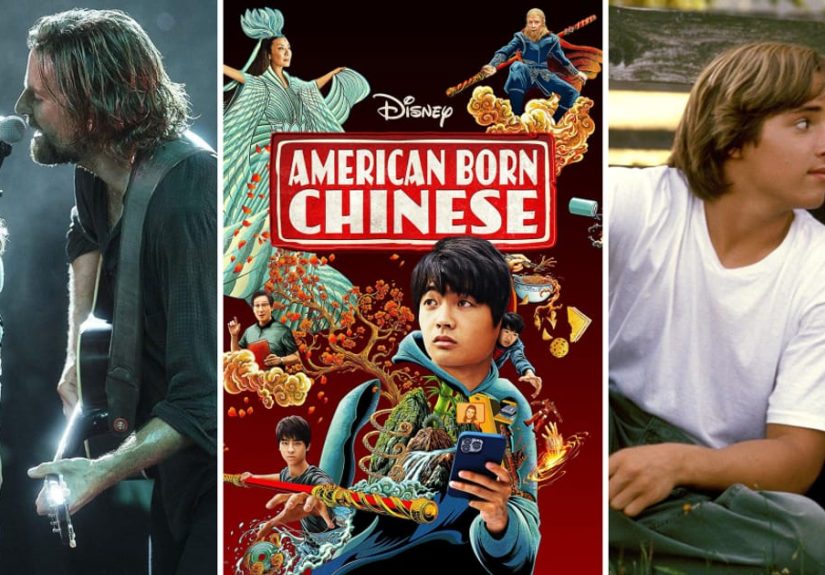
Jumping to TV, Disney+’s American Born Chinese updates the “Born” theme for the age of streaming and superhero fatigue. Based on Gene Luen Yang’s acclaimed graphic novel, the series follows Jin Wang, a Chinese American high-schooler trying to blend in, who gets pulled into a war among Chinese mythological figures while dealing with regular teenage problems.
The title does double duty. “American born” points to the character’s passport, but the show is really about belonging at school, in his family, and between cultures. It plays with action, comedy, and myth, but at its core it’s another “born” story: a kid figuring out who he’s allowed to be, not just who other people expect him to be.
Reality TV And Representation: Born This Way
While many “Born” titles are scripted, the reality series Born This Way focuses on real young adults with Down syndrome navigating work, relationships, and independence. The show earned critical honors for portraying its cast with nuance and warmth, rather than leaning on stereotypes or “inspiration porn.”
Here the word “born” points directly at disability and difference but the series quickly moves past labels to focus on personality. Viewers get to know cast members as whole people: funny, stubborn, romantic, ambitious. If the “Born” in some titles is about destiny, Born This Way quietly argues that what you’re born with is only part of your story.
Hard Truths: Born into Brothels
Among the most emotionally intense “Born” titles is the documentary Born into Brothels: Calcutta’s Red Light Kids. The film follows children growing up in Kolkata’s red-light district and documents a photographer’s attempt to use cameras and art to open up new possibilities for them.
The title is blunt by design. These kids are literally “born into” circumstances stacked against them. Yet the film balances harsh realities with moments of joy and creativity, which is part of why it resonated with critics and took home the Academy Award for Best Documentary Feature. It’s not an easy watch, but it’s one of the most important “Born” stories on this list.
So Is This Really “Every” Major Film And Show?
Short answer: no single article can realistically capture every notable “Born” title. Fan-curated lists easily pass 150 entries, from lesser-known TV movies to international deep cuts, and new projects with “Born” in the title appear regularly on streaming platforms.
What you’ve seen here is a curated sample of the biggest and most influential examples: titles that won major awards, sparked debate, inspired remakes and spin-offs, or held a meaningful place in film and TV history. Together, they show how one small word can stretch across genres musicals, war dramas, crime films, family adventures, reality TV, and documentaries while always circling the same big questions about who we are and who we might become.
Watching “Born” Stories: Experiences And Takeaways
Sit down for a marathon of “Born” titles and you’ll notice something funny: even though the word is the same, the emotional journey keeps changing. Viewers who binge the A Star Is Born films, for example, often talk about feeling like they’re watching Hollywood rewrite its own diary every few decades. The clothes change, the music changes, the technology definitely changes, but the emotional hit the thrill of seeing someone step into their power while the person who helped them falls apart lands in every era.
Switch from those musical tragedies to Born on the Fourth of July and the experience is completely different. The word “born” starts to feel heavier. Viewers see how the same country that raised Ron Kovic as a patriotic kid also sends him to a war that shatters his body and his faith. People who come to the film expecting a conventional war movie often come away talking about how it re-framed their understanding of patriotism, sacrifice, and the long tail of trauma at home.
Then there are the “Born” stories that sneak up on you with unexpected tenderness. Someone might put on Born Free or Born to Be Wild for a cozy family night and discover that these are less about cute animals and more about responsibility. The question “What was this creature born for?” quickly turns into “What kind of humans are we if we ignore the answer?” Kids notice the animals; adults notice the ethics. Both leave with a stronger sense that freedom is not just a slogan in a title.
If you move into the darker territory of Born to Kill or Natural Born Killers, the viewing experience becomes more confrontational. These films make audiences uncomfortable on purpose. Discussions afterward usually turn to blame: are these characters wired wrong from day one, or are they the product of violent homes, corrupt institutions, and a culture that treats brutality as entertainment? Viewers don’t always agree, but that tension is exactly what keeps these movies in circulation.
Modern TV entries like American Born Chinese or Born This Way add another layer to the experience. Here, “born” isn’t about destiny so much as identity. People who grew up between cultures or with a disability see pieces of their own lives reflected on screen sometimes for the first time in a mainstream, big-platform production. For other viewers, these shows become accessible windows into experiences they’ve never had, which is quietly powerful in its own right.
Put all of this together and you start to see why “Born” keeps showing up in titles. For viewers, it signals that something important is at stake: a career, a conscience, a sense of belonging, a life. Whether you’re in the mood for a tear-jerking musical, a searing war drama, a messy crime thriller, or a hopeful documentary about kids with cameras, there’s a “Born” story ready to match your playlist and maybe change the way you think about where our stories really begin.
SEO JSON