Table of Contents >> Show >> Hide
- Why This Story Hit a Nerve Online
- A White Cane Is an Independence Tool, Not a Conversation Piece
- The Real Villain Here Is Everyday Ableism
- What Should Have Happened Instead
- What Parents Should Teach Their Kids About Disability
- The Story Also Reveals Something Good
- Why This Headline Still Matters
- Related Experiences: The Everyday Friction Behind Stories Like This
Some viral stories are funny in a “what in the parking-lot circus did I just read?” kind of way. This is not one of those stories. It is memorable, yes. Ridiculous, absolutely. But it also lands with a thud because it highlights a very real problem: too many people still do not understand what a white cane is, what it does, or why messing with it is a serious safety issue.
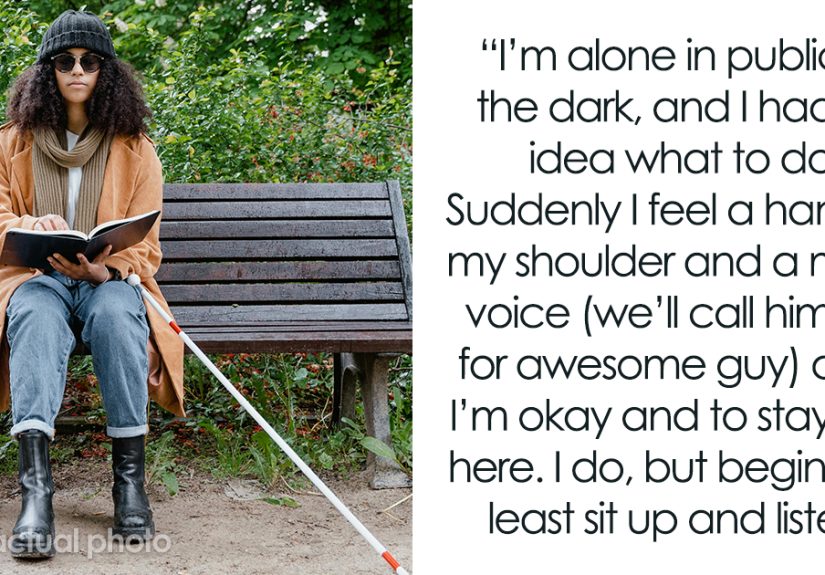
In the now-famous account behind this headline, a newly blind woman described going out alone to handle a bank errand and pick up groceries. While navigating the store with her cane, she accidentally bumped into a child, apologized, and tried to explain that she was blind. Instead of accepting the apology and moving on like a reasonable human being with functioning empathy, the child’s mother allegedly accused her of faking blindness. Then, in the moment where this story crosses the border from rude into downright dangerous, the woman says the child grabbed her cane and the mother let it happen.
That detail is why the story stuck. A white cane is not a toy. It is not a prop. It is not a fashion accessory, a dramatic flourish, or a stick that wandered away from a marching band. It is a mobility tool that helps blind and low-vision people travel safely and independently. Taking it away is not a prank. It is interference with someone’s ability to move through the world.
Why This Story Hit a Nerve Online
The internet has seen no shortage of “entitled parent” stories, but this one triggered such strong reactions because it touches on something deeper than everyday bad manners. It exposes how quickly ignorance can become ableism when a person refuses to believe a disability unless it looks the way they expect.
That is one of the ugliest parts of the story. The mother reportedly challenged the woman’s blindness because she was not wearing oversized dark sunglasses, as if blindness comes with a costume department and a mandatory wardrobe. It does not. Blindness exists on a spectrum. Some people have no vision at all. Others have partial sight, light perception, tunnel vision, or fluctuating vision. Some use sunglasses, some do not. Some use guide dogs, some use white canes, some use both, and some use neither at all times. There is no single “correct” visual presentation of blindness.
This is where so many public misunderstandings begin. People mistake unfamiliarity for fraud. If a disability does not match a movie cliché, they assume something suspicious is happening. That mindset is exhausting for disabled people and, in situations like this one, can become unsafe very quickly.
A White Cane Is an Independence Tool, Not a Conversation Piece
It helps people read space through touch and motion
A white cane gives information about the environment: curbs, steps, obstacles, changes in terrain, aisle displays, dropped objects, and the general layout of an unfamiliar space. In plain English, it helps a blind person know what is in front of them before their shin, shoulder, or face discovers it the hard way.
That is why people who understand blindness etiquette are so direct on this point: do not touch, move, grab, joke about, or “borrow” someone’s cane. It is an extension of the user’s spatial awareness. The cane is part safety device, part navigation system, part independence engine. Snatching it away because a child wants to play pirate for ten seconds is not cute. It is reckless.
Taking it away can trigger panic and disorientation
The original poster described immediate panic after losing her cane, which makes perfect sense. For a person who relies on that tool, suddenly losing it in a noisy store is like having the lights go out and the floor plan rearranged at the same time. You are no longer simply inconvenienced. You are vulnerable.
That is why this story feels bigger than one rude encounter in a grocery aisle. It demonstrates how a seemingly small act can strip away a disabled person’s control in seconds. Independence is not abstract when you are blind. It can be as concrete as the object in your hand.
The Real Villain Here Is Everyday Ableism
Let us be honest: the phrase “entitled mom” makes for a clickable headline, but the more useful phrase is everyday ableism. The mother’s alleged behavior reflects several familiar problems all at once:
- assuming a blind person must “look blind” in a specific way,
- deciding that her child’s feelings mattered more than someone else’s safety,
- treating a mobility aid like public property,
- and refusing to believe a disabled person when that person explained their own reality.
That combination is not rare enough to dismiss as random villainy. Ask blind adults about shopping, sidewalks, public transit, airports, restaurants, or office buildings, and you will hear versions of the same theme: strangers grabbing arms without asking, people talking to companions instead of to them, kids swinging on canes, employees rearranging spaces without warning, and bystanders assuming help is needed when what is actually needed is space.
The story also underscores a truth many disability advocates repeat over and over: most barriers are not created by a medical condition alone. They are created by social attitudes, poor design, and the refusal to respect disabled people as the experts on their own lives.
What Should Have Happened Instead
The correct response to this situation was almost comically simple.
- The woman accidentally bumps into the child.
- She apologizes.
- The mother says, “No problem.”
- Everybody continues shopping for cereal, frozen peas, and whatever else destiny had placed on the grocery list.
That is it. No interrogation. No fake detective work. No performance review of the woman’s blindness. No allowing a child to grab a mobility aid because he suddenly developed a deep and urgent passion for assistive technology.
If someone who is blind seems to need help, the respectful move is to ask first. Not grab first. Not lecture first. Not assume first. Ask first. If help is wanted, offer your arm so the person can choose how to take guidance. If help is not wanted, respect the answer and move along.
What Parents Should Teach Their Kids About Disability
Parents do not need a graduate seminar in accessibility to handle moments like this well. They just need a few solid rules and the willingness to model basic decency.
Rule No. 1: Mobility aids are not toys
Tell kids early that canes, walkers, wheelchairs, crutches, hearing devices, and service animals are not playthings. They are part of how someone moves, communicates, or stays safe.
Rule No. 2: Curiosity is fine, grabbing is not
Children are curious. That is normal. The fix is not shame; it is guidance. “You can ask a question politely, but you may not touch.” Easy, useful, effective.
Rule No. 3: Apologies do not need courtroom drama
If a minor accidental bump happens in a crowded public place, teach children to accept an apology and move on. Not every moment requires outrage, a witness statement, and the emotional tone of a reality-show reunion special.
The Story Also Reveals Something Good
For all its ugliness, the post does not end in total despair. Another shopper stepped in, retrieved the cane, helped the woman up, and stayed with her while she finished shopping. That matters. Public kindness cannot erase ableism, but it can interrupt it.
And that is one reason this story continues to circulate. It is not just about cruelty. It is about contrast. One person weaponized ignorance; another person practiced basic humanity. One treated disability as a performance to be judged; the other recognized a person in distress and helped restore control.
That contrast is the whole lesson. Accessibility is not only about laws, ramps, training, and policy, though all of those matter. It is also about everyday choices. Do you believe people when they tell you what they need? Do you respect their tools? Do you make space, ask first, and listen? Or do you turn someone else’s vulnerability into your own little power trip?
Why This Headline Still Matters
At first glance, “Entitled Mom Gets Mad At Blind Lady” sounds like internet melodrama wrapped in clickbait clothing. But underneath the headline is a serious reminder about blindness, dignity, and public behavior. A white cane symbolizes independence, not helplessness. Interfering with it is not harmless. And doubting a disabled person because they do not fit your stereotype is not skepticism. It is disrespect.
If there is one useful takeaway from the whole mess, it is this: blind people do not need strangers to test their legitimacy. They need the same thing everyone else needs in publicsafety, respect, and the freedom to do ordinary errands without somebody turning aisle seven into an audition for Worst Person of the Week.
Related Experiences: The Everyday Friction Behind Stories Like This
One reason this story spread so widely is that many blind and low-vision readers recognized the pattern immediately. Even if they had never had a cane physically taken from them, they knew the emotional shape of the situation. The doubt. The unwanted interference. The weird confidence some strangers have when they know very little but act like they are starring in a documentary called I Have Decided Your Disability Is Suspicious.
Many common experiences are less dramatic than the viral story, but they come from the same place. A blind person enters a store and an employee talks to the sighted companion instead of speaking directly to the customer. Someone sees a white cane and suddenly starts shouting, as if vision loss and hearing loss always arrive as a package deal. A stranger grabs an elbow without warning, which can feel less like help and more like being yanked into someone else’s plan. Furniture gets moved, displays spill into walkways, and people leave doors half open, all while assuming these are tiny issues when they can actually create hazards.
Then there are the questions that reveal how little the public understands modern accessibility. “How do blind people text?” “How do they use social media?” “How are they typing?” The answer, quite often, is technology, training, practice, and adaptation. Screen readers read text aloud. VoiceOver and Narrator help users navigate screens. Braille displays, audio tools, magnification software, and keyboard skills make digital life possible. Blindness is not the end of communication. It just changes the interface.
Other experiences are social rather than technical. People may praise blind individuals for doing ordinary tasks, which can feel patronizing rather than supportive. Others swing hard in the opposite direction and act suspicious of anyone who appears “too capable” to fit their stereotype of blindness. That contradiction is exhausting. Disabled people are often expected to be either inspirational superheroes or helpless dependents, with very little room to simply be regular adults buying bread, checking bank balances, and trying not to get flattened by a promotional display near the frozen foods.
Parents also play a huge role in whether these encounters go well. When adults calmly explain that a white cane helps someone travel safely, children usually understand faster than grown-ups. Kids can be taught to ask respectful questions, keep their hands to themselves, and recognize that disability is a normal part of human life. The problem is rarely childhood curiosity on its own. The problem is when adults reinforce fear, mockery, entitlement, or disbelief.
That is why stories like this should not be treated as disposable internet outrage. They are useful cultural snapshots. They show where etiquette fails, where public knowledge is weak, and where accessibility still depends too much on whether the nearest stranger happens to be decent. The goal is not to make blind people inspirational symbols or pity magnets. The goal is much simpler: create a world where a person can use a white cane, go shopping, apologize for an accidental bump, and finish the trip without having to defend their disability to a self-appointed expert in nonsense.