Table of Contents >> Show >> Hide
- Before You Start: Can Fake Jewelry Really Become Silver Again?
- What You Will Need
- Easy Ways to Make Fake Jewelry Silver Again: 11 Steps
- Step 1: Figure Out What Kind of “Fake Silver” You Have
- Step 2: Dust and Degrease the Surface First
- Step 3: Mix a Gentle Soap Solution
- Step 4: Wipe, Don’t Soak, for Delicate Pieces
- Step 5: Use a Cotton Swab or Soft Brush for Tight Spots
- Step 6: Rinse Carefully and Dry Thoroughly
- Step 7: Buff With a Jewelry Cloth for a Silver-Tone Shine
- Step 8: Try the Foil-and-Baking-Soda Method Only on Plain Metal Pieces
- Step 9: Skip Toothpaste, Harsh Pastes, and Random Internet Chaos
- Step 10: Know When Cleaning Will Not Fix the Problem
- Step 11: Keep It Silver Longer With Better Storage and Wear Habits
- Common Mistakes That Make Fake Jewelry Look Worse
- When to Use a Store-Bought Jewelry Cleaner
- How to Tell Whether a Piece Is Worth Saving
- Real-World Examples of What Works
- Experiences and Lessons People Commonly Learn While Restoring Fake Silver Jewelry
- Conclusion
If your favorite fake silver necklace now looks more “sad gray spoon” than “cool vintage sparkle,” do not panic. Costume jewelry and silver-tone pieces often lose their shine because dirt, oils, moisture, and tarnish build up over time. The good news is that many pieces can look dramatically better with the right cleaning method. The less-fun news is that not every dull piece can be fully restored at home. If the silver-colored coating has worn off completely, no kitchen trick will magically re-plate it. Still, a careful cleaning routine can remove grime, brighten the finish, and make fake jewelry look silver againor at least silver-ish enough to rejoin your outfit rotation with dignity.
This guide walks you through 11 practical steps to clean fake jewelry safely, restore silver-tone shine, and avoid the classic mistake of scrubbing the finish right off. It is built for real life: thrift-store finds, drawer-bottom bracelets, mystery earrings, and the chain you forgot existed until five minutes before going out.
Before You Start: Can Fake Jewelry Really Become Silver Again?
Sometimes, yes. Sometimes, not exactly. If your jewelry is simply dirty, mildly tarnished, or coated with skin oils, it can often be cleaned and brightened beautifully. If the piece is silver-plated or silver-tone over a base metal like brass, copper, or alloy, cleaning may reveal more shine and improve the color.
But if the top finish has chipped, peeled, or rubbed away, you are not dealing with dirt anymoreyou are dealing with missing plating. In that case, cleaning can help the piece look neater, but it will not restore the original silver coating. That usually requires re-plating, touch-up paint designed for metal, or replacement.
In other words, your bracelet may need a spa day, not a miracle.
What You Will Need
- Microfiber cloth or very soft cotton cloth
- Mild dish soap
- Warm water
- Small bowl
- Cotton swabs
- Soft baby toothbrush or extra-soft brush
- Dry towel
- Aluminum foil and baking soda for certain plain metal pieces only
- Jewelry polishing cloth for final buffing
Easy Ways to Make Fake Jewelry Silver Again: 11 Steps
Step 1: Figure Out What Kind of “Fake Silver” You Have
Start by looking closely at the jewelry under bright light. Is it silver-tone metal with no stones? Is it plated costume jewelry with rhinestones glued in place? Are there chipped spots exposing yellow, bronze, or copper-colored metal underneath?
This matters because different pieces tolerate different cleaning methods. A plain silver-tone chain can usually handle more cleaning than a brooch full of glued crystals. If you see peeling, flaking, missing color, or cracked settings, go extra gentle. Think “dab and wipe,” not “kitchen chemistry experiment.”
Step 2: Dust and Degrease the Surface First
Before you do anything fancy, wipe the piece with a dry microfiber cloth. This removes loose dust, makeup residue, and body oils that can make jewelry look dull. You would be amazed how many “tarnished” earrings are actually just wearing a fine coat of foundation, hairspray, and life choices.
Pay special attention to crevices around clasps, jump rings, and decorative details. This first pass often restores enough shine that you may not need a deeper clean.
Step 3: Mix a Gentle Soap Solution
In a small bowl, mix warm water with a few drops of mild dish soap. Do not use hot water, bleach, ammonia-heavy products, or strong household cleaners. Fake jewelry usually has thin plating, glue, and delicate finishes that do not appreciate aggressive chemistry.
This mild solution is your safest all-purpose option for costume jewelry, silver-tone chains, and most plated pieces. If you are unsure what the metal is, this is the best place to start.
Step 4: Wipe, Don’t Soak, for Delicate Pieces
Dip a soft cloth into the soapy water, wring it out well, and gently wipe the jewelry. This is especially important if the piece has rhinestones, faux pearls, enamel, or anything that appears glued on. Long soaking sessions can loosen adhesives and turn a sparkly statement earring into a tiny craft disaster.
For simple metal pieces without stones, a brief soak of a minute or two may be fine, but with costume jewelry, restraint is your best friend. Clean slowly and check your progress as you go.
Step 5: Use a Cotton Swab or Soft Brush for Tight Spots
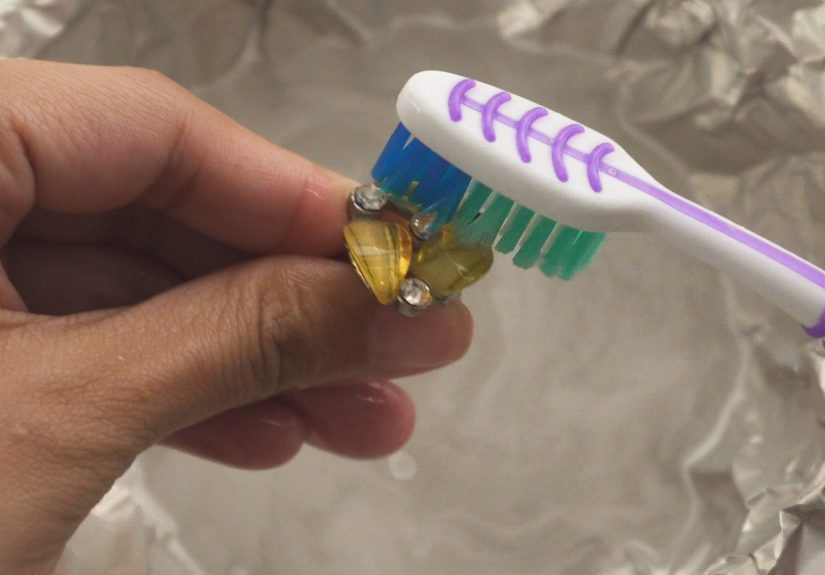
Now go after the grime hiding in small details. Use a cotton swab or an extra-soft toothbrush dipped lightly in the soap solution. Gently brush around links, engravings, prongs, and textured areas. Avoid hard scrubbing. The goal is to lift dirt, not sandblast the finish off your favorite ring.
If you notice color coming off onto the swab, stop immediately. That means the plating is fragile or already breaking down. Switch back to a cloth-only approach.
Step 6: Rinse Carefully and Dry Thoroughly
Do not run delicate costume jewelry under a roaring faucet like it owes you money. Instead, wipe away soap residue with another clean cloth dampened with plain water. This keeps moisture controlled and helps protect glued stones.
Then pat the piece dry and let it air dry completely on a towel. Placing earrings or brooches upside down can help moisture escape from the settings instead of pooling underneath. A fully dry finish looks brighter and is less likely to tarnish again quickly.
Step 7: Buff With a Jewelry Cloth for a Silver-Tone Shine
Once dry, buff the jewelry with a polishing cloth made for jewelry or a clean microfiber cloth. This step often makes the biggest visible difference. Buffing smooths away haze, brightens the surface, and gives silver-tone jewelry that crisp reflective look people actually want.
Use light pressure and small circular motions. If the piece is only mildly dull, this may be all it needed from the start. Some fake jewelry responds beautifully to polishing because the finish was never ruinedjust buried under residue.
Step 8: Try the Foil-and-Baking-Soda Method Only on Plain Metal Pieces
If your fake jewelry is plain silver-tone metal with no pearls, no glued stones, and no mystery coatings, you can try a cautious tarnish-removal bath. Line a bowl with aluminum foil, place the jewelry so it touches the foil, sprinkle in baking soda, and add hot water. Let it sit briefly, then remove, rinse, and dry.
This method can help lift tarnish from some silver-tone and plated pieces, but it is not for everything. Skip it if the jewelry is delicate, embellished, antique-looking with intentional dark details, or obviously chipped. Also skip it if your instincts are saying, “This necklace seems fragile.” Your instincts are probably right.
Step 9: Skip Toothpaste, Harsh Pastes, and Random Internet Chaos
Yes, you will find advice telling you to scrub jewelry with toothpaste, salt paste, ketchup, or half the condiment shelf. Resist the urge. Some of these methods may work on sturdier solid metals, but fake jewelry is not the place to get adventurous. Abrasive cleaners can scratch the surface, wear away plating, dull stones, and leave a once-cute bracelet looking like it fought a vacuum cleaner and lost.
If you truly need extra help beyond mild soap and gentle tarnish removal, use a product clearly labeled safe for costume jewelry or plated jewelry. When in doubt, less drama is better.
Step 10: Know When Cleaning Will Not Fix the Problem
If the silver color is missing in patches, revealing yellow or reddish metal underneath, you are dealing with worn plating. Cleaning will not replace metal that is no longer there. At that point, your options are:
- Have the piece professionally re-plated if it has sentimental value
- Use it as a vintage-style piece with character
- Retire it gracefully and replace it with a better-quality silver-tone version
This step is important because many people keep cleaning harder when the real issue is surface loss, not dirt. That usually makes the piece worse. When the finish is gone, the finish is gone. Let us be honest with the bracelet and with ourselves.
Step 11: Keep It Silver Longer With Better Storage and Wear Habits
Once your jewelry looks good again, protect your hard work. Store each piece separately in a soft pouch, small plastic bag, or divided jewelry box. Keep it away from humidity, direct sunlight, and bathroom steam. Add silica packets if you live somewhere humid or your room basically turns tropical every summer.
Also follow the golden rule for fake silver jewelry: last on, first off. Put on perfume, lotion, hairspray, and sunscreen before you wear the jewelry. Then remove the jewelry before showering, swimming, exercising, or sleeping. Water, sweat, and product residue are repeat offenders in the case of “Why did this necklace turn weird again?”
Common Mistakes That Make Fake Jewelry Look Worse
- Soaking embellished pieces too long: This can loosen glue and cloud stones.
- Using abrasive cleaners: Toothpaste, rough baking soda pastes, and scrubby pads can strip plating.
- Cleaning too aggressively: Hard pressure often damages thin finishes.
- Not drying thoroughly: Leftover moisture invites more tarnish and discoloration.
- Storing jewelry in humid spaces: The bathroom is convenient, but it is also basically a tarnish incubator.
When to Use a Store-Bought Jewelry Cleaner
A commercial cleaner can be helpful if it is specifically labeled for costume jewelry, plated jewelry, or silver-plated pieces. Read the label like your accessories depend on itbecause they do. Many cleaners designed for fine jewelry or sterling silver are too strong for fake jewelry, especially if the piece contains glued elements or fragile finishes.
Good candidates for a gentle commercial cleaner include plain silver-tone chains, metal-only hoops, and sturdier fashion jewelry that has become cloudy or tarnished. Always spot-test first on a hidden area. If the finish changes, stop.
How to Tell Whether a Piece Is Worth Saving
Not every piece deserves a rescue mission. Here is a simple test: if it is sentimental, part of a favorite outfit, or unusually well made, it is worth trying to restore. If it is flaking badly, turning your skin green, and missing half its stones, the universe may be gently telling you to move on.
Still, many thrifted or inexpensive pieces clean up surprisingly well. A dull silver-tone bracelet can go from “junk drawer gremlin” to “actually kind of chic” after ten careful minutes. That is part of the fun.
Real-World Examples of What Works
Example 1: A tarnished chain necklace. A basic silver-tone chain with no stones usually responds well to a wipe-down, a mild soap cleaning, thorough drying, and a polishing cloth. If it is still dark in places, a short foil-and-baking-soda treatment may help.
Example 2: Rhinestone earrings looking cloudy. Skip soaking. Wipe the metal with a damp soapy cloth, clean around the stones with a barely damp cotton swab, dry thoroughly, and buff the metal only.
Example 3: A ring with brass showing through. Cleaning may improve shine, but it will not make exposed base metal silver again. At that point, re-plating or replacement is the realistic solution.
Experiences and Lessons People Commonly Learn While Restoring Fake Silver Jewelry
One of the most common experiences people have with fake silver jewelry is realizing that the piece was not ruined nearly as badly as it looked. What seemed like permanent discoloration often turns out to be a mix of lotion, soap residue, oxidation, dust, and skin oils. After one careful cleaning, many people are surprised by how much silver-tone shine comes back. The change can be dramatic, especially on earrings, lightweight chains, and fashion rings that have been sitting in a box for months.
Another common lesson is that gentle cleaning almost always beats aggressive cleaning. People often begin with panic energy and internet confidence, which is a dangerous combination. They want instant results, so they reach for toothpaste, rough brushes, or strong household cleaners. Then they discover that fake jewelry has very little tolerance for “enthusiasm.” A soft cloth and a few minutes of patience usually do more good than an intense scrubbing session worthy of a kitchen sink.
Many people also learn the hard way that glued stones and water are not best friends. A necklace may look sturdy, but once moisture slips under glued rhinestones or faux pearls, the whole piece becomes vulnerable. That is why the smartest restorations are usually controlled and careful. Wiping works better than soaking for delicate costume jewelry. Tiny habits like drying the back of an earring well or keeping moisture out of the settings make a bigger difference than most people expect.
There is also the very relatable moment when someone realizes a piece is not dirty at allit is worn out. This happens a lot with rings and bracelets that rub against skin, desks, bags, and countertops every day. The silver finish slowly disappears, and what looks like stubborn tarnish is actually exposed base metal. That can be disappointing, but it is also useful. Once people understand the difference between removable tarnish and missing plating, they stop over-cleaning and start making smarter decisions about repair, replacement, or storage.
Finally, people who successfully restore fake jewelry often change how they treat it afterward. They stop tossing pieces into one tangled pile. They store items separately, keep them dry, and put them on after perfume instead of before. In other words, they graduate from accidental jewelry chaos to mildly responsible accessorizing. And that one shiftbetter daily careusually matters more than any single cleaning trick. The best way to make fake jewelry silver again is not just knowing how to clean it. It is knowing how to keep it from turning dull in the first place.
Conclusion
If you want to make fake jewelry silver again, the safest method is also the most effective for most pieces: clean gently, dry thoroughly, and buff patiently. Start with mild soap and a soft cloth, use detail tools carefully, and save stronger tarnish-removal tricks for plain metal items that can actually handle them. Most importantly, know the difference between surface dullness and missing plating. One can be cleaned. The other needs repair, replacement, or a very generous attitude.
With the right steps, plenty of fake silver jewelry can absolutely make a comeback. Maybe not “museum heirloom” level, but definitely “Yes, I am wearing this again” levelwhich, honestly, is the goal.