Table of Contents >> Show >> Hide
If you want to understand Los Angeles without sitting through a traffic report, skip the freeway and step inside a few homes. That is the magic of the Dwell on Design: Westside Home Tour. It is not just a parade of pretty kitchens and chairs that cost more than your first car. It is a living, sun-soaked lesson in how Westside architecture actually works: how houses pull in light, how patios become extra rooms, how privacy and openness somehow coexist, and how a city famous for reinvention keeps rewriting the idea of home.
Over the years, Dwell’s Westside tours have become known for showing off a distinctly Los Angeles mix of midcentury icons, sharp contemporary builds, thoughtful remodels, and quietly clever sustainable ideas. Some editions leaned heavily into eco-conscious design. Others highlighted the sheer variety of the Westside, from hillsides and courtyards to beach-adjacent compounds and art-filled family homes. What stayed consistent was the tour’s core appeal: real houses, real design choices, and a rare chance to see how architecture behaves when people actually live in it.
That matters because the best homes on the Westside are never just “modern” in the showroom sense. They are modern in a practical, very California way. They make space for ocean air, afternoon shade, dinner outside, kids running in and out, bikes leaning near the entry, and the subtle but serious business of making daily life look easier than it is. The result is a tour that feels part architecture lesson, part neighborhood safari, and part low-key fantasy about becoming the kind of person who owns a courtyard olive tree.
What the Westside Home Tour Really Is
At its best, the Westside Home Tour functions like Dwell magazine in three dimensions. Instead of flipping through spreads, visitors move room to room, noticing scale, sightlines, materials, and the surprisingly emotional power of good natural light. One year might feature five carefully chosen Westside homes. Another might fold the Westside into a larger citywide program with more residences and “Meet the Architects” events. Either way, the formula is smart: give design-minded people self-guided access to exceptional homes, then let the architecture do the talking.
And talk it does. In past tours, the featured houses have included everything from ocean-facing spaces with dramatic glass walls to homes with retractable living room walls, black cedar courtyard volumes, artist studios, and sensitive additions that preserved older footprints while introducing contemporary muscle. That range is exactly why the event works. The point is not to prove that one style wins. The point is to show that good residential design solves problems with personality.
Even the older versions of the tour still feel relevant because the questions they asked have not gone away. How do you remodel without erasing history? How do you make a compact urban lot feel expansive? How do you build greener without making the house feel like a lecture? These are not niche design problems. They are everyday housing questions dressed in very good cabinetry.
Why the Westside Is the Perfect Setting
1. The climate practically begs architects to show off
The Westside gives designers one of the great architectural cheat codes: weather that allows indoor-outdoor living for most of the year. That is why homes in Venice, Santa Monica, Mar Vista, Brentwood, and neighboring pockets so often blur the boundary between inside and outside. Folding doors, courtyards, decks, garden rooms, breezeways, and deep overhangs are not aesthetic extras here. They are part of the local design grammar.
This is also why Westside homes often feel calmer than they look on paper. A plan with multiple volumes, glass walls, and unusual circulation can still read as easygoing when every room has a visual relationship to a garden, patio, terrace, or planted courtyard. The old California promise of “a garden in every room” still hovers over the region, whether a home is a renovated midcentury cottage or a crisp new build with minimalist bones.
2. Neighborhoods carry distinct design personalities
One of the pleasures of a Dwell on Design Westside Home Tour is that the neighborhoods are not interchangeable. Venice still carries its weird, creative, improvisational energy, where studios, sculptural homes, and beach-town looseness coexist in the same visual sentence. Santa Monica often feels more polished and panoramic, with hillside light, coastal breezes, and houses that seem determined to frame every possible sunset. Mar Vista brings deep modernist credibility, while other Westside stops may layer in courtyard traditions, creative reuse, or family-oriented remodels with a distinctly lived-in warmth.
That variety gives the tour narrative momentum. It is not just house after house. It is an unfolding argument about what modern living can mean in different parts of the same city.
3. Modernism never really left
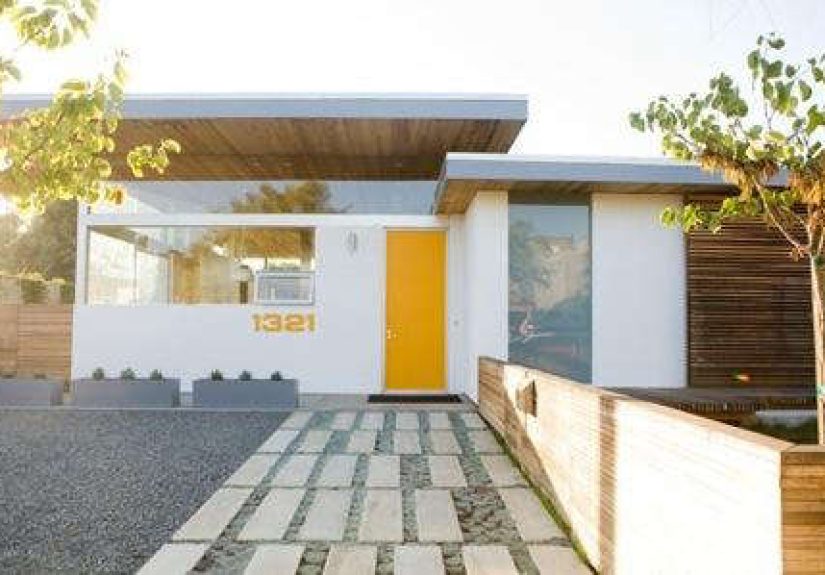
The Westside is one of those places where modernism is not a trend but an inheritance. Postwar experimentation, courtyard planning, steel-and-glass bravado, and a long affection for casual elegance all left fingerprints on the area. In Mar Vista, for example, the historic concentration of postwar modern homes is so significant that it became Los Angeles’s first designated historic district made up solely of Modern-style post-World War II houses. That kind of local legacy gives the Westside tour extra depth. You are not just seeing isolated “designer homes.” You are seeing new work in conversation with a serious regional tradition.
What You Tend to See on a Great Westside Tour
Midcentury bones with modern upgrades
Many standout Westside homes are not brand-new statements. They are thoughtful rewrites. A modest original footprint might remain, while the house gains better flow, more daylight, cleaner sightlines, smarter storage, and stronger connections to the yard. The appeal here is not nostalgia for nostalgia’s sake. It is the recognition that many older homes got the scale right and the materials right, but needed help with circulation, performance, or flexibility.
That is why tour-goers often come away remembering the homes that resisted the urge to bulldoze first and think later. A carefully handled remodel can preserve character while still feeling completely current.
Contemporary houses that know when to loosen up
Then there are the newer homes, often the ones people expect to be cold but end up loving. The best contemporary Westside residences know that strict minimalism only gets you so far. They soften hard geometry with warm wood, textured plaster, planted courts, built-in seating, tactile stone, and places where life can actually happen. A formal living room that nobody uses is less impressive than a kitchen-dining zone that gracefully absorbs breakfast, work calls, homework, and a late-night glass of wine.
Good Westside modernism understands this. It aims for atmosphere, not just angles.
Spaces built for real people, not just beautiful photographs
Another recurring theme is multipurpose living. Artist studios, detached workspaces, recording rooms, backyard structures, family nooks, reading corners, and entertaining zones show up again and again because Westside life asks a lot from a house. People want privacy, hospitality, creativity, storage, sunshine, flexibility, and a floor plan that does not collapse the moment someone starts a puzzle on the dining table.
The best homes on tour solve these demands without becoming over-programmed. They feel edited rather than over-engineered. That is harder to do than it looks, which is exactly why it is satisfying to see in person.
Sustainability without the sermon
Older Westside tour coverage repeatedly points to eco-consciousness, and for good reason. But the most compelling sustainable design choices are usually the least theatrical. Better insulation. Smarter siting. Cross-ventilation. Durable materials. Daylighting. Shading. Landscapes that support outdoor use without demanding absurd amounts of water. In other words, houses that perform better and feel better, without shouting “behold, my green roof” every five minutes.
That understated approach fits the spirit of the event. The tour is less interested in gadget worship than in design intelligence.
Design Lessons Worth Borrowing From the Tour
You do not need a Westside budget, a celebrity architect, or a cedar-clad courtyard cube to learn something useful from this event. The strongest homes usually reinforce a few practical lessons.
First, light should be shaped, not merely admitted. Skylights, clerestories, shaded glass walls, and controlled openings can make a home feel bigger and calmer without adding square footage.
Second, circulation matters more than decoration. A house that moves well feels more luxurious than a house stuffed with expensive finishes. Visitors notice this immediately on tour, even if they cannot quite explain why one home feels effortless and another feels bossy.
Third, outdoor space works hardest when it is treated like part of the plan, not leftover territory. The Westside tour repeatedly proves that a narrow court, a side yard, or a compact deck can carry enormous weight when it connects to interior life.
Fourth, restraint ages better than gimmicks. The homes people remember are not always the most dramatic. They are often the ones with coherence: materials that speak to each other, furniture that respects the architecture, and a layout that makes human behavior feel oddly elegant.
Why the Tour Still Matters in a Design-Saturated Era
We live in a time when everyone can scroll through immaculate interiors before breakfast. So why does a house tour still matter? Because photographs flatten experience. They do not tell you how a ceiling height changes your mood, how a courtyard pulls cool air through a room, or how a hallway can either compress and release space beautifully or make you feel like you are walking through a drywall apology.
The Dwell on Design: Westside Home Tour still matters because it puts design back into physical space. It turns abstract trends into lived reality. It lets visitors compare homes across neighborhoods and styles, then leave with a more discerning eye. After a good tour, even your own front door starts looking like a design decision instead of just the thing you slam when the groceries are heavy.
It also matters because the Westside remains a compelling testing ground for residential ideas. Climate pressure, density, family needs, preservation debates, sustainability goals, and the high expectations of design-savvy homeowners all collide here. When a house on the Westside works, it usually has something worth teaching.
Experiences From a Day on the Westside Home Tour
The best way to understand the Westside Home Tour is to imagine the day from the sidewalk up. You start with a map, a coffee, and the quiet confidence that today you are absolutely the sort of person who says things like, “I really appreciate the way this threshold compresses before the reveal.” Then you arrive at the first house and realize that, yes, you actually do appreciate the threshold. This is how the tour gets you.
There is always a moment at the first stop when the outside world falls away. Maybe it happens in a courtyard where the city noise drops a notch. Maybe it happens in a living room where the glass is pulled back so completely that the patio feels like an extension of the sofa. Maybe it happens in a kitchen where the materials are simple but perfect, and suddenly you are staring at a white oak cabinet front like it is a minor religious experience. The Westside has a talent for this kind of seduction. It does not smack you over the head. It lures you in with light, breeze, and proportions that make your shoulders unclench.
As the day unfolds, you start noticing the recurring themes. One home uses a narrow side yard as a green hallway that cools the interior. Another turns an awkward lot into a private sanctuary with a U-shaped plan around a courtyard. Another looks minimal at first glance, then reveals all the small human moves that make it lovable: a bench exactly where you want to drop your bag, a built-in shelf that catches the morning sun, a breakfast nook that feels designed for long conversations and second cups of coffee. These are not flashy observations, but they are the reason the tour stays with people.
You also notice how different the neighborhoods feel under your feet. A Venice stop may feel improvisational and artistic, as if the house grew out of studio culture, ocean air, and a refusal to be boring. A Santa Monica home may feel more composed, more horizon-conscious, more interested in framing sky and hillside. A Mar Vista stop might carry that quietly serious modernist energy where every line seems intentional but nothing feels uptight. Moving between homes becomes a lesson in local personality as much as design.
Then there is the social side of the experience, which is half the fun. People on these tours are gloriously observant. One person is zooming in on rain-screen detailing. Another is whispering about the dining chairs. Someone else is clearly there for the landscaping and is having the time of their life near a gravel path and a single sculptural agave. If you are lucky, an architect or designer shares a quick explanation that makes the whole house click into focus. Suddenly that odd wall placement or bridge connection or blackened exterior cladding is not just stylish. It is strategic.
By the final stop, something shifts. You are no longer merely admiring expensive homes. You are editing your own ideas about how a home should work. You start thinking less about square footage and more about sequence, less about decoration and more about atmosphere. You realize a house can be bold without being loud, sustainable without being preachy, and luxurious without looking like it swallowed a showroom whole.
That is the real experience of Dwell on Design: Westside Home Tour. It sends you back into ordinary life with newly sharpened instincts. You may not leave with a new house, but you do leave with better eyes. And that, in design terms, is a pretty great souvenir.
Conclusion
The Dwell on Design: Westside Home Tour endures because it captures what Los Angeles residential design does best: openness without exposure, beauty without stiffness, and innovation that still remembers people need places to eat, gather, retreat, and breathe. It is a tour of houses, yes, but also a tour of ideas that continue to shape modern living on the Westside and beyond.
If you care about architecture, interiors, remodeling, sustainability, or simply the delicious possibility that your own home could function a little better, this tour offers more than inspiration. It offers a working model of how design can improve daily life without losing warmth, humor, or soul. In a city built on reinvention, that feels exactly right.