Table of Contents >> Show >> Hide
- First, a quick refresher: What “Best Makeup and Hairstyling” actually rewards
- Druski’s whole career is basically “character work, speed-run edition”
- The case for Druski’s “Oscar-worthy” makeup moment: the NASCAR transformation
- Makeup and hairstyling are the ultimate comedy cheat codes
- But waitdoesn’t the Oscar go to film work, not internet skits?
- If the Oscars ever added “Best Screen Transformation,” Druski would be a problem (for everyone else)
- A reality check: transformation comedy can spark real conversations
- What Druski’s viral transformations teach us about the craft
- Experiences: What “Druski Should Win the Oscar for Best Makeup and Hairstyling” feels like in real life
- Conclusion
There are two kinds of screen transformations. The first is the classic “new haircut, new me” moment. The second is the kind that makes you blink twice, zoom in, and ask your group chat, “Wait… that’s WHO?”
Druski lives in that second categorythe rarified air where a comedian can shape-shift so hard you start checking your own mirrors for continuity errors. His whole brand is built on characters that feel weirdly real: the posture, the cadence, the facial expressions, the micro-choices that scream, “I’ve met this guy at a gas station at 1 a.m.” That’s performance, sure. But it’s also presentation. And presentation, my friends, is where makeup and hairstyling stop being “extras” and become the silent co-star that does the heavy lifting while the lead steals the laugh.
So yesthis headline is intentionally dramatic. The Academy isn’t exactly mailing Oscar ballots to Instagram skits. But if the award is meant to honor the best achievement in makeup and hairstyling, then Druski’s most unrecognizable looks deserve to be part of the conversationif not as nominees, then as proof of how much the craft matters when you’re trying to sell a character in under 60 seconds.
First, a quick refresher: What “Best Makeup and Hairstyling” actually rewards
The Oscar for Best Makeup and Hairstyling isn’t about looking “pretty.” It’s about achievementthe way makeup and hair design transform a performer into a believable human (or creature, or historical figure, or living bruise, depending on the film). The Academy’s own rules define makeup as changes created by the practical application of cosmetics, prosthetics, and facial hair; hairstyling includes changes created with styling, wigs, and hairpieces.
Translation: if you can change how a performer reads on cameraage, identity, era, vibe, social role, even “this guy definitely tailgates”you’re playing in the same sandbox as Oscar-winning artists.
Also, the process is serious-serious
In the nominations phase, the Makeup Artists and Hairstylists Branch narrows the field to a shortlist and holds what’s often called a “bake-off,” where the artists discuss their work and show curated excerpts. It’s not just “show us the final look.” It’s “show us the craft”: the design decisions, the execution, and why it works in the story.
That matters here, because Druski’s best transformations don’t just look impressivethey function like storytelling shortcuts. They set the tone instantly. They give you the character before the character speaks. And that’s exactly what film makeup is supposed to do.
Druski’s whole career is basically “character work, speed-run edition”
Druski (Drew Desbordes) has built a modern comedy empire on short-form character sketches and culture commentary that feel both exaggerated and painfully recognizable. Profiles of his rise point to how quickly he can sketch a persona with tiny detailsvoice, body language, wardrobe, and the “I can’t believe he nailed that” specificity that makes viewers feel in on the joke.
And as his platform grew, so did the scope: bigger productions, recurring series, music-video appearances, and concepts that blur the line between internet comedy and entertainment industry infrastructure. That’s not just “posting.” That’s production.
- Coulda Been Records became a recognizable comedic universe of auditions, commentary, and chaos.
- Coulda Been House expanded the idea into a competitive, reality-style format with higher stakes and bigger visuals.
- “Sneakin’ In with Druski” put him into branded, episodic storytellingwhere disguises and “blend in” energy are literally part of the format.
- Coulda Fest scaled his comedy into arenas by mixing sketches, music, and surprise guestsbecause why do one genre when you can do three?
And here’s the key: as the production value rises, the transformation work matters more. In a selfie-style skit, you can get away with “close enough.” In a high-resolution, widely shared, replayed-to-death video, your makeup work has to survive the internet’s favorite sport: pausing.
The case for Druski’s “Oscar-worthy” makeup moment: the NASCAR transformation
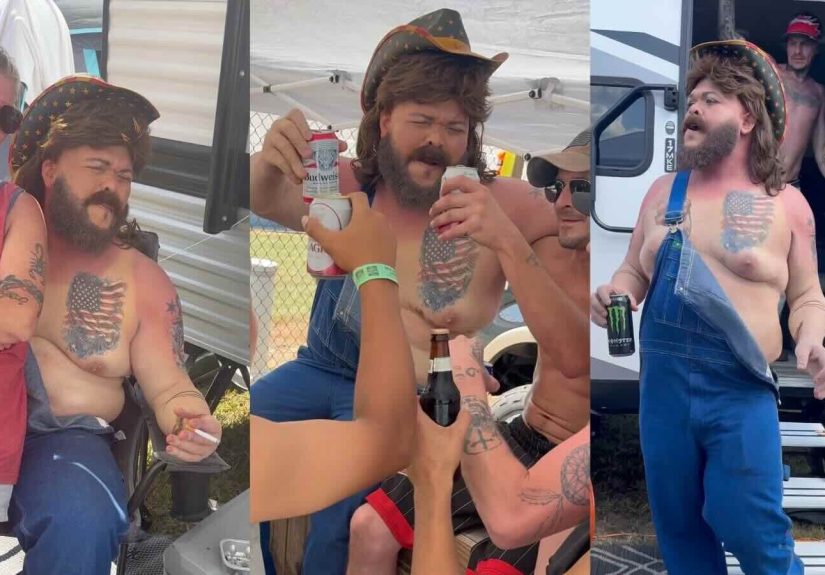
The look that lit the internet on fire wasn’t just a funny outfit. It was a full transformationskin tone, facial hair, hair styling, and the kind of lived-in details that sell a character like a documentary crew just stumbled into a tailgate.
Reports around the viral NASCAR skit describe an hours-long full-body makeup process, including painted skin, tattoos, and sunburn effects designed to read convincingly on camera and in daylight. The transformation was associated with makeup artist Kaylee Kehne-Swisher, whose film credits include major studio projects. That matters because it places the work in a professional context: this wasn’t party-store makeup. It was special-effects thinking applied to comedy.
Why this is bigger than “a funny bit”
When a transformation becomes so convincing that casual viewers think they’re watching a different person, you’ve crossed into the same territory the Oscars often reward: makeup and hair that disappear into the character. Not flashy for the sake of flashyeffective for the sake of story.
The irony is that comedy sometimes gets underestimated here. In drama, an aging prosthetic can signal “prestige.” In comedy, a hyper-specific look can signal “punchline.” But both are doing the same job: shaping perception before the actor even opens their mouth.
Makeup and hairstyling are the ultimate comedy cheat codes
Comedy lives and dies by speed. A joke has a short runway. A character has even less time to land. That’s why hair and makeup are secretly some of the funniest writers in the room.
1) Instant character clarity
A mullet (real or wig), a perfectly wrong mustache, a too-precise tan line, eyebrows that suggest a man who “doesn’t believe in seatbelts”these are visual punchlines. They tell you the type of person you’re about to meet.
2) Believability makes the exaggeration funnier
If the look is sloppy, the audience focuses on the costume. If the look is believable, the audience focuses on the behaviorwhich is where Druski shines. The better the transformation, the easier it is for the bit to feel like you’re watching a real human do a real thing, just turned up to 11.
3) The camera is unforgiving (and the internet is worse)
Film makeup artists talk about how work has to hold under harsh lighting, close-ups, long shooting days, and continuity requirements. Viral comedy has its own version of that: screenshots, reaction videos, memes, stitches, and zoom-ins. If your edges don’t hold up, the comments will let you knowin 4K.
But waitdoesn’t the Oscar go to film work, not internet skits?
Correct. The Academy Award for Best Makeup and Hairstyling is a film category, bound to eligibility rules and a formal voting process. Druski isn’t “snubbed” in the official sense, because a viral comedy sketch isn’t competing in the same lane as the year’s shortlisted films.
This piece is really making a different point: the craftsmanship that makes film makeup Oscar-worthy is increasingly shaping modern comedyand audiences are noticing. When a transformation is the reason a video works, the makeup and hair team deserves more public credit. Not just “shoutout to the MUA,” but a real appreciation for the artistry, planning, and execution.
If the Oscars ever added “Best Screen Transformation,” Druski would be a problem (for everyone else)
Imagine a category that honored transformation work across formatsfilm, television, streaming, and digital shorts. The criteria could mirror what the Academy already values:
- Design: Is the look intentional, specific, and character-driven?
- Execution: Does it hold up under lighting, motion, and close inspection?
- Story impact: Does it change how the audience experiences the performance?
- Difficulty: Complexity, application time, materials, and technical challenges.
Under those rules, Druski’s most convincing transformations wouldn’t just be “funny.” They’d be competitive. Because the work isn’t only about a jokeit’s about building a character that the audience instantly understands.
A reality check: transformation comedy can spark real conversations
It’s also worth saying out loud: some transformations hit cultural nerves, especially when they involve identity, stereotypes, or “passing” as someone else. Druski’s viral NASCAR persona sparked debate for exactly that reason. That debate isn’t separate from the makeup; it’s partly enabled by how convincing the look was.
Great makeup can amplify a message. That’s power. And power comes with responsibilityboth for performers and for audiences deciding what they’re laughing at and why. Appreciating the craft doesn’t mean ignoring the context. It means recognizing that makeup and hairstyling can be more than cosmeticthey can be cultural.
What Druski’s viral transformations teach us about the craft
If you’ve ever wondered why the Academy has a whole branch devoted to makeup and hairstyling, look at how people reacted to Druski’s most unrecognizable looks. The first response wasn’t, “That’s a great joke.” It was, “How is that even possible?”
That questionhowis the heart of this category. It’s the same curiosity that makes audiences watch behind-the-scenes videos of prosthetics, wig-lays, aging makeup, creature builds, and character designs. The laughter draws you in; the transformation makes you stay.
And that’s why the headline works even if the Oscars don’t: Druski’s most convincing transformations are proof that makeup and hairstyling aren’t “support.” They’re storytelling.
Experiences: What “Druski Should Win the Oscar for Best Makeup and Hairstyling” feels like in real life
There’s a very specific modern experience that only exists because the internet has turned all of us into mini film critics with pause buttons. You’re scrolling, half-paying attention, and a video starts playing. You assume you know what you’re looking atsome random guy at an event, some new face in the feeduntil your brain catches a detail that doesn’t match the story you’ve already told yourself.
That’s when you do the sacred ritual: you restart the clip. You squint. You lean closer to the screen like your posture alone can improve resolution. Then you hit the comments, because the comments are the modern-day director’s commentary track. And somewhere between the first “ain’t no way” and the fifteenth crying-laughing emoji, the truth drops: it’s Druski.
That little emotional roller coasterconfusion → disbelief → recognition → replayis a huge part of why transformation comedy works right now. The joke lands twice: once when you see the character doing the bit, and again when you realize the character is a disguise. Makeup and hairstyling are what make that second punch possible. Without the believable look, there’s no “gotcha” momentjust a guy in a costume. With the believable look, the video becomes a magic trick.
And it doesn’t stop at the laugh. Viewers often walk away with a new appreciation for the craft in a way that feels surprisingly educational. Suddenly people who have never cared about wigs are debating hairlines. People who have never said the word “prosthetic” are asking if it was airbrushed, painted, or applied in pieces. Even casual fans start noticing detailstexture, color variation, how the makeup holds in outdoor light, how sweat would normally break an illusion. In other words, a comedy skit accidentally turns into a masterclass in practical effects.
There’s also a creator-side experience that mirrors what happens on film sets: once audiences start paying attention to the transformation, credit matters more. People want to know who did the work. They start following makeup artists, not just performers. They learn that the “look” is rarely one person’s effortit’s planning, materials, time, removal, and a whole set of decisions made under real-world constraints. That’s a healthy shift for entertainment culture, because it spreads appreciation beyond the star to the craftspeople who make the star’s performance believable.
Finally, there’s the social experience: the group chat debate. Some friends focus on the comedy. Some focus on the realism. Some immediately zoom out to contextwhat the character represents, why the look sparked conversation, and whether the satire is punching up, down, or sideways. That’s the thing about truly convincing makeup: it amplifies the impact of the performance, for better or worse. It can make a joke sharper, but it can also make the discussion louder. Either way, the craft is doing exactly what great makeup and hair are supposed to domaking the character feel real enough to matter.
Conclusion
Druski isn’t literally eligible for the Oscar for Best Makeup and Hairstyling with a viral sketch. But if the point of that Oscar is to honor the kind of craft that transforms a performer, sells a character, and changes how an audience experiences a storythen Druski’s most convincing looks belong in the same conversation.
Because the truth is simple: the internet has become a new kind of screen, and transformation is still transformation. Whether it happens at the Dolby Theatre or in your For You Page, great makeup and hairstyling remain one of the most powerful storytelling tools we have. And if the Academy ever expands the party to include the digital world, Druski might want to clear his calendarbecause the “bake-off” would be hilarious.