Table of Contents >> Show >> Hide
- What Is a Wall Letter Board?
- Plan Before You Craft (Your Future Self Will Thank You)
- Materials and Tools
- How to Make a DIY Wall Letter Board (Step-by-Step)
- Make It Look Expensive (Without the Expensive Part)
- What to Put on Your Letter Board
- Common Problems (and How to Fix Them)
- Care and Maintenance
- Conclusion
- Real-World “I Wish Someone Told Me This” Experiences (500+ Words of Helpful Truth)
A DIY wall letter board is basically the introvert’s megaphone: you get to “say” something in your home without having to say anything at all.
It can announce dinner, flex a dad joke, remind everyone that the laundry is not going to fold itself, or quietly roast your guests with
“SHOES OFF OR BE JUDGED.” And unlike a poster, it’s changeableso your décor can match your mood, your season, or your sudden obsession with motivational quotes.
In this guide, you’ll learn how to build a sturdy, good-looking wall letter board (the kind with grooves that hold plastic letters), how to hang it safely,
and how to make it look like you bought it from a boutique instead of making it in your kitchen like a responsible adult with a glue gun.
What Is a Wall Letter Board?
The classic “letter board” is a framed board covered in felt (or fabric) with horizontal grooves. The grooves grip little plastic letters so you can swap
messages whenever you want. It’s part home décor, part message board, part comedy stage.
The secret sauce is the ribbed surface. Store-bought boards use a manufactured grooved backing. For a DIY wall letter board, we recreate
that effect with evenly spaced slats (wood strips, dowels, or foam board) under felt.
Plan Before You Craft (Your Future Self Will Thank You)
1) Pick the size and location
Decide where the board will live: entryway, kitchen, office, nursery, or that awkward wall that currently holds… nothing but vibes.
A popular range is 12×16 to 18×24, but go bigger if you want headline-sized messages or menu boards.
2) Match the letters to the grooves
Letter sets come in different sizes. The spacing of your grooves needs to fit the “feet” of the letters so they slide in snugly.
Too tight and you’ll be wrestling every vowel like it owes you money. Too loose and letters will sag like they just heard your Wi-Fi password is “password.”
3) Decide on your build style
- Classic wood-slat build: crisp grooves, sturdy feel, boutique look.
- Dowel-wrap build: great if you like repetitive crafts and have podcasts to catch up on.
- Foam-core build: lightweight, budget-friendly, surprisingly clean results.
Materials and Tools
Core supplies
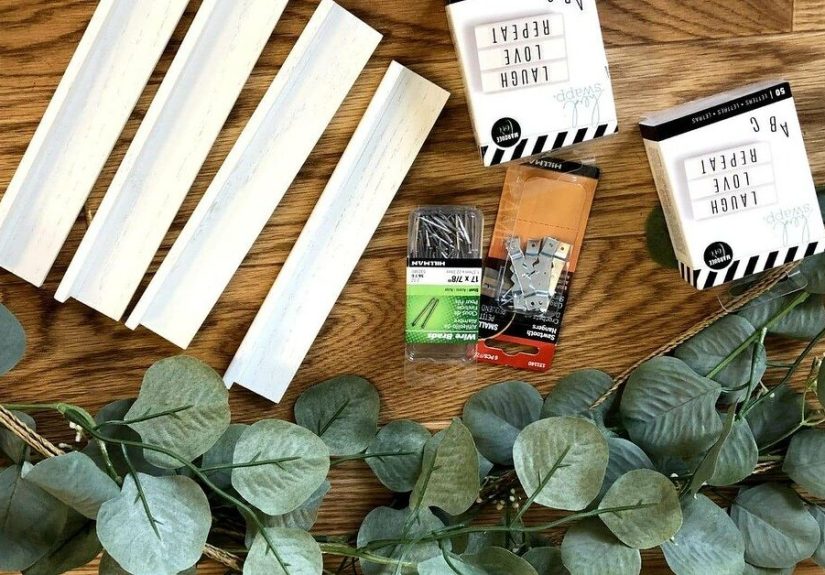
- Frame: a deep picture frame, shadow box, or thrifted frame with enough depth to hold your layered board.
- Backing board: foam core, MDF, hardboard, or plywood cut to frame size.
- Slats: thin wood strips, paint stirrers, balsa strips, or foam-core strips.
- Felt or fabric: thicker felt is easier to work with and hides lumps better.
- Adhesive: hot glue gun (fast), tacky glue (slower), or spray adhesive (smooth coverage).
- Letter set: plastic letters made for grooved letter boards (plus extra vowels, because life).
Tools that make life easier
- Ruler or metal straightedge
- Utility knife or craft knife
- Scissors
- Cutting mat (or a sacrificial cardboard box)
- Level and pencil for hanging
- Sandpaper (if you’re painting or staining the frame)
How to Make a DIY Wall Letter Board (Step-by-Step)
Below is a reliable method used by DIYers for a “real” changeable felt letter board feel: slats underneath felt, with grooves pressed in.
The result: neat rows, better letter grip, and fewer regrets.
Step 1: Prep the frame
Remove glass, paper inserts, and anything that isn’t the frame itself. If you’re painting or staining, do it now.
Let it fully dry before the felt arriveswet paint and felt become best friends in the worst way.
Step 2: Cut your backing board
Measure the inside opening of the frame and cut your backing board to fit. It should sit snugly without bowing.
If you’re using foam core, use a sharp blade and multiple light passes for clean edges.
Step 3: Create the groove structure (choose one method)
Method A: Slats + Felt “Press-In” (clean, lightweight, and popular)
Cut slats (wood strips or foam-core strips) the width of your board. Then glue them down in parallel rows,
leaving consistent gaps between each slat. The gaps become your grooves once the felt is pressed in.
- Spacing tip: Use your letters as a spacing gauge. Place a letter between two slats to ensure it fits comfortably.
- Consistency tip: Make a spacer jig from scrap cardboard so every gap matches without constant measuring.
Method B: Dowel-Wrap Rows (classic “ribbed” look with a cozy texture)
Cut thin dowels to the width of the board. Cut felt into strips wide enough to wrap around each dowel. Hot glue the felt strip to the dowel and wrap tightly.
Then glue each wrapped dowel to the backing board, row by row, with small gaps between dowels for letter feet.
This method takes longer, but it creates a soft, rounded rib that looks very “vintage shop in a good way.”
Put on music. Accept that hot glue strings are part of your new lifestyle.
Step 4: Cover the board with felt
Cut felt slightly larger than your board (about 1–2 inches extra on each side). Apply adhesive on the top surface of your slatted board and lay the felt down.
Start from the center and smooth outward to avoid bubbles.
Now the satisfying part: use a ruler, old gift card, or the dull side of a butter knife to press felt into the gaps between slats.
Work row by row. Keep pressure even so grooves stay straight. If you press too hard and dent foam core, congratulationsyou’ve invented “extra rustic.”
Step 5: Wrap and secure the back
Flip the board and pull the felt snug (not stretched like a trampoline). Glue or staple the felt to the back side.
Trim bulk at corners so the board sits flat in the frame. If your frame has tabs, make sure they can close without forcing it.
Step 6: Assemble the frame
Insert the finished board into the frame and secure it. If the frame is deep, you may need extra backing (cardboard or thin wood) to stop the board from shifting.
The goal: no rattling when someone changes the message like they’re spinning the Wheel of Fortune.
Step 7: Add hanging hardware (so it stays on the wall)
A DIY wall letter board can get heavier than it looksespecially with a solid frame. Use proper hardware:
- Sawtooth hanger: good for lighter boards, easy to center.
- D-rings + wire: better for medium/heavy frames and keeps things stable.
- Wall anchors or studs: use anchors rated for the weight if you can’t hit a stud.
Hang it level, step back, adjust, and pretend you got it perfect on the first try. That’s the DIY code.
Make It Look Expensive (Without the Expensive Part)
Upgrade the frame finish
A simple matte black frame looks modern. Natural wood feels cozy. White frames read clean and Scandinavian.
Want “high-end”? Lightly sand edges after painting for a subtle worn finish, or add a thin gold rub to details.
Choose a felt color that plays well with your room
Black felt is classic, but charcoal, cream, olive, and dusty blush can look seriously stylish.
Just remember: lighter felt shows dust faster, like it’s auditioning for a cleaning product commercial.
Add letter storage (because missing letters are inevitable)
Stick a slim pouch or envelope to the back of the frame to hold extra letters. This prevents the classic mystery:
“How do we have four Qs and zero Es?”
What to Put on Your Letter Board
This is where your changeable letter board becomes more than décor. It becomes a tiny billboard for your household.
Practical ideas
- Weekly menu: “TACO TUESDAY” never goes out of style.
- Chore reminders: “DISHES ARE NOT DECOR.”
- Family calendar cues: “SOCCER 6PM / GROCERIES / DON’T FORGET KEYS.”
- Work-from-home boundaries: “IN A MEETING. YES, STILL.”
Fun ideas (aka the reason letter boards exist)
- “WELCOME. PLEASE ADMIRE MY PILLOWS.”
- “EAT. SLEEP. REPEAT. (OR JUST SNACK.)”
- “HOME IS WHERE THE WIFI AUTOCONNECTS.”
- “IF YOU’RE READING THIS, YOU’RE TOO CLOSE TO MY SNACKS.”
Common Problems (and How to Fix Them)
Problem: Letters won’t stay put
Your groove spacing is likely too wide, or the felt is too thin. Add another felt layer, or re-cover with thicker felt.
If only a few rows are loose, you can carefully press felt deeper into the groove to tighten grip.
Problem: Grooves look wobbly
This usually happens when slats shift during gluing or your spacer isn’t consistent.
Hide minor wobble with darker felt and a busy message. For a redo, use a cardboard spacer jig and glue in small sections.
Problem: The board bows inside the frame
Switch to a sturdier backing (thin plywood/hardboard) or add a second layer behind your foam core for rigidity.
Also avoid soaking foam core with too much wet gluewarping is its love language.
Problem: Hot glue lumps show through
Use smaller dots of glue, spread them quickly, and choose thicker felt.
Spray adhesive can create a smoother finish, especially on the top felt layer.
Care and Maintenance
- Use a lint roller to keep the felt looking fresh (especially if you have pets who believe felt is a snack).
- Store letters in a divided box so you can actually find vowels when you need them.
- Avoid direct sunlight if you’re using bright feltfading is sneaky.
- If felt pills over time, gently shave fuzz with a fabric shaver.
Conclusion
A DIY wall letter board is one of those projects that’s genuinely useful, surprisingly customizable, and ridiculously fun once it’s up.
Build it big for bold statements, keep it small for subtle daily notes, or make a few and rotate them seasonally like the organized legend you are.
With the right groove spacing, decent felt, and solid hanging hardware, your board will look polishedand your messages will finally get the wall time they deserve.
Real-World “I Wish Someone Told Me This” Experiences (500+ Words of Helpful Truth)
Let’s talk about what usually happens in the wild when people make a DIY letter board for the wallbecause the internet loves a “5-minute craft,”
and your living room deserves honesty.
First: you will underestimate how many letters you need. You’ll look at a standard set and think, “Wow, 340 pieces! That’s basically infinite.”
Then you’ll try to write something like “WE’RE OUT OF PAPER TOWELS” and discover you own exactly one E, two Rs, and an aggressive surplus of Xs.
The fix is simple: either buy a second letter set (especially for vowels) or embrace creative spelling like you’re texting in 2009. “PAPR TOWLZ” is… a vibe.
Second: spacing is everything, and it’s also the easiest thing to get slightly wrong. The “slats + press-in felt” method is forgiving, but only if your gaps are consistent.
Many first-timers eyeball it and end up with a board where the top row holds letters perfectly, the middle rows are kind of okay, and the bottom row behaves like a water slide.
If you remember one trick, make it this: use the actual letters as your measuring tool. Build your grooves around the letters you’ll use, not around a ruler
that doesn’t know what “snug fit” feels like.
Third: hot glue will try to humble you. It works fast, it grabs hard, and it leaves those tiny glue strings that somehow end up on your shirt, your hair,
and inexplicably inside the frame. If you’re a hot-glue person, keep a scrap piece of cardboard nearby to “park” the glue gun and wipe strings before they land on the felt.
If you’re not a hot-glue person, spray adhesive can give you a smoother surfacejust use it in a well-ventilated area and protect everything within a 10-foot radius
(because spray adhesive travels like gossip).
Fourth: your wall is part of the project. Hanging the board is where people get overconfident. A letter board in a chunky frame can be heavier than it looks,
and drywall has zero interest in your dreams if you skip proper anchors. If you can hit a stud, do it. If you can’t, use anchors rated above the board’s weight.
The “it’ll probably be fine” method is how DIY becomes “unplanned gravity experiment.”
Fifth: your board will start a small cultural movement in your home. The first message is usually something wholesome like “HELLO SPRING” or “WELCOME.”
Then, as days pass, it becomes operational: “TRASH NIGHT,” “DOG NEEDS FOOD,” “STOP LEAVING MUGS IN SINK.” Eventually, it gets spicy:
“IF YOU ATE THE LAST COOKIE, AT LEAST BE BRAVE.” This is normal. Your letter board becomes the household bulletin board, therapist, and stand-up comedian.
Lean into it.
And finally: perfection is optional. The most charming boards aren’t the ones with laser-straight grooves and museum-quality framing.
They’re the ones that get usedwhere letters are swapped, jokes are attempted, and the message changes often enough that people actually look at it.
If your grooves are 2% crooked but your family reads it and laughs? That’s a win. That’s the point.