Table of Contents >> Show >> Hide
- What You’re Building (And Why This Design Works)
- Materials, Hardware, and Tools
- Cut List (Standard Cart: 48" x 24" x ~72" Tall)
- Step-by-Step Build Tutorial
- Step 1: Build the bottom frame (the part that keeps you from regretting everything)
- Step 2: Add legs (and keep them actually vertical)
- Step 3: Install the top frame
- Step 4: Add shelf supports (your shelves deserve more than vibes)
- Step 5: Cut and attach the shelves
- Step 6: Add the rolling hardware (aka: casters that don’t quit)
- Step 7: Build the awning frame
- Step 8: Add canopy fabric (instant “main character at the market” energy)
- Step 9: Optional upgrades that look expensive (but aren’t)
- Design Notes: Making It Stable, Strong, and Easy to Roll
- Finishing: Paint, Stain, and Weather Protection
- Simple Setup Ideas for Real Events
- FAQ
- of Real-World “What It’s Like” Experience (What Builders Commonly Notice)
- Conclusion
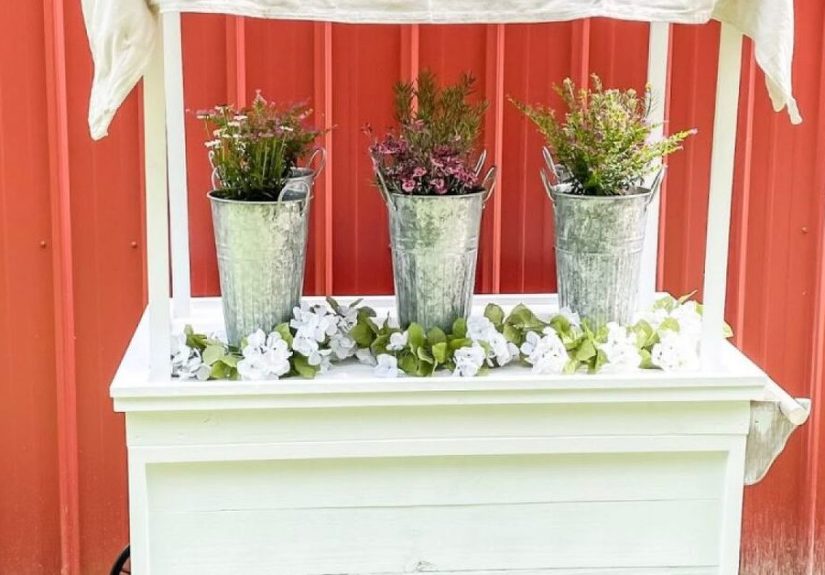
Want the charm of a farmers-market flower stand without paying farmers-market prices? Build your own DIY flower cart:
part display piece, part rolling storage, part “why does my garage suddenly look like a boutique?” miracle.
This plan is designed for real-life DIYers: straight cuts, forgiving joinery, sturdy shelves, and a canopy you can customize for parties, weddings, or a weekend pop-up.
What You’re Building (And Why This Design Works)
This flower cart is a 48" long x 24" deep rolling cart with two shelves, a simple awning frame,
and locking casters so it behaves in public (no drifting during your “adorable bouquet bar” moment).
It’s built mostly from 2x4s for strength, with lighter boards for the canopy so it doesn’t feel like you’re pushing a baby grand piano.
Best uses
- Flower bar / bouquet station for weddings, showers, birthdays
- Farmstand-style display for potted herbs, succulents, or seasonal decor
- Craft fair or bake sale cart (swap buckets for bins, add signage)
- Home organization cart that looks fancy enough to live indoors
Skill level & time
Beginner-friendly if you can measure, drill, and keep a straight face when lumber isn’t perfectly straight.
Plan for 4–6 hours of build time plus drying time for paint/stain.
Materials, Hardware, and Tools
Lumber & sheet goods
- 2×4 lumber (about 9–10 eight-foot boards, depending on waste and upgrades)
- 1×2 lumber (about 4–5 eight-foot boards for the awning and trim rails)
- 3/4" exterior-grade plywood (one 4×8 sheet is plenty for two shelves and optional panels)
- Optional: 1×3 or 1×4 boards for a thicker “finished” front lip
- Optional: 1" hardwood dowel (36–48") if you want a push/pull handle
Hardware
- (4) locking swivel casters, 3"–4" diameter (bigger rolls easier outdoors)
- 2-1/2" exterior screws (or coated deck screws) for the 2×4 frame
- 1-1/4" screws for attaching shelves/trim
- Wood glue (exterior-rated if the cart lives outside)
- Bolts + washers + lock nuts for casters (recommended) or heavy-duty lag screws
- Staples or small screws + washers for canopy fabric
- Sandpaper (80/120/180 grit)
Finish options
- Paint (primer + exterior paint) for the classic “market cart” look
- Stain + exterior clear coat if you want wood grain with weather protection
- Outdoor sealer if you prefer a natural, low-shine finish
Tools
- Miter saw or circular saw + straightedge guide
- Drill/driver + bits
- Measuring tape, speed square, pencil
- Clamps (helpful, not mandatory)
- Sander (or sanding block + determination)
- Staple gun (for canopy fabric)
Cut List (Standard Cart: 48" x 24" x ~72" Tall)
All dimensions assume standard lumber thickness (2×4 is about 1-1/2" x 3-1/2"). Measure your actual boards if you want ultra-clean alignment.
2×4 cuts
| Qty | Length | Part |
|---|---|---|
| 4 | 48" | Long rails (top frame + bottom frame) |
| 4 | 21" | Short rails (top frame + bottom frame) |
| 4 | 60" | Legs (cart body height before canopy) |
| 4 | 21" | Shelf supports (inside, front-to-back) |
| 2 | 45" | Mid-shelf front/back cleats (optional but recommended) |
| 2 | 45" | Bottom-shelf front/back cleats (optional) |
| 2 | 18" | Diagonal braces (optional for extra anti-wobble) |
Plywood cuts (3/4" recommended)
| Qty | Size | Part |
|---|---|---|
| 1 | 48" x 24" | Bottom shelf |
| 1 | 48" x 18" | Middle shelf (slightly shallower = nicer reach) |
| Optional | 48" x 10" | Back panel (great for stiffness + signage) |
| Optional | 24" x 10" | Side panels (stiffness + style) |
1×2 cuts (awning frame)
| Qty | Length | Part |
|---|---|---|
| 2 | 48" | Awning long rails |
| 2 | 24" | Awning short rails |
| 3 | 24" | Awning cross slats (fabric support) |
| 2 | 14" | Awning uprights (front corners) |
| 2 | 14" | Awning uprights (back corners) |
Canopy fabric: cut to about 54" x 30" so you have overhang to wrap and staple.
Outdoor canvas, painter’s drop cloth, or striped ticking looks especially “flower market.”
Step-by-Step Build Tutorial
Step 1: Build the bottom frame (the part that keeps you from regretting everything)
-
Make a rectangle using (2) 48" rails and (2) 21" rails (2x4s).
The 21" pieces fit inside the 48" pieces for a clean outer length of 48". - Square it up (measure corner-to-corner; matching diagonals means you’re square).
-
Glue the joints and drive 2-1/2" screws through the long rails into the ends of the short rails.
Pre-drill to reduce splitting.
Step 2: Add legs (and keep them actually vertical)
-
Stand each 60" leg inside the corners of the bottom frame.
Use a square and clamp if possible. - Screw through the outside of the frame into each leg (2 screws per side is ideal).
-
If your cart will be rolled outdoors or loaded heavy, add diagonal braces in at least two corners.
Wobble is cute in jelly, not in furniture.
Step 3: Install the top frame
- Build a second rectangle from (2) 48" rails and (2) 21" rails (2x4s), just like the bottom.
- Slide it onto the legs so the top frame sits about 6" below the top of the legs (or flush if you want a taller body).
- Clamp, level, and screw the frame into the legs.
Step 4: Add shelf supports (your shelves deserve more than vibes)
-
Mark shelf heights. A practical setup:
- Bottom shelf: sits on the bottom frame
- Middle shelf: about 22"–26" above the bottom shelf
-
Install (4) 21" shelf supports inside the frame (front-to-back).
Two supports for the middle shelf and two additional supports if you want extra stiffness. - Add optional front/back cleats under the middle shelf (45" pieces) to prevent sag.
Step 5: Cut and attach the shelves
-
Cut plywood shelves to size:
48" x 24" for the bottom, 48" x 18" for the middle. - Sand the edges so they’re touch-friendly (and snag-free for tablecloths, aprons, and dignity).
- Lay each shelf in place, pre-drill, and fasten with 1-1/4" screws.
Step 6: Add the rolling hardware (aka: casters that don’t quit)
- Flip the cart upside down (grab a helpergravity loves centerpieces).
-
Position a caster near each corner of the bottom frame.
Keep them inset slightly so wheels don’t rub on the frame. -
For the strongest hold, use bolts + washers + lock nuts through the 2×4 frame.
If you use screws/lag bolts, make sure they’re rated for the load and bite deeply into solid wood. - Choose at least two locking castersfour is even better for event use.
Step 7: Build the awning frame
-
Assemble a rectangle from 1×2 boards:
(2) 48" and (2) 24". - Add (3) 24" cross slats spaced evenly across the top. These support the canopy fabric and prevent sag.
-
Attach (4) 14" uprights at the corners of the awning frame.
You can screw from the outside or use pocket holes if that’s your style. -
Center the awning assembly on the cart top frame and attach it to the legs with screws.
If you want the canopy removable, attach using bolts with wing nuts or use threaded inserts.
Step 8: Add canopy fabric (instant “main character at the market” energy)
- Iron or steam the fabric first if you want crisp stripes instead of “wrinkled sail on a stormy sea.”
- Pull fabric snug across the awning frame and staple underneath the long rails.
-
Fold corners like a neat gift wrap and staple securely.
Add a thin trim strip (1×2) underneath if you want to hide staples.
Step 9: Optional upgrades that look expensive (but aren’t)
- Back panel: add a plywood back for stiffness and a clean place for a sign
- Removable bucket rail: screw a thin front lip to hang metal buckets for stems and greenery
- Chalkboard sign: mount a framed chalkboard on the front for pricing or messages
- Handle: drill a hole and mount a hardwood dowel for easier steering
- Corner trim: add 1×2 trim to hide raw plywood edges for a polished look
Design Notes: Making It Stable, Strong, and Easy to Roll
How to prevent the “shopping cart shimmy”
- Use locking swivel casters and lock them whenever the cart is parked.
- Add diagonal braces (or a back panel) to reduce racking when pushing.
-
Keep heavier items (water buckets, potted plants) on the bottom shelf.
Your cart should feel grounded, not top-heavy.
Choosing casters without overthinking it (but not underthinking it either)
For indoor floors, polyurethane or rubber-like wheels roll smoothly and are gentler on surfaces.
For outdoor patios and sidewalks, aim for 3"–4" diameter wheels so small cracks don’t stop the show.
As a practical rule, size for more capacity than you think you needfresh-cut flowers might be light, but water buckets are not.
Finishing: Paint, Stain, and Weather Protection
Your finish has two jobs: look good and survive reality. That means sanding, cleaning dust, and using products meant for the environment your cart will live in.
Option A: Painted “market cart” finish (classic and forgiving)
- Sand to 120–180 grit, then wipe clean.
- Prime any raw wood, especially end grain (it drinks paint like it’s been hiking in the desert).
- Apply 2 coats of paint.
- For extra durability, add a clear topcoat rated for your use (especially if it will be wiped down often).
Option B: Stain + exterior clear coat (pretty wood grain, tougher maintenance)
- Condition softwood if you want more even stain absorption.
- Stain, let it cure fully, then seal with an exterior-rated clear coat.
- Recoat as neededsun and rain are relentless.
Option C: Outdoor oil or sealer (low shine, easy refresh)
Outdoor oils and sealers can be the easiest long-term choice because touch-ups are simple:
clean, lightly sand, reapply. No dramatic peeling. No existential crisis.
Simple Setup Ideas for Real Events
Wedding bouquet bar setup
- Top shelf: vases, ribbon, tags, snips
- Middle shelf: greenery + focal blooms in buckets
- Bottom shelf: water refills, extra buckets, cleanup kit
Farmstand plant display
- Use the middle shelf for smaller pots and the bottom shelf for heavier planters.
- Add a back panel and mount a seasonal sign (hello, “Herbs,” “Cut Flowers,” and “Absolutely Not Free”).
Indoor decor cart
- Swap the canopy fabric for a neutral drop cloth and paint the cart a soft white or matte black.
- Add felt pads to the caster locks if your floors are delicate.
FAQ
Can I build this without a miter saw?
Yes. A circular saw with a straightedge guide works finetake your time and measure carefully.
The cart looks “intentional” when your cuts are consistent.
What’s the best wood for a flower cart?
For budget builds, construction lumber works well. For a cleaner look, pick straighter boards and avoid pieces with big twists.
If it will live outdoors full-time, choose materials and finishes meant for weather exposure.
How do I keep buckets from sliding around?
Add a 1×2 “fence” around the shelf perimeter or screw down a thin cleat where each bucket sits.
Your flowers should be dramaticyour buckets shouldn’t be.
of Real-World “What It’s Like” Experience (What Builders Commonly Notice)
Building a DIY flower cart is one of those projects that starts with confidence (“I can totally do this”) and quickly becomes a relationship with the concept of square.
The first thing most people notice is that a cart is basically a rolling rectangleso if the rectangle is even a little off, the cart will remind you forever by wobbling, drifting, or making the canopy look slightly cranky.
The good news is that this is fixable early: checking corner-to-corner measurements on your frames feels like a boring extra step, but it’s the difference between “handmade charm” and “why does my cart lean like it’s listening to gossip?”
Lumber selection is the next surprise. Two boards both labeled “2×4” can behave like completely different species of animal.
A slightly bowed 2×4 can still be used, but builders often learn to “crown” boards the same way: put the curve facing the same direction so your frame stays predictable.
If you’re working in a driveway or garage, you’ll probably find that clamps feel optional right up until the moment you need three hands.
A couple of inexpensive clamps can save a lot of muttering.
Then there’s the canopythe most fun part and also the part that exposes impatience.
Fabric looks innocent until you staple it and realize stripes can go diagonal in a heartbeat.
Many builders discover that it helps to staple the fabric in the middle of one long side first, then the opposite long side, then the middles of the short sides, and only then work outward toward the corners.
That little “center-first” approach keeps tension even, prevents puckers, and makes the canopy look crisp instead of tired.
If you’re using a drop cloth, a quick iron or steam beforehand makes it look intentionally styled rather than “fresh from the paint aisle.”
Painting or staining is where expectations meet physics.
People often underestimate how much end grain drinks up finish, especially on softwood.
Sealing end grain well (primer for paint, or extra coat for stain + clear) keeps the cart looking consistent and helps prevent the “patchy at the corners” look.
And if you paint, builders commonly realize that a tiny foam roller can make the flat surfaces look smoother than a brush alonewhile a brush is still handy for inside corners and trim.
Finally, casters change everything. The first push is usually a delightuntil the cart rolls a little too freely.
Locking casters are the unsung heroes here; once builders use them at an event, they never want to go back.
Bigger wheels tend to feel nicer outdoors, and heavier items on the bottom shelf make the cart feel stable and “professional.”
The most satisfying moment is the last one: loading it with buckets and stepping back.
Suddenly it doesn’t look like lumber anymoreit looks like a flower stand that belongs in photos, which is exactly the point.