Table of Contents >> Show >> Hide
- Why People Get Braces (It’s Not Just About a Straight Smile)
- Types of Dental Braces
- Types of Retainers (Because Teeth Love a Comeback Tour)
- What to Expect: The Braces-to-Retainer Timeline
- Care and Cleaning: Braces Edition
- Care and Cleaning: Retainer Edition
- Common “Is This Normal?” Moments (And What To Do)
- Kids, Teens, and Adults: Different Life Stages, Same Physics
- How Long Do Braces Take?
- Costs and Insurance: What Actually Moves the Needle
- Retainers: How Long Will I Need One?
- When to Call the Orthodontist (Don’t Be a Hero)
- Real-Life Experiences: What People Commonly Notice (About )
- Conclusion
Braces are basically the world’s most organized tiny construction project: your orthodontist builds a mini “rail system” on your teeth,
then uses gentle, steady force to guide them into a healthier position. Retainers are the security team that makes sure those teeth
don’t sneak back to their old neighborhood the moment treatment ends.
If you’re considering dental braces (or you already have them and are currently googling “why does my mouth feel like a
hardware store?”), this guide breaks down the major types of braces and types of retainers, how to care
for them, and what to expect from day one through the “new-smile” finish line.
Why People Get Braces (It’s Not Just About a Straight Smile)
Orthodontic treatment is commonly used to fix “malocclusion,” which is a fancy way of saying your teeth or bite don’t line up the way
they should. That can show up as crowding, gaps, overbite, underbite, crossbite, open bite, or teeth that are rotated or drifting.
Straight teeth can be easier to clean and may help distribute biting forces more evenlyplus, yes, a confident smile is a very real bonus.
You might hear about early orthodontic evaluations for kids (often around elementary-school age), but adults can benefit too. The best
timing depends on your teeth, your jaw growth, and what you’re trying to fixso the “right” answer is usually “ask an orthodontist,
not your group chat.”
Types of Dental Braces
The “best” braces are the ones that match your bite issues, your lifestyle, and your budget. Here are the big categories you’ll hear
about in orthodontic offices across the U.S.
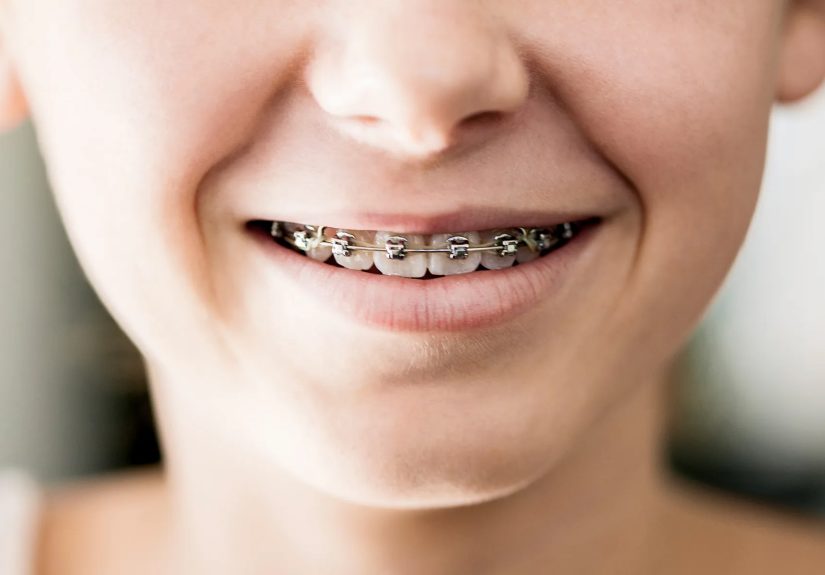
1) Traditional Metal Braces
These are the classic: small metal brackets attached to each tooth, connected by an archwire. The wire is adjusted periodically to keep
teeth moving. Metal braces are widely used because they’re durable, effective for many bite problems, and often the most budget-friendly
fixed option.
- Pros: Great for complex movements; tough; usually more affordable than premium options.
- Cons: Most visible; can irritate cheeks/lips at first.
2) Ceramic Braces
Ceramic braces work like metal braces, but the brackets are tooth-colored or clear to blend in more. They’re popular with people who want
the reliability of brackets and wires with a lower-profile look.
- Pros: Less noticeable than metal; effective for many cases.
- Cons: Can stain if you’re not careful; may be more fragile and cost more.
3) Self-Ligating Braces
Self-ligating braces use a built-in “door” or clip to hold the wire instead of elastic bands. They can look similar to metal or ceramic
braces, but the mechanics differ slightly. Some patients like them for comfort or easier cleaning around fewer elastics, though your case
and your orthodontist’s approach matter more than the hype.
4) Lingual Braces
Lingual braces are attached to the back (tongue side) of your teeth, so they’re hidden from view. They can be a great option for people
who want a more invisible fixed appliance, but they aren’t ideal for every bite problem.
- Pros: Very discreet from the outside.
- Cons: Can feel tricky for speech at first; may irritate the tongue; can be harder to clean; often costs more.
5) Clear Aligners (Like Invisalign and Similar Systems)
Clear aligners are removable trays that fit snugly over your teeth. You switch to a new set on a schedule (commonly every 1–2 weeks),
and each set nudges your teeth toward the plan. Aligners are popular for adults and teens who want a discreet option, but they require
consistencyif you “forget” them, they “forget” to work.
- Pros: Nearly invisible; removable for eating and brushing; fewer food restrictions.
- Cons: Must be worn as directed (often most of the day); may not handle every complex bite issue without additional tools.
Types of Retainers (Because Teeth Love a Comeback Tour)
After braces or aligners, retainers help keep your teeth in their new positions. Teeth can shift over timeespecially soon after treatment
so retainers are a big deal. Many orthodontists will talk about retention as a long-term commitment, not a short fling.
1) Hawley Retainer
The Hawley retainer is the classic removable type: a thin wire across the front teeth with an acrylic base that rests against the roof of the
mouth or along the inside of the lower teeth. It’s adjustable and durable, and it can last a long time if cared for well.
2) Clear Plastic Retainer (Essix-Style)
These look like aligners and fit over the teeth. They’re popular because they’re discreet and easy to wear. They can crack or warp if mistreated,
so they reward gentle handlinglike a phone screen, but with more saliva.
3) Fixed (Permanent/Bonded) Retainer
A fixed retainer is typically a wire bonded to the back of the teeth (often the lower front teeth). It’s invisible from the front and you can’t
“forget” to wear itbecause it lives there now. The trade-off is cleaning around it takes effort and the bond can fail over time.
What to Expect: The Braces-to-Retainer Timeline
Step 1: Consultation and Records
Your first orthodontic appointment is usually about information: exam, discussion of goals, and “records” like photos, X-rays, scans, or impressions.
The orthodontist evaluates your bite, spacing, and jaw alignment and then recommends options (braces vs. aligners, possible extra appliances, expected
timeline, and costs).
Step 2: Getting Braces On (Bonding Day)
If you’re getting traditional braces, brackets are attached, and a wire is placed to start moving teeth. You might leave thinking, “That wasn’t bad,”
and then later discover your teeth have opinions. Soreness is common early on and after adjustmentsusually more “tender” than “terrifying.”
Step 3: Adjustments and Progress Checks
You’ll return for regular visits so your orthodontist can adjust the wire, change elastics, monitor tooth movement, and keep everything on track.
Some people need extra tools (rubber bands, springs, expanders, bite ramps). Translation: orthodontics is personalized. Your friend’s experience
may not match yoursexcept for the part where everyone learns to eat carefully.
Step 4: Debonding (Braces Come Off)
Removing braces is usually quick. Teeth are cleaned and polished. Then comes the “don’t ghost your retainer” talkbecause retention is the phase
that protects all that hard work.
Step 5: Retainers, Retainers, Retainers
Retainer schedules vary. Many orthodontists start with more wear right after treatment (often full-time or most of the day), then transition to
nighttime wear. Some people need long-term nighttime wear to help prevent relapse. The details depend on your teeth, your bite, and your risk of shifting.
Care and Cleaning: Braces Edition
Braces create extra nooks where plaque can camp out like it paid rent. Great hygiene mattersboth for your gums and to help avoid stains, white spots,
and cavities.
Daily brushing that actually works
- Brush at least twice a day with fluoride toothpaste. Aim for along the gumline, around brackets, and the chewing surfaces.
- Use a soft-bristled toothbrush or an electric toothbrush. Many people find an interdental brush helpful for tight spaces.
- Rinse well, especially after meals if you can’t brush right away.
Flossing with braces (yes, you still have to)
Flossing with braces can feel like threading a needle while riding a scooter, but tools help: floss threaders, orthodontic floss, and water flossers.
The goal is consistent cleaning between teeth and under wires where plaque likes to hide.
Food rules: protect the brackets and the vibe
- Avoid very sticky foods (caramels, taffy) and very hard foods (ice, hard candy, popcorn kernels).
- Cut crunchy foods (apples, carrots) into smaller pieces.
- Chew thoughtfullybraces are not a bottle opener, package opener, or “let’s test this jaw strength” gadget.
Sports and instruments
If you play contact sports, ask about a mouthguard that fits braces. If you play a wind instrument, expect an adjustment periodorthodontic wax can help
with irritation while your cheeks and lips adapt.
Care and Cleaning: Retainer Edition
Retainers sit in your mouth for hours, so they can collect plaque and bacteriajust like teeth. A “clean retainer” is not a luxury item; it’s basic
hygiene.
Daily retainer care (simple, not dramatic)
- Rinse your retainer with lukewarm water when you take it out.
- Clean it daily using gentle methods (your orthodontist may recommend a soft brush and mild soap or an approved cleaner).
- Avoid hot water, which can warp clear plastic retainers.
- Store it in a ventilated case when not in usenever wrapped in a napkin (that’s how retainers disappear forever).
Deeper cleaning (weekly or as directed)
Many orthodontists suggest occasional soaking with retainer-cleaning products to help remove buildup. Follow your orthodontist’s instructions and any
product directions. If you have a fixed retainer, the “cleaning” is really about your teeth: brush and floss carefully around the bonded wire and consider
tools like floss threaders or small interproximal brushes.
What not to do
- Don’t boil retainers or use very hot water.
- Don’t leave them in a hot car or direct sunlight.
- Don’t let pets “babysit” themdogs, in particular, see retainers as premium chew toys.
Common “Is This Normal?” Moments (And What To Do)
Soreness and pressure
Mild soreness is common after braces are placed and after adjustments. Soft foods, cool water, and orthodontist-approved pain relief options can help.
If pain is sharp, worsening, or doesn’t improve, call your orthodontic officedon’t just white-knuckle it.
Loose bracket or poking wire
This happens. Often it’s related to chewing something too hard or sticky. If a wire is poking, orthodontic wax can provide temporary relief until you
can be seen. If a bracket comes loose, keep it if it falls off and call the office for guidance.
Speech changes with aligners or retainers
A slight lisp can happen at firstespecially with clear retainers or lingual appliances. Most people adapt with practice (reading aloud works).
Your mouth is basically relearning its routine.
Kids, Teens, and Adults: Different Life Stages, Same Physics
Orthodontic care is common for kids and teens because jaws are still growing, which can make some corrections easier. But adults can absolutely
benefit too. Adults may have different considerationslike prior dental work, gum health, or more limited jaw growthso treatment planning is especially
individualized. The good news: modern options (including clear aligners and less-visible braces) have made adult treatment far more popular.
How Long Do Braces Take?
Treatment time depends on complexity, biology, and consistency (especially with aligners and elastics). Many comprehensive braces cases land somewhere
in the “a year or two-ish” range, while more complex bite corrections can take longer. Your orthodontist should give you a personalized estimate and
update it as treatment progresses.
Costs and Insurance: What Actually Moves the Needle
The cost of braces or aligners depends on the type of treatment, complexity, location, and how long treatment lasts. Insurance may cover part of
orthodontic treatment, especially for children, but benefits vary widely. Many orthodontic offices offer payment plans.
Tip: when comparing options, ask what’s included (records, adjustments, retainers, replacement retainers, emergency visits). A lower sticker price
can sometimes come with extra “surprise” costs later.
Retainers: How Long Will I Need One?
Teeth can shift throughout life. That doesn’t mean your orthodontic results are doomedit just means retention matters. Many orthodontists recommend
ongoing nighttime retainer wear after the initial full-time phase (if prescribed). If you stop wearing your retainer and notice shifting, talk to your
orthodontist sooner rather than later. Small changes can be easier to address than major relapse.
When to Call the Orthodontist (Don’t Be a Hero)
- You have significant pain, swelling, or sores that don’t improve.
- A wire is poking and wax isn’t enough to keep you comfortable.
- A bracket breaks or a piece of the appliance comes loose.
- Your aligner or retainer cracks, doesn’t fit, or feels warped.
- You suspect an infection, gum problems, or tooth damage.
Real-Life Experiences: What People Commonly Notice (About )
If orthodontic treatment had a theme song, it would start with “This feels weird,” peak at “Wait, I can’t eat THAT?” and end with “Okay…
that smile was worth it.” Most people’s day-to-day experience with braces or retainers is less dramatic than the internet makes it look
but it does come with a learning curve.
The first week with braces is often the most noticeable. Patients commonly describe a dull pressure in the teeth and tenderness when biting,
especially on foods that require serious chewing (steak, crusty bread, the kind of granola that doubles as gravel). Softer optionsyogurt,
pasta, scrambled eggs, smoothiestend to become temporary best friends. Many people also learn quickly that tiny lifestyle tweaks matter:
cutting apples into slices instead of taking heroic bites, choosing popcorn-free movie snacks, and keeping a travel toothbrush nearby for
“I definitely have spinach in my brackets” moments.
Cheek and lip irritation is another frequent early complaint. The inside of your mouth isn’t used to brackets and wires, so it may take a
couple of weeks to toughen up. Orthodontic wax is often described as a “tiny miracle” because it reduces rubbing while tissues adapt.
Over time, most patients report they stop noticing the brackets except during adjustmentswhen the pressure returns briefly and then fades.
Clear aligners come with their own set of real-world habits. People often say the trays feel snug at first (especially with a new set), and
the biggest challenge is consistency. Aligners only work when they’re worn as directed. Patients also mention the “routine factor”: taking
aligners out to eat, brushing before putting them back in, storing them in a case instead of on a lunch tray, and resisting the urge to
sip sugary drinks while wearing trays. The upside is fewer food restrictions and easier brushing and flossingif you do the routine.
Then comes the retainer stage, which is where many people feel surprised: “Wait, I’m not done?” Retainers can feel like a step backward
because treatment looks finished, but retention protects results while bone and tissues stabilize. Common experiences include a short period
of speech adjustment, mild nighttime drooling (glamorous, yes), and the realization that retainers require actual care. People frequently
learn the hard way that hot water can warp clear retainers, napkins can accidentally get thrown away, and pets consider them gourmet.
The most consistent “success story” pattern is simple: patients who keep up with hygiene, follow wear instructions, and call the orthodontist
when something breaks tend to have smoother treatment and better long-term results. In other words, braces and retainers are like a group project
except your teammates are your teeth, and they never read the instructions unless you make them.
Conclusion
Dental braces and retainers are toolspowerful onesused to guide teeth and bites into healthier alignment and then keep them there. The key
ingredients for a great outcome are the right appliance for your case, steady follow-through (especially with aligners and retainer wear),
and solid daily care. If you’re thinking about orthodontic treatment, a consultation can clarify your options and give you a realistic timeline,
cost estimate, and plan tailored to you.