Table of Contents >> Show >> Hide
- Quick Navigation
- What Makes Peanut Butter Cookies Crunchy?
- Ingredients for Crunchy Peanut Butter Cookies
- Step-by-Step Instructions
- Pro Tips for Extra Crunch (Without Dry Sadness)
- Variations & Mix-Ins
- Troubleshooting
- Storage & Freezing (How to Keep the Crunch)
- FAQ
- Conclusion
- Crunchy Cookie Field Notes (500-ish Words of Real-Life Experience, Minus the Boring Parts)
Crunchy peanut butter cookies are the sweet, salty, slightly chaotic love child of a dessert and a snack.
They’re the cookie you make when you want something that snaps a little at the edges, then melts into peanutty bliss
the kind of bliss that makes you “accidentally” eat three while “just checking if they cooled.”
This crunchy peanut butter cookies recipe is built for real kitchens: it’s straightforward, reliably crisp,
and flexible enough to handle your personal cookie philosophy (thin and crackly? thick with crunchy bits? somewhere in between?).
We’ll cover the why behind the crunch, the how to nail it every time, and the little upgrades that make people ask,
“Wait… what did you DO to these?”
What Makes Peanut Butter Cookies Crunchy?
“Crunchy” isn’t one single thing. It’s a team effortsugar, fat, baking time, and even cooling all play a role.
Here’s the short version: less moisture + more caramelization + proper cooling = more crunch.
Here’s the useful version:
Sugar is the crunch architect
Granulated sugar helps create that crisp bite because it encourages spreading and a crackly surface as the cookie bakes and cools.
Brown sugar brings moisture and chew (delicious, but it can soften the crunch if it dominates).
The sweet spot for “crunchy-but-not-shatter-your-dental-work” is using both, then rolling dough in sugar for a crisp exterior.
Fat choice changes the texture dramatically
All-butter cookies taste amazing, but they can spread more and sometimes skew toward “chewy-crisp.”
Adding a little shortening helps cookies hold shape and bake up with a firmer, crisp structurevery classic peanut butter cookie energy.
If you prefer all butter, you can still get crunchy cookies; you’ll just lean more on chilling, shaping, and bake time.
Thickness and bake time are your crunch dial
Thin dough + slightly longer bake = more crunch. Thicker dough + shorter bake = more soft center.
We’ll set you up for crunchy edges with a satisfying bite, then give you optional tweaks for “extra crunchy” mode.
Cooling is not optional (sorry)
Cookies continue to set as they cool. If you judge them hot, you’ll think they’re too soft.
If you wait 15 minutes, you’ll realize you made perfect crunchy peanut butter cookiesand you’ll also realize
you should have made a double batch.
Ingredients for Crunchy Peanut Butter Cookies
This recipe makes about 30–34 cookies, depending on scoop size and how generous you feel when “rounding up.”
For best results, use standard commercial peanut butter (the kind that doesn’t separate) for consistent texture.
Natural peanut butter can work, but it’s moodier than a cat in a bathtubsee the FAQ for adjustments.
Dry Ingredients
- 2 1/4 cups (270g) all-purpose flour
- 1 tsp baking soda
- 1 tsp baking powder
- 3/4 tsp kosher salt (or 1/2 tsp fine salt)
Wet Ingredients
- 1/2 cup (113g) unsalted butter, room temperature
- 1/2 cup (96g) vegetable shortening (for crisp structure; see substitutions below)
- 1 cup (260g) crunchy peanut butter
- 3/4 cup (150g) granulated sugar
- 3/4 cup (165g) packed light brown sugar
- 2 large eggs, room temperature
- 2 tsp vanilla extract
Optional “More Crunch” Add-Ins
- 1/2 cup roasted salted peanuts, roughly chopped
- 1–2 tbsp coarse sugar (for rolling or sprinkling)
- Flaky sea salt, a pinch on top (sweet-salty magic)
For Rolling
- 1/3 cup granulated sugar (or coarse sugar for a sparkly crunch)
Equipment
- 2 baking sheets
- Parchment paper (recommended) or ungreased sheets for extra crisp bottoms
- Stand mixer or hand mixer + large bowl
- Cookie scoop (1.5 tbsp) or tablespoon
- Fork (for the classic crisscross)
- Wire rack (cooling = crunch insurance)
Substitution note: If you don’t want shortening, use 1 cup (226g) butter total.
The cookies will be slightly less “classic-crisp,” but still crunchy if you follow the bake and cooling tips.
Step-by-Step Instructions
1) Prep like you mean it
- Preheat oven to 375°F.
- Line baking sheets with parchment (or leave ungreased if you want extra crisp bottoms).
- In a bowl, whisk together flour, baking soda, baking powder, and salt. Set aside.
2) Cream the fats and sugars (this matters for texture)
-
In a large bowl, beat butter, shortening, and crunchy peanut butter until smooth and cohesive.
You want it creamynot whipped into a mousse. - Add granulated sugar and brown sugar. Beat until combined and slightly lighter in color.
- Beat in the eggs, one at a time, then mix in vanilla.
3) Add dry ingredients without overmixing
- Add the dry ingredients in two additions, mixing on low just until no dry flour remains.
- If using chopped peanuts, fold them in at the end.
4) Chill briefly for better shaping
Cover and chill the dough for 45–60 minutes. This helps the dough firm up so it’s easier to roll and stamp with the fork.
(If your kitchen is cool and the dough already handles well, you can chill for 20–30 minutes instead.)
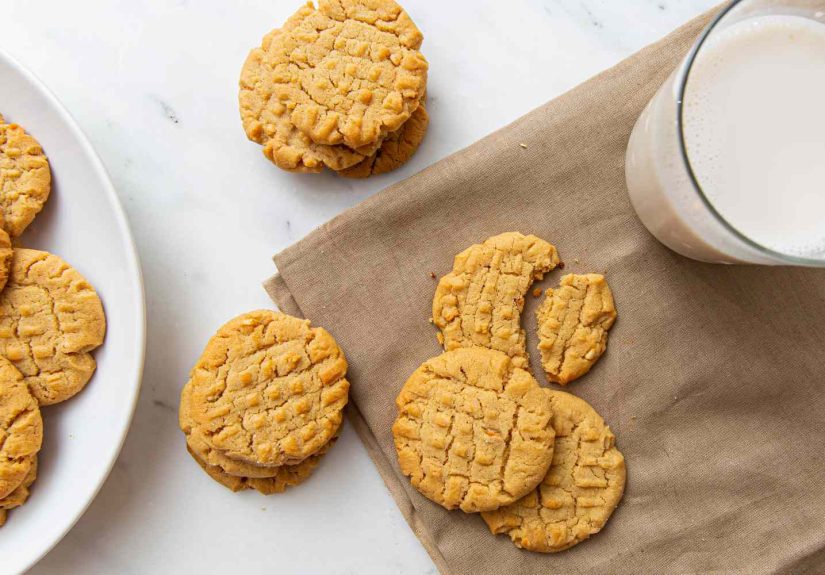
5) Roll, sugar-coat, crisscross (the cookie trifecta)
- Put the rolling sugar in a small bowl.
- Scoop dough into 1.5-tablespoon portions (about 30g each) and roll into balls.
- Roll each ball in sugar to coat.
- Place on baking sheet, leaving 2 inches between cookies.
-
Press each cookie with a fork to make a crisscross pattern. (Dip the fork in sugar if it sticks.)
Flatten to about 1/2 inch thick.
6) Bake for crunch, then cool for crunch
-
Bake 9–11 minutes, rotating the pan halfway through, until edges look set and the bottoms are
light golden to golden brown. - Let cookies cool on the baking sheet for 5 minutes (they’re still setting).
- Transfer to a wire rack and cool completely. This is when they become properly crunchy.
Extra-crunch option: Bake 1–2 minutes longer (watch closely). You’re aiming for deeper golden bottoms,
not “campfire charcoal.”
Pro Tips for Extra Crunch (Without Dry Sadness)
Use crunchy peanut butter + optional chopped peanuts
Crunchy peanut butter adds texture built right into the dough. Adding chopped roasted peanuts stacks crunch on crunch,
like a delicious Jenga tower that collapses directly into your mouth.
Roll in sugar (yes, it’s worth the “extra step”)
Sugar coating creates a crisp shell that bakes into a crackly exterior.
Coarse sugar adds extra sparkle and a more pronounced crunch.
Flatten for even baking
Peanut butter dough is denser than many cookie doughs. Flattening helps it bake evenly, and the crisscross
gives you more surface area for crisp edges and caramelization.
Watch the bottoms, not the tops
Peanut butter cookies don’t always look dramatically browned on top. Peek underneath one cookie near the end:
a golden bottom is your “done” signal for crunchy structure.
Cool in open air
If you trap warm cookies in a container, steam will soften them.
Let them cool fully on a rack before storingunless you want “soft-ish” cookies, which is also valid,
and I respect your journey.
Variations & Mix-Ins
Chocolate chip crunchy peanut butter cookies
Add 3/4 cup semisweet chocolate chips. If you want extra crunch, use chopped chocolate plus peanuts.
Salted honey vibe
Add 1 tbsp honey and finish with a pinch of flaky salt.
(You’ll get sweet-salty depth without turning the cookie into a sticky situation.)
Spiced “grown-up PB cookie”
Add 1/2 tsp cinnamon and a tiny pinch of cayenne.
Not “hot”more like “Oh, that’s interesting… give me another.”
Gluten-free-friendly shortcut (flourless style)
If you need a naturally gluten-free option, consider a flourless peanut butter cookie approach
(peanut butter + sugar + egg). Those tend to bake up crisp at the edges and tender in the middle.
Keep in mind: they’re a different texture than classic flour-based cookies, but they’re fast and crowd-pleasing.
Troubleshooting
My cookies spread too much
- Chill the dough longer (60–90 minutes).
- Make sure butter wasn’t too soft or melty.
- Double-check flour measurement (spoon and level, or weigh it).
My cookies are crumbly/dry
- Peanut butter brands vary. If dough seems dry, mix in 1–2 tsp warm water until it holds together.
- Don’t overbakepull them when bottoms are golden, not dark brown.
My cookies aren’t crunchy enough
- Bake 1–2 minutes longer next time (and cool fully on a rack).
- Use coarse sugar for rolling or sprinkle on top.
- Swap 2–4 tbsp of brown sugar for granulated sugar (slightly less moisture = more crunch).
My fork keeps sticking
- Dip fork tines in sugar between presses.
- If dough is very soft, chill it 15–20 minutes more.
Storage & Freezing (How to Keep the Crunch)
Storing baked cookies
Once completely cool, store cookies in an airtight container at room temperature for 3–4 days.
To help maintain crunch, place a small piece of parchment between layers and avoid storing them while even slightly warm.
Freezing baked cookies
Freeze in a freezer-safe container for up to 3 months. Thaw uncovered at room temperature.
If you want to revive crispness, a quick 3–4 minutes at 300°F can help.
Freezing cookie dough
Scoop dough balls, freeze on a tray until firm, then store in a freezer bag for up to 3 months.
Bake from frozen by adding 1–3 minutes to bake time, and keep an eye on the bottoms.
FAQ
Why do peanut butter cookies have fork marks?
Two reasons: tradition and physics. Peanut butter cookie dough is dense, and flattening helps cookies bake more evenly.
The crisscross also increases surface area, which encourages crisp edges and a more even set.
Can I use natural peanut butter?
Yes, but expect variability. Natural peanut butter can separate and has different moisture/fat behavior.
If you use it, stir it extremely well, and be prepared to chill the dough longer.
If the dough seems oily, add a tablespoon or two of flour; if it seems dry, add a teaspoon of water.
Crunchy vs. creamy peanut butterdoes it matter?
Creamy gives a smoother bite. Crunchy adds built-in texture and more obvious “peanut pieces” in every cookie.
For a true crunchy peanut butter cookies recipe, crunchy peanut butter is the easiest win.
How do I get cookies crunchy all the way through?
Make them slightly thinner, bake 1–2 minutes longer, and cool completely on a wire rack.
You can also shift the sugar balance slightly toward granulated sugar for a drier, crisper finish.
Can I make these ahead for parties?
Absolutely. Freeze dough balls and bake the day-of for maximum crunch and fresh peanut butter aroma.
Your house will smell like a bakery and your friends will “just happen” to arrive early.
Conclusion
A great crunchy peanut butter cookie is all about balance: enough sugar to crisp, enough peanut butter to stay rich,
the right bake to set the edges, and enough patience to let them cool into their final, snappy glory.
Once you’ve baked a batch with that crackly sugar coat and peanut-studded crunch, it’s hard to go back.
(Fair warning: these cookies have a mysterious habit of disappearing.)
Crunchy Cookie Field Notes (500-ish Words of Real-Life Experience, Minus the Boring Parts)
If crunchy peanut butter cookies had a personality, they’d be the friend who shows up five minutes early, brings snacks,
and still somehow eats your snacks. They’re dependableuntil humidity rolls in, your oven decides to run “a little hot,”
and your cookie sheet starts acting like it’s auditioning for a baking reality show.
Here’s what bakers tend to learn after a few batches (and a few “why are these soft?” moments). First:
the crunch doesn’t fully arrive until the cookies cool. This is emotionally inconvenient,
because warm peanut butter cookies smell like happiness. But if you judge them right out of the oven, you’ll think you failed.
You didn’t. You just met the “cooling curve,” where cookies go from floppy to firm as the sugars set and the structure finishes forming.
The wire rack isn’t a fancy accessoryit’s basically a crunch finishing school.
Second: your peanut butter brand is secretly in charge. Some jars are thicker, some runnier, some sweeter, some saltier,
and some separate like they’re trying to avoid responsibility. If a dough feels oddly dry and crumbly, a teaspoon of warm water can bring it back.
If it feels oily and slack, extra chilling (or a spoonful of flour) can save the day.
Think of it like this: cookie dough is a negotiation, and peanut butter is the loudest voice in the room.
Third: sugar rolling is the shortcut to “bakery crunch”. It’s tempting to skip it because it feels “extra.”
But the sugar coat creates that crisp shell that turns into a crackly, golden finish.
If you want to make your cookies look and taste more expensive than they were, roll in coarse sugar.
Suddenly your cookie is wearing a sparkly jacket and acting like it owns the place.
Fourth: fork marks are not just decoration. They help flatten dense dough, which makes baking more even.
Plus, the ridges give you more surface area for browning, and browning is where the “toasty, roasted peanut” flavor really wakes up.
(Bonus: fork marks also tell everyone “this is a peanut butter cookie” from across the room, which prevents tragic misunderstandings,
like someone expecting chocolate chip and then looking personally betrayed.)
Fifth: pan choice and spacing actually matter. Crowded cookies trap steam and bake unevenly.
Give them room. And if you want crisp bottoms, try one test batch on an ungreased sheet (still totally fine to use parchment, though).
You’ll notice the bottom browns a little more decisively, which translates to more crunch.
Finally: the best crunchy peanut butter cookies are the ones you can repeat. That’s why this recipe focuses on controllable levers:
chill time, thickness, sugar rolling, bake time, and cooling. Once you know which dial to turn, you can customize:
slightly thinner for full crunch, slightly thicker for crunchy edges and a tender center, extra peanuts for texture,
or a pinch of flaky salt for that sweet-salty “wait why is this so good?” moment.
And yessomeone will ask for the recipe. Smile casually. Pretend you didn’t just read an entire cookie manifesto.
Hand them a cookie anyway. That’s what heroes do.