Table of Contents >> Show >> Hide
- What Is CoolSculpting for Arms, Exactly?
- Who Is (and Isn’t) a Good Candidate?
- CoolSculpting Arms Procedure: Step-by-Step (What It’s Actually Like)
- How Many Sessions or Cycles Do Arms Usually Need?
- CoolSculpting for Arms Results Timeline (When You’ll See a Difference)
- CoolSculpting Arms Cost (U.S.): What You’ll Typically Pay
- Side Effects and Safety: What Can Go Wrong?
- CoolSculpting for Arms Photos: What Before-and-After Images Should Show
- CoolSculpting for Arms vs. Other Options
- Frequently Asked Questions
- Conclusion
- Real-World Experiences (What People Commonly Report)
- Experience #1: The “Oh wow that suction is serious” moment
- Experience #2: The massage is the spicy part
- Experience #3: The first week can be weirdly numb (and slightly bruised)
- Experience #4: The “Did it do anything?” phase (weeks 1–4)
- Experience #5: The noticeable change tends to be gradual and practical
- Experience #6: Expectations matter more than almost anything
- Experience #7: Choosing the right provider is a recurring “wish I’d known”
If you’ve ever waved at someone and felt like your upper arms waved back a half-second later, you’re not alone.
“Stubborn upper-arm fat” (aka the infamous “bat wings”) is one of those body quirks that can ignore gym routines,
laugh at push-ups, and remain emotionally attached to your sleeveless tops.
CoolSculpting for arms is a non-surgical body-contouring option that uses controlled cooling (cryolipolysis) to reduce
a localized pocket of fat in the upper arm area. It’s not a weight-loss treatment, and it won’t turn your arms into
superhero biceps overnightbut for the right candidate, it can make the upper arm look slimmer and more defined over
the following weeks and months.
What Is CoolSculpting for Arms, Exactly?
CoolSculpting is a brand name for cryolipolysiscontrolled cooling designed to target subcutaneous fat (the fat you can
pinch) while sparing the skin and surrounding tissues. For arms, providers typically treat the back/outer portion of the
upper arm where soft fat tends to hang, especially when the arm is relaxed at your side.
How it works (the simple version)
- Fat cells are more sensitive to cold than most other cells.
- When cooled to the right temperature for the right amount of time, fat cells are damaged.
- Your body gradually clears the affected fat cells over weeks to months.
- The goal is a noticeable reduction in the thickness of the fat layer in that specific area.
Who Is (and Isn’t) a Good Candidate?
CoolSculpting for arms tends to work best for people who are near their stable weight and have a small-to-moderate,
pinchable bulge on the upper arms that doesn’t respond much to diet and exercise. Think “contouring,” not “major transformation.”
Good candidate checklist
- You can pinch the fat in the upper arm (subcutaneous fat).
- Your skin has decent elasticity (so it can tighten back somewhat after volume decreases).
- You’re okay with gradual results (not instant gratification).
- You understand it’s not a substitute for weight loss or an overall fitness plan.
When it may not be the best fit
-
Loose skin is the main issue (CoolSculpting reduces fat, but it doesn’t “remove” skin). If skin laxity is significant,
other optionslike skin-tightening devices or surgerymay be more appropriate. -
You have certain cold-sensitivity medical conditions (examples are often listed as contraindications for cryolipolysis).
Always disclose your medical history to a licensed provider. - You’re looking for a dramatic change in a short time frame (this is not a “next weekend” kind of treatment).
-
Age considerations: In practice, most U.S. aesthetic practices primarily treat adults. If someone is under 18,
decisions should involve a parent/guardian and a qualified clinicianplus a serious conversation about expectations and body image.
CoolSculpting Arms Procedure: Step-by-Step (What It’s Actually Like)
While exact details vary by clinic and device version (including CoolSculpting Elite in many practices), the overall flow is pretty consistent.
Here’s what most people can expect.
1) Consultation and treatment plan
A clinician evaluates your upper arms, checks how much fat is pinchable, and discusses your goals.
This is also when you’ll talk about how many cycles (applicator runs) might be needed and whether you should treat both arms.
You’ll likely take standardized “before” photos during this visit or on treatment day.
2) Marking and measuring
The provider marks the target area on each upper arm and may take measurements to help track changes over time.
(Yes, there will be a moment when your arm is treated like a blueprint. Very architectural. Very “HGTV but for biceps.”)
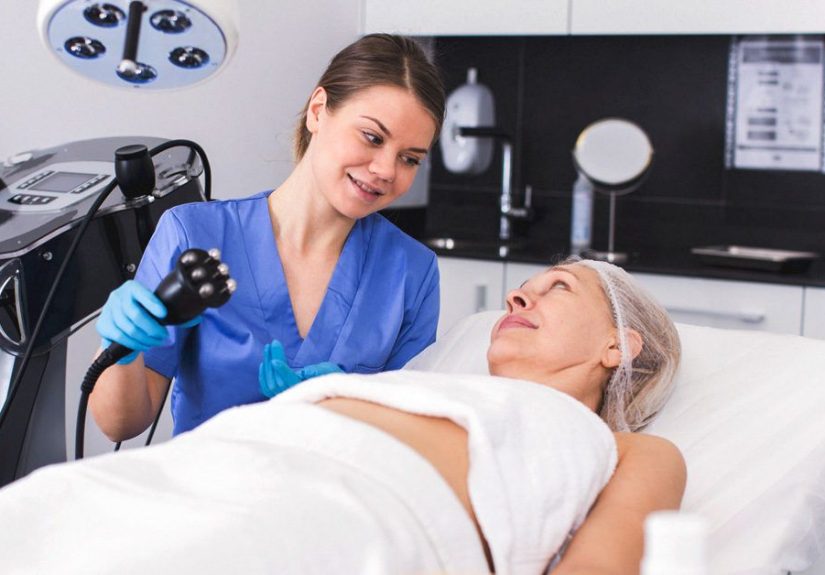
3) Gel pad + applicator placement
A protective gel pad is placed on the skin, then the applicator is positioned. For arms, clinics often use a smaller
applicator designed to fit the upper arm contour.
4) The cooling cycle (usually 35–60 minutes per area)
You’ll feel strong suction/pulling at first, followed by intense cold. Many people report that the area becomes numb fairly quickly.
During the cycle, you can usually sit, work on a laptop, read, or watch videosbasically, you’re “busy freezing fat” but in a low-effort way.
5) Post-treatment massage
After the applicator is removed, the treated area is typically massaged for a short period.
Many people say this is the most uncomfortable partlike a deep massage on a numb, chilled area.
6) Back to normal life
Most people return to normal activities the same day, though you may have temporary soreness, swelling, or bruising.
Plan around major events if you bruise easily (your arms might look like they lost a minor bar fight with a vacuum cleaner).
How Many Sessions or Cycles Do Arms Usually Need?
The short answer: it depends on your anatomy, your goal, and the applicator plan. Many people treat both arms,
and each arm may require one or more cycles per session. Some clinics recommend multiple cycles per arm, and some people do a second visit after
several weeks if they want more reduction.
Your provider should explain a personalized plan (including whether they will treat the back of the arm, outer arm, or multiple angles).
If someone promises “one quick zap and you’re done forever,” that’s a red flagthis process is gradual and dose-dependent.
CoolSculpting for Arms Results Timeline (When You’ll See a Difference)
CoolSculpting is famous for being a “slow reveal.” Your body needs time to process and clear the affected fat cells.
Typical timeline
- Immediately after: swelling, firmness, numbness, or tenderness can temporarily mask any change.
- 2–4 weeks: some people start noticing small changes, especially in how sleeves fit.
- 8–12 weeks: many see more visible improvement (often considered the “main reveal” window).
- 3–6 months: final changes can continue to develop for some individuals.
How much fat reduction is realistic?
Many clinical discussions of cryolipolysis describe an average reduction in the fat layer in the treated area that can be in the
roughly 20–25% range after a single treatmentbut results vary widely. Some people need additional sessions for the arms
to get the look they want, and some are “meh” responders.
CoolSculpting Arms Cost (U.S.): What You’ll Typically Pay
Costs vary by region, provider credentials, device version, andmost importantlyhow many cycles you need.
In the U.S., pricing is often quoted per cycle or as a package for a treatment plan.
Common U.S. price ranges (ballpark)
- Per cycle: often hundreds to over a thousand dollars, depending on market and clinic.
- Total treatment plan: commonly a few thousand dollars when multiple cycles/areas are included.
Why arm pricing can jump around
- Number of cycles per arm: more coverage = more cycles = higher cost.
- Device version: some clinics price CoolSculpting Elite differently than earlier systems.
- Provider expertise: board-certified specialists may charge more (often for good reason).
- Packages and promos: some clinics offer bundles for multiple cycles or treat-both-arms packages.
- Geography: major metro pricing can be higher than smaller markets.
Practical tip: ask for a written quote that includes cycles, number of sessions, and expected timeline.
Also ask what happens if you want more improvementwill additional cycles be discounted, or is it full price again?
Side Effects and Safety: What Can Go Wrong?
Most side effects are temporary and localized, but “non-surgical” doesn’t mean “no risks.”
Understanding the difference between common, expected reactions and rare complications is key.
Common short-term side effects (usually temporary)
- Redness, swelling, bruising
- Numbness, tingling, sensitivity changes
- Firmness or “fullness” in the treated area
- Aching, soreness, cramping sensations
Less common but important risks
-
Paradoxical adipose hyperplasia (PAH): a rare complication where the treated area becomes larger or firmer instead of smaller.
It typically appears weeks to months later and may require surgical correction. - Nerve pain or prolonged sensitivity changes: uncommon, but possibleespecially in smaller areas like arms where nerves may be closer.
- Skin injury: rare but can happen, especially with improper technique, poor device handling, or counterfeit/unauthorized equipment.
How to lower risk (without pretending risk disappears)
- Choose a qualified, experienced provider (ask about training and how often they treat arms).
- Confirm the clinic uses authorized devices and applicators.
- Be honest about your medical history, including cold sensitivity issues and any prior arm procedures.
- Follow aftercare instructions and report unusual pain, blistering, or late-developing lumps/firmness.
CoolSculpting for Arms Photos: What Before-and-After Images Should Show
Photos can be helpfulbut only if they’re taken properly. A “before” taken under harsh overhead lighting and an “after” taken in flattering
golden-hour sunshine isn’t evidence. It’s a mood board.
What to look for in trustworthy arm photos
- Same pose: arms positioned the same way (angle changes can fake dramatic differences).
- Same lighting: consistent brightness and shadow.
- Same distance: camera placement and zoom matter.
- Same timing: “after” should be labeled (e.g., 8–12 weeks post-treatment).
- Multiple angles: arms often look different from front vs. side vs. back.
What arm results often look like (realistic expectations)
Many arm results are subtle-but-noticeable: a smoother contour at the back of the upper arm, less “hang,” and a slightly more defined upper arm line.
If you’re expecting your arms to look like you’ve been secretly doing triceps dips in a superhero training montage, that’s more about muscle and skin
than fat freezing.
CoolSculpting for Arms vs. Other Options
Arms are tricky because “the problem” might be fat, skin, muscle tone, or all three. Here’s how CoolSculpting compares to other approaches.
Exercise and strength training
Great for improving muscle tone and function. But spot reduction is limitedfat loss happens systemically, and genetics decide where it leaves last.
Still, many clinicians recommend pairing any contouring plan with consistent strength work.
Radiofrequency or ultrasound body contouring
Some devices use heat or sound waves to target fat and/or tighten skin. These may be worth discussing if skin laxity is part of your goal.
They often require a series of sessions.
Liposuction
Surgical, more immediate and dramatic fat removalbut includes anesthesia considerations, downtime, and higher overall risk and cost.
It can be more effective for larger changes.
Arm lift (brachioplasty)
Best for significant loose skin (often after major weight loss). It is surgical and leaves scars, but it directly addresses the “extra skin” issue
that non-surgical fat reduction can’t fully solve.
Frequently Asked Questions
Does CoolSculpting for arms hurt?
Most people describe the first few minutes as intense cold and pulling, followed by numbness. The post-treatment massage can be uncomfortable.
Pain tolerance variessome people shrug it off, others plan a “treat yourself” coffee afterward as emotional compensation.
Will the fat come back?
Treated fat cells are reduced in that area, but your body can still store fat in remaining fat cells if you gain weight.
Results tend to look best when weight stays relatively stable.
Will it tighten loose skin?
CoolSculpting is primarily a fat-reduction treatment. If skin laxity is the main issue, talk to a clinician about skin-tightening options or surgery.
Is it safe?
It is widely used and generally considered safe when performed correctly on appropriate candidates, but side effects and rare complications can occur.
The safest move is choosing a reputable medical practice and having a real consultationnot a “click-to-buy” situation.
Conclusion
CoolSculpting for arms can be a solid option for reducing a stubborn upper-arm fat bulgeespecially if you’re close to your goal weight,
have pinchable fat, and want a non-surgical approach with minimal downtime. The trade-offs are cost, patience (results take time),
and accepting that arms are a “skin + fat + tone” zonemeaning some people need a different (or combined) approach for the look they want.
The best next step is a consultation with a qualified provider who treats arms frequently, can explain your cycle plan clearly,
and can show standardized before-and-after photos that match your starting point.
Real-World Experiences (What People Commonly Report)
Below is a composite of common experiences patients share across reputable medical and consumer health sources and typical clinic aftercare guidance.
It’s not “one person’s story,” because bodies varyand because your arms deserve facts, not fairy tales.
Experience #1: The “Oh wow that suction is serious” moment
Many people say the first few minutes are the strangest: the applicator grips the upper arm and creates a strong pulling sensation.
It can feel tight and awkward, like your arm is being gentlybut firmlyrecruited into a vacuum-based loyalty program.
Then the cold ramps up, and most report that the area starts to numb. Once numb, the rest of the cycle is often described as boring in the best way.
People scroll, work, nap, or plan dinner like nothing unusual is happening (except for the fact that their arm is chillingliterally).
Experience #2: The massage is the spicy part
A common theme: the post-treatment massage can be more uncomfortable than the cooling itself.
Patients often describe it as a deep kneading over firm, cold tissue. Some say it’s brief and tolerable; others rate it as
“I understand why they warned me.” The good news: it’s short, and discomfort usually fades quickly after.
Experience #3: The first week can be weirdly numb (and slightly bruised)
For arms, people frequently mention bruising, tenderness, swelling, and numbness that can linger longer than expected.
Numbness may feel like you’re wearing an invisible sleeve. Some report zings or tingles as sensation returns.
If you bruise easily, you might avoid sleeveless outfits for a bitnot because anything is “wrong,” but because your arm may look like it took up
amateur kickboxing as a hobby.
Experience #4: The “Did it do anything?” phase (weeks 1–4)
A very normal emotional arc is: excitement → soreness → impatience. Many people don’t see much change early on, and some feel puffy or firm in the
treated area. That can lead to the classic question: “Did I just pay to make my arm temporarily grumpy?”
This is also when providers often remind patients that the body needs time to clear the affected fat cells. Small wins in this phase are usually
about fitsleeves may feel slightly less tight, or the arm contour looks a bit smoother in certain lighting.
Experience #5: The noticeable change tends to be gradual and practical
When people do see improvement, it’s often described in everyday terms: arms look better in photos with arms down at the sides,
less bulge at the back of the upper arm, and a more “streamlined” shape in fitted tops.
The change is frequently subtle rather than dramaticthink “refined,” not “new body unlocked.”
Some patients feel satisfied after one round; others choose another session to push results further, especially if the initial fat pocket
was thicker or if they want more symmetry.
Experience #6: Expectations matter more than almost anything
Patients who report the highest satisfaction often share two mindsets: (1) they treated a very specific, localized problem area and
(2) they understood this is not a muscle-toning or skin-removal procedure. People who expect CoolSculpting to replace strength training
or to fix significant loose skin are more likely to feel disappointed.
Many clinicians encourage pairing arm contouring with consistent strength work (triceps, shoulders, posture) because the combination can make
the overall arm silhouette look more definedeven when fat reduction alone is modest.
Experience #7: Choosing the right provider is a recurring “wish I’d known”
A common theme in patient advice is to choose a reputable medical practice with lots of experience treating arms specifically.
Patients often recommend asking: how many arm cases they do per month, what applicator plan they’d use for your anatomy, and whether
they can show standardized before-and-after photos taken at similar time points.
Another repeated tip: avoid suspiciously cheap deals from unknown operatorsbecause the device, technique, and safety protocols matter.