Table of Contents >> Show >> Hide
- What Is Hereditary Angioedema (HAE)?
- Where Does a Cold Compress Fit into HAE Care?
- Potential Benefits of Cold Compresses for Hereditary Angioedema
- How to Use a Cold Compress Safely with HAE
- Special Situations: Where to Be Extra Careful
- Cold Compresses as Part of Everyday HAE Self-Care
- When a Cold Compress Is Not Enough (Red-Flag Signs)
- Practical Tips to Make Cold Compresses Work Better for You
- Real-World Experiences with Cold Compresses and HAE
- Bringing It All Together
If you live with hereditary angioedema (HAE), you get way too much “surprise swelling” in your life.
Face, hands, feet, belly, even your airway — HAE likes to keep things exciting in all the wrong ways.
The good news: there are powerful medications to prevent and treat attacks. The less dramatic news:
simple tools like a cold compress can also help you feel more comfortable while those meds do the
heavy lifting.
In this guide, we’ll walk through how cold compresses fit into HAE care: what they can realistically do,
what they absolutely cannot do, and how to use them safely so you’re soothing swelling, not adding
frostbite to your list of problems. Think of a cold compress as the cool-headed sidekick to your
prescribed HAE treatments — not the superhero, but a very useful friend.
Quick reminder: This article is educational and does not replace medical advice. Always follow
the plan you’ve made with your HAE specialist and ask them before changing your routine.
What Is Hereditary Angioedema (HAE)?
Hereditary angioedema is a rare genetic condition that causes sudden episodes of deep swelling under
the skin or in mucosal tissues. The most commonly affected areas are the face, hands, feet, genitals,
gastrointestinal tract, and airway. Swelling in the airway can be life-threatening and is a medical
emergency.
Why HAE swelling is different
Many people are familiar with allergic swelling, where hives and puffiness show up after a food or
medication reaction. That type of angioedema is driven by histamine and usually responds to
antihistamines and steroids. HAE is different: it’s typically driven by a peptide called bradykinin, which
increases blood vessel permeability and lets fluid leak into tissues. Because of this, standard allergy
meds (antihistamines, steroids, epinephrine) are usually not effective for HAE attacks.
Most people with HAE have either:
- Too little of a protein called C1 inhibitor, or
- C1 inhibitor that doesn’t work properly.
Either way, the result is a tendency toward sudden, sometimes unpredictable swelling episodes. Attacks
may occur as often as every week or two in some people, and they can last several days if not treated.
Triggers you should know about
Not all HAE attacks have a clear trigger, but common ones can include:
- Emotional stress or anxiety
- Minor injuries or pressure (tight clothing, leaning on a surface, physical work)
- Dental work or surgery
- Infections, like colds or the flu
- Hormonal shifts (for example, menstruation, pregnancy, certain estrogen-containing medications)
Cold compresses don’t prevent these triggers and they don’t stop an attack from progressing, but they
can sometimes make an attack feel less painful or less “angry” while your prescribed treatments (like
C1 inhibitor infusions or bradykinin-blocking medications) do the real work.
Where Does a Cold Compress Fit into HAE Care?
Let’s get the hierarchy straight, because this is important for safety:
- First-line therapy for HAE attacks: On-demand prescription medications specifically designed for HAE.
- Long-term prevention: Preventive (prophylactic) meds prescribed by your specialist.
- Comfort tools: Strategies like rest, gentle positioning, stress reduction, and yes, cold compresses.
Cold compresses live firmly in the “comfort tool” category. They:
- Do not fix the underlying problem with C1 inhibitor or bradykinin.
- Do not replace your emergency or on-demand medication.
- May help reduce local pain, throbbing, and the sensation of heat or tightness during a mild attack.
Think of them as the equivalent of a cozy ice pack on a sprained ankle: they don’t knit the ligament
back together, but they make the situation more tolerable while healing or treatment is happening.
Potential Benefits of Cold Compresses for Hereditary Angioedema
1. Easing pain and discomfort
Many people describe HAE swelling as painful, tight, or “bruised from the inside.” A cold compress can
temporarily numb the area and slow down local nerve impulses, so your brain receives fewer “this
hurts” signals. This can make it easier to rest, sleep, or focus on other things while you wait for your
HAE treatment to kick in.
2. Reducing the sensation of heat
Even though HAE swelling isn’t an infection, the affected area may feel warm or inflamed. Cooling the
skin surface can make that area feel calmer and less “on fire,” which many people find soothing. It
doesn’t mean the swelling is gone, but it often feels less intense.
3. Helping with visible swelling in exposed areas
Swelling in the face or hands can be both physically uncomfortable and emotionally stressful,
especially in social or work settings. A cold compress may help those areas feel less tight and may
slightly reduce visible puffiness for some people. Even small improvements can be a big deal when
you’re trying to function in your daily life.
4. Supporting rest and relaxation during an attack
Managing HAE is not just about the swelling itself; it’s also about coping with the anxiety that comes
with it. Taking a few minutes to apply a cold compress, lie down, and practice deep breathing can
become a mini ritual that calms both body and mind. Reducing stress may also help you feel more in
control during flares.
How to Use a Cold Compress Safely with HAE
Choose the right type of cold compress
You’ve got options:
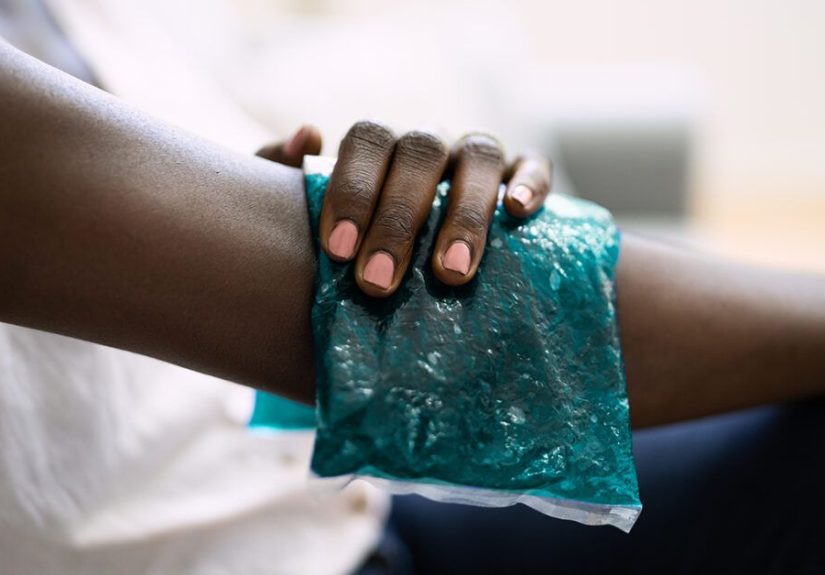
- Reusable gel pack: Flexible and easy to keep in the freezer. Good for curved areas like the face or joints.
- Bag of frozen peas or corn: Classic home hack. Wrap in a thin cloth before using.
- Cold, damp cloth: Great if you don’t have ice handy or prefer something milder.
- Commercial cold wrap or sleeve: These can stay put on arms, legs, or joints while you move around.
Whatever you choose, make sure there’s a thin barrier (like a clean cotton cloth) between your skin
and the cold source. Direct ice on bare skin can cause damage surprisingly quickly.
Step-by-step guide
- Follow your HAE action plan first: take or administer any on-demand medication your doctor prescribed.
- Prepare your cold compress: wrap your ice pack or frozen veggies in a clean, thin towel.
- Gently position the compress on the swollen area. Don’t press hard; you don’t want to add pressure to already stressed tissue.
- Set a timer for about 10–15 minutes.
- Remove the compress and let your skin warm back up for at least the same amount of time.
- Repeat as needed, as long as your skin looks and feels okay and you’re not ignoring any worsening symptoms.
How long and how often?
A common pattern is 10–15 minutes on, 10–15 minutes off, repeated a few times. Very long or continuous
cold exposure can damage the skin or underlying tissues, especially if your sensation is reduced in that
area. If the skin becomes very pale, hard, numb, or painful in a sharp way, stop the cold immediately.
Special Situations: Where to Be Extra Careful
Swelling near the throat or airway
This is the big safety rule: if you suspect swelling in your tongue, throat, or airway, treat it as an
emergency. Use your prescribed HAE rescue medication immediately (if available) and follow your
emergency plan. Call your local emergency number if you have:
- Trouble breathing or feeling like your throat is closing
- Difficulty swallowing or speaking
- Hoarseness or a change in your voice
- A feeling of tightness or “lump” in the throat
Applying a cold compress to your neck might feel soothing, but it must never delay calling for emergency
care. It’s a comfort measure, not a treatment for airway risk.
Abdominal HAE attacks
Cold compresses on the abdomen are tricky. If your abdomen is extremely painful, bloated, or tender,
a cold pack may provide mild relief for some people, but for others it can feel worse. More
importantly, severe abdominal HAE attacks can mimic surgical emergencies and may require urgent
medical evaluation.
If your abdominal pain is intense, associated with vomiting, or feels different from your usual pattern,
prioritize your HAE medications and medical assessment over at-home comfort measures.
Sensitive areas & fragile skin
For areas like the face, lips, or genitals, use extra caution:
- Use milder cold (cool damp cloth rather than solid ice).
- Limit the time to the shorter end of the 10–15 minute range.
- Check the skin frequently for any changes in color or sensation.
Cold Compresses as Part of Everyday HAE Self-Care
While medications are the main players in HAE treatment, small routines can make life with HAE more
manageable. Cold compresses can fit into a broader self-care toolkit like this:
- At the first sign of a mild skin flare: use your prescribed on-demand therapy if directed, then add a cold compress for comfort.
- After minor trauma: if you bump into something or have a small injury in an area that often swells, a cold pack may reduce discomfort while you keep an eye on symptoms.
- Before or after known “pressure” situations: for example, after standing all day, you might use a cool wrap on the ankles if they tend to swell.
Many people also pair cold compress use with relaxing activities: listening to a podcast, guided
meditation, or slow breathing exercises. The goal is not just physical relief, but also emotional
decompression when HAE decides to crash your schedule.
When a Cold Compress Is Not Enough (Red-Flag Signs)
Even if a cold compress makes the area feel a bit better, you still need to follow your HAE action plan.
You should contact your healthcare team or seek urgent care if:
- You notice any symptoms involving your tongue, throat, or breathing.
- The swelling is rapidly progressing or very different from your usual pattern.
- The pain is severe, especially in the abdomen.
- You’ve used your on-demand medication and the attack is not improving within the time frame your provider discussed.
- You’re unsure whether what you’re experiencing is HAE or something else.
Cold compresses are not “dangerous” by themselves when used properly, but the real danger is relying
on them instead of your prescribed HAE treatments or emergency care. If in doubt, call your
provider or emergency services — no one ever regrets being cautious with their airway.
Practical Tips to Make Cold Compresses Work Better for You
- Keep supplies ready: Store one or two gel packs in your freezer so you’re not hunting for ice in the middle of the night.
- Pack “HAE comfort kits”: For work or travel, keep a small insulated bag with a reusable pack you can chill in a workplace freezer or hotel mini-fridge.
- Use soft barriers: Thin cotton towels or T-shirts are gentler than rough fabrics and reduce friction on swollen skin.
- Don’t over-tighten wraps: Elastic bandages or tight sleeves around a swollen area may actually worsen discomfort.
- Track what helps: In a symptom journal, note when you used cold compresses and how much relief you felt. Over time, you’ll learn which situations they help the most.
Real-World Experiences with Cold Compresses and HAE
Every person with HAE has their own playbook for getting through attacks. Cold compresses may or
may not be an all-star in your personal plan, but hearing how others use them can give you ideas to
discuss with your care team. The following examples are composites based on common patient
stories — not real individuals, but very real situations.
Face swelling before an important day
“Alex” is in their 20s, living with HAE and juggling college, work, and social life. One evening, after a
stressful week, they notice that familiar tingling in the lower lip that often means a flare is coming.
They follow their doctor’s instructions: they use their on-demand HAE medication right away, then
reach for a soft cold pack from the freezer and wrap it in a clean T-shirt.
Instead of pressing the pack hard onto the lip, Alex supports their chin with a pillow and lets the cold
rest gently against the area in short intervals. The swelling still happens, but the lip feels less hot and
painful, and they’re able to sleep better. The next morning, the swelling is noticeable but not as
dramatic as past attacks. Alex still reschedules a planned presentation (because boundaries are
healthy), but they don’t feel completely derailed.
Hand swelling after physical work
“Maria” works with her hands all day. After a long shift involving carrying boxes and tools, she notices
that her fingers feel tight and sore — a familiar setup for a hand or forearm flare. Following her HAE
action plan, she uses her prescribed medication at the first sign of a potential attack.
While she waits, she fills a small bowl with cool (not icy) water and dips a clean cloth into it, wringing it
out gently and wrapping it around her fingers. She cycles 10 minutes on, 10 minutes off. The cool
cloth dulls the ache enough for her to relax on the couch instead of pacing around in discomfort. Her
swelling still lasts a while, but the episode feels much more tolerable, and she’s less anxious about
every minor twinge.
Nighttime leg swelling and sleep
“Jordan” often gets lower-leg swelling episodes, especially after long days on their feet. They’ve
noticed that if they ignore early tingling and tightness, they wake up in the night with throbbing pain.
Now, when symptoms start, they take their on-demand HAE treatment if indicated, then elevate their
legs on pillows and use flexible gel packs wrapped in thin towels on the most uncomfortable spots.
The cool packs don’t prevent the flare, but they do take the edge off the pain enough for Jordan to fall
asleep sooner. They also build this into a calming routine: dim lights, gentle stretching (if okayed by
their provider), and a favorite playlist. The combination of physical relief and emotional comfort makes
the swelling feel less overwhelming and less like a “catastrophe” every time.
Learning when not to use cold
Not every HAE story is a “cold compress wins” moment. “Sam” tried using a very icy pack directly on
bare skin during an intense abdominal attack, thinking “colder is better.” The result? More discomfort
and a patch of skin that turned pale and numb. After that experience (and a talk with their provider),
Sam switched to milder cooling, shorter sessions, and only in areas where it actually felt good, never
as a substitute for seeking care.
The takeaway: cold compresses should feel soothing, not punishing. If they’re making things worse,
you have full permission to retire them and focus on other comfort strategies.
Bringing It All Together
Cold compresses won’t change the genetics behind hereditary angioedema. They won’t stop airway
swelling or replace targeted HAE medications. What they can do is make many mild to moderate
attacks a little less miserable — easing pain, calming heat, and giving you a practical tool you can use
at home, at work, or on the road.
The best approach is a layered one: a solid, personalized HAE treatment plan from your specialist;
early use of on-demand medications when attacks begin; trigger awareness; and simple comfort tools
like cold compresses to help your body and mind ride out the storm. If you’re curious whether cold
therapy belongs in your routine, bring it up at your next appointment and ask how it might fit alongside
your current medications.
You deserve a plan that doesn’t just keep you alive, but helps you live as comfortably and confidently
as possible with HAE — and if a humble cold pack earns a spot in your toolkit, all the better.