Table of Contents >> Show >> Hide
- The 5 Rules That Make Organizing Work Everywhere
- 1) Declutter first (organizers can’t save you from too much stuff)
- 2) Organize by “point of use,” not by what seems logical in theory
- 3) Create zones (each zone gets a job description)
- 4) Contain what remains (bins, dividers, trays, and boundaries)
- 5) Maintain with tiny resets (because “organized forever” is not a real setting)
- The Entryway: Your Home’s “Landing Zone” (Make It Calm, Not a Catchall)
- Living Room: Organize for Real Life (Not for a Catalog Photo)
- Kitchen: Make the Most-Used Room the Easiest to Keep Tidy
- Bathroom: Small Space, Big Impact (And Yes, It Can Stay Nice)
- Bedroom: Design for Rest (Not for Piles You Step Around)
- Closets: Stop “Nothing to Wear” from Happening in a Full Closet
- Laundry Room: Make Laundry Less Annoying (A Worthy Goal)
- Home Office + Paper: Control the Paper, Control the Chaos
- Kids’ Rooms and Play Areas: Toy Peace Without Becoming a Toy Museum
- Garage, Basement, and Utility Spaces: Organize for Safety and Sanity
- How to Start Without Getting Overwhelmed
- Common Organizing Mistakes (So You Can Skip Them)
- Real-World Experiences: What Actually Happens When People Try These Tips (500+ Words)
- Conclusion: An Organized Home Is a Repeatable System, Not a One-Time Project
If your home had a “Downloads” folder, would it be your kitchen counter? (No judgment. Most of us are one unopened package away from chaos.)
The good news: getting organized doesn’t require a perfect pantry, a label maker addiction, or turning your hallway into a Pinterest set.
What works is a simple system you can repeatroom by room, zone by zoneso your stuff stops auditioning for a role as “clutter.”
Below is expert-style, real-life-friendly guidance for every space in your home, with specific examples you can steal immediately. We’ll keep it practical,
a little funny, and highly doablebecause the only thing that should be overflowing in your house is your enthusiasm for finding the remote on the first try.
The 5 Rules That Make Organizing Work Everywhere
1) Declutter first (organizers can’t save you from too much stuff)
Storage bins are helpful. But if you’re storing things you don’t use, you’re basically paying rent to keep clutter comfortable.
Start by removing what doesn’t belong, doesn’t work, or doesn’t fit your life right now.
- Quick decision hack: Ask, “Have I used this recently, and will I use it again soon?” If not, it’s a donation or recycle candidate.
- Emotional-item rule: Don’t begin with sentimental stuff. Warm up on easy categories first (duplicates, expired items, broken things).
- Keep one “donation bag” visible: When it’s full, it leaves the house. No second-guessing in the doorway.
2) Organize by “point of use,” not by what seems logical in theory
Store items where you actually use them. If you do your hair in the bedroom, keep the hair tools there (safely), not in a far-away bathroom cabinet
that only exists in your fantasy version of yourself.
3) Create zones (each zone gets a job description)
A zone is a dedicated home for a category of items that supports a specific activity. Think: “coffee zone,” “school drop-off zone,” “first-aid zone.”
When zones are clear, tidying becomes fastbecause you’re not negotiating with every object.
4) Contain what remains (bins, dividers, trays, and boundaries)
Containers don’t just hold itemsthey limit how much you keep. If the snack bin is full, you don’t buy more snacks; you eat the snacks.
Boundaries keep your home from becoming a storage unit with Wi-Fi.
- Clear bins: Great for pantries and kid gear because you can see what you have.
- Drawer dividers: Perfect for bathrooms, kitchens, and “miscellaneous chaos” drawers.
- Trays: Turn random piles into intentional “collections” (keys, mail, daily meds).
5) Maintain with tiny resets (because “organized forever” is not a real setting)
The secret isn’t a once-a-year organizing marathon. It’s a 5–10 minute daily reset and a short weekly check-in.
Your home doesn’t need perfection; it needs a refresh cycle.
- Daily: 5-minute “closing shift” before bedtrash out, surfaces cleared, items returned to zones.
- Weekly: Clear the landing zone (entryway/mail), toss expired fridge items, empty small trash bins.
- Monthly: One mini-project: a drawer, a shelf, or one cabinettimed, contained, done.
The Entryway: Your Home’s “Landing Zone” (Make It Calm, Not a Catchall)
The entryway sets the tone. When it’s messy, everything feels messierlike the whole house is wearing a wrinkled shirt.
The goal is simple: give incoming items a designated place to land.
Entryway essentials (even in a tiny space)
- Hooks at kid height: Backpacks and jackets get hung up instead of tossed down like dramatic confetti.
- Shoe boundary: A rack or bin that fits only what you want out (ideally one pair per person, seasonally adjusted).
- Small tray or bowl: Keys, earbuds, loose changeso they stop teleporting into the couch.
- Mail station: A lidded bin or slim sorter: “To Do,” “To File,” “To Shred.” No floor piles allowed.
Pro tip: Reduce visual clutter
Too many open baskets and hooks can still look chaotic. Mix open storage (daily items) with closed storage (extras) so the space looks intentional.
Living Room: Organize for Real Life (Not for a Catalog Photo)
Living rooms collect “everyday evidence”: blankets, chargers, toys, game controllers, and that one mysterious cable that might power a spaceship.
The solution is to create zones that match how you actually use the room.
3 living room zones that change everything
- Relax zone: A basket for blankets; a small bin for remotes; a coaster tray for drinks.
- Kid/pet zone: One lidded bin or cabinet for toys; rotate toys weekly so fewer stay out.
- Media zone: A labeled drawer for controllers, batteries, and cords (bonus: one “charging station” basket).
Easy clutter-control rules
- One-surface rule: Choose one surface (coffee table tray) where “small stuff” can live. Everything else stays clear.
- Two-minute tidy: Set a timer after dinner. Everyone returns items to zones. It’s shockingly effective.
- Hidden storage wins: Ottomans, benches, and cabinets do more than pretty baskets when you need fast cleanup.
Kitchen: Make the Most-Used Room the Easiest to Keep Tidy
Kitchens don’t get cluttered because you’re messy. They get cluttered because you use them constantly.
Organize to reduce friction: store by frequency, protect your counters, and give every category a home.
Countertops: the “highway,” not the “storage closet”
- Keep only daily essentials out: coffee maker, utensil crock, maybe a fruit bowl. Everything else earns a cabinet.
- Create a paper-command spot: one folder, one tray, or one wall fileso papers don’t spread like glitter.
- Use vertical space: wall rails, hooks, magnetic strips, or shelves for items that clog drawers.
Cabinets and drawers: stop the “avalanche effect”
- Group like with like: baking, snacks, breakfast, cooking oils, spices.
- Use risers and turntables: for spices, cans, oils, and small bottles so you can see everything.
- Container-lid sanity: store lids vertically in a rack; keep containers in one bin so they don’t multiply overnight.
Pantry: organize by category + visibility
Pantries work best when you can see what you have and reach what you use. Place everyday items at eye level, backstock up high,
and kid snacks lower (if that fits your household).
- Decant when it helps: flour, sugar, rice, cerealclear containers reduce mess and make inventory obvious.
- Label by category: “Pasta,” “Baking,” “Lunchbox,” “Snacks,” “Breakfast.” Labels aren’t just cutethey prevent drift.
- First-in, first-out: put new items behind older ones to cut food waste.
Bathroom: Small Space, Big Impact (And Yes, It Can Stay Nice)
Bathrooms tend to hide clutter behind cabinet doors… until the doors stop closing. Your main targets: under-sink chaos, overstuffed drawers,
and products you don’t use.
Bathroom organizing system that sticks
- Pull everything out: wipe the space, then sort into categories: daily, weekly, rarely, backups, first-aid.
- Use clear bins: one for hair care, one for skin care, one for dental, one for cleaning.
- Add a small lazy Susan: for bottles that tip and tumble.
- Declutter expired products: be honestif you tried it once and hated it, you’re allowed to let it go.
Pro safety note
Keep medications, razors, and strong cleaners secured and out of reach of kids and pets. “Organized” should also mean “safe.”
Bedroom: Design for Rest (Not for Piles You Step Around)
Bedrooms collect “almost put away” items: laundry, accessories, books, water bottles, and yesterday’s outfit that is not dirty but also not clean.
The fix is to reduce decision fatigue and give common clutter a proper home.
Nightstand: keep it boring on purpose
- Limit to essentials: lamp, book, water, charger, maybe hand lotion.
- Use a small tray: for jewelry, chapstick, and the tiny items that otherwise vanish.
- Add one drawer divider: so it doesn’t become a mini junk drawer with dreams.
Use under-bed storage strategically
Under the bed is prime real estate for off-season clothing, extra linens, and rarely used itemsespecially if your closet is small.
Choose flat bins that slide easily and label them clearly.
Closets: Stop “Nothing to Wear” from Happening in a Full Closet
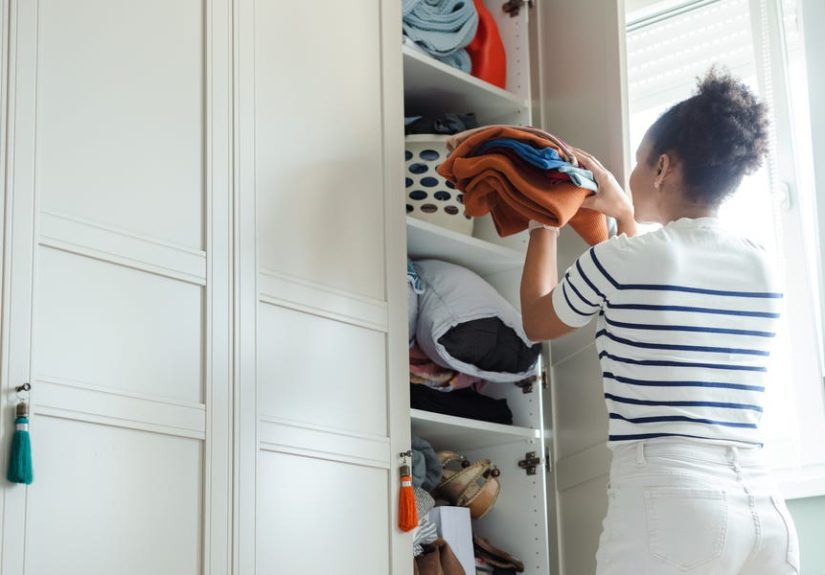
Closet organization is less about fancy systems and more about visibility and routine.
If you can see your options, you wear what you own. If you can’t, you buy duplicates. Then the closet gets a raise.
Closet setup that works
- Uniform hangers: instantly reduces visual chaos and helps clothes hang consistently.
- Sort by type, then color (optional): tops, pants, dresses, outerwear; color is a nice bonus if you like it.
- Use vertical space: add shelf dividers, hanging organizers, or stackable bins for accessories.
- Keep a donation bag inside the closet: when something doesn’t fit or flatter, it exits faster.
Best “small closet” trick
Store “off-season” elsewhere. Your closet should hold what you can wear now, not your entire life story.
Laundry Room: Make Laundry Less Annoying (A Worthy Goal)
Laundry gets easier when supplies are grouped and steps are simplified. The objective: reduce wandering and sorting later.
Laundry room zones
- Sorting zone: a divided hamper or multiple baskets (whites/darks/delicates) if your household benefits.
- Supplies zone: one bin for detergent, stain remover, dryer sheets, lint rollers, and mesh bags.
- Lost-and-found zone: a small basket for stray socks, buttons, and “whose is this?” items.
Two small habits that save time
- Refill as you go: when detergent is low, add it to your shopping list immediately.
- Put away instantly (when possible): folding is optional; putting clothes where they belong is not.
Home Office + Paper: Control the Paper, Control the Chaos
Paper clutter has a special talent: it looks urgent even when it’s a pizza coupon from 2019.
Use a simple system that keeps papers moving.
Minimal paper system
- Action tray: bills, forms, school noticesanything that requires a next step.
- File folder/bin: warranties, taxes, manuals you truly need, medical documents.
- Shred/recycle basket: junk mail goes here immediately so it doesn’t breed on countertops.
Digital backup (when appropriate)
If it’s safe and relevant for your household, consider scanning key documents so you’re not managing towering stacks of paper “just in case.”
Kids’ Rooms and Play Areas: Toy Peace Without Becoming a Toy Museum
Kids don’t need more bins. They need a simple, repeatable system with clear category boundaries.
The goal isn’t “perfectly tidy.” It’s “easy to reset.”
Kid-friendly organizing rules
- Big categories: blocks, dolls, cars, art supplies, puzzlesavoid micro-sorting that nobody maintains.
- Picture labels: younger kids can follow visuals more easily than words.
- Rotation box: keep some toys stored away and swap them weekly to reduce clutter and increase interest.
- Art station boundaries: a bin for paper, a cup for markers, a small drawer for glue/tapecontained mess is still a win.
Garage, Basement, and Utility Spaces: Organize for Safety and Sanity
These spaces become “where things go to be forgotten.” Treat them like functional zones instead of mystery warehouses.
Bonus: you’ll stop buying duplicates of tools you already own (somewhere).
Best-practice zone list
- Tools zone: frequently used tools accessible; rarely used tools higher or deeper.
- Seasonal zone: décor, sports gear, camping items in labeled bins.
- Home maintenance zone: light bulbs, filters, batteries, paint supplies (stored safely).
- Donation/dispatch zone: one box where outgoing items waitso your car becomes a helpful accomplice.
Contain + label or it doesn’t count
Clear labels prevent “I’ll remember what’s in here” optimism. (You won’t. Future-you is busy.)
How to Start Without Getting Overwhelmed
The fastest way to quit is to try to do the whole house in one heroic day. Instead, use a contained-space approach:
one drawer, one shelf, one cabinet, one zone.
The 25-minute reset method
- Pick one small area (a drawer, a shelf, the space under one sink).
- Set a timer for 25 minutes.
- Clear out, sort into categories, remove trash/donations, then contain what stays.
- Stop when the timer ends. Take a break. Repeat if you wantno burnout required.
The weekend “most-used rooms first” plan
- Day 1: Entryway + kitchen (biggest daily impact).
- Day 2: Bedroom + bathroom (rest and routines).
- Optional add-on: One closet or the laundry room if you still have energy.
Common Organizing Mistakes (So You Can Skip Them)
- Buying organizers before decluttering: measure second, buy last.
- Over-labeling everything: labels are useful, but you don’t need a tag for “misc cords that haunt me.”
- Creating systems too complex to maintain: if it takes 8 steps to put something away, it will live on a chair forever.
- Storing items far from where they’re used: distance = clutter. Point of use wins.
Real-World Experiences: What Actually Happens When People Try These Tips (500+ Words)
Let’s talk about the part nobody puts in the “after” photo: the messy middle. The truth is, organizing usually begins with a minor identity crisis.
You pull everything out of a drawer, stare at the pile, and think, “So this is who I am now.” That moment is normaland it’s often the turning point.
People who succeed aren’t magically neat. They’re the ones who build a system that matches their habits, not their hopes.
One common experience: the “I found three of these!” phenomenon. It happens in kitchens (measuring cups),
bathrooms (half-used skincare), and garages (mystery screws). When people finally create zones and containers, they discover duplicates they forgot they owned.
That’s why visibility is so powerful. Clear bins, shelf risers, and drawer dividers aren’t about aestheticsthey reduce accidental re-buying.
When you can see the tape, you stop buying tape like you’re preparing for a sticky apocalypse.
Another relatable storyline: the entryway rebellion. Many households start strong with hooks and a shoe rack…
and then gradually the “landing zone” expands into a full-scale lifestyle. Shoes drift. Mail multiplies. A backpack takes up permanent residence.
What fixes it isn’t more storageit’s a weekly reset and a clear boundary. People who keep entryways tidy usually do two things:
(1) they limit how many items can be out (one pair of shoes per person is a classic), and (2) they schedule a fast weekly sweep.
The sweep is not dramatic. It’s five minutes, a trash can, and a firm attitude toward flyers.
In living rooms, a frequent breakthrough is realizing that clutter is often a storage design problem, not a “lazy” problem.
When families add one lidded bin for toys and one small container for remotes and chargers, tidying time drops instantly.
The lidded bin matters because it lets you do the “company’s coming!” cleanup without playing an advanced-level sorting game.
A lot of people report that once a room becomes easier to reset, they tidy more oftenbecause it stops feeling like punishment.
Kitchens deliver the most dramatic before-and-after feelings. People tend to describe the same win: getting counters back.
When you move rarely used appliances into a cabinet and give papers a single home, the entire room feels larger.
Another common “aha” is the pantry: as soon as snacks, baking items, and breakfast foods are grouped, grocery shopping gets easier.
People stop buying duplicates, waste less food, and spend less time doing the “pantry squint” to find the cinnamon.
Even imperfect pantry organization helps, as long as it’s consistent and visible.
The most realistic organizing victory? Not perfectionmaintenance. Many people find that a nightly 5-minute reset
is the difference between “pretty organized” and “how did it get like this again?” The reset works because it’s small.
It doesn’t require motivation, just momentum. Toss trash, return items to zones, clear one surface.
It’s the same principle as brushing your teeth: you don’t wait until it’s a major situation.
Finally, there’s the emotional side. Decluttering can feel weirdly personal. People often hold onto items for “future me,”
guilt, or sunk costs. A helpful mindset is shifting from “I’m getting rid of this” to “I’m making room for what I actually use.”
When organizing systems align with daily routines, the home becomes easier to live inless searching, less tripping over piles,
fewer “where is it?” arguments, and more calm. And that’s the real flex: not a perfect label font, but a home that supports you.
Conclusion: An Organized Home Is a Repeatable System, Not a One-Time Project
The best home organizing tips are the ones you’ll still use next month. Start small, go room by room,
create zones based on real life, and keep maintenance light but consistent. If you do that, your home will feel easier
not because it’s “perfect,” but because it’s predictable. And predictable is underrated when you’re trying to find scissors.