Table of Contents >> Show >> Hide
- The Short Answer: No, But It Might Help
- Why a Thermal Printer Feels Weirdly Good to the ADHD Brain
- What a Thermal Printer Can Actually Do for ADHD Management
- Where the “Cure” Headline Goes Off the Rails
- What Evidence-Based ADHD Care Actually Looks Like
- How to Use a Thermal Printer Without Expecting Miracles
- Who Is Most Likely to Benefit?
- What the Experience Often Looks Like in Real Life
- Final Verdict
Synthesized from current U.S. sources including CDC, NIMH, AAP, HealthyChildren, CHADD, Understood, ADDitude, Cleveland Clinic, Mayo Clinic, Child Mind Institute, MedlinePlus, Zebra, and Hackaday.
If you have spent any time online lately, you may have seen a very specific kind of modern miracle claim: not a mushroom powder, not a monk-approved morning ritual, but a tiny thermal printer cheerfully spitting out labels like it has been personally hired to save your life. The headline practically writes itself: Can a thermal printer cure ADHD?
It is a funny question, a clicky question, and also the kind of question that deserves a serious answer before somebody impulse-buys a pocket printer at 1:14 a.m. and expects it to perform neurological wizardry by breakfast.
So let’s get the big answer out of the way early: no, a thermal printer cannot cure ADHD. ADHD is a real neurodevelopmental condition, not a paperwork shortage. A gadget cannot erase it any more than a water bottle can cure insomnia or a filing cabinet can fix heartbreak.
But here is where the story gets interesting. While a thermal printer does not cure ADHD, it can help some people manage certain ADHD-related struggles by making tasks visible, concrete, immediate, and harder to ignore. For people who live with time blindness, working-memory hiccups, and the mysterious ability to forget a task while actively walking toward it, that can feel surprisingly powerful.
In other words, the printer is not the cure. It is the sidekick. Sometimes a very useful sidekick. Sometimes a tiny paper goblin. Often both.
The Short Answer: No, But It Might Help
ADHD treatment is bigger than any single object on your desk. Evidence-based care usually includes some combination of medication, behavior therapy, counseling, parent training, school supports, coaching, or skills-based strategies depending on the person’s age and needs. That is why the word cure is the wrong word here.
A thermal printer is better understood as an ADHD support tool. It can reduce friction around planning, reminders, routines, and task initiation. Those are all areas where people with ADHD often struggle. If a tool makes the next step more obvious and easier to start, it can be genuinely helpful. It just is not medical treatment on its own.
Think of it this way: if ADHD often makes your brain feel like twenty browser tabs are open and one is playing music but you cannot find which one, a thermal printer can act like a sticky note with a power cord. It does not close the tabs. It just points at the one you need right now.
Why a Thermal Printer Feels Weirdly Good to the ADHD Brain
1. It externalizes memory
Many people with ADHD do better when important information exists outside the brain. A task written down and placed where action happens is easier to follow than a task floating around in mental fog. A printed reminder on the bathroom mirror, front door, desk, or lunch bag can be more effective than a thought you swear you will remember later. You will not remember later. No one remembers later. Later is a fictional country.
2. It reduces startup friction
Opening an app, deciding on categories, choosing a template, and color-coding your life in twelve pastel shades may sound productive. For an ADHD brain, it can also become an elite form of procrastination. A thermal printer can be faster: type, print, stick, done. That speed matters. The easier it is to capture a task, the more likely the task makes it into the real world before your attention skates off toward something shiny.
3. It creates visual cues at the point of action
ADHD often responds better to prompts that appear exactly where the behavior needs to happen. A label that says “TAKE MEDS” on the coffee maker, “PACK CHARGER” near the door, or “START DISHWASHER” above the sink may work better than a vague phone reminder that pops up while you are elbow-deep in five unrelated thoughts.
4. It adds novelty and satisfaction
Novelty can boost engagement, and many ADHD-friendly systems work because they make routine tasks a little less dull. A tiny printer that spits out physical tasks feels more tangible than another notification on a phone. You can tear off the note, move it, stack it, jar it, crumple it, or dramatically slam it into a “done” pile like a detective closing a case. That sensory payoff is not trivial. It can create momentum.
What a Thermal Printer Can Actually Do for ADHD Management
Print mini checklists for routines
Morning and evening routines are classic pain points. A thermal printer can generate short, repeatable checklists for getting out the door, packing a school bag, feeding the dog, or shutting down for bed. Keeping the steps visible reduces the mental load of having to remember them in sequence.
Turn big tasks into tiny steps
“Clean the kitchen” is not a task. It is a threat. Breaking it into printed strips like “clear counters,” “start dishes,” “wipe stove,” and “take out trash” makes the job easier to start. Task initiation improves when the first move is obvious and small.
Label homes for objects
ADHD and misplaced items are old enemies. Labels on drawers, bins, baskets, chargers, shelves, and supply stations can reduce the daily scavenger hunt. When everything has a visible home, putting things away becomes less abstract and more automatic.
Create transition prompts
Transitions are often harder than people realize. A printed note that says “LEAVE IN 10 MINUTES,” “GRAB LUNCH FROM FRIDGE,” or “SWITCH TO HOMEWORK” can act like a bridge between one activity and the next. That matters for kids, teens, and adults alike.
Build a visible “done” system
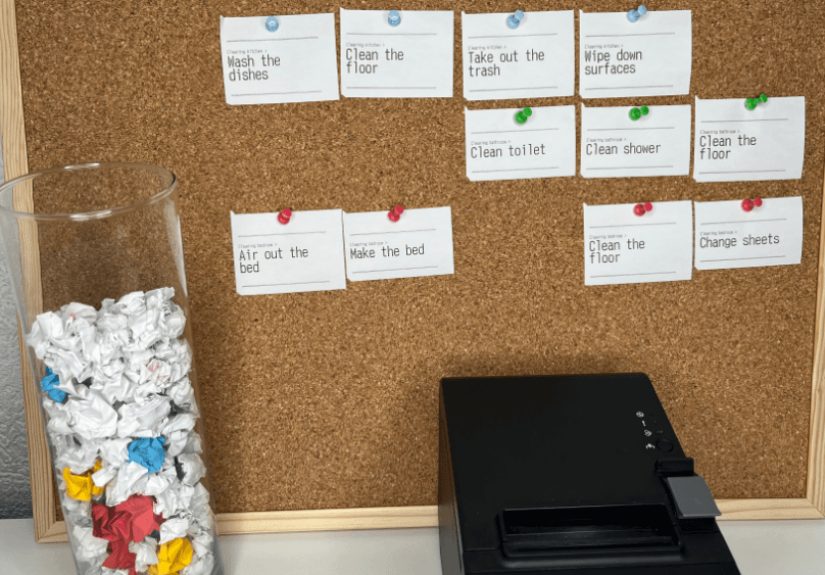
One reason chores and admin tasks feel so draining is that they vanish the moment they are complete. A printed task ticket dropped into a jar, clipped to a board, or moved to a finished column gives the brain a physical record of success. This can be especially useful for people who end the day feeling like they “did nothing” despite being busy the entire time.
Where the “Cure” Headline Goes Off the Rails
ADHD is not just disorganization
Disorganization is only one part of ADHD. The condition can affect attention regulation, impulsivity, emotional control, planning, motivation, working memory, and time management. A printer may help with reminders and routines, but it does not address the whole condition.
A good tool is not the same as treatment
Useful tools can absolutely improve daily life. But they work best as part of a larger strategy. For some people, that means medication. For others, therapy, coaching, parent training, school accommodations, sleep improvements, or environmental changes. A thermal printer can support those efforts; it should not replace them.
The wrong system becomes decorative clutter
Here is the other side of the cute gadget fantasy: if the system is too complicated, too demanding, or too easy to ignore, the printer becomes one more object sitting on your desk judging you silently. Labels everywhere can turn into wallpaper. Printouts can become paper tumbleweeds. ADHD-friendly tools are only helpful when they are simple enough to survive real life.
Thermal printers have practical limits
Most direct thermal printers use heat-sensitive paper and do not need ink, which is part of their appeal. But that same paper is not always ideal for long-term use. Some prints can fade with heat, light, friction, or time. So a thermal printer is great for short reminders, lists, and labels indoors, but it is not necessarily the forever-archive of your dreams.
What Evidence-Based ADHD Care Actually Looks Like
If you are asking whether a thermal printer can cure ADHD, the better question is: what really helps?
For children
For younger children, behavior therapy and parent training are widely recommended, especially early on. As kids get older, treatment may also include medication, classroom support, and structured routines at home and school. Visual schedules, checklists, and prompts can be part of that environment, which is one reason the printer idea is not completely ridiculous. It fits the broader principle of making expectations visible and concrete.
For teens and adults
Teens and adults often benefit from medication, counseling, skills training, cognitive behavioral strategies, coaching, or combinations of these. Practical supports matter: calendars, planners, reminder systems, timers, checklists, and organized routines. A thermal printer can slot neatly into this world because it turns abstract intentions into visible cues.
For everyone
The most effective systems tend to share a few qualities: they are easy to repeat, easy to see, hard to lose, and realistic on tired days. That last part is crucial. The best ADHD strategy is not the most beautiful one. It is the one you can still use when your brain feels like a squirrel operating a fax machine.
How to Use a Thermal Printer Without Expecting Miracles
Keep the printouts short
One task per slip works better than a motivational essay. “Put laundry in dryer” beats “complete domestic textile processing cycle.”
Place reminders where the action happens
Print the cue and put it at the exact point of use. Medicine near the breakfast setup. Backpack checklist near the door. Homework steps on the desk. Context matters more than creativity.
Build one repeatable routine first
Do not label your entire life in a burst of weekend optimism. Start with one friction-heavy area like mornings, meds, meals, or school prep. Test it. Adjust it. Then expand.
Use it to break down resistance
When you are stuck, print the smallest next action. Not “finish taxes.” Print “open tax folder.” Success often depends on lowering the entry point until the brain stops arguing.
Pair it with another proven tool
A thermal printer works best when combined with timers, a calendar, medication routines, therapy strategies, or family support. It is a bridge, not the whole highway.
Who Is Most Likely to Benefit?
A thermal printer may be especially helpful for people who:
- Forget steps once they leave the room
- Respond well to visual reminders
- Need low-friction task capture
- Like tangible systems more than apps
- Need labels, bins, stations, or routines made visible
- Feel motivated by physical evidence of progress
It may be less helpful for people who hate paper clutter, ignore visual noise, or already have a digital system that works beautifully. Not every ADHD brain wants the same kind of support, and that is normal.
What the Experience Often Looks Like in Real Life
People who get excited about thermal printers for ADHD usually are not claiming a medical breakthrough. What they are describing is a felt experience: the strange relief of finally finding a tool that makes daily life less slippery.
One common experience is that tasks stop feeling invisible. Instead of trying to hold a dozen obligations in working memory, a person can print three tiny task slips and place them in front of them. Suddenly the day looks less like a fog bank and more like a path. The job is still the job, but it has edges now. For someone who regularly loses momentum between intention and action, that can feel huge.
Another experience people describe is reduced resistance to starting. Opening an app can lead to tweaking categories. Opening a notebook can lead to rewriting the list because the handwriting looks “wrong.” But printing a quick label or a one-line task creates less room for negotiation. The brain has fewer excuses. The next step is sitting there on a little strip of paper, looking annoyingly specific.
There is also the emotional side. ADHD can come with a lot of self-criticism, especially when routines fall apart. A tiny printer can turn organization into something more playful and less moralized. Instead of thinking, “Why can’t I just remember basic things?” a person may start thinking, “Fine, the machine will remember for me.” That shift matters. It moves the problem from shame to design.
Parents sometimes find the experience useful for family life too. A printed bedtime sequence, lunch checklist, or school-morning routine can reduce repeated verbal reminders. Kids do not always love being told the same thing twelve times before 7:30 a.m. Adults also do not enjoy saying it twelve times. A visible checklist can take some heat out of those moments.
Students and adults often describe another benefit: the satisfaction of seeing completed tasks pile up. That physical proof can counter the classic ADHD feeling of being busy all day but somehow convinced nothing happened. A stack of finished slips, a board of completed labels, or a jar full of “done” tickets makes effort visible. It turns productivity from an abstract concept into something you can literally hold.
Of course, the experience is not always magical. Some people buy the printer, use it intensely for six days, then leave it next to a dead charger and a half-eaten granola bar. Others discover they love printing labels but hate maintaining the system. That does not mean they failed. It just means the tool solved one problem and introduced another. ADHD support is often less about finding the perfect object and more about discovering which imperfections you can live with consistently.
That is why the most honest experience-based conclusion is this: a thermal printer can be a surprisingly effective support for the right person in the right setup. It can make tasks visible, reduce friction, and bring a little novelty to routines that usually feel impossible. But it does not cure ADHD, replace treatment, or turn executive function into a superpower. It is just a tool. A clever one, a fun one, and for some people, a genuinely useful one. Which is still pretty impressive for a machine best known for printing receipts.
Final Verdict
So, can a thermal printer cure ADHD? No.
Can it help someone with ADHD function better by turning reminders into visible, tangible, low-friction cues? Absolutely. In the right hands, it can support routines, reduce mental load, and make tasks easier to start. That is not a cure. But it is not nothing either.
The smartest way to think about an ADHD thermal printer setup is as one tool in a broader system: treatment where needed, practical supports where useful, and enough self-awareness to know when a gadget is helping versus when it is just becoming very committed desk decor.
If a little printer helps you remember your meds, start your homework, pack your bag, or finally take the wet laundry out before it evolves into a new life form, that counts as a win. Just maybe not a cure.