Table of Contents >> Show >> Hide
- What the Butterfly Effect Really Means
- 1. A Wrong Turn in Sarajevo Helped Ignite World War I
- 2. A Moldy Petri Dish Changed Modern Medicine
- 3. A Melted Candy Bar Helped Create the Microwave Oven
- 4. A Weak Glue Became the Post-it Note
- 5. Burrs on a Dog’s Fur Inspired Velcro
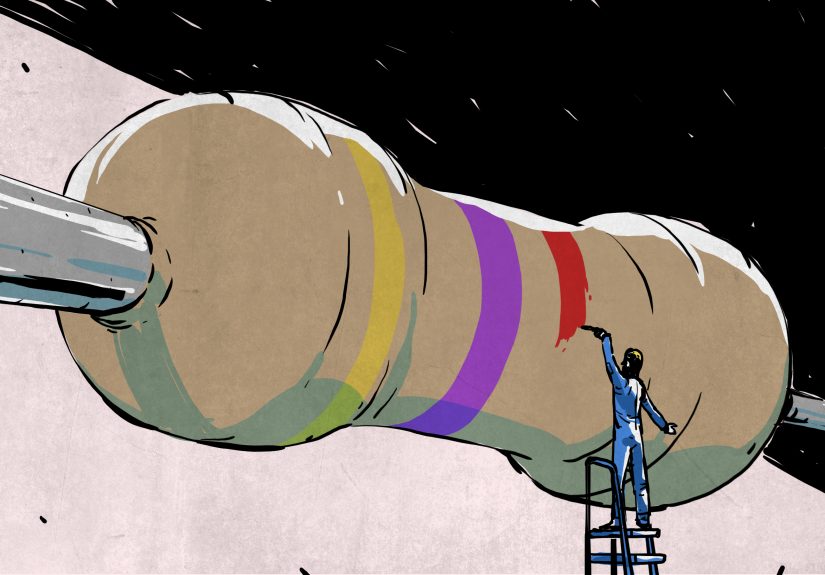
- 6. The Wrong Resistor Helped Create the Implantable Pacemaker
- 7. A Tiny O-Ring Helped Trigger the Challenger Disaster
- 8. Apollo 11’s Computer Alarms Nearly Changed the Story of the Moon Landing
- 9. One Decision on a Soviet Submarine May Have Helped Prevent Nuclear War
- Why Small Events Become Huge Turning Points
- The Human Experience of Butterfly Effects
- Conclusion
- SEO Tags
History loves to act like it was always headed in one neat, inevitable direction. Kings rise, empires fall, scientists discover things, astronauts land, and humanity marches forward like it has a spreadsheet and a five-year plan. In reality, history is often much messier, weirder, and more accidental than that. Sometimes the world changes because of a grand strategy. Sometimes it changes because somebody made a wrong turn, used the wrong resistor, forgot to clean up a Petri dish, or noticed burrs stuck to a dog.
That is why the idea of the butterfly effect keeps grabbing people’s imagination. In science, the phrase comes from meteorologist Edward Lorenz, whose work showed that tiny differences in starting conditions can produce wildly different outcomes in complex systems. In everyday life, the phrase has taken on a broader meaning: a small event sets off a chain reaction so large that the original cause starts to look almost ridiculous. A missed detail becomes a global turning point. A minor mistake becomes a life-saving invention. A small decision becomes a giant headline.
This is where the story gets good. Because once you start looking for butterfly effects that changed the world, you realize civilization is basically held together by fragile routines, surprising accidents, and a lot of people saying, “Well, that escalated quickly.”
What the Butterfly Effect Really Means
Before we jump into the juicy examples, it helps to clear up one thing. The butterfly effect is not just a poetic way to say that “everything matters.” In its original scientific sense, it describes how small changes in initial conditions can lead to very different outcomes in systems that are highly sensitive and difficult to predict, like the weather. Lorenz discovered this while working with weather models and seeing that tiny changes in input data could generate dramatically different forecasts.
In popular writing, though, the phrase has expanded beyond math and meteorology. We now use it for those moments when a tiny detail sends shock waves across history. That broader use is not a physics lecture, but it is still useful. It helps explain why human events can feel so wildly disproportionate. The cause is small. The consequences are enormous. And hindsight makes the whole thing look both obvious and absurd.
1. A Wrong Turn in Sarajevo Helped Ignite World War I
If you ever needed proof that the world can hinge on one lousy driving decision, Sarajevo in June 1914 would like a word.
Archduke Franz Ferdinand of Austria and his wife, Sophie, were visiting Sarajevo at a time of deep political tension. Earlier that day, an assassination attempt had already failed. That alone should have been enough drama for one morning. But later, while the royal couple’s motorcade was moving through the city, their driver took a wrong turn and had to stop to reverse. The problem? The car stopped near Gavrilo Princip, one of the conspirators, who suddenly found his opportunity dropped into his lap like the darkest lottery win in history.
Princip shot the Archduke and his wife. Their deaths did not create Europe’s tensions from scratch, of course. The continent was already packed with alliances, nationalism, militarism, and imperial rivalry. But this assassination became the trigger that pushed those tensions over the edge. Austria-Hungary moved against Serbia. Alliances snapped into motion. Within weeks, Europe was at war. The conflict became World War I, and the war reshaped borders, toppled empires, transformed warfare, and helped create the conditions for World War II.
So yes, the causes of World War I were complex. But one wrong turn turned complexity into catastrophe.
2. A Moldy Petri Dish Changed Modern Medicine
Some inventions are born in spotless laboratories with perfect planning. Penicillin was not one of them. Penicillin arrived like many great breakthroughs do: by being inconvenient, messy, and easy to miss.
In 1928, Alexander Fleming returned from vacation and noticed that one of his Petri dishes had been contaminated by mold. Usually, that would be lab-trash territory. But Fleming observed something unusual: the bacteria around the mold were not growing. The mold was producing a substance that killed or inhibited the bacteria. That substance became penicillin.
At first, the discovery did not instantly transform medicine. Fleming identified the effect, but turning it into a stable, usable treatment took more time and a lot more work. Eventually, researchers developed ways to isolate and produce penicillin on a large scale, and during World War II, U.S.-British cooperation accelerated production. Once that happened, the impact was enormous.
Before antibiotics, routine infections could be deadly, surgery was riskier, and a simple wound could spiral into tragedy. Penicillin changed that equation. It helped turn bacterial infections from frequent killers into treatable problems. It did not solve every medical challenge, and antibiotic resistance remains a serious issue today, but few accidental discoveries have saved more lives.
All from a contaminated dish that a less curious scientist might have tossed out without a second glance. Talk about a scientific version of “wait, don’t throw that away.”
3. A Melted Candy Bar Helped Create the Microwave Oven
Not every world-changing butterfly effect involves war or medicine. Some of them involve lunch. In 1945, engineer Percy Spencer was working with radar technology when he noticed that a candy bar in his pocket had melted. Instead of reacting like a normal person and just mourning the chocolate, he got curious. That curiosity led him to investigate how microwaves from a magnetron could heat food.
The result was the microwave oven. Early models were enormous, heavy, and not exactly cute countertop material. They were more “industrial metal giant” than “college dorm hero.” But the core discovery turned into one of the most influential kitchen technologies of the modern era.
The microwave oven changed how households cook, reheat, defrost, and survive weekday chaos. It sped up food preparation, supported the rise of convenience foods, influenced workplace eating habits, and became a fixture of modern domestic life. Is it glamorous? Not especially. Is it historically important? Absolutely. Half the planet’s leftovers would like to file a statement in its favor.
4. A Weak Glue Became the Post-it Note
The Post-it Note is such a normal office object that it is easy to forget it came from failure. In fact, it came from the exact opposite of what its inventor wanted.
At 3M, scientist Spencer Silver was trying to create a strong adhesive. Instead, he developed a weak one: sticky enough to cling, gentle enough to peel away. For years, it looked like a solution without a problem. Then Art Fry, another 3M scientist, found a use for it. He wanted a bookmark that would stay in place in his church hymnal without damaging the page. Suddenly, the so-called failed adhesive had a purpose.
That combination of one failed experiment and one practical annoyance produced a product that transformed everyday organization and communication. Post-it Notes became office shorthand for reminders, brainstorming, editing, project planning, and passive-aggressive friendliness. “Can you review this?” looks much nicer on a yellow square than it does in all caps at 11:43 p.m.
It is a classic butterfly effect because the breakthrough did not come from a perfect invention on the first try. It came from recognizing that failure in one context could be brilliance in another.
5. Burrs on a Dog’s Fur Inspired Velcro
If nature had a patent attorney, it would be exhausted by now. One of the best examples of human innovation borrowed from the natural world is Velcro.
Swiss engineer Georges de Mestral got the idea after noticing burrs stuck to his clothes and his dog’s fur after a trip outdoors. Instead of simply grumbling and picking them off, he looked at them under a microscope. He found tiny hook-like structures that latched onto loops in fabric and fur. That observation led him to develop hook-and-loop fasteners.
The road from idea to useful product was not instant. It took years of experimentation to find materials and manufacturing methods that worked well enough. But once the design matured, the invention spread everywhere: clothing, medical gear, shoes, transportation, sports equipment, and even space applications. What began as one guy noticing that plants were being clingy eventually became a fastening system used around the world.
This is the butterfly effect at its most elegant. A tiny natural annoyance became a global design principle.
6. The Wrong Resistor Helped Create the Implantable Pacemaker
Sometimes a mistake does not just change convenience. It changes survival.
In the mid-1950s, engineer Wilson Greatbatch was working on an oscillator intended to help record heart activity. During the process, he accidentally inserted the wrong resistor. Instead of producing the output he expected, the circuit began to pulse in a rhythm resembling the human heartbeat. Greatbatch immediately realized the potential. That accidental pulse opened the path toward the implantable pacemaker.
By 1960, the device developed by Greatbatch and Dr. William Chardack had been implanted in a human patient in Buffalo, New York. Over time, pacemakers became smaller, more reliable, and more widely used, helping millions of people live longer and more safely with serious heart-rhythm disorders.
Few accidents have had consequences this profound. A wrong electronic part became a medical device that has literally kept human hearts on schedule. That is not a metaphor. That is engineering showing off.
7. A Tiny O-Ring Helped Trigger the Challenger Disaster
Butterfly effects are not always inspiring. Sometimes they are devastating. The Challenger disaster is one of the clearest reminders that in complex systems, tiny parts can carry massive consequences.
On January 28, 1986, Space Shuttle Challenger broke apart 73 seconds after launch, killing all seven crew members. Investigations found that a rubber O-ring in a solid rocket booster joint had failed in unusually cold conditions. The tragedy also exposed deeper organizational problems: warnings were raised, concerns were not fully acted upon, and the risk was not handled with the seriousness it required.
The physical failure involved a small component. The human failure involved judgment, communication, and institutional culture. Together, they created a catastrophic chain reaction. Challenger changed NASA, public trust, engineering accountability, and how people think about risk in high-stakes technological systems.
This is the darker truth behind the butterfly effect: tiny details do not stay tiny when the system around them is loaded with pressure, complexity, and false confidence.
8. Apollo 11’s Computer Alarms Nearly Changed the Story of the Moon Landing
Not every butterfly effect ends in disaster. Sometimes the small thing goes wrong and the bigger system still survives because somebody prepared brilliantly.
During Apollo 11’s lunar descent, the onboard computer began throwing 1201 and 1202 alarms. That is the sort of moment that tends to raise everyone’s blood pressure to “historically significant.” The alarms were caused by overload conditions, but the computer’s restart protections had been designed and tested so that the most important functions would continue running.
Because the software and systems teams had built in resilience, and because mission control understood what the alarms meant, the landing continued. Neil Armstrong and Buzz Aldrin reached the Moon, and the mission became one of humanity’s defining achievements.
So this butterfly effect cuts both ways. A small systems issue nearly altered one of the most famous moments in history, but careful engineering turned what could have been an abort into a triumph. Tiny cause, huge stakes, better ending.
9. One Decision on a Soviet Submarine May Have Helped Prevent Nuclear War
Some butterfly effects are so chilling that they make every other example sit down and breathe into a paper bag. During the Cuban Missile Crisis in October 1962, one Soviet submarine, B-59, found itself under intense pressure and confusion. Later recollections published by the National Security Archive describe a moment when the captain came close to using a nuclear torpedo, believing war might already have begun.
According to those records and recollections, Vasily Arkhipov played a critical role in calming the situation and helping prevent that launch. The result was not flashy. There was no parade for “catastrophe that did not happen.” But the consequences of restraint may have been enormous.
This example matters because it shows the butterfly effect in reverse. A small act of judgment can stop a world-altering disaster just as surely as a small mistake can start one. Sometimes history changes because somebody panics. Sometimes it changes because one person refuses to.
Why Small Events Become Huge Turning Points
Here is the real lesson: little events do not reshape the world on their own. They matter because they land inside larger systems that are already tense, connected, and vulnerable. Sarajevo exploded because Europe was already unstable. The O-ring mattered because the shuttle system was unforgiving. Penicillin mattered because medicine needed a breakthrough and scientists knew how to build on it. Velcro and Post-it Notes mattered because people immediately found practical uses for them.
In other words, butterfly effects are not magic tricks. They are chain reactions. The spark is small. The conditions around it decide whether it becomes a candle, a bonfire, or a five-alarm historical mess.
The Human Experience of Butterfly Effects
Now let’s bring this down from world history to ordinary life, because the reason people love this topic is not just that empires fell or inventions spread. It is that butterfly effects feel familiar. Most people can think of a tiny moment that changed everything: taking one class, missing one bus, answering one message, moving to one new place, saying yes to one invitation, or saying no at exactly the right time.
That is what makes the butterfly effect feel so personal. We are all living inside chains of consequence we usually cannot see in real time. At the moment something small happens, it rarely arrives with dramatic music and a sign that says, “Attention: your character arc is beginning.” More often, it feels boring. Annoying, even. A delay. A mistake. A weird coincidence. A bad turn. A random conversation.
Then, months or years later, you look back and realize that the entire shape of your life bent around that tiny point. One recommendation led to a job. One failure pushed you into a better direction. One accidental hobby became a career. One friendship introduced you to a city, a field, a business idea, or a whole new version of yourself. Life is constantly pretending to be casual while doing major plot development behind your back.
There is also a humbling side to this. Butterfly effects remind us that control is never as complete as we imagine. Planning matters, discipline matters, expertise matters, but so do luck, timing, attention, and the ability to notice opportunity inside confusion. That is why curious people change the world so often. They do not just experience accidents. They recognize them. Fleming noticed the mold. Spencer noticed the melted candy bar. Greatbatch noticed the pulse. De Mestral noticed the burrs. The world-changing moment often begins with someone saying, “Huh. That is odd.”
And maybe that is the most useful takeaway of all. You do not need to become superstitious about every tiny choice, as if picking the wrong sandwich will rewrite civilization. But you should respect the power of small things. Pay attention. Stay flexible. Be willing to revise the plan. Sometimes the overlooked detail is the story. Sometimes the mistake is the map. Sometimes the thing that looks minor is quietly opening a door that did not exist five minutes earlier.
History is full of giant outcomes with ridiculously small beginnings. That does not mean every little moment becomes a legend. It just means we should stop underestimating the little moments. They are often the ones doing the heavy lifting while the big moments take all the credit.
Conclusion
The biggest changes in history do not always begin with a grand speech or a master plan. Sometimes they begin with a wrong turn, a weak glue, a stray mold spore, a cold morning, or a split-second decision under pressure. That is why butterfly effects that completely changed the world remain so fascinating. They reveal how fragile, creative, dangerous, and surprising human history really is.
They also reveal something comforting. Even in a chaotic world, small things matter. Attention matters. Curiosity matters. Judgment matters. And sometimes the tiniest moment ends up writing the biggest chapter.