Table of Contents >> Show >> Hide
- What “Black Basalt” Really Means (Hint: It’s Not a Rock)
- Why Black Basalt Became a “Prestige” Material
- Signature Looks: What Makes Black Basalt So Recognizable
- Real-World Examples: From Museum Icons to Your Coffee Table
- How to Style Black Basalt Prestige Earthenware in a Modern Home
- Buying Guide: How to Choose (and Not Regret It Later)
- Care and Maintenance: Keeping Matte Black Looking Gorgeous
- Why People Love It: The Psychology of Matte Black on the Table
- Experiences With Black Basalt Prestige Earthenware (About )
- Conclusion
Some tableware whispers “I’m practical.” Some shouts “I’m expensive.” Black Basalt Prestige Earthenware does something
far more interesting: it purrs. It’s the matte-black, sculptural cousin of everyday ceramicsdramatic without being
fussy, historic without looking like it lives behind museum glass.
If you’ve ever wondered why certain black ceramics look deep and velvety (not chalky), why they seem to turn a basic tea
moment into a full-on period drama, or why the phrase “Black Basalt” keeps showing up in design circles, this is your
guide. We’ll dig into what “black basalt” actually means, why Wedgwood made it famous, what “prestige” signals in modern
collections, and how to buy, use, style, and care for it without treating your cups like they’re made of ego.
What “Black Basalt” Really Means (Hint: It’s Not a Rock)
Let’s clear up the most common misconception: black basalt isn’t carved from volcanic stone. It’s a type of
ceramic body engineered to look like basaltdense, dark, and refinedwithout needing a chisel and a mountain.
Historically, “black basalt” refers to a fine-grained black stoneware that fires to a rich, uniform black in an oxidizing kiln
atmosphere. It’s known for a clean silhouette, crisp detail, and a surface that can be left unglazed (for a velvety matte look)
or selectively glazed (often on the interior of functional pieces like teapots).
In other words: it’s the ceramic equivalent of a well-tailored black blazer. Not loud. Not shiny. Just quietly confident.
Earthenware vs. Stoneware: Why the Labels Can Get Confusing
You’ll sometimes see “Black Basalt” described as stoneware in historical contexts, but a modern product listing might
use “earthenware” as a broader retail category for ceramic giftware or tabletop. What matters for you as a buyer is the
finish (matte vs. glazed), the use case (display vs. daily tea), and the care requirements.
Translation: don’t get stuck in the semantics. Focus on the object in front of youits weight, density, surface, and how it’s meant to be used.
Why Black Basalt Became a “Prestige” Material
Black ceramics existed before Josiah WedgwoodStaffordshire potters were already making dark wares sometimes called
“Egyptian black.” But Wedgwood refined the material into something cleaner, harder, and visually more luxurious, then
used it for forms that screamed (politely): “I have taste, education, and possibly a library with a ladder.”
Neoclassical Cool: The Original Mood Board
In the late 18th century, Europeand especially the design-obsessed elitewas enthralled by the classical world.
Think Greek and Roman sculpture, “Etruscan” vases (often actually Greek), and the idea that owning the right objects made
you a better person. Black basalt played perfectly into this aesthetic: it could mimic the look of carved stone or ancient artifacts,
but in ceramic form with repeatable precision.
That’s why you see black basalt used for busts, plaques, cameos, vases, and showpiece vesselsobjects designed to be
admired from across a room, preferably while someone says “Ah yes, the proportions are exquisite,” and everyone nods like
they understand proportions.
The “Prestige” Signal in Modern Collections
Today, when brands (especially heritage houses) attach words like “prestige” to black basalt pieces, it usually implies:
- Elevated craftsmanship (clean joins, sharp edges, consistent color)
- Sculptural presence (forms meant to look intentional, not accidental)
- Giftable packaging (because nothing says “I care” like foam inserts)
- Collectible positioning (limited runs, signature motifs, or heritage references)
Black Basalt Prestige Earthenware, as a concept, sits at that intersection: functional enough to use, gorgeous enough to display,
and historically grounded enough to feel like you bought a storynot just a cup.
Signature Looks: What Makes Black Basalt So Recognizable
1) That Velvet-Matte Black
The most iconic black basalt look is matte, dry-bodied, and light-absorbingless “shiny black car” and more “midnight tuxedo.”
It photographs beautifully, but more importantly, it makes everything placed next to it look more deliberate: lemon slices pop brighter,
white linens look crisper, and your kitchen instantly feels like it has a design opinion.
2) Crisp Relief and Fine Detail
One reason black basalt became famous is that it can hold fine modelingthink portrait medallions, classical figures, or
decorative bands that stay sharp instead of turning into a soft blur after firing.
3) Engine-Turned and Classical Motifs
Many historic black basalt forms feature engine-turned textures (subtle geometric patterns) or classical ornament. The effect is
understated complexity: from a distance, it’s sleek; up close, it’s a tiny universe of detail.
Real-World Examples: From Museum Icons to Your Coffee Table
Black basalt isn’t just “black dishes.” It’s a category with a long design lineage that includes:
The Portland Vase Connection
One of the most famous ceramic flexes in history involves Wedgwood recreating the Portland Vasean ancient Roman glass masterpiece
in ceramic versions, including black basalt interpretations that echo the original’s dark body. This is part of why black basalt reads as
“prestige”: it’s tied to the idea of translating museum-level artifacts into attainable (or at least purchasable) objects.
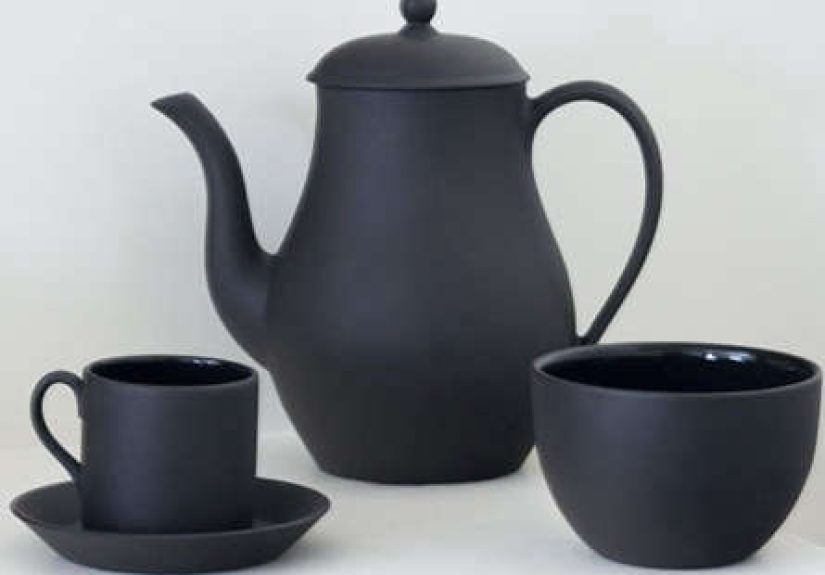
Black Basalt Teaware
Teapots, coffee pots, and creamers in black basalt are especially beloved because they combine drama with daily ritual.
Often, the interior is glazed for function (easier cleaning, less absorption), while the exterior stays matte for that signature look.
Sculptural Giftware
Busts, plaques, and ornamental figures in black basalt were designed as conversation pieces long before anyone called them that.
Put one on a shelf and it doesn’t just decorateit announces a vibe: thoughtful, slightly mysterious, and not afraid of a little drama.
How to Style Black Basalt Prestige Earthenware in a Modern Home
Black basalt is surprisingly flexible. It can go minimalist, maximalist, rustic, or ultra-moderndepending on what you pair it with.
Here are a few reliable styling strategies:
Monochrome, But Make It Interesting
Pair matte-black pieces with other tactile neutrals: linen, raw wood, brushed steel, and creamy ceramics. The contrast isn’t colorit’s texture.
This is how you make a black teapot look “editorial” instead of “goth cafeteria.”
High-Contrast Table Settings
If you want black basalt to look instantly luxurious, place it against white: white plates, white tablecloth, white flowers.
The black becomes the outline; the white becomes the spotlight. Everything looks intentional, including the crackers.
Old Meets New
Black basalt has a historic silhouette, so it pairs beautifully with modern shapes. Try it next to a contemporary glass carafe
or a sleek stainless tray. The mix says, “I respect history, but I also own a phone charger.”
Buying Guide: How to Choose (and Not Regret It Later)
Decide: Display Piece or Daily Use?
Start with honesty. If you want a showpiece, prioritize form, detail, and condition. If you want a daily tea companion,
prioritize comfort (handle shape), stability (base width), and interior glaze (easier cleaning).
Check the Finish
- Matte exterior: stunning, but can show fingerprints and may be more prone to staining from oils or pigments.
- Glazed surfaces: easier to clean, often slightly more reflective, sometimes less “basalt drama.”
Look for Maker’s Marks and Provenance
Heritage black basalt pieces often have impressed marks on the base. For collectible items, ask about:
- Mark style (impressed vs. printed)
- Condition (chips on rims, hairline cracks, repaired breaks)
- Provenance (auction records, collection notes, or reputable dealer descriptions)
A good rule: if the story sounds too cinematic and the details are fuzzy, you’re buying a screenplaynot a teapot.
Price Expectations
Black basalt spans a wide range: modern giftware can be accessible, while historic or rare sculptural works can climb quickly
depending on rarity, condition, and documented history. If you’re shopping “prestige” pieces, you’re often paying for:
design pedigree, manufacturing consistency, and presentationplus the privilege of owning something that looks good even when it’s doing nothing.
Care and Maintenance: Keeping Matte Black Looking Gorgeous
The most important thing to know about matte black ceramics: they’re not fragile divas, but they do have preferences.
Treat them well and they’ll stay rich and even-toned; treat them like a cast-iron pan during a breakup and you’ll regret it.
Daily Cleaning
- Use mild dish soap and a soft sponge or cloth.
- Avoid abrasive pads and harsh powders on matte surfaces.
- Rinse soon after strongly pigmented foods (think turmeric, beets, espresso).
Removing Marks and Stains
Matte and unglazed finishes can pick up marks from metal utensils or absorb oils over time. For light staining:
- Try a gentle baking soda paste (baking soda + water), rub lightly, rinse well.
- For stubborn marks, use only manufacturer-approved methodssome matte finishes can be altered by aggressive cleaners.
Storage and Scratching Prevention
Stack carefully. Many ceramics have unglazed foot rings that can rub the surface of the piece below. If you’re stacking plates
or shallow bowls, consider soft liners between themespecially if you want that matte finish to stay “museum calm.”
Why People Love It: The Psychology of Matte Black on the Table
Black basalt isn’t just an aesthetic choice; it changes how people experience a meal. Matte black creates contrast, frames food,
and makes colors look richer. It also makes everyday ritualstea, coffee, dessertfeel more intentional.
There’s a reason designers keep coming back to it: it’s timeless, it’s graphic, and it does the job of “centerpiece” without taking up
any extra space. It’s like having a well-dressed guest who doesn’t talk over everyone.
Experiences With Black Basalt Prestige Earthenware (About )
Ask owners why they keep reaching for black basalt pieces, and you’ll hear a theme: the experience feels a little ceremonial,
even on an ordinary Tuesday. The first thing people notice is the weightnot necessarily heavy, but grounded. A matte-black
cup in your hand feels deliberate, like it was designed to be held, not just stored. It’s the kind of object that makes you stand up
straighter without knowing why.
In real kitchens, black basalt often becomes the “company” set without ever being labeled as such. Someone might not plan a formal
tea service, but when a friend drops by, the black basalt teapot comes out because it instantly elevates the moment. The pour looks
more dramatic against the dark surface, and steam reads like a special effect. Suddenly, you’re not “having tea,” you’re “hosting,” even
if your snack selection is aggressively casual.
On the table, black basalt has a knack for making food look more photogenicwithout turning dinner into a content shoot.
A simple citrus tart looks brighter; a caprese salad looks more saturated; even a humble bowl of strawberries appears
like it belongs in a magazine spread titled “Summer, But Make It Sophisticated.” This is why people who swear they don’t care
about plating still secretly love a matte black serving piece. It does the visual work for you.
There’s also a “design anchor” effect. In open shelving or a glass-front cabinet, one black basalt item can pull a whole collection together.
Owners will often describe rearranging shelves around itwhite ceramics on one side, wood and glass on the otherbecause the black
piece becomes the punctuation mark. It’s not clutter; it’s composition. The object makes the space look intentional even when the rest of
the kitchen is a minor improvisational comedy.
Of course, the matte finish comes with real-life quirks. People learn quickly that strong pigments and oily foods can leave temporary
“ghosts” if you let them sit. The common routine becomes simple: rinse sooner, wash gently, and dry with care. Those tiny habits become part
of the ownership experienceless like a chore and more like maintaining a favorite leather bag. You don’t baby it because it’s fragile; you
respect it because it’s good.
Over time, many owners notice an emotional shift: black basalt pieces become linked to specific ritualsquiet mornings, a late-night cup of tea,
a holiday dessert, a conversation that ran long. That’s the real prestige. Not the label, not the heritage, not even the pricejust the way a
beautifully made object can make ordinary life feel a little more composed.