Table of Contents >> Show >> Hide
- Why Steak + Beans + Roasted Broccolini Just Works
- Recipe at a Glance
- Ingredients
- Equipment You’ll Want (No Fancy Stuff Required)
- Step-by-Step: How To Make Steak with Beans and Roasted Broccolini
- Steak Doneness: A Quick, Low-Drama Guide
- Common Mistakes (and How to Avoid Them)
- Flavor Variations (Because You’ll Make This Again)
- Make-Ahead and Leftovers
- Conclusion
- Real-World Kitchen Experiences ( of “What You’ll Notice When You Cook This”)
If you’ve ever paid steakhouse prices for a plate that’s basically “meat + green thing + something cozy,” this is your sign to reclaim your wallet.
This recipe gives you a juicy, pan-seared steak, a skillet of garlicky, lemony beans that taste like they’ve been simmering all day (they haven’t),
and roasted broccolini with crispy tips that are borderline addictive.
The best part: the whole thing runs on simple, proven techniquesdry surfaces brown better, hot pans mean better crust, butter basting makes steak feel fancy,
and high-heat roasting turns broccolini into a “why don’t we do this every week?” situation.
Why Steak + Beans + Roasted Broccolini Just Works
- Contrast, baby. Rich steak + bright broccolini + creamy beans = the holy trinity of satisfying.
- Beans pull double duty. They’re a side, a sauce, and a cushion for steak juices. Basically a delicious safety net.
- Broccolini brings crunch and snap. Roasting gives you charred tips and tender stems without turning everything into mush.
- It’s weeknight-friendly. One pan for steak, one pan for broccolini, one skillet for beans (or the steak pan, if you’re a dish-minimizer).
Recipe at a Glance
Serves: 2 (or 1 hungry hero with excellent taste)
Prep time: 15 minutes (plus optional salting time)
Cook time: 20–25 minutes
Total: About 40 minutes (faster if you skip the optional dry-brine)
Ingredients
For the Steak
- 2 steaks, 1 to 1½ inches thick (ribeye, New York strip, sirloin, or filet mignon)
- Kosher salt
- Freshly ground black pepper
- 1–2 tbsp high-smoke-point oil (avocado, canola, grapeseed)
- 2 tbsp unsalted butter
- 2 garlic cloves, smashed
- 2–3 sprigs rosemary or thyme (optional, but very “steakhouse energy”)
For the Garlicky Beans
- 1 tbsp olive oil
- 1 small shallot, finely chopped (or ¼ small onion)
- 3 garlic cloves, minced
- 1 (15-oz) can cannellini beans (or great northern beans), drained and rinsed
- ½ cup low-sodium chicken broth or vegetable broth (more as needed)
- ½ tsp kosher salt (start small; adjust later)
- ¼ tsp red pepper flakes (optional)
- 1 tsp lemon zest + 1–2 tbsp lemon juice
- 1 tbsp chopped parsley (or chives)
- Optional: 2 tbsp grated Parmesan, or a drizzle of good olive oil for finishing
For the Roasted Broccolini
- 1 bunch broccolini (about 10–12 oz), trimmed
- 1½ tbsp olive oil
- Kosher salt and black pepper
- 1 garlic clove, thinly sliced (optional)
- Lemon wedges for serving
- Optional: pinch of red pepper flakes, shaved Parmesan, or toasted almonds
Equipment You’ll Want (No Fancy Stuff Required)
- Heavy skillet (cast iron is ideal; stainless steel works great too)
- Sheet pan
- Tongs
- Instant-read thermometer (strongly recommended for stress-free doneness)
Step-by-Step: How To Make Steak with Beans and Roasted Broccolini
Step 1: Salt the steak (optional, but worth it if you have time)
Pat the steaks dry. Salt generously on all sides. If you can, place them on a rack (or plate) and refrigerate uncovered for
at least 45 minutes and up to overnight. This helps the surface dry out for better browning and seasons the meat more deeply.
If you’re cooking right away, salt just before searingstill delicious, just a little less “restaurant-level.”
Step 2: Roast the broccolini
- Heat oven to 425°F.
- Toss broccolini with olive oil, salt, pepper, and (if using) sliced garlic and a pinch of red pepper flakes.
- Spread on a sheet pan in a single layer.
- Roast 15–20 minutes until crisp-tender with charred tips. Squeeze lemon over it right before serving.
Step 3: Make the garlicky beans (creamy without cream)
- Heat olive oil in a skillet over medium heat. Add shallot and cook 2–3 minutes until softened.
- Add garlic (and red pepper flakes if using). Stir 30 secondsjust until fragrant. Don’t let it burn; bitter garlic is a mood killer.
- Add beans, broth, and salt. Simmer 5–7 minutes.
- For a creamier texture, mash a small portion of beans with the back of a spoon. Add more broth if it gets too thick.
You’re aiming for “cozy and spoonable,” not “bean soup,” not “bean cement.” - Finish with lemon zest, lemon juice, parsley, and optional Parmesan or a drizzle of extra-virgin olive oil. Keep warm.
Step 4: Pan-sear and butter-baste the steak
- Remove steak from fridge 10–20 minutes before cooking (not required, but it takes the chill off). Pat very dry again.
Season with pepper (and a little more salt if needed). - Heat a heavy skillet over medium-high until very hot. Add oil and heat until shimmering.
- Add steaks. Sear, flipping every 30–60 seconds, until a deep brown crust forms.
(Yes, flipping more often is totally fineyour steak will not get offended.) - Reduce heat to medium. Add butter, smashed garlic, and herbs. Tilt pan and spoon-baste the steak continuously for 1–3 minutes.
- Check temperature with an instant-read thermometer:
pull the steak a few degrees before your target, since it will keep cooking as it rests. - Rest steak 5–10 minutes. Then slice against the grain (especially important for strip/sirloin).
Step 5: Plate like you paid $42 for it
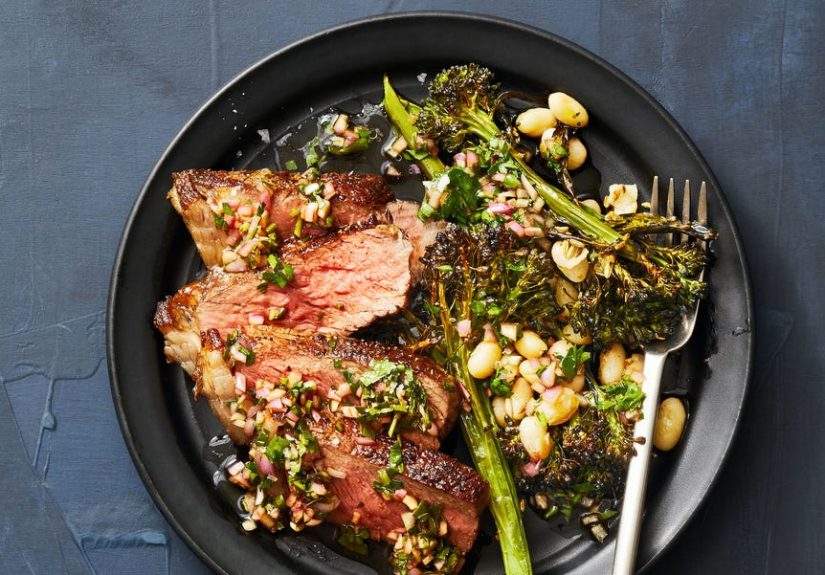
Spoon beans onto plates. Fan steak slices on top. Add broccolini on the side. Drizzle with any buttery pan drippings.
Finish with lemon, flaky salt, or a tiny shower of Parmesan.
Steak Doneness: A Quick, Low-Drama Guide
Thermometers remove guesswork and prevent the tragedy of “I blinked and it’s well-done.”
Here are common pull temps (remove from heat at these temps, then rest):
- Rare: pull at 120–125°F
- Medium-rare: pull at 125–130°F
- Medium: pull at 135–140°F
- Medium-well: pull at 145–150°F
Food safety note: official guidance for whole cuts of beef is to reach 145°F and rest.
Many people prefer lower temperatures for tenderness and juiciness; choose what aligns with your comfort and risk tolerance.
Common Mistakes (and How to Avoid Them)
- Wet steak = weak crust. Pat dry before cooking. If your steak looks shiny, it’s basically wearing a raincoat.
- Cold pan. If the pan isn’t hot, you’ll steam the steak instead of searing it. Steam is for dumplings, not ribeye.
- Burned butter. Add butter after the initial sear and reduce heat. Butter is delicious, not immortal.
- No resting. Resting helps juices redistribute. Cutting immediately is like popping a water balloon and acting surprised.
- Overcrowding the broccolini. Give it space so it roasts and chars instead of turning limp.
Flavor Variations (Because You’ll Make This Again)
Switch up the beans
- Smoky: add smoked paprika and a splash of hot sauce.
- Italian-ish: stir in a spoonful of pesto, then top with Parmesan.
- Bright & herby: add more lemon and chopped dill or basil.
Broccolini upgrades
- Nutty: top with toasted almonds or pine nuts.
- Cheesy: finish with shaved Parmesan.
- Spicy: chili flakes or a squeeze of chili crisp.
Steak options
- Grill it: keep the beans and broccolini; grill the steak for summer mode.
- Reverse sear: for extra-thick steaks, start low in the oven, then sear hard at the end.
- Sauce moment: whisk a spoonful of mustard into the pan drippings for an instant pan sauce.
Make-Ahead and Leftovers
- Beans: reheat with a splash of broth to loosen. They get thicker as they sit (bean physics).
- Broccolini: re-crisp in a hot oven or skillet; microwaving makes it sad.
- Steak: slice cold for salads or sandwiches, or rewarm gently in a skillet with a tiny splash of broth or water.
Conclusion
This steak with beans and roasted broccolini hits the sweet spot: it’s impressive without being complicated, hearty without being heavy,
and flexible enough to become your “I can cook” signature move. Once you nail the timingbroccolini roasting while beans simmer and steak searsyou’ll feel like you’ve hacked dinner.
In the best possible way.
Real-World Kitchen Experiences ( of “What You’ll Notice When You Cook This”)
The first time you make this, the biggest surprise is how fast it all comes togetherright up until the moment you realize steak has feelings about timing.
Vegetables are forgiving. Beans are forgiving. Steak is like, “Hello, I’m expensive, please don’t freestyle.”
The good news is that this recipe is designed to reduce the chaos: broccolini goes into a hot oven and basically takes care of itself,
beans simmer calmly on the stove, and the steak gets your full attention for a short, intense windowlike a tiny culinary job interview.
One common experience: you’ll think your pan is hot enough, then the steak hits and suddenly you’re doubting everything.
If the sizzle is timid, your crust will be too. If the sizzle is loud and confident, you’re in business.
A heavy skillet helps because it holds heat when cold meat lands in it.
And flipping more often than you were taught can feel “wrong” at firstlike you’re breaking a family rule.
But frequent flipping tends to cook the interior more evenly, which means less overcooked gray band hugging the edges.
It’s the difference between “steakhouse slice” and “well, it’s cooked, technically.”
Beans have their own little personality trait: they want to be creamy, but they need permission.
That permission is a bit of simmer time and just enough liquid. When you mash a few beans, it changes everything
suddenly you have a sauce instead of a pile of legumes. The lemon is also a game-changer.
Without it, the beans can taste flat and heavy; with it, they taste bright and intentional, like you planned your life.
(Even if you absolutely did not.)
Roasted broccolini is the stealth MVP. The tips get crispy and slightly bitter in a way that pairs perfectly with rich steak.
If you’ve only ever had broccolini steamed, roasting can feel like meeting the cool cousin of a vegetable you thought you already knew.
The moment you pull the pan and see those charred edges, you’ll want to sneak a piece before it hits the plate.
Do it. Quality control is important. Also, it’s delicious.
The most “real-life” moment comes at the end: resting the steak. Your instincts may tell you to slice immediately because dinner is right there,
and everyone is suddenly starving. Rest anyway. Use that time to spoon beans onto plates, squeeze lemon on the broccolini, and pretend you’re plating for a food magazine.
When you finally slice the steak and the juices stay mostly where they belong (instead of flooding your cutting board), you’ll understand why resting matters.
And once you drizzle those buttery pan drippings over beans that are already halfway to becoming a sauce?
That’s the moment this dinner stops being “a recipe” and becomes “a repeat.”