Table of Contents >> Show >> Hide
- A quick reality check before we talk “best”
- What counts as “rat poison” in 2025?
- So… what are the “best” rat poisons in 2025?
- How to choose a rat poison responsibly (a 2025 checklist)
- The smarter alternative: integrated rodent control (what actually works long-term)
- Safety warnings (please read this part like it’s on a neon sign)
- FAQ: quick answers people actually need
- Real-World Experiences : what people learn the hard way in 2025
- Conclusion
A practical, safety-first guide to rodenticidesplus the “honestly better” alternatives that often solve the problem faster.
A quick reality check before we talk “best”
“Best rat poison” sounds like a simple shopping question. In 2025, it’s more like asking,
“What’s the most effective option that won’t accidentally take out my dog, my kid, the neighborhood owl,
or my own peace of mind?”
Rodenticides (rat and mouse poisons) can work, but they come with real risks: accidental exposure,
secondary poisoning of pets and wildlife, and the classic horror-movie moment where you realize the smell
in the wall is not your imagination. That’s why many public health and pest-management programs now
emphasize integrated pest management (IPM): seal them out, remove food/water, reduce hiding spots, and trap.
Poison is usually the “last tool,” not the first.
This 2025 guide explains the major types of rat poisons sold in the U.S., how to choose responsibly,
and when you should skip poison entirely. (Spoiler: that’s more often than you think.)
What counts as “rat poison” in 2025?
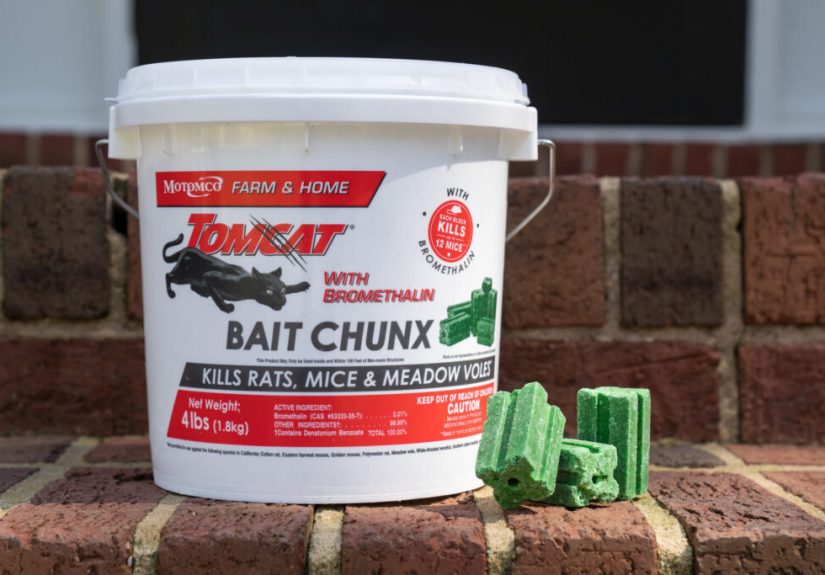
In the U.S., consumer “rat poison” typically means an EPA-registered rodenticide bait
sold as blocks, soft bait, pellets, or place packs. The “poison” part is the active ingredient,
and that matters a lot because different ingredients have different risks for kids, pets, and wildlife.
The big categories you’ll see on labels
- Anticoagulants (blood-clotting inhibitors): Often discussed as first-generation vs. second-generation.
These have been a major focus of restrictions because of poisoning risks to non-target animals. - Non-anticoagulants: Common examples include bromethalin, cholecalciferol,
and zinc phosphide. These work differently and have different safety concerns.
One important 2025 takeaway: availability varies by state. Some states (notably California)
have tighter limits on what can be sold and who can use certain rodenticides. If you’re shopping online,
your cart may say “nope” at checkout for a reason.
So… what are the “best” rat poisons in 2025?
If you define “best” as effective + least likely to harm everyone else, the answer usually isn’t a specific brand.
It’s a strategy and a product format:
Best overall (for most homes): avoid loose bait; choose secured bait in tamper-resistant stations
If you must use rodenticide, the most responsible option is typically an EPA-registered bait used only inside a tamper-resistant bait station
that can’t be easily opened by children, dogs, or curious raccoons with strong opinions.
In practice, this means you should generally avoid “open tray” pellets or scatter-style bait.
Look for packaging that emphasizes child- and pet-resistant bait stations and follow the label to the letter.
(Yes, even if you’re a “I don’t read manuals” person. Poison labels are not the place to freestyle.)
Best for minimizing wildlife harm: prioritize prevention + trapping; use poison only when necessary
Secondary poisoning is a big deal: when predators or scavengers eat poisoned rodents, they can be harmed too.
That’s why many guidance documents push homeowners toward exclusion and trapping first.
If you live near greenbelts, waterways, or anywhere you’ve ever seen a hawk giving you side-eye,
treat rodenticide as a last resort and consider calling a licensed pest management professional for a targeted plan.
Best for “I have kids/pets”: traps (often) beat poison
Households with toddlers, dogs, cats, or the kind of teenager who will absolutely touch the one thing you told them not to touch
should strongly consider enclosed snap traps or electronic traps as the first-line approach.
You can still keep traps out of reach, and you eliminate the “accidental ingestion” problem that makes rodenticides so risky.
How to choose a rat poison responsibly (a 2025 checklist)
If you’re determined to use rodenticide, use this checklist to avoid the most common mistakes.
Think of it as “shopping like an adult who has met consequences.”
1) Confirm you actually have rats (not mice, squirrels, or a haunted pipe)
Rats and mice don’t always respond the same way to the same tactics. Misidentifying the pest is how people end up
buying three different products and still hearing scratchy tap-dancing at 2 a.m.
2) Pick an EPA-registered product and read the entire label
In the U.S., the rodenticide label is the law. It tells you where it can be used, what pests it targets,
and what safety steps are required. Look for the EPA registration information on the package.
3) Choose the safest form factor
- Prefer: bait blocks or secured bait systems used with tamper-resistant stations.
- Be cautious with: loose pellets or anything that can be spilled, carried, or scattered.
4) Plan for “after”: carcasses, odors, and repeat visitors
Poison alone doesn’t solve the conditions that attracted rodents in the first place. If food sources, water, and entry points remain,
you’re basically hosting a rodent buffet with a very small “downside,” and rodents are famously willing to accept risk for snacks.
The smarter alternative: integrated rodent control (what actually works long-term)
Seal up: stop new rodents from moving in
Exclusion is the most underrated “product” on the market. If you close entry points and reduce access to food and water,
you shrink the problem dramaticallyand you reduce how long you’ll need traps or any bait at all.
- Inspect around doors, garage edges, vents, utility line entry points, and foundation gaps.
- Use appropriate materials (e.g., metal flashing, hardware cloth, durable sealants) for gnaw-prone areas.
Trap up: reduce the existing population safely
Trapping is direct, fast, and avoids the “mystery smell in the wall” risk associated with rodenticides.
Modern enclosed snap traps and electronic traps can reduce accidental contact, especially in homes with pets or children.
Clean up: remove the things rodents love (food, water, hiding spots)
Rodents thrive on clutter, accessible pantry goods, open trash, pet food left out overnight, and dense landscaping that acts like a rodent hotel.
A weekend of cleanup can outperform a month of random product purchases.
- Store food (including pet food and bird seed) in rodent-resistant containers.
- Reduce outdoor harborage: trim vegetation near structures and tidy up wood piles and debris.
- Manage garbage: secure lids and clean up spills that turn into nightly buffets.
Safety warnings (please read this part like it’s on a neon sign)
Rodenticides can poison children, pets, and wildlife. If you use them at all:
- Keep products locked up and out of reach, even before you deploy anything.
- Use tamper-resistant bait stations when the label calls for it (and many labels do).
- Never place bait openly where non-target animals can access it.
- Don’t improvise with unlabeled uses, mixtures, or “home hacks.”
- If exposure is suspected, contact Poison Control (U.S.) at 1-800-222-1222 immediately,
and contact a veterinarian for pets right away.
If you’re dealing with a heavy infestation, repeated reinfestation, or rodents in sensitive locations
(kitchens, schools, multi-unit buildings, near wildlife habitat), it’s often best to hire a licensed pest professional
who can apply a targeted plan and follow local regulations.
FAQ: quick answers people actually need
Is rat poison legal to buy in the U.S. in 2025?
Many rodenticides are legal to buy, but what’s available depends on the active ingredient, package type, and your state.
Some higher-risk products are restricted to professional use or sold in specific channels.
Why do some experts discourage rat poison?
Because it can harm non-target animals and create downstream problems: secondary poisoning, accidental ingestion,
and rodents dying in inaccessible places. Many public health and IPM resources recommend prevention and trapping first.
What’s the fastest way to get rid of rats?
Usually a combination: seal entry points + remove food/water + aggressive trapping.
Poison can be part of a plan, but it’s rarely a magic button by itself.
Real-World Experiences : what people learn the hard way in 2025
Here’s what homeowners and renters commonly report when they go looking for the “best rat poison,”
based on recurring patterns in pest-control guidance and public health advicenot because rats hold town halls,
but because humans repeat the same mistakes with impressive consistency.
Experience #1: “I bought poison, and now the rats are… invisible?”
A lot of people expect instant results. Then nothing obvious happens, so they add more products, try a different bait,
or move things around daily. The problem is that rodents don’t behave like lab robots, and a chaotic approach can
make them avoid new objects. In many cases, what finally works is stepping back and fixing the basics:
sealing entry points, removing food sources, and using consistent trapping in strategic spots. The “best” product
ends up being the one you barely needed because your home stopped being the easiest restaurant on the block.
Experience #2: “The poison worked… and now something smells like regret.”
One of the most dreaded side effects of rodenticides is rodents dying where you can’t reach theminside walls,
crawlspaces, or tight attic corners. People describe it as a smell that arrives like an uninvited guest and refuses
to leave. This is a big reason many experts push traps first: a trap tells you exactly where the rodent is, so you can
dispose of it promptly and keep the situation from turning into a nose-based mystery novel.
Experience #3: “My dog found the bait station before I did.”
Even responsible households can underestimate how determined pets are. In 2025, the safest stories usually involve
tamper-resistant stations placed where pets can’t access them and careful storage of unused product. The scary stories
are almost always the same: bait left accessible “just for a minute,” bait placed in a spot that seemed safe until the dog
demonstrated parkour skills, or bait stored where a curious animal could reach it. The lesson people repeat afterward is
painfully consistent: if you can’t secure it, don’t use it.
Experience #4: “I keep killing rats, but they keep coming back.”
This is the reinfestation loop. If there’s a gap under a door, a broken vent screen, a pet door that doesn’t seal,
or food left out nightly, new rodents will replace the ones you removed. People often report the biggest “aha” moment
was realizing that poison (or traps) is only the removal step. The lasting fix is exclusion and sanitation. Once they
sealed access and reduced attractants, the need for rodenticide dropped sharplyor disappeared entirely.
Experience #5: “I wish I called a pro sooner.”
When an infestation is advancedmultiple entry points, established nesting, rodents in walls, or activity in a multi-unit building
DIY can become expensive fast. The “best rat poison” question becomes less about brands and more about creating a plan:
inspection, monitoring, exclusion, targeted removal, and follow-up. People who eventually hire a licensed professional often say the same thing:
the real value wasn’t just productsit was diagnosis, placement strategy, and knowing what’s legal and appropriate locally.
If you take only one thing from these experiences, let it be this: the “best” solution is the one that solves the cause,
not just the symptom. Rats are stubborn. So should your prevention plan be.