Table of Contents >> Show >> Hide
- Quick Picks: Best Pressure Canners in 2025
- First: Pressure Canner vs. Pressure Cooker (Not the Same Party)
- How We Chose These Pressure Canners
- Buying Guide: What Actually Matters (and What’s Just Marketing)
- The Best Pressure Canners (Detailed Picks)
- Best Overall: Presto 23-Quart Pressure Canner (Stovetop Classic)
- Best for Induction: Presto 23-Quart Induction Compatible (01784)
- Best Upgrade: All American 1930 (No. 921 / No. 915)
- Best for Beginners: Presto 16-Quart Pressure Canner
- Best Small-Batch Choice: Smaller True Pressure Canners (Still Jar-Upright)
- Best Countertop Option (With Caveats): Presto Precise Digital Pressure Canner (02144)
- Care, Maintenance, and “Please Don’t Do That” Tips
- FAQ: Quick Answers Before You Hit “Add to Cart”
- Real-World Experiences (What People Learn After the First Few Batches)
- 1) Your first “pssshhh-jiggle” moment is weirdly emotional
- 2) Bigger isn’t always betteruntil it is
- 3) Induction owners have a special kind of shopping journey
- 4) The real convenience is not the canning dayit’s the random Tuesday
- 5) Maintenance feels annoying… until it saves a batch
- 6) Most people end up with a “starter recipe roster”
- Conclusion
If you’ve ever looked at a pile of garden produce and thought, “I could preserve this… or I could stare at it until it becomes compost,” welcome. A good pressure canner turns chaos into calm: shelves of home-canned soups, beans, broths, meats, and meals that make weeknights easier and winters cozier.
This 2025 guide breaks down the best pressure canners worth buying right now, what actually matters (spoiler: it’s not just “bigger is better”), and how to pick a model that fits your stove, your batch size, and your patience level. We’ll keep it practical, safety-smart, and just funny enough to make you forget you’re reading about metal pots with locking lids.
Quick Picks: Best Pressure Canners in 2025
- Best Overall (Most Homes): Presto 23-Quart Pressure Canner (classic workhorse capacity)
- Best Upgrade (Built Like a Tank): All American 1930 (No. 921 or No. 915)
- Best for Induction Cooktops: Presto 23-Quart Induction Compatible (01784)
- Best for Beginners: Presto 16-Quart Pressure Canner (lighter, simpler, lower buy-in)
- Best for Small Batches: All American 10.5-Quart (No. 910) or other true canners that still fit jars upright
- Best Countertop Option (With Caveats): Presto Precise Digital Pressure Canner (02144)
First: Pressure Canner vs. Pressure Cooker (Not the Same Party)
A pressure canner is designed to safely preserve low-acid foods (think: vegetables, meats, poultry, seafood, soups, and mixed meals). Low-acid foods require higher temperatures than boiling water can provide, which is why pressure canning exists in the first place.
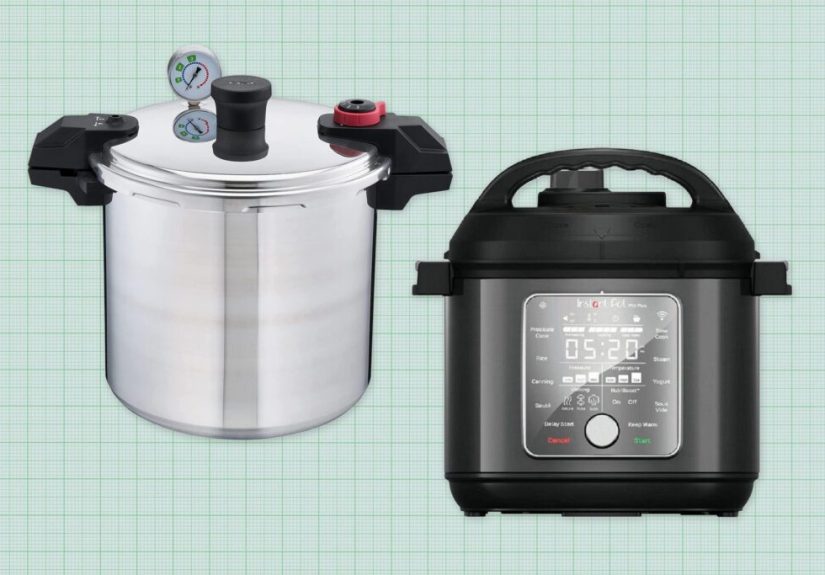
A pressure cooker (including most electric multi-cookers) is built for fast cookingnot for research-tested home canning processes. Even when a front panel has a “canning” button, that doesn’t automatically mean it can safely and consistently deliver the temperature profile needed inside jars.
Bottom line: If you want to preserve low-acid foods, use a true pressure canner and follow research-tested recipes and processing instructions from reputable sources (USDA/NCHFP and Extension programs). Don’t freestyle it. This is canning, not jazz.
How We Chose These Pressure Canners
We synthesized guidance from U.S.-based, research-driven sources (food preservation authorities and university Extension programs), plus well-established kitchen-testing publications. The picks below reflect what consistently matters for safety and usability:
- True canning capacity: holds jars upright on a rack (not stacked sideways like a game of pantry Jenga)
- Pressure control system: weighted gauge vs. dial gauge (and what maintenance each requires)
- Cooktop compatibility: gas, electric coil, smooth-top, and induction are not equal-opportunity heat sources
- Safety features: secure lid-lock systems, venting design, and safety plugs/fuses
- Long-term ownership: replacement parts, gasket availability (if applicable), and ease of care
Buying Guide: What Actually Matters (and What’s Just Marketing)
1) Size: Pick Capacity You’ll Use, Not Just Capacity You Can Brag About
Most home pressure canners are sized to process around 7 quart jars (or more pints), which is a sweet spot for many families. Bigger canners can be greatuntil you realize you’re lifting a heavy metal pot that feels like it was forged from your annual grocery budget.
Practical rule: If you regularly can soups, broths, beans, or meat, go bigger. If you only can a few batches a year, a smaller (but still true) canner may be easier to live with.
2) Gauge Type: Weighted vs. Dial (Your Maintenance Personality Test)
Dial-gauge canners give a pressure reading on a dial. They’re common and can be very accuratebut the gauge should be checked for accuracy regularly (many Extension offices offer testing). If the gauge is off, your process can drift into under-processing (unsafe) or over-processing (mushy food and heartbreak).
Weighted-gauge canners regulate pressure by rocking/jiggling a weight. These typically don’t require calibration the way dial gauges do, because the weight itself controls the pressure. They can be wonderfully “set-and-listen” once you know the sound your canner makes at the correct pressure.
Translation: If you love precision and don’t mind occasional checkups, dial gauges are fine. If you want simpler long-term maintenance, weighted gauge can feel like the low-drama choice.
3) Your Stove Matters: Induction Changes the Game
Induction cooktops require cookware with a compatible base. Many traditional aluminum pressure canners don’t work on induction. If you have induction, choose a canner specifically designed for itusually with a stainless steel-clad base.
Also: smooth-top electric ranges have weight limits and heat cycling. Always confirm your cooktop’s guidance on heavy cookware and long high-heat use.
4) Safety Basics You Should Never Skip
Safe canning depends on reaching the right temperature inside jars and maintaining it long enough. That’s why ventilation/venting steps and steady pressure matter, and why forcing cool-down can cause problems. Follow your canner manual and research-tested recipes preciselyespecially for low-acid foods.
If you’re brand new, consider taking a local Extension class or using a trusted beginner resource so you build confidence without guessing.
The Best Pressure Canners (Detailed Picks)
Best Overall: Presto 23-Quart Pressure Canner (Stovetop Classic)
Who it’s for: Most home canners who want a full-size canner without spending “handmade artisan cookware” money.
The Presto 23-quart line has become a go-to because it hits the sweet spot of capacity, affordability, and availability. You can process larger batches efficiently, and replacement parts (like gaskets for gasketed models) are typically easy to find.
- Pros: Great value, full-size capacity, widely available parts, strong track record in home kitchens
- Cons: Can be bulky; gasket and dial gauge models require upkeep; not all versions work on induction
- Best for: Broths, beans, soups, garden harvest marathons, “Sunday batch day” households
Best for Induction: Presto 23-Quart Induction Compatible (01784)
Who it’s for: Anyone with an induction range who refuses to let their stove dictate their pantry destiny.
This model is designed with a stainless steel-clad base so it can run on induction while keeping the familiar large-batch feel of a traditional canner. It’s often described as one of the few widely available full-size options built for induction cooking.
- Pros: Works on induction (and other cooktops), full-size capacity, familiar stovetop canning workflow
- Cons: Heavier than all-aluminum versions; induction cooktops varyalways confirm your cooktop can handle the load
- Best for: Induction households, frequent canners, anyone tired of “will this pot work?” roulette
Best Upgrade: All American 1930 (No. 921 / No. 915)
Who it’s for: Serious canners who want a long-term, heirloom-style canner and don’t mind a higher upfront cost.
All American pressure canners are famous for their metal-to-metal sealing system (no gasket), sturdy build, and reputation for lasting for decades with proper care. Many owners love the “buy it once” feelingplus fewer gasket replacements over time.
- Pros: Extremely durable, no gasket to replace, strong reputation, great for frequent canning
- Cons: Expensive, heavy, and (important!) many All American models are not induction compatible
- Best for: High-volume canners, homesteaders, anyone who wants equipment that outlives their smartphone
Best for Beginners: Presto 16-Quart Pressure Canner
Who it’s for: New canners and smaller households who want a legit canner with less heft and a friendlier price.
If a 23-quart canner feels like adopting a small appliance with emotional needs, a 16-quart model can be a comfortable entry point. It’s generally easier to maneuver, store, and get comfortable withwithout sacrificing the core safety design of a true pressure canner.
- Pros: Lighter than larger models, more approachable price, easier storage
- Cons: Smaller batch capacity; you may outgrow it if you start canning often
- Best for: First-time canners, apartment kitchens, “I just want to can stock and beans occasionally”
Best Small-Batch Choice: Smaller True Pressure Canners (Still Jar-Upright)
Who it’s for: People who can in small runs, have limited storage, or prefer manageable lifting.
Small canners can be fantasticif they’re still true pressure canners that hold jars upright on a rack and meet the minimum practical capacity used for tested processes. A compact canner is ideal for making a few pints of chili, a handful of jars of broth, or small weekly batches without turning your kitchen into a factory floor.
- Pros: Easier handling, less storage space, great for frequent small batches
- Cons: More canning sessions to preserve the same harvest; not all “small” vessels are recommended for canning
- Best for: Small households, beginners who want less weight, anyone canning “a little, often”
Best Countertop Option (With Caveats): Presto Precise Digital Pressure Canner (02144)
Who it’s for: People who want more automation and are committed to following that specific appliance’s instructions carefully.
This is the model many people ask about because it promises to reduce the “babysitting” factor. The manufacturer positions it as designed to meet USDA home canning guideline targets for safe processing, and some consumers love the simplicity of a guided workflow.
Important reality check: Authoritative food preservation sources have clearly warned against using electric multi-cookers for pressure canning because research-tested processes were developed for stovetop canners, and the temperature behavior inside jars is what matters most. A dedicated digital canner is different from an Instant Pot-style multi-cooker, but you should still be cautious about mixing instructions across sources. If you choose a digital canner, follow the appliance’s manual exactly and prioritize research-based guidance when deciding what and how to preserve.
- Pros: More automated, countertop-friendly, attractive for beginners who want step guidance
- Cons: Smaller capacity than full-size stovetop models; limited independent verification compared with long-established stovetop canners; must follow the manufacturer’s process instructions carefully
- Best for: People who dislike stove monitoring, small batches, and those willing to stay strictly within the device’s documented processes
Care, Maintenance, and “Please Don’t Do That” Tips
Keep the Caner (and Your Food) in the Safe Zone
- Check parts before the season: Look at vent pipes, seals, racks, and safety plugs/fuses for wear.
- Dial gauge owners: Have the gauge checked for accuracy as recommended. Small errors can matter.
- Gasketed lids: Keep gaskets clean and properly cared forsteam leaks are not a fun hobby.
- Follow tested recipes: Especially for low-acid foods and mixed meals. This is where safety lives.
Common Mistakes That Turn “Cozy Pantry” Into “Regret”
- Using a pressure cooker for canning: It may cook beans quickly, but that’s not the same as a tested canning process.
- Inventing your own process: “My aunt did it this way” is not a processing authority.
- Forcing the cool-down: Rapid cooling can cause liquid loss, seal failures, and safety issues.
- Ignoring altitude adjustments: Elevation affects temperatures inside the canner; follow guidance for your location.
FAQ: Quick Answers Before You Hit “Add to Cart”
What’s the best pressure canner for most people?
A full-size stovetop canner with a solid safety design and readily available partsoften a Presto 23-quart modelhits the best balance for many households.
Is a weighted gauge better than a dial gauge?
Not universallyjust different. Weighted gauges are often lower-maintenance; dial gauges offer a direct reading but require accuracy checks.
Can I pressure-can on induction?
Yesif you buy an induction-compatible pressure canner (like the Presto 01784) and your cooktop can support the weight and sustained heat needs.
What about electric “canning” buttons on multi-cookers?
Authoritative preservation sources have warned against relying on electric multi-cookers for pressure canning because tested processes weren’t developed for them. Use a true pressure canner for low-acid foods.
Real-World Experiences (What People Learn After the First Few Batches)
To make this guide more than a list of shiny metal pots, here are common experiences home canners report after they’ve lived with a pressure canner for a whilethe kind of lessons that don’t show up on a product box.
1) Your first “pssshhh-jiggle” moment is weirdly emotional
Many beginners say the first time the canner comes up to pressure feels like launching a tiny rocket in the kitchen. You’ll stare. You’ll listen. You’ll wonder if you should text someone. Then you realize: it’s doing exactly what it’s supposed to do. After two or three batches, that sound becomes the soundtrack of future you opening a jar of broth and feeling smug in February.
2) Bigger isn’t always betteruntil it is
Small-batch canners are adored for one reason: they’re manageable. They don’t dominate your cabinet like a metal octopus. They don’t require a pre-lift stretch routine. But once people get comfortable and start canning staplesbeans, stock, soups, chili basethe “I wish I had a bigger canner” phase often hits. A common pattern is starting with a smaller canner, falling in love with the pantry results, then upgrading once canning becomes a regular rhythm.
3) Induction owners have a special kind of shopping journey
Induction cooktops are amazing… right up until you’re holding a gorgeous aluminum canner that won’t work on your stove. People with induction ranges often say the induction-compatible canner feels like the “finally!” purchaseless about brand loyalty and more about “I would like to preserve food without reinventing physics.” Once the right base is in place, the process feels normal and dependable.
4) The real convenience is not the canning dayit’s the random Tuesday
On canning day, you work. You manage jars. You clean up. It’s a project. But the payoff is what happens later: you crack open a jar of chicken stock and dinner becomes a 20-minute situation instead of an all-evening saga. People consistently say the biggest “wow” moment is realizing how much pressure-canned food cuts down decision fatigue. Your pantry becomes a meal-plan backup system.
5) Maintenance feels annoying… until it saves a batch
New canners sometimes roll their eyes at gauge checks, gasket care, and reading manuals. Then one day they notice a steam leak early, replace a worn part, and avoid a processing failure. That’s when maintenance stops feeling like bureaucracy and starts feeling like insurance. The most satisfied long-term owners tend to treat their canner like a tool: keep it clean, keep it accurate, and it will quietly do its job for years.
6) Most people end up with a “starter recipe roster”
After a season, many home canners settle into a few staples they love making repeatedly: broths (because they’re endlessly useful), beans (because convenience), and a couple of go-to soups or stews. This “roster” becomes the gateway to experimentingbecause once you trust your workflow, you’re more likely to try new research-tested recipes and build confidence. The canner stops being intimidating and starts being a kitchen tradition.
If you’re choosing your first canner, don’t aim for perfection. Aim for a model you’ll actually use: one that matches your cooktop, your storage space, and your realistic batch size. Consistency beats ambitionespecially when ambition weighs 15 pounds and doesn’t fit in your cabinet.
Conclusion
The best pressure canner is the one that fits your life: your stove, your batch size, your comfort level, and your long-term plans. For many households, a full-size Presto is the smart “do-it-all” option. If you want heirloom durability and don’t mind the weight (or the price), All American is a legendary upgrade. If you’re on induction, go straight to an induction-compatible model and save yourself the heartbreak of incompatible cookware.
Whichever model you choose, pair it with research-tested instructions, keep the parts in good shape, and treat pressure canning like the powerful tool it is. Your future selfstanding in front of a pantry full of ready-to-eat mealswill be very impressed with you.