Table of Contents >> Show >> Hide
- Your weekend garden paint game plan (so it actually looks good by Sunday)
- What makes an exterior paint “garden-proof” (and why some paints fail fast)
- The best exterior paints for a weekend garden transformation (by surface)
- Best for wood fences and sheds: Premium exterior acrylic latex
- Best for rough, aging wood (that moves): Solid color acrylic stain (the “paint look” that behaves better)
- Best for decks, steps, and walking surfaces: Use deck-specific coatings (not wall paint)
- Best for brick, stucco, and masonry garden walls: Masonry-friendly exterior coatings
- Best for metal gates, railings, and outdoor fixtures: Rust-inhibiting enamel + proper prep
- Best for plastic/resin outdoor furniture and planters: Adhesion-first strategy
- Primers and prep products that save your weekend
- Color combos that make a garden look expensive (even if you bought nothing new)
- Fast application tricks (so you finish before your motivation evaporates)
- Common weekend-makeover mistakes (and how to avoid them)
- Safety notes (quick, important, not scary)
- Make it last: 10-minute maintenance that keeps your garden looking “new”
- Extra: Real weekend experiences that make your paint makeover smoother (and funnier)
- Conclusion
Got a garden that’s giving “abandoned movie set” instead of “weekend oasis”? Good news: you don’t need a full landscape redesign, a wheelbarrow of new plants, or a small loan that requires a serious conversation with your future self.
If you can clean, tape, and resist the urge to paint in direct noon sun like a human rotisserie chicken, you can pull off a dramatic garden makeover in a single weekend. The secret weapon isn’t magic. It’s the right exterior paint for each surfacewood, metal, masonry, and the plastic stuff you swear you’ll replace “next year.”
This guide breaks down the best exterior paints (and paint-like products) for the most common garden eyesoresfences, sheds, planters, gates, and tired patio piecesplus a simple weekend game plan that turns “rundown” into “purposefully charming.”
Your weekend garden paint game plan (so it actually looks good by Sunday)
Friday night: The boring parts that make the fun parts work
- Walk the yard and pick 2–3 targets (max). Example: fence + shed + metal gate. Don’t add five more “quick wins” mid-project. That’s how you end up eating dinner on an upside-down bucket in an unfinished masterpiece of regret.
- Check the weather window: aim for mild temps, low humidity, dry surfaces, and no rain for at least a day after painting. (Paint is brave, but it’s not waterproof while it’s still trying to become paint.)
- Choose a tight color palette: one “main” color, one trim/accent, and one supporting stain/neutral. Three is stylish. Seven is a paint sample collage.
Saturday: Prep + first coat = 80% of the makeover
- Clean (wash off dirt, pollen, mildew, and chalky residue).
- Scrape + sand anything peeling or rough.
- Spot-prime bare wood, rust spots, stains, and glossy surfaces that need help gripping paint.
- First coat on your biggest surface (usually the fence or shed).
Sunday: Second coat + details + “wow factor”
- Second coat where needed (many exterior products look “done” only after coat two).
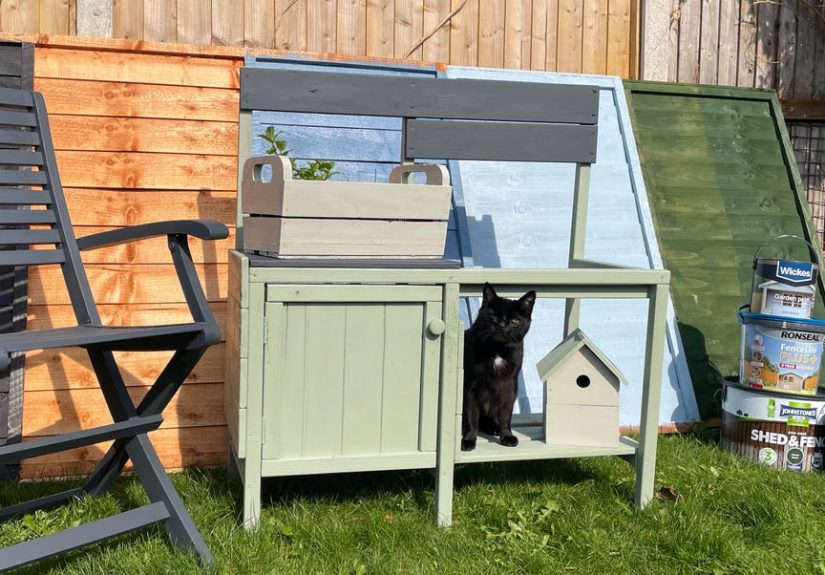
- Paint the accent items: planters, trellis, bench, gate, potting tablethese are the jewelry.
- Pull tape, touch up, clean up. The “after” photo is taken today. The paint can cure quietly while you brag politely.
What makes an exterior paint “garden-proof” (and why some paints fail fast)
1) Exterior acrylic latex is the workhorse
For most garden projectswood fences, sheds, vertical surfaces100% acrylic exterior paint is the dependable choice. It flexes with temperature swings, holds color better, and cleans up with soap and water. It’s typically your best bet for speed + durability.
2) “Paint and primer in one” isn’t a free pass to skip prep
These formulas can save time on previously painted, sound surfaces. But if you’re painting over bare wood, stains, tannins, rust, or chalky residue, you still need the right primer (bonding, stain-blocking, rust-inhibiting, or mildew-resistant) for a finish that lasts.
3) Mildew and algae resistance matters outdoors (especially in shady, damp corners)
Many premium exterior paints include additives to resist mildew on the paint film. That’s greatbut it works best when you remove existing mildew first. Painting over it is like putting a fresh shirt on top of a muddy hoodie. You’ll still smell the problem.
4) Choose sheen like you choose shoes: match the job
- Flat/Matte: hides roughness on older fences and sheds, looks “designer,” scuffs a bit easier.
- Satin/Eggshell: the sweet spot for most garden woodworkwipeable, not too shiny.
- Semi-gloss/Gloss: best for trim, doors, metal, and anything you want to clean often.
The best exterior paints for a weekend garden transformation (by surface)
Best for wood fences and sheds: Premium exterior acrylic latex
If your fence is faded, your shed is chalky, and the garden looks tired even when the plants are trying their best, this category brings the biggest visual jump fast. Look for terms like 100% acrylic, mildew resistant, fade resistant, and strong adhesion.
- Sherwin-Williams Duration Exterior Acrylic Latex – A favorite for durability-minded projects where you want a tough finish and mildew resistance, especially on large vertical surfaces like fences or sheds.
- Benjamin Moore AURA Exterior – Known for rich color and strong fade resistance. If you’re painting a shed a deep green, inky navy, or “fancy charcoal,” this is the kind of formula that helps those colors stay handsome longer.
- BEHR MARQUEE Exterior – Built for strong coverage and outdoor durability, with features geared toward resisting dirt and fading. Great when your makeover plan includes a bold color and you don’t want to do five coats “for character.”
- PPG Permanizer Exterior Acrylic Latex – A premium pick with durability and mildew resistance, good for weather-exposed garden structures where you want a long-lasting film.
- Valspar Duramax Exterior Paint + Primer – A solid choice for weekend warriors, with features aimed at weather protection and resistance to mold/mildew/algaehandy for fences near sprinklers or shaded runs along the side yard.
Example makeover: Paint a weathered shed in a dark, low-sheen color (matte/satin). Paint the door and trim in a clean contrasting shade. Suddenly the shed looks intentionallike you planned itrather than like it “happened” over time.
Best for rough, aging wood (that moves): Solid color acrylic stain (the “paint look” that behaves better)
Old fences often expand, contract, and generally live dramatic lives. A solid color acrylic stain gives you the look of paint but is designed to bond and flex with exterior wood. For many fences, it’s lower-maintenance than traditional paintespecially when the wood isn’t perfectly smooth.
- Cabot Solid Color Acrylic Stain + Sealer – Designed for wood with a flexible finish and strong weather barrier. Great when you want a painted look on fencing, pergolas, and garden woodwork.
- BEHR Solid Color House & Fence Wood Stain – Built for vertical exterior surfaces and formulated to resist cracking and peeling, with broad color availability.
- BEHR Premium Solid Color Waterproofing Stain & Sealer – If you’re tackling fences (and sometimes certain deck/fence combos), this type of product is aimed at long-term weather resistance.
When to choose solid stain over paint: if your fence is older, rough-sawn, previously stained, or you want a “painted” finish without signing up for future peeling drama.
Best for decks, steps, and walking surfaces: Use deck-specific coatings (not wall paint)
If it’s a surface you walk on, don’t use leftover exterior house paint. It’s not formulated for constant abrasion and can peel or wear quickly. Instead, choose a deck stain/coating designed for foot traffic and weather exposure. For a weekend glow-up, a solid color deck stain can make old decking look uniform fastjust confirm the product is rated for horizontal surfaces and follow cure-time rules so you don’t leave sneaker prints as “modern art.”
Best for brick, stucco, and masonry garden walls: Masonry-friendly exterior coatings
Masonry holds moisture and needs coatings that can handle it. For garden walls, planters made of block, or old brick features, look for masonry-rated exterior paint (or compatible acrylic systems) and prep carefully: remove chalking, repair cracks, and prime where needed. Bonus points if the coating resists algae in damp shade.
Quick win: Painting a crumbling masonry planter or low retaining wall in a soft mineral tone can instantly make the whole garden look curated, like it belongs in a design magazine that also sells $18 lemons.
Best for metal gates, railings, and outdoor fixtures: Rust-inhibiting enamel + proper prep
Metal’s main enemy is rust. Your job is to break up the rust party before paint arrives. Sand rusty areas, wipe clean, and use a rust-inhibiting primer where needed.
- Rust-Oleum Stops Rust (spray or brush-on) – Great for garden furniture, railings, and metal accents when you want fast coverage and corrosion protection. Spray works especially well for scrollwork and tight corners.
Weekend tip: Paint the metal gate and the mailbox (if visible) in the same color. That tiny repetition makes the whole space feel “designed,” even if the rest of your plan is “hide the hose.”
Best for plastic/resin outdoor furniture and planters: Adhesion-first strategy
Plastic can be slick and stubborn. Some spray paints are made to bond better to plastic; otherwise, use a bonding primer that’s compatible with plastic, then topcoat with a durable exterior paint. The goal is adhesionbecause if it scratches off with a fingernail, your makeover becomes confetti.
Primers and prep products that save your weekend
When you need a bonding primer
If you’re painting glossy surfaces (previous oil paint, slick coatings, certain plastics), a bonding primer helps paint stick instead of sliding off in sheets later.
When you need a stain-blocking / tannin-blocking primer
Painting cedar, redwood, or knotty wood? Tannins can bleed through and turn your fresh white into “mysterious yellowish map.” Use a stain-blocker on bare or problem areas.
When mildew is part of the backstory
Clean mildew thoroughly first, then consider a mold/mildew-resistant primer for extra protection in damp zoneslike fences behind dense shrubs or structures that never see sun.
- KILZ Mold & Mildew Interior/Exterior Primer – Useful when you need stain blocking plus an added layer of mildew resistance (and you’re painting in a garden area that stays humid or shady).
Color combos that make a garden look expensive (even if you bought nothing new)
1) Modern cottage: Deep shed + warm wood tones
Paint the shed a deep green/charcoal. Keep trim light. Let wood elements (or stain) add warmth. Toss in terracotta pots and suddenly your garden has “taste.”
2) Parisian patio vibe: Black + creamy white + one bold accent
Paint metal furniture black. Refresh planters in a creamy white. Add one statement color (cobalt cushion, citron pot, or a door in glossy red). It’s café energy without the airfare.
3) Desert calm: Soft beige + clay + matte black hardware
Perfect for making a messy yard feel serene. Beige hides dust. Clay looks natural. Matte black reads intentional and modern.
Fast application tricks (so you finish before your motivation evaporates)
Roll big, brush edges, spray details
Use a roller for fence panels and shed walls. Brush for edges and corners. Use spray paint for metal scrollwork and furniture with lots of curves. Mixing methods is not cheatingit’s efficiency with better aesthetics.
Paint from top to bottom (gravity always wins)
Start high, finish low. Drips happen. Your job is to put them where you can still fix them.
Two thin coats beat one gloopy coat
Thick paint can sag, wrinkle, and dry weird. You want a smooth film that cures properly. Your future self will thank you.
Common weekend-makeover mistakes (and how to avoid them)
- Painting wet wood after rain or washing → leads to poor adhesion and peeling. Let it dry fully.
- Skipping mildew removal → mildew can return through the coating, especially in shade.
- Ignoring surface prep → peeling paint is usually a prep problem wearing a paint costume.
- Painting in harsh sun → paint can dry too fast, causing lap marks and uneven sheen.
- Using wall paint on decks → abrasion will punish you. Choose deck-rated products.
Safety notes (quick, important, not scary)
If you’re working on older structures, be cautious about lead-based paint (common in homes built before 1978). Avoid dry sanding old paint unless you’re using lead-safe practices, and consider professional help if you suspect lead. Wear gloves, eye protection, and a mask when sanding or spraying. Ventilation is your friend. So is reading the labelbecause the label is basically the paint’s instruction manual and also its legal autobiography.
Make it last: 10-minute maintenance that keeps your garden looking “new”
- Rinse pollen and grime off painted surfaces occasionally (especially fences near trees).
- Trim shrubs away from painted wood to reduce trapped moisture.
- Touch up chips on metal quickly to prevent rust from spreading.
- Store leftover paint properly for future touch-ups (label it with the project name and date).
Extra: Real weekend experiences that make your paint makeover smoother (and funnier)
Here’s the part nobody tells you when they show the “after” photo: weekend garden makeovers are less like a calm craft project and more like a mini reality show called So You Thought This Would Take Two Hours. These are the most common (and surprisingly helpful) lessons DIYers report after doing a fast exterior-paint refresh.
1) Prep is the actual makeover. The first time you power-wash a fence and watch it go from gray sadness to “oh, you’re brown!” is a spiritual experience. Cleaning doesn’t feel glamorous, but it’s the step that makes paint look crisp instead of patchy. If your fence is chalky, the paint may look great for a month and then start flakinglike it got bored and left.
2) Pick your “hero surface” and commit. Gardens look messy when the biggest item is messy. A freshly painted shed or fence acts like a backdrop in a photo: it makes everything else look more intentional, even if your potted plants are still in mismatched containers you collected like trophies at a yard sale.
3) Wind is an uninvited collaborator. On calm days, spray paint is a dream. On breezy days, it becomes a performance art piece titled Mist Settling on Everything You Love. DIYers who win weekends usually spray early (when winds are lighter), use drop cloths aggressively, and keep the can closer to the surface than they thinkmoving steadily to avoid drips.
4) Dark colors are dramatic… and honest. A deep charcoal shed is gorgeous, but it will highlight bumps, old brush marks, and repairs. The workaround is simple: choose a matte or low-sheen finish for rough wood, and don’t skip sanding obvious ridges. If you want a shiny look, save gloss for smoother surfaces like metal or well-prepped trim.
5) The “one-coat dream” depends on reality. Many premium paints cover extremely well, but weekend warriors still report that rough fences and thirsty wood often drink the first coat like it’s electrolytes. Planning for two coats keeps you from running out of paint at 6:40 p.m. when the store is closed and your fence is half “new” and half “historic.”
6) Two accent items can carry the whole yard. People who get the biggest compliments usually paint just a couple of small elements in a bold, clean accentlike matching planters by the door, or a gate and a potting bench in the same color. Your brain reads repetition as “design.” It’s basically a cheat code.
7) Dry-to-touch is not cured. This one matters. Plenty of DIYers learn (the hard way) that paint may feel dry, but it’s still soft underneath. Dragging patio chairs across a freshly painted surface too soon can leave scuffs, dents, or a surprise imprint that looks like modern fossil evidence. If you need to use the space fast, paint items you can move into a protected area to cure.
8) The best “experience upgrade” is lighting. After paint, solar path lights or warm string lights make everything look finishedlike the garden is hosting a tasteful evening event instead of a backyard intervention. Paint gives you the clean canvas; lighting gives you the mood.
Bottom line: the best exterior paints don’t just cover old surfacesthey help you create a garden that feels cared for. And when you finish in a weekend, you get that rare adult luxury: enjoying your space without spending the next six weekends “still working on it.”
Conclusion
A weekend garden transformation is less about doing everything and more about doing the right things: pick a few high-impact surfaces, match the product to the material, prep like you mean it, and keep your color palette tight. With premium exterior acrylics for big areas, solid color stains for rough fencing, rust-fighting enamels for metal, and the right primer in the right places, you can turn “rundown” into “refreshed” before Monday shows up with emails and opinions.
Now go forth and paint. Your garden deserves a glow-upand your fence has been through enough.