Table of Contents >> Show >> Hide
- Quick Picks
- What “Best” Actually Means for an Electric Screwdriver
- Best Overall: DeWalt 8V MAX Gyroscopic Electric Screwdriver
- Best Everyday Value: Skil 4V Electric Screwdriver
- Best for Furniture Assembly (and Chronic Screw Droppers): Worx SD Semi-Automatic Driver
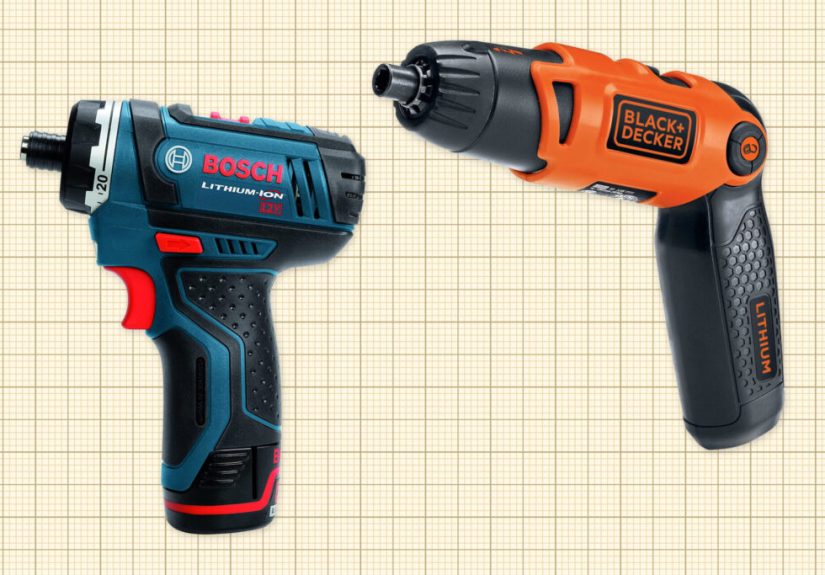
- Best Budget Pivot Driver: BLACK+DECKER 4V MAX Pivot Screwdriver
- Best for Electronics & Precision Work: Fanttik E1 Max (Precision Electric Screwdriver)
- Best “Smart” Feature Set: Hoto PixelDrive
- Best Step-Up for Tougher Fastening: Go 12V Compact Hex Driver
- Honorable Mentions
- How to Choose the Right Electric Screwdriver
- Safety & Best Practices (No Drama, Just Better Results)
- FAQ
- Hands-On Experiences: What Using the “Best Electric Screwdrivers” Really Feels Like
- Conclusion
If you’ve ever assembled flat-pack furniture with the tiny L-shaped hex key that comes in the box, you already know the
five stages of grief: optimism, confidence, denial, blisters, and finally
“Why is this screw laughing at me?”
An electric screwdriver is the humble hero for all the jobs that don’t need a full-size drill but also shouldn’t require
a wrist workout. Think: cabinet hinges, outlet covers, shelf brackets, furniture assembly, laptop repairs, and that one
door handle that’s been loose since last summer (you know the one).
Quick Picks
- Best overall for most people: DeWalt 8V MAX Gyroscopic (smooth control + clutch for consistent results)
- Best “everyday around the house” value: Skil 4V electric screwdriver (simple, capable, budget-friendly)
- Best for furniture assembly (especially if you drop screws a lot): Worx SD (bit cartridge + screw holder)
- Best budget pivot style: BLACK+DECKER 4V MAX pivot driver (compact, flexible head, easy to stash)
- Best for electronics & tiny screws: Fanttik E1 Max precision driver (controlled torque + lots of bits)
- Best “smart” feature set: Hoto PixelDrive (torque display + USB-C + ring light)
- Best step-up for tougher fastening: A 12V compact hex driver (Milwaukee M12 class or similar) for more torque and runtime
What “Best” Actually Means for an Electric Screwdriver
The best electric screwdriver isn’t necessarily the strongest. In fact, too much power can be the fastest way to
strip screw heads, chew up softwood, or crack particleboard (RIP, bargain bookshelf). “Best” usually means:
- Control: Smooth start, predictable speed, and an easy way to stop before things go wrong.
- Right-sized power: Enough torque to drive common screws without turning every project into demolition.
- Clutch or torque settings: The feature that saves your screws, your materials, and your patience.
- Comfort: If your hand cramps up, you’ll go back to manual tools out of spite.
- Charging that fits your life: USB-C is convenient; replaceable batteries are even better for frequent use.
- Bit compatibility: Standard 1/4-inch hex is your friend. Weird proprietary bits are not.
Electric Screwdriver vs. Drill: A Quick Reality Check
A drill is built to drill holes and drive fasteners. An electric screwdriver is built to drive fasteners with more finesse.
If you mostly assemble, tighten, and do light-duty fastening, an electric screwdriver is often faster and safer for the workpiece.
If you regularly sink long screws into studs or build decks, you’re shopping in drill/impact territory.
Best Overall: DeWalt 8V MAX Gyroscopic Electric Screwdriver
If you want one tool that feels like it was designed by someone who’s actually tightened 300 cabinet screws in one afternoon,
DeWalt’s gyroscopic driver is hard to beat. Instead of a traditional trigger-only experience, it uses motion control:
twist your wrist and it ramps speed up or down. That sounds like a gimmick until you use it and realize your wrist is now
a precision instrument (like a surgeon, but for drawer pulls).
Why it wins
- Fine control: The gyroscopic action makes it easier to feather speed without “oops, full send.”
- Clutch settings: Great for repeatable fasteningespecially in cabinetry and furniture hardware.
- Ergonomics: Comfortable grip with a form factor that suits long sessions.
- Work light: Because screws always hide in the darkest corner of the cabinet like tiny metal goblins.
Best for
Homeowners, DIYers, and anyone who does frequent “medium-light” fastening: hinges, brackets, hardware installs, flat-pack
furniture upgrades (like swapping cheap screws for better ones), and general maintenance.
Watch-outs
This is not a replacement for an impact driver. It’s built for control first, power second. If your “typical screw” is a
structural fastener or you’re driving into hard material all day, you’ll want a beefier tool.
Best Everyday Value: Skil 4V Electric Screwdriver
Sometimes you just want a compact driver that’s quick, simple, and doesn’t cost “I guess I’m eating ramen this week” money.
The Skil 4V class of drivers hits that sweet spot: light-duty power, easy charging, and the kind of footprint that fits in a
kitchen drawer without requiring a zoning permit.
Why it’s a great pick
- Easy to grab-and-go: Great for small fixes and frequent tightening tasks.
- Lightweight: Less fatigue when you’re swapping multiple outlet plates or adjusting cabinet hinges.
- Practical speed: Fast enough to be helpful, slow enough to stay controlled on typical household screws.
Best for
Apartment dwellers, first-time homeowners, and anyone who wants a “daily driver” for small repairs, furniture touch-ups,
and quick installations.
Best for Furniture Assembly (and Chronic Screw Droppers): Worx SD Semi-Automatic Driver
The Worx SD has a party trick that’s actually useful: a bit cartridge and a screw-holding system that reduces fumbling,
especially when you’re holding a panel with one hand and trying to start a screw with the other. It’s the tool equivalent
of having a friend help youminus the friend’s opinion about how you “definitely should’ve bought the nicer dresser.”
Why it shines
- Onboard bits: You can switch bits quickly without digging through a case mid-project.
- Screw holder: Helps start screws one-handeduseful for awkward angles and furniture frames.
- Fun factor: You’ll find things to tighten just to justify using it. (Not saying this is a problem.)
Best for
Flat-pack furniture, drawer slides, cabinet hardware, and repetitive tasks where speed and convenience matter more than
brute torque.
Best Budget Pivot Driver: BLACK+DECKER 4V MAX Pivot Screwdriver
The pivot-handle style driver is a classic for a reason: it fits where straight drivers can’t, and it’s comfortable in both
“pistol” and “wand” positions. BLACK+DECKER’s 4V MAX pivot driver is a solid budget-friendly option that’s easy to keep charged,
easy to store, and surprisingly handy for quick fixes.
Why it’s worth considering
- Pivoting handle: Helps reach into tight spaces and odd angles.
- LED light: Small feature, big quality-of-life improvement.
- Low commitment: Great starter tool for light-duty work.
Best for
Hanging pictures, tightening loose hardware, assembling smaller furniture pieces, and general “around the house” tasks.
Best for Electronics & Precision Work: Fanttik E1 Max (Precision Electric Screwdriver)
There’s a special kind of screw used in electronics: tiny, delicate, and absolutely determined to roll under the couch at the
speed of light. Precision electric screwdrivers exist for that worldwhere the goal isn’t maximum torque, it’s safe, consistent
turning with a bit set that includes the weird sizes your gadgets demand.
What makes a precision driver “best”
- Very low torque options: Helps avoid stripping micro screws or cracking plastic housings.
- Bit variety: Electronics often need specialty bits (Torx, security bits, tiny Phillips/flat).
- Good case design: A bit set that stays organized saves time and sanity.
- Magnet-friendly: A magnetized tip helps keep tiny screws from falling into the abyss.
The Fanttik E1 Max is popular in the “I open devices for fun” crowd because it’s built like a real kit, not a toy. If you
work on laptops, PCs, game controllers, small appliances, or camera gear, a precision driver can be the best purchase you make
all yearright after the magnetic parts tray.
Best “Smart” Feature Set: Hoto PixelDrive
Some electric screwdrivers are purely utilitarian. The Hoto PixelDrive clearly wants to be the electric screwdriver you
show people. It’s compact, USB-C rechargeable, and includes a pixelated display that shows torque levels and battery
status. It also has multiple torque settings and speed modes that make it feel more “tunable” than the average light-duty driver.
Why the features matter
- Visible torque level: Helps you repeat settings across similar screws and materials.
- Two-speed feel: A lower-speed mode for delicate tasks, plus a faster mode for assembly work.
- Ring light: Excellent visibility when working inside cabinets or behind furniture.
- USB-C charging: Convenient for people who don’t want another proprietary charger in their life.
Best Step-Up for Tougher Fastening: Go 12V Compact Hex Driver
If you often drive longer screws, work in hardwood, or just want something that won’t bog down when the going gets stubborn,
consider jumping to a compact 12V hex screwdriver/driver. This category (think Milwaukee M12 class and similar tools) tends to be
larger than 4V/8V screwdrivers, but you gain torque, runtime, and versatility.
When the 12V class makes sense
- Lots of fastening: Installing shelves, mounting hardware, repeated hinge installs.
- Harder materials: More consistent driving into denser wood or thicker hardware.
- Battery ecosystem: If you already own 12V tools, sharing batteries is a big win.
This isn’t “better” for everyoneit’s just a better match for heavier use. If your projects are mostly furniture and home
maintenance, a lighter electric screwdriver is usually the smarter and safer choice.
Honorable Mentions
Bosch Go (compact push-to-start style)
If you like a compact driver that feels controlled and less fatiguing than larger tools, the Bosch Go-style approach is appealing.
It’s aimed at light-to-medium tasks where precision matters more than speed. This is the kind of driver you pick up when you want
to avoid overdriving without babysitting the trigger.
Ryobi USB Lithium Screwdriver (compact, modern charging)
Ryobi’s USB Lithium lineup is built around convenient charging and compact tools. If you like a small driver you can keep topped up
easily and stash anywhere, this category is a strong contenderespecially for light-duty tasks and quick fixes.
IKEA’s entry-level drivers (great gift energy)
IKEA’s drivers can be a fun starter option for occasional use and basic assembly. They’re typically best treated as a light-duty,
“use it for what it is” toolhelpful for furniture day, less ideal for ongoing heavy work.
How to Choose the Right Electric Screwdriver
1) Start with your most common job
- Furniture assembly: Look for decent control, moderate speed, and a comfortable grip. Screw-holding features help.
- Cabinets & hardware: Clutch settings matter. You’ll want repeatable torque.
- Electronics: Prioritize precision torque, bit variety, and a good case. High torque is a liability here.
- Heavier fastening: Consider stepping up to 8V/12V class tools and a more robust clutch.
2) Understand power without obsessing over it
For typical home tasks, lower voltage tools can be plenty. Higher voltage tends to mean more torque and sometimes higher speed,
but control and clutch quality are usually more important than raw power for screwdriving.
3) Torque settings and clutch: your “anti-regret” feature
If you’ve ever stripped a screw head or sunk a screw too deep into soft material, you already understand why this matters.
A clutch lets you stop consistently at a set resistanceso each screw is snug, not crushed.
4) Ergonomics: the tool you’ll actually use wins
A heavier tool might be more powerful, but if it’s awkward, you’ll avoid it. Handles that pivot, grips that feel stable,
and balance that doesn’t fight you are all quietly important.
5) Don’t ignore bits
A great driver paired with cheap, worn-out bits is like buying a sports car and driving it on bald tires. Use quality bits,
match the bit to the screw head, and replace bits when they start camming out. You’ll work faster and damage fewer screws.
Safety & Best Practices (No Drama, Just Better Results)
- Start slow: Especially on delicate materials and small screws.
- Let the clutch do the work: If you have torque settings, use them.
- Finish by hand when needed: For final snugging on furniture hardware, a manual quarter-turn can be perfect.
- Use the right bit: A slightly wrong bit is the #1 cause of stripped heads.
- Keep pressure straight: Angled driving leads to cam-out and chewed screws.
FAQ
Is an electric screwdriver strong enough for everything?
Not everything. It’s ideal for light-to-medium fastening. For heavy construction screws and tough materials, a drill or impact
driver is usually the right tool.
Do I need variable speed?
It’s niceespecially for controlbut not mandatory. A well-tuned single-speed tool with good torque control can still be excellent.
What’s better: USB charging or a removable battery?
USB charging is convenient for occasional use. Removable batteries are better if you use the tool often, because you can swap and keep moving.
Hands-On Experiences: What Using the “Best Electric Screwdrivers” Really Feels Like
The first time you use a good electric screwdriver on a real project, it’s not just the speed that surprises youit’s the
lack of friction between you and the task. A manual screwdriver makes you fight every screw. A drill can make you fight
the tool (and sometimes the consequences). A well-chosen electric screwdriver feels like the job suddenly has fewer arguments.
Take the classic “Saturday furniture build.” You open the box, spread out boards like you’re staging an archaeological dig,
and then you meet the hardware bag: 48 screws, 12 cams, and one mysterious extra piece that will haunt your dreams. With a basic
electric driver, you can keep your pace steadydrive, stop, check alignment, repeatwithout the forearm fatigue that turns
instructions into modern poetry (“Step 14: weep softly while tightening”).
The biggest quality-of-life upgrade I notice in real use is control. A driver with torque settings lets you
work on softer materials (particleboard, pine, plastics) without that awful moment when the screw suddenly “gives” and you realize
you’ve just created a permanent crater. You start to trust the tool. You also start to trust yourself, which is dangerous only
in the sense that you may volunteer to help friends assemble furniture. Choose your power wisely.
In kitchens and bathroomswhere screws love hiding in dim cornersan LED work light becomes oddly essential. Changing cabinet
hinges, tightening drawer fronts, or adjusting door hardware often means working at strange angles. A pivoting handle or a slim
inline design can be the difference between “done in five minutes” and “why is my wrist shaped like that now?” This is also where
screw-holding features (like Worx’s setup) can shine: if you’ve ever tried to start a screw while balancing a hinge plate, you know
how valuable a third hand would be. A tool that reduces drops and fumbles doesn’t just save timeit keeps your mood intact.
Precision electric screwdrivers are their own little universe. If you’ve opened a laptop, swapped a controller battery, or upgraded
a PC part, you’ve probably met the micro-screw that won’t bite, the one that’s slightly off-angle, and the one that falls into the
one place you can’t reach without disassembling half the device. A precision driver with gentle torque feels calmer and more
respectfullike it understands you’re working with plastic clips and tiny threads, not deck boards. The best kits also stay organized,
which matters more than you’d think. When your bits don’t spill everywhere, you spend your time fixing things instead of playing
“find the tiny Torx” on hard mode.
Over time, the best electric screwdriver becomes the tool you reach for firstnot because it’s the most powerful, but because it’s
the most pleasant. It makes small jobs actually small. And that’s the real win: the loose doorknob gets tightened today,
the wobbly chair gets fixed before it becomes a full-blown incident, and the next furniture build doesn’t require a pep talk. In
a world full of big, loud power tools, an electric screwdriver is the quiet, competent friend who shows up, does the job, and
doesn’t brag about it. (Unlike your uncle’s impact driver.)
Conclusion
The best electric screwdriver is the one that matches your day-to-day reality. If you want premium control and a tool you’ll keep
for years, an 8V gyroscopic driver is a standout. If you want a budget-friendly helper for quick household tasks, a solid 4V driver
is hard to beat. If you assemble furniture often, convenience features like screw holders and easy bit changes can genuinely save
time (and your sanity). And if you work on electronics, a precision kit is the right tool for the jobfull stop.
Pick the driver that fits your projects, use quality bits, and let torque control do the hard work. Your wrists will thank you,
your screws will look nicer, and your future self will stop avoiding that loose cabinet handle.