Table of Contents >> Show >> Hide
- Why Apple + Cranberry Works So Well
- Quick Overview: What Makes This the “Best” Apple-Cranberry Pie
- Ingredients
- Best Apples for Apple-Cranberry Pie
- Equipment Checklist
- Step-by-Step: How To Make Apple-Cranberry Pie
- How To Know When It’s Done (No Guessing Required)
- Pro Tips for a Flaky Crust and Non-Runny Filling
- Fun Variations (Because You’re the Boss of Your Pie)
- Make-Ahead and Storage
- Serving Ideas
- Troubleshooting: Common Pie Problems (and How to Fix Them Next Time)
- Real-World Apple-Cranberry Pie Experiences (What Bakers Learn Fast)
- Conclusion
Apple pie is already a legend. Cranberry sauce is already a holiday celebrity. Put them together and you get a pie that tastes like fall put on a cozy sweater,
then high-fived winter. This apple-cranberry pie hits that perfect tart-sweet balance: tender, cinnamon-kissed apples; bright bursts of cranberry;
and a flaky crust that shatters just enough to make you feel like you’re winning at life.
This guide is built like a real test-kitchen playbook: smart apple choices, a filling that won’t turn into pie soup, and baking steps that help you avoid
the dreaded “soggy bottom” (which sounds like a Victorian insult but is actually a pastry tragedy). Let’s bake.
Why Apple + Cranberry Works So Well
Apples bring sweetness, body, and that classic pie comfort. Cranberries bring sparkletart, fruity, and just a little dramatic (in a good way). Together they create
a filling that tastes more complex than plain apple pie, with a brighter finish and a gorgeous ruby glow that makes people say, “Wait… what is in this?”
Quick Overview: What Makes This the “Best” Apple-Cranberry Pie
- Two-apple strategy for flavor + structure (so slices hold their shape).
- Jammy cranberry base to prevent watery filling and concentrate flavor.
- Reliable thickener (cornstarch) + proper cooling time for clean slices.
- High-heat start to set the crust, then a steady bake to finish.
- Make-ahead friendly components for holiday sanity.
Ingredients
For the all-butter double crust (top + bottom)
- 2 1/2 cups (300g) all-purpose flour
- 1 tablespoon sugar
- 1 teaspoon fine salt
- 1 cup (2 sticks / 226g) unsalted butter, very cold, cut into 1/2-inch cubes
- 6–8 tablespoons ice water (start with 6; add as needed)
- 1 teaspoon apple cider vinegar (optional, helps tenderness)
For the apple-cranberry filling
- 3 pounds apples (about 6–7 medium), peeled, cored, sliced 1/4-inch thick
- 2 cups fresh cranberries (or frozen, no need to thaw)
- 3/4 cup granulated sugar (adjust to taste)
- 1/4 cup packed light brown sugar
- 3 tablespoons cornstarch
- 1 teaspoon ground cinnamon
- 1/4 teaspoon ground ginger
- 1/8 teaspoon ground nutmeg
- 1/2 teaspoon fine salt
- Zest of 1 orange + 2 tablespoons orange juice
- 1 tablespoon lemon juice
- 1 teaspoon vanilla extract
- 1 tablespoon unsalted butter, cut into small pieces
For finishing
- 1 egg + 1 tablespoon milk or water (egg wash)
- 1–2 teaspoons coarse sugar (optional, but sparkly and delightful)
Best Apples for Apple-Cranberry Pie
The goal is apples that taste great and don’t collapse into applesauce. Use a mix:
one tart, one sweet-crisp. That combo gives you structure, flavor, and a filling that feels “alive.”
- Tart & firm: Granny Smith, Pink Lady
- Sweet-crisp: Honeycrisp, Fuji
- Classic baking options: Braeburn, Golden Delicious
If you only have one type, choose a good baking apple (Honeycrisp, Granny Smith, Braeburn). Just avoid very soft apples that melt fast unless you’re purposely
aiming for a softer, saucier pie.
Equipment Checklist
- 9-inch pie dish (glass or metal bakes reliably)
- Rolling pin
- Large mixing bowl
- Medium saucepan
- Baking sheet (for catching drips)
- Pastry brush (or use a spoon and optimism)
Step-by-Step: How To Make Apple-Cranberry Pie
Step 1: Make the pie dough (and chill it like it’s on vacation)
-
In a large bowl, whisk flour, sugar, and salt. Add cold butter cubes and cut in with a pastry cutter (or use your fingertips quickly) until you have a mix of
pea-size pieces and some flatter flakes. -
Mix 6 tablespoons ice water with the vinegar (if using). Drizzle over the flour-butter mixture. Stir with a fork until the dough starts clumping. Add more ice
water 1 tablespoon at a time until it holds together when you squeeze it. (Dry crumbs = no. Slightly shaggy = yes.) -
Divide into two disks (one slightly larger for the bottom crust), wrap tightly, and chill at least 2 hours (or overnight). You can also freeze for longer storage.
Step 2: Make a jammy cranberry base (the anti-soup strategy)
Cranberries are juicy, and apples release liquid as they bake. Cooking part of the cranberries briefly concentrates flavor and helps the pie set up with fewer
surprises. We’re basically doing “cranberry pre-game.”
-
In a medium saucepan, combine cranberries, granulated sugar, orange zest, and orange juice. Cook over medium heat, stirring, until the cranberries burst and the
mixture looks glossy and jammyabout 6–8 minutes. -
Transfer to a bowl and let cool 10 minutes. (Warm is okay. Lava is not.)
Step 3: Build the filling
-
In a large bowl, toss sliced apples with lemon juice and vanilla. Add brown sugar, cornstarch, cinnamon, ginger, nutmeg, and salt. Mix well.
-
Fold in the cooled cranberry mixture. Taste a little (cook’s privilege). If it’s extremely tart, add 1–2 tablespoons sugar. If it’s very sweet, add an extra
squeeze of lemon. Balance is the whole point.
Step 4: Roll, fill, top
-
Preheat oven to 425°F. Place a baking sheet on the lower rack to preheat (this helps bottom browning).
-
Roll the larger dough disk into a 12-inch circle. Fit into a 9-inch pie dish, letting excess hang over the edge. Chill the lined dish for 10 minutes while you
roll the top crust. -
Spoon filling into the crust, packing the apples slightly so you don’t get a big air gap later. Dot the top with 1 tablespoon butter pieces.
-
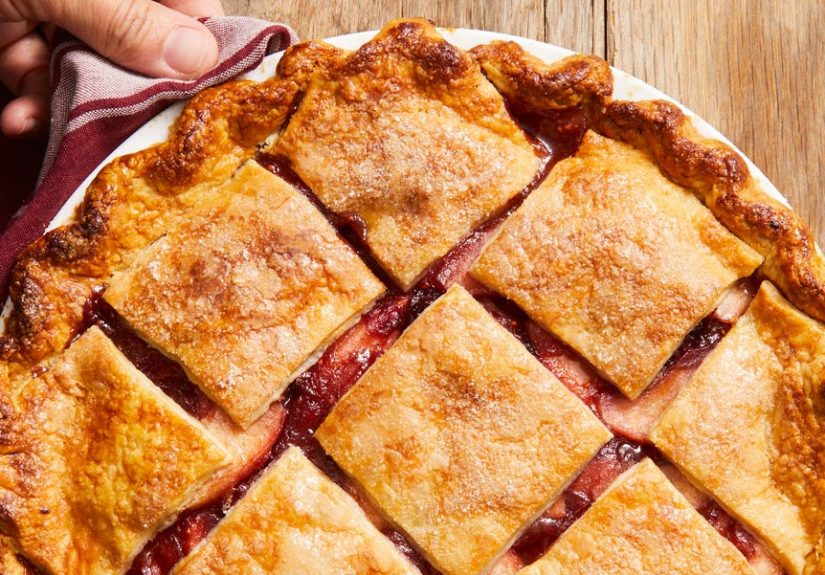
Roll the second disk and top the pie with a full crust (cut vents) or a lattice. Trim excess dough, fold edges under, and crimp.
-
Brush with egg wash and sprinkle with coarse sugar if you want that bakery-level sparkle.
Step 5: Bake (hot start, steady finish)
-
Place the pie on the preheated baking sheet. Bake at 425°F for 20 minutes.
-
Reduce heat to 375°F and bake 40–55 minutes, until the crust is deep golden and the filling is bubbling (look through vents or
lattice). If the crust edges brown too fast, cover with foil or a pie shield. -
Cool on a rack for at least 3 hours before slicing. I know. It smells like a cinnamon cloud moved into your kitchen. Still: cooling is what turns
“runny” into “sliceable.”
How To Know When It’s Done (No Guessing Required)
- Visual: Deep golden crust, not pale.
- Bubble test: Filling actively bubbles in the center, not just at the edges.
- Smell: You’ll get a caramelized fruit aroma, not raw flour vibes.
Pro Tips for a Flaky Crust and Non-Runny Filling
Keep everything cold
Cold butter = flaky layers. Warm butter = sadness. If the dough gets sticky while rolling, pop it back in the fridge for 10–15 minutes.
Slice apples evenly
Aim for about 1/4-inch slices so everything bakes at the same pace. Thick slices stay crunchy; thin slices can collapse. Even slices = peace.
Don’t skip the preheated baking sheet
That blast of heat under the pie helps the bottom crust cook through instead of steaming in fruit juices like it’s stuck in a sauna.
Fun Variations (Because You’re the Boss of Your Pie)
Apple-Cranberry Crumble Pie
Skip the top crust and add a crumble topping: 1/2 cup flour + 1/2 cup oats + 1/2 cup brown sugar + 6 tablespoons melted butter + pinch salt. Bake as directed.
Orange-Spice Upgrade
Add 1/4 teaspoon ground cloves (go easy) or swap ginger for cardamom. Orange + cranberry can handle it.
Extra cranberry pop
Add 1/3 cup dried cranberries for chewy bursts. If you do, reduce sugar slightly to keep things balanced.
Make-Ahead and Storage
Make-ahead options
- Pie dough: Refrigerate up to 2 days or freeze up to 3 months.
- Filling: You can prep apples and cranberry base separately, then combine right before assembling.
- Baked pie: Bake 1 day ahead for holidays. Flavor improves as it rests.
Storage
- Room temp: Loosely covered for 1 day.
- Fridge: 3–4 days, covered. Rewarm slices in a low oven for best texture.
- Freezer: Wrap tightly and freeze up to 3 months. Thaw in fridge overnight.
Serving Ideas
Apple-cranberry pie is already a whole event, but it plays well with friends:
- Vanilla ice cream (classic for a reason)
- Whipped cream with orange zest
- A slice of sharp cheddar on the side (sweet-salty fans, unite)
Troubleshooting: Common Pie Problems (and How to Fix Them Next Time)
“My filling is runny.”
- You didn’t bake long enough for a full-center bubble.
- You sliced too soon. Cooling is part of the recipe, not a suggestion.
- Your apples were extra juicynext time add 1 extra tablespoon cornstarch.
“My bottom crust is pale.”
- Use the lower rack + preheated baking sheet trick.
- Consider a metal pie pan for stronger heat transfer.
- Make sure your oven is fully preheated (pie hates half-commitment).
“My top crust browned too fast.”
- Tent loosely with foil once it reaches your ideal color.
- Check oven temperature accuracy if it happens often.
Real-World Apple-Cranberry Pie Experiences (What Bakers Learn Fast)
The first time someone makes an apple-cranberry pie, it usually starts with big confidence and ends with one small existential question:
“Why is my pie doing… that?” The good news is that most apple-cranberry pie “problems” are actually normal pie behaviorand once you know the patterns,
you can bake like you’ve got a tiny pastry degree tucked in your apron.
One of the most common “aha” moments is realizing that apple choice is texture. People often assume all apples bake the same because apples are
apples… which is like assuming all dogs are the same because they’re dogs. (Try explaining that to a Chihuahua and a Great Dane.) Tart, firm apples like Granny Smith
keep their shape, while sweeter apples can soften more quickly. Many home bakers end up loving a mix because the pie tastes layered: you get tender bites and
slightly firmer bites in the same slice, which feels intentional and fancy even if you were wearing sweatpants the whole time.
Cranberries teach a different lesson: tartness is a moving target. Some bags of cranberries are sharper than others, and if your apples are extra sweet,
the contrast can be amazingor a little startling. Experienced bakers often do a quick taste check after mixing the filling. If the filling makes your cheeks do that
“sour face,” a spoonful or two of sugar smooths it out. If it tastes flat, a squeeze of lemon or a touch more orange zest wakes it up. The filling doesn’t need to be
candy-sweet; it just needs to be balanced so every bite tastes bright instead of harsh.
Then there’s the classic pie illusion: the filling looks thick in the bowl, but after baking it suddenly seems looser. Usually, it’s not because the recipe “failed.”
It’s because the pie needs time to set. Fruit pies thicken as they cool, and slicing too early releases hot juices before they can settle into that
sliceable, glossy consistency. Seasoned pie makers plan around the cooldown: bake earlier than you think, let it rest, and rewarm slices later if you want that
“fresh from the oven” vibe without the puddle.
Another very real experience: the first time you try a lattice, you learn that pie dough has emotions. If it’s too warm, it stretches and tears. If it’s too cold,
it cracks like it’s auditioning for a dramatic role. The sweet spot is dough that’s cool but flexible. Bakers who make pies regularly get into a rhythm: roll, chill,
assemble, chill again for a few minutes if needed. It feels slower, but it’s actually faster than fighting sticky dough while whispering apologies to your rolling pin.
Finally, the most underrated pie experience is learning how your oven behaves. Some ovens run hot, some brown unevenly, and some have that one mysterious “lava corner.”
The bakers who consistently turn out gorgeous pies do little adjustments without thinking: lower rack for better bottoms, foil on edges when the top gets ahead, and
baking until the filling bubbles in the center instead of trusting the timer like it’s a fortune teller. The result? A pie that looks impressive, slices cleanly, and
tastes like you planned it that waybecause now you did.
Conclusion
If you want a holiday dessert that feels classic but tastes upgraded, this best apple-cranberry pie recipe is your new go-to. Use a smart apple mix,
cook a quick jammy cranberry base, bake with a hot start, and let the pie cool like it’s part of the job (because it is). The payoff is a flaky crust, bright fruit
flavor, and slices that make people hover near your kitchen like it’s a pie-themed open house.