Table of Contents >> Show >> Hide
- What the Retired Navy Admiral Actually Said (and Why People Care)
- UFO vs. UAP vs. “Underwater UFOs”: The Vocabulary That Changes the Story
- Why the Ocean Is the Perfect Place to Hide (Even If You’re Not a Space Alien)
- What Official UAP Reporting Actually Shows Right Now
- So… Are UFOs Really Hiding Underwater? A Practical Test of the Claim
- The “Mundane Explanation Buffet” That Often Beats the Alien Entrée
- Why This Topic Won’t Go Away (Even When Proof Doesn’t Show Up on Schedule)
- Conclusion: A Mystery Worth Studying, Not a Conclusion Worth Declaring
- Experiences and Encounters: The Underwater-UFO Stories People Keep Telling
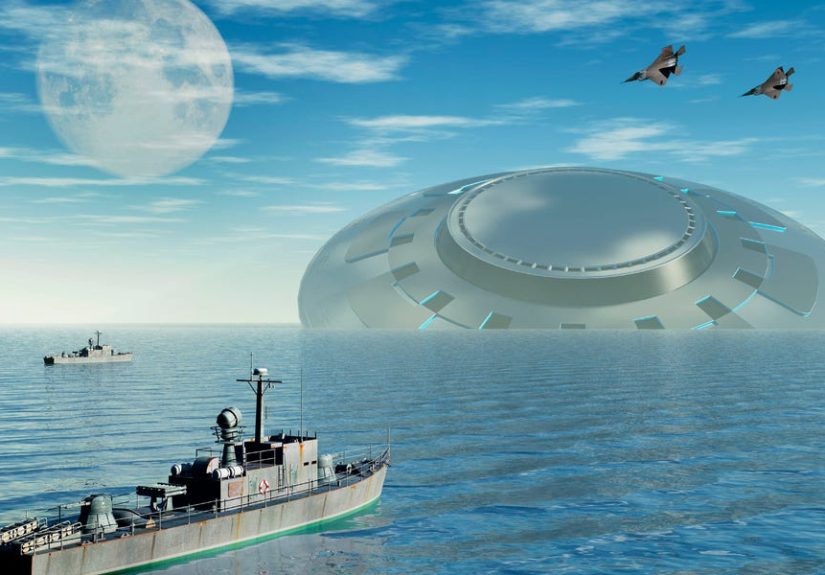
If you wanted to run a secret operation on Earth, you wouldn’t pick a place with tourists, traffic cams, and teenagers
livestreaming everything from a potato to the moon. You’d pick the oceanthe planet’s biggest blind spot, a place that
swallows evidence the way a couch swallows TV remotes. Which is why one retired U.S. Navy admiral’s claim keeps grabbing
headlines: maybe some of the “UFO” mystery isn’t up in the sky at all. Maybe it’s under our feet… and under a whole lot
of water.
That statement sounds like the setup to a summer blockbuster (coming soon: The Abyss, but With More Paperwork).
But it also taps into a very real, very modern debate about UAPUnidentified Anomalous Phenomenathe official term the
U.S. government now uses for sightings that can’t immediately be explained. And here’s the key: “unidentified” doesn’t
mean “alien.” It means “we don’t know yet,” which is both less thrilling and far more useful.
Let’s unpack what the retired admiral actually said, why the ocean is such an irresistible hiding place in theory, what
official reports do (and don’t) show, and how we could test underwater-UFO claims without turning every weird wave into
a conspiracy.
What the Retired Navy Admiral Actually Said (and Why People Care)
The claim making the rounds comes from retired Rear Adm. Tim Gallaudet, a former U.S. Navy officer with a background in
meteorology and oceanography who has spoken publicly about UAP concerns. His public commentsand later, written testimony
helped push one specific idea into the spotlight: that some UAP might be “transmedium,” meaning they appear to move between
air and water, and that the ocean could be a plausible place for unknown technology to operate or hide.
Why does it matter when a retired flag officer says it? Not because rank magically turns speculation into fact, but because
senior military leaders tend to be careful about what they attach their names to. When someone with that résumé says,
“We should take this seriously,” it reframes the topic from tabloid entertainment to a mix of aviation safety, intelligence
analysis, andsometimesbureaucratic frustration.
In his testimony, Gallaudet describes learning about UAP-related concerns through official Navy channels, including an email
thread that discussed an “urgent” safety issue tied to unknown objects encountered by military aviators during training.
He also describes the broader culture shift: pilots and operators reporting anomalous observations not because they’re
auditioning for science fiction, but because near-misses and unidentified objects can be genuinely dangerous.
Importantly, “danger” doesn’t require extraterrestrials. A balloon in the wrong place can be dangerous. A drone near a
runway can be dangerous. A sensor glitch can be dangerous if it distracts pilots. And if any unknown object represents
foreign surveillance or advanced tech, that’s dangerous in a very grown-up, geopolitical way.
UFO vs. UAP vs. “Underwater UFOs”: The Vocabulary That Changes the Story
Words matter here because they quietly change what you think you’re arguing about.
UFO
“UFO” means Unidentified Flying Object. It’s culturally loadedoften shorthand for “alien craft,” even though the literal
meaning is just “something flying that we haven’t identified.”
UAP
“UAP” (Unidentified Anomalous Phenomena) is broader and more neutral. In official usage, it’s meant to cover unexplained
observations across domainsnot just “flying.” That shift is deliberate: the modern problem isn’t limited to the sky.
USO and transmedium
“USO” (Unidentified Submerged Object) is a popular term used in books, documentaries, and sailor lore. The government
typically folds this kind of thing into UAP languageespecially when an observation suggests something may have moved
from air to sea, or vice versa. “Transmedium” is the term you’ll see in official reporting for that idea.
Once you adopt “transmedium,” underwater claims stop sounding like a totally separate mystery and start sounding like
one branch of a single question: what are these observations, and why do we sometimes fail to identify them quickly?
Why the Ocean Is the Perfect Place to Hide (Even If You’re Not a Space Alien)
Let’s be honest: the ocean doesn’t just hide hypothetical UFOs. It hides shipwrecks, missing cargo, sunken planes, and
entire mountain ranges. It’s not a “secret base” so much as a “massive, moving filing cabinet” where the labels fall off.
1) The ocean is huge, and we don’t observe most of it
Earth’s ocean covers about 70% of the planet. Vast areas are unmapped at high resolution, and visually explored regions are
a fraction of a fraction. That’s not a poetic exaggerationit’s a practical one. Even with modern sonar, satellites, and
autonomous vehicles, the deep sea remains one of humanity’s least directly observed environments.
2) Water is a sensor’s worst frenemy
In air, radar and optical sensors can track objects across long distances. Underwater, things get tricky fast. Radio waves
don’t travel well through seawater, which is why submarines aren’t exactly sending TikToks from 1,000 feet down. Instead,
underwater detection leans heavily on acoustics: sonar, hydrophones, and clever signal processing.
Sound travels faster in seawater than in air, and it can travel long distances under the right conditions. But “can travel”
isn’t the same as “makes everything easy.” Temperature layers, salinity, depth, and seafloor geography can bend, scatter,
and distort sound in ways that create ambiguous returns. In other words: the ocean is an environment where “we saw
something” is often true, while “we know exactly what it was” is harder.
3) “Hidden underwater” doesn’t require sci-fi technology
Before we leap to nonhuman intelligence, remember the boring-but-important possibilities:
adversary submarines, unmanned underwater vehicles (UUVs), classified prototypes, sensor decoys, or even unfamiliar wildlife
and unusual environmental effects. The ocean is where secrecy is normal. It’s the planet’s original “private mode.”
What Official UAP Reporting Actually Shows Right Now
Here’s where things get both more grounded and more complicated: official UAP reporting is real, but it rarely provides the
cinematic “case closed” moment that people want.
Government reports: lots of cases, limited data
Recent government reporting describes hundreds of UAP reports and emphasizes a recurring problem: many cases lack enough
high-quality sensor data to reach firm conclusions. Some cases are resolved as ordinary objectsballoons, birds, drones,
aircraft, satellites. Others remain unresolved not because they’re magical, but because the available data isn’t good enough.
A key wrinkle for the underwater theory
If you’re expecting a flood of official “underwater UFO” cases, you may be surprised. In at least one recent reporting window,
the unclassified consolidated annual reporting data show UAP reports categorized overwhelmingly in the air domain, with
none recorded in the maritime or “transmedium” categories for that period.
That doesn’t prove underwater UAP don’t exist. It could reflect how incidents are reported, categorized, or shared
(including classification issues). It could mean underwater events are rarer. Or it could mean the underwater angle is mostly
a hypothesis drawn from a smaller set of anecdotes and interpretations rather than a dominant pattern in current reporting.
“No evidence” is not the same as “case closed,” but it matters
Official public-facing language has repeatedly stated that investigators have not found verifiable evidence of extraterrestrial
beings, activity, or technology in the cases they’ve been able to resolve in unclassified reporting. That statement is easy to
ignore if you’re craving a twist endingbut it’s essential context if you’re trying to separate curiosity from certainty.
So… Are UFOs Really Hiding Underwater? A Practical Test of the Claim
The underwater-UFO idea can be treated like a scientific and intelligence hypothesis, not a belief system. That means asking:
what would we expect to observe if the claim were true, and how could we confirm or disconfirm it?
Step 1: Define what “underwater UAP” would look like in data
A real, testable pattern would include consistent multi-sensor signaturesradar/infrared tracking an object to the ocean
surface, acoustic detection consistent with motion below the surface, and timing/location agreement that rules out coincidence.
One sensor is a clue. Multiple sensors with synchronized metadata is evidence.
Step 2: Separate “anomaly” from “advanced”
Anomalies happen for mundane reasons: calibration errors, strange atmospheric conditions, glare, parallax, compression artifacts,
and misunderstood distances or speeds. A rigorous approach assumes error first and demands strong proof before upgrading
“unidentified” to “extraordinary.”
Step 3: Treat the ocean as an environment, not a backdrop
If an object appears to behave oddly near the sea, environmental context matters: sea state, temperature inversions, cloud
ceilings, swell patterns, and local traffic (ships, aircraft, drones). Environmental data can explain why sensors disagreeor
why something seems to move impossibly fast when it’s actually a geometry problem.
Step 4: Build a reporting pipeline that rewards clarity, not stigma
One repeated theme in serious UAP work is that stigma reduces reporting and reduces data quality. If operators fear ridicule,
they may not file reports promptly or include critical details. That turns a solvable mystery into an eternal rumor. A standardized
reporting system with strong metadata requirements (time, location, sensor type, calibration status, chain of custody) makes
“unidentified” easier to turn into “identified.”
The “Mundane Explanation Buffet” That Often Beats the Alien Entrée
A good analyst doesn’t dismiss dramatic possibilitiesbut they also don’t skip the boring menu. Here are explanations that
repeatedly show up in UAP discussions, including cases near water:
Misjudged distance and speed
Many “impossible” maneuvers become “possible” when the object is farther away (and thus larger) or closer (and thus smaller)
than assumed. Without precise range data, speed estimates can be wildly wrong.
Drones and balloons in unexpected places
Small unmanned systems can look bizarre on sensors, especially at night or at odd angles. Balloons can appear to hover,
accelerate, or change direction due to winds at different altitudes.
Sensor artifacts and processing quirks
Sensors are not eyeballs. They’re instruments with settings, limitations, and failure modes. Sometimes the “anomaly” is the
system’s interpretation of the world, not the world itself.
Classified or novel technology
Not every unknown is “nonhuman.” Some unknowns are simply “not for public release.” That can include U.S. systems, allied
systems, and adversary systems. The ocean domain, in particular, is full of secrecy by design.
Why This Topic Won’t Go Away (Even When Proof Doesn’t Show Up on Schedule)
The underwater angle persists for three reasons that have nothing to do with social media algorithms (though they help):
- The ocean is genuinely under-observed, so it’s a natural “unknown zone” for the human imagination.
- Some UAP reports describe behavior near water, which invites “maybe it went underwater” interpretations.
- The national security framing is real: unidentified objects near training ranges or sensitive areas are a legitimate concern.
In other words, underwater-UFO talk survives because it sits at the intersection of mystery and measurementwhere human
curiosity tends to pitch a tent and refuse to leave.
Conclusion: A Mystery Worth Studying, Not a Conclusion Worth Declaring
So, are UFOs hiding underwater? A retired U.S. Navy admiral believes the ocean is a plausible place to look, and the idea
fits a simple reality: the sea is vast, difficult to monitor, and already home to secretive human technology. But a plausible
hiding place is not the same thing as proof of hidden occupants.
The most responsible position is also the most productive one: treat underwater UAP as a testable hypothesis. Demand
better multi-sensor data. Improve reporting and reduce stigma. Separate “unidentified” from “unexplainable.” And keep the
humor handy, because if there’s one thing the ocean teaches us, it’s that certainty sinks faster than speculation.
If the underwater theory turns out to be wrong, we still gain something valuable: improved detection, safer skies, better
maritime awareness, and fewer mysteries caused by bad data. And if it turns out to be rightwell, then we’ll have earned the
right to be amazed with receipts.
Experiences and Encounters: The Underwater-UFO Stories People Keep Telling
To understand why the underwater-UFO idea has traction, it helps to look at the kinds of experiences that repeatedly show up
in public accountsespecially from military aviation and maritime contexts. These stories are not “proof,” but they are
patterns of perception worth examining because they shape what gets reported, what gets investigated, and what gets
remembered.
One common category is the “something near the waterline” encounter. In these reports, aviators describe an unknown object
operating just above the ocean surfacelow enough that it blurs the boundary between air and sea. The famous appeal of this
scenario is obvious: if an object can dip into the water (or appear to), it suddenly gains the best possible escape route from
cameras and radar. Even the idea of a splashdown can turn an already strange event into a legend.
Another category is “sensor-first, eyes-second.” Sailors and pilots sometimes learn about an anomaly from instrumentsradar,
infrared, or other tracking systemsbefore anyone sees it clearly. That sequence matters because it can create a feedback loop:
an alert primes observers to expect something unusual, and the mind is very good at building a picture from partial information.
It’s not deception; it’s human cognition doing what it does under stress and time pressure.
Then there’s the “disappeared into the ocean” narrative, which shows up in modern media reporting as well as older sea stories.
In at least one widely discussed incident involving Navy imagery, media reports described a spherical-looking object and claims
that footage appeared to show it dropping toward the water, with official spokespeople confirming the material was taken by
Navy personnel and was being evaluated by a Pentagon task force at the time. Even without a definitive public explanation,
that combinationvideo, official acknowledgment, and a watery endpointacts like gasoline on the underwater-UFO campfire.
A fourth category is the “classified gap” experience: people who believe something important happened, but key details are
locked behind classification, lost in bureaucracy, or never formally recorded in a way the public can access. In his own written
testimony, Gallaudet describes encountering this feeling directlypointing to an internal Navy email thread that raised safety
concerns and later seemed to vanish from his inbox. Experiences like that don’t just fuel suspicion; they also highlight a
practical problem: when information flow is messy, the vacuum fills with narratives.
Finally, there are the pure “ocean mystery” experiencesstrange lights reported offshore, unusual tracks on sensors, odd
acoustic events, and sightings that get passed around as cautionary tales. Most of these, when investigated, likely end up
tied to ordinary causes: misidentified aircraft, drones, satellites, atmospheric effects, shipping traffic, or instrument error.
But some remain unresolved because the data isn’t rich enough to close the case. And unresolved cases, like unfinished songs,
tend to get stuck in people’s heads.
If you’re looking for a mature takeaway, it’s this: the experiences are real in the sense that people genuinely observed
something they couldn’t readily identify. The leapfrom “unidentified” to “underwater nonhuman intelligence”is the part
that requires extraordinary evidence. Until that evidence exists, the most useful response is better measurement, clearer
reporting, and just enough humility to admit that the ocean can make fools of all of usscientists, sailors, and skeptics alike.