Table of Contents >> Show >> Hide
One wrong backing track. One awkward little jig. One live-TV moment that refused to die.
That is the short version of the Ashlee Simpson SNL lip-synching scandal. The longer version is far more interesting, and a lot more human. What happened in 2004 was not just a pop star getting caught in an embarrassing mistake. It became a culture-war moment about authenticity, celebrity, gender, and the specific cruelty of an era that loved to turn young women into punchlines before breakfast.
More than two decades later, Ashlee Simpson has spoken about that night with a mix of honesty, humor, and scar tissue. Her recent reflections have sharpened the real story: yes, the performance blew up; yes, it was humiliating; and yes, the aftermath was far worse than the mistake itself. In her own words, the bullying was “insane.” That phrase matters because it shifts the conversation away from the old meme and toward the person standing inside it.
So let’s revisit the infamous night, what actually happened, why the backlash got so ugly, and why the moment still says a lot about how pop culture rewards spectacle while pretending to be morally offended by it. In other words: welcome back to one of the internet’s earliest public-shaming masterclasses, starring a 20-year-old singer who became a national lesson in how not to survive live television gracefully. Or at least how not to survive it without a thousand headlines doing jazz hands over your pain.
The Night Everything Went Sideways
By the fall of 2004, Ashlee Simpson was not some random newcomer wandering into the spotlight with a guitar and good intentions. She was very much a rising pop-rock star. Her debut era was hot, her single “Pieces of Me” was everywhere, and her image was built around a slightly rougher, more diaristic kind of fame than the ultra-polished pop princess mold. She felt approachable, emotional, and just messy enough to seem real. That mattered.
Then came Saturday Night Live.
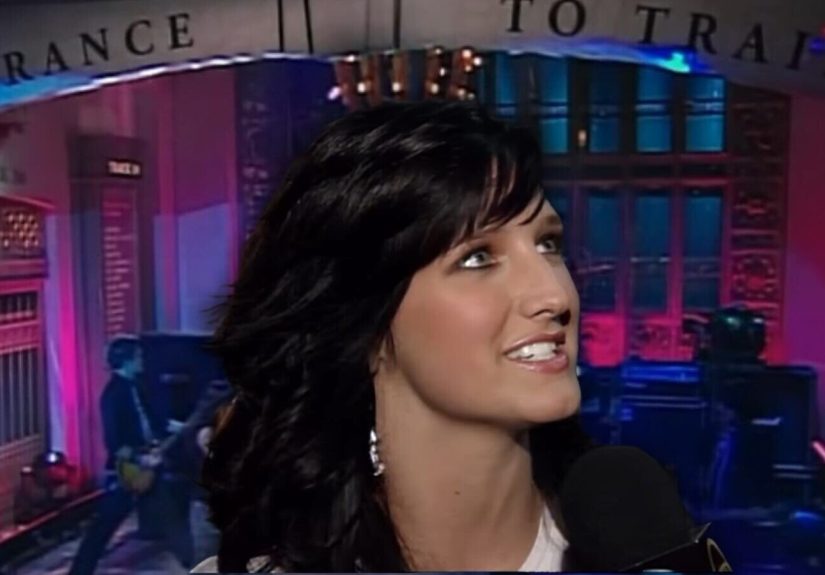
During her first song, everything looked fine. During the second, chaos kicked in. Instead of the track she was supposed to perform, the vocals for “Pieces of Me” started playing again before she raised the microphone. The mismatch exposed that a pre-recorded vocal track was in play. Simpson looked confused, did a brief, now-legendary dance that history has been far too committed to preserving, and exited the stage while the band kept going.
And just like that, a performance error became a pop-culture detonation.
Live television has always been built on the possibility of disaster. That is half the thrill. But this particular disaster carried extra voltage because it hit one of the entertainment industry’s favorite pressure points: authenticity. Fans will forgive bad notes. They will sometimes forgive weird outfits, stiff interviews, and chaotic choreography that looks like someone lost a bet. But they get especially dramatic about anything that feels fake. The second the wrong track played, the room changed. The audience was no longer watching a singer have a technical problem. They were watching the myth of “realness” crack open in real time.
Why the Backlash Was So Brutal
The backlash to the Ashlee Simpson SNL controversy was not merely criticism. It was a cultural feeding frenzy. The incident dominated entertainment coverage, late-night jokes, gossip columns, and watercooler commentary. People acted as though they had uncovered a state secret instead of a pre-recorded vocal on a live show. That overreaction is what makes the story linger.
Part of the reason it exploded was timing. This happened in a transitional media era: the tabloids were still powerful, celebrity blogs were sharpening their knives, message boards were mean, and public mistakes stuck around longer because there were fewer distractions. Today, a scandal can burn hot for 36 hours before everyone moves on to the next controversy, the next breakup, the next red-carpet disaster involving too much mesh. Back then, a single humiliating moment could sit on your chest like a cinder block.
Ashlee Simpson has said exactly that in later interviews. Looking back, she has described how everything felt heavier in that period because media coverage did not move as quickly. It was magazines, TV clips, reruns, headlines, and endless repetition. The embarrassment did not just go viral. It nested.
Authenticity Was the Real Product
What made Simpson especially vulnerable was the image she represented. She was sold less as a pristine vocalist and more as a believable young woman writing from her life. That branding can be powerful, but it also creates a trap. The public does not simply want songs; it wants proof of sincerity. Once the lip-synching moment happened, the reaction was not, “That was rough.” It became, “Was any of this real?”
That question was bigger than the performance itself. It bled into how people talked about her songwriting, her voice, her credibility, and even her place in pop culture. Years later, Simpson would say that one of the hardest parts was feeling as though her creative credit had been wiped away. In other words, one botched TV segment somehow got inflated into an argument that her entire career was counterfeit. That is not criticism. That is narrative overkill.
The Gendered Math Was Ugly
It is also impossible to separate the scandal from the way women in pop were treated in the 2000s. Young female celebrities were expected to be polished but relatable, sexy but not too sexual, vulnerable but never weak, ambitious but never calculating. It was a no-win pageant judged by people who acted shocked whenever fame looked manufactured, as though the entertainment business is operated by woodland creatures and pure intention.
Simpson has since recalled the cruelty of hearing grown adults say vicious things about her over what was, at bottom, one failed performance. That detail matters. The person at the center of the scandal was not a veteran executive or a cynical industry machine. She was 20. Yet the public response often treated her like a symbol to be punished rather than a young artist having a spectacularly bad night.
Her Explanation Did Not Stop the Story
In the immediate aftermath, explanations came quickly. Simpson and her camp said she had been dealing with voice problems connected to acid reflux. Later reflections added more nuance, including discussion of vocal issues and the pressure surrounding the performance. The core point stayed consistent: she was not in ideal singing shape, and a backing track was involved as a safety measure.
That explanation should have softened the story. It did not.
Partly, that is because audiences tend to hear explanations after a scandal as excuses, especially when the footage is memorable. And the footage was very memorable. Once an image becomes a punchline, context arrives late to a party where nobody wants sober conversation. The weird dance, the abrupt exit, the post-show attempt to blame the band, and the raw confusion of the moment all fused into one perfect tabloid loop.
Even Lorne Michaels, reflecting later, framed the incident as the kind of thing that can happen on live television. He emphasized that accidents happen and that lip-synching was not standard practice for the show. That is an important detail because it strips some of the mythology away. This was not a carefully orchestrated deception exposed by a heroic culture of truth-seekers. It was a messy live-TV failure amplified by a public eager for blood.
The Shame Outlived the Mistake
The truly revealing part of this story is not what happened on stage. It is what happened afterward. Simpson has spoken in recent years about how long she carried that moment. Not just publicly, but internally. She described having to remind herself, over and over, that her fans knew what she could do, that one incident did not erase her work, and that public perception is not the same thing as identity.
That is the part celebrity coverage usually skips. We love the instant reaction and the headline-friendly humiliation. We are less interested in the long, boring, psychologically expensive aftermath. The part where someone has to live inside a joke they did not write.
And that aftermath was not abstract. It affected how people talked about her music, how she had to defend her talent, and how one bad night became a permanent footnote attached to her name. That is why her later language feels so important. When she says the bullying was insane or the experience was dehumanizing, she is not rewriting history. She is finally naming it correctly.
The Comeback Everyone Forgets
There is another twist here that deserves more attention: Ashlee Simpson went back.
In 2005, she returned to SNL and performed live again. That alone is a more interesting story than the original scandal. It takes nerve to walk back into the room where you became a national punchline. She even introduced one of the songs by noting that she had written it after her last SNL appearance. That is not cowardice. That is a comeback, even if pop culture memory tends to keep the embarrassment and misplace the resilience.
This is one reason the story lands differently now. Distance has made it easier to see the imbalance. The incident was real. The embarrassment was real. But so was the recovery. So was the fact that she kept making music, kept showing up, and kept trying to reclaim authorship over a narrative that had been flattened into one gif-able mess.
In hindsight, the return performance feels almost symbolic. It was less about proving she had never messed up and more about refusing to let the mess-up become the whole biography. That distinction matters, especially in celebrity culture, where the public loves redemption stories but only after it has had a satisfying amount of fun being cruel.
Why This Story Still Matters in 2026
The phrase “After Ashlee Simpson got caught lip-synching on SNL, the bullying was insane” keeps resonating because it captures more than an old entertainment scandal. It captures the prototype for a familiar cycle: a mistake happens, the internet turns it into identity, and the person at the center spends years trying to shrink the moment back down to its actual size.
Today, people are more fluent in talking about online pile-ons, parasocial cruelty, and the human cost of public humiliation. We have better vocabulary now. We talk about mental health, context collapse, and digital dogpiles. We are not exactly kinder, but we are at least better at pretending we know what kindness is supposed to look like.
Ashlee Simpson’s experience sits right in the middle of that shift. Her story reminds us that celebrity ridicule was never harmless just because it was entertaining. It also reminds us that authenticity in pop has always been a performance in its own right. Audiences want stars to be “real,” but only in ways that remain flattering, controlled, and camera-ready. The second reality shows up looking sweaty, panicked, or imperfect, people get weirdly offended that a human being has entered the frame.
In that sense, the scandal now reads less like a morality tale about lip-synching and more like a cautionary tale about public appetite. People were not scandalized because a backing track existed. They were scandalized because they got to witness vulnerability without permission. And instead of treating that vulnerability with grace, the culture turned it into sport.
Additional Experiences Related to the Topic
To really understand why the Ashlee Simpson story still sticks, it helps to think about the experience around the moment, not just the moment itself. Imagine being a young performer in your breakout era. Your songs are everywhere, your schedule is relentless, your image is under a microscope, and every public appearance feels like both an opportunity and an exam. Then your voice goes shaky, a safety plan is made, the plan fails on live television, and suddenly millions of people decide they know what you are made of. That kind of experience can scramble a person’s sense of scale. One mistake becomes bigger than a year of work.
There is also the specific emotional experience of being publicly embarrassed in a way that can be replayed forever. Most people get to have their worst professional moment in front of five co-workers, maybe a manager, and one guy in accounting who was not even supposed to be in the meeting. Celebrities have theirs clipped, archived, memed, narrated, and reintroduced every few years as “remember this?” content. It is humiliation with a syndication deal.
For fans, the experience was weird too. A lot of people who liked Simpson’s music watched that night and suddenly felt pressured to pick a side: defend her, mock her, or act like you always knew she was a fraud. Pop culture has a way of making spectators feel like jurors. There is rarely space for a more ordinary reaction, which is: “Wow, that looked awful. I also feel bad for her.” That middle ground often disappears in celebrity scandals, even though it is usually the most human response available.
For artists broadly, the incident became a kind of cautionary legend. It was the nightmare scenario whispered behind the scenes: tech mishap, live broadcast, bad optics, no recovery time. Performers learned from it, labels learned from it, and audiences probably learned the wrong lesson from it. The wrong lesson was that getting caught mattered more than the pressure that created the situation in the first place. The better lesson is that live performance is fragile, and fame makes fragile moments feel criminal.
There is also an experience many former teen stars describe that maps onto this story: the strange pain of being treated like a fully accountable adult by an industry that still profits from your youth. You are old enough to be mocked mercilessly, but still young enough to be pushed into decisions you do not fully control. That gap matters. Simpson’s later comments about learning the “power of no” suggest that the scandal was not just humiliating; it was educational in a harsh, expensive way.
And maybe that is why the story has aged differently. What once looked like a punchline now looks like an early lesson in media cruelty. The experience underneath the headline was not “pop star exposed.” It was pressure, fear, public shame, and then the long work of getting your own name back from a moment that tried to keep it. That is a much sadder story, but also a much truer one.
Conclusion
Ashlee Simpson’s SNL lip-synching scandal endures because it was never just about lip-synching. It was about how quickly public opinion can turn, how brutally young women in pop were judged, and how one technical failure became a referendum on an entire person’s legitimacy. The incident was embarrassing, sure. But the backlash was the bigger story then, and it is the more revealing story now.
Years later, Simpson’s own reflections have reframed the event in the clearest possible terms. The performance may have been a live-TV mess, but the response was a human mess. And if there is any lasting lesson in revisiting this piece of 2000s pop history, it is that the culture was often far crueler than the mistake ever deserved.
In the end, the most interesting part of the story is not that Ashlee Simpson got caught lip-synching on SNL. It is that she survived being turned into a punchline, kept going, and eventually told the truth about what that level of ridicule actually felt like. The scandal made headlines. The resilience is what deserves the rerun.