
Table of Contents >> Show >> Hide
- Why Monitoring Stress Matters
- The 5 Main Ways to Measure and Monitor Stress
- 1. Self-Report Questionnaires (Perceived Stress Scales)
- 2. Stress Diaries and Journaling
- 3. Heart Rate and Heart Rate Variability (HRV)
- 4. Biofeedback and Multi-Sensor Devices
- 5. Cortisol and Other Biomarker Testing
- Putting It All Together: Building Your Personal Stress Dashboard
- Real-Life Experiences with Monitoring Stress (Extra Insights)
- Conclusion: From “Always Stressed” to “Better Informed”
If feeling “a little stressed” were an Olympic sport, most of us would be medal contenders.
Deadlines, group chats that never end, news alerts every 5 minutes – it all adds up.
The tricky part? Stress isn’t just a feeling. It quietly affects your heart, hormones, sleep, and behavior.
That’s why actually measuring stress – not just guessing – is such a game changer.
In this guide, we’ll walk through five science-backed methods for monitoring stress,
from quick questionnaires to high-tech wearables and lab tests. Think of it as upgrading from
“I think I’m stressed” to “I know how stressed I am and what to do about it.”
Why Monitoring Stress Matters
Stress by itself isn’t the villain. In short bursts, it can help you focus, react faster, and get things done.
The problem is chronic stress – the kind that sticks around for weeks or months.
Research links long-term stress to higher risks of heart disease, high blood pressure, depression, anxiety,
digestive issues, and poor sleep. It also tends to push people toward unhelpful coping habits like overeating,
overspending, or doomscrolling at 2 a.m.
Monitoring stress gives you three big advantages:
- A reality check: You may think you’re “fine” until the data says otherwise.
- Early warning signs: Small trends in mood, heart rate, or sleep can signal that stress is building.
- Feedback on what works: You can literally see whether therapy, exercise, meditation, or better boundaries are helping.
You don’t have to use every method in this article. Even one or two can give you surprisingly useful insight into
how stress shows up in your life and your body.
The 5 Main Ways to Measure and Monitor Stress
Scientists and clinicians typically use a mix of:
- Self-report tools (how stressed you feel)
- Behavioral tracking (what you do under stress)
- Physiological measures (how your body responds)
- Biomarkers (what’s happening in your hormones)
Below are five practical methods, plus how you can realistically use them in everyday life.
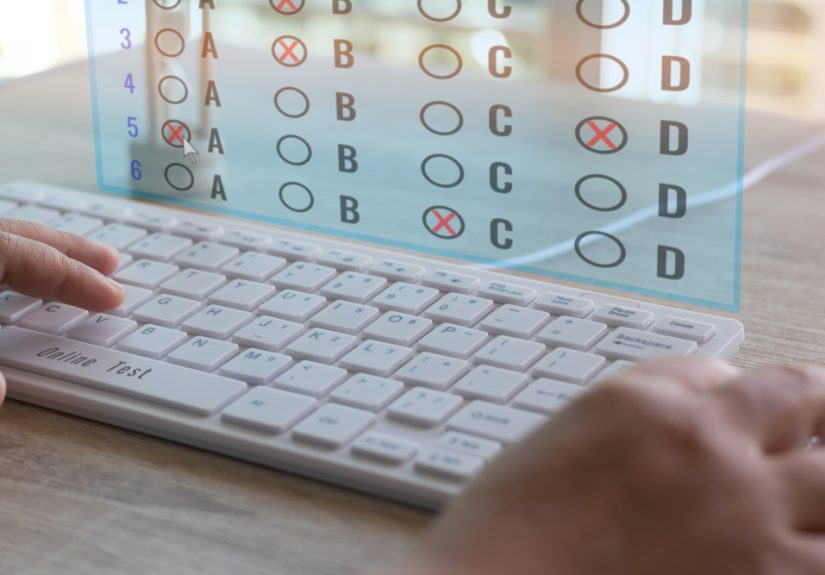
1. Self-Report Questionnaires (Perceived Stress Scales)
One of the most widely used tools in research and clinical practice is the
Perceived Stress Scale (PSS). It’s a short questionnaire
(often 10 items) that asks how unpredictable, uncontrollable, and overloaded
your life has felt over the past month. You rate items like “How often have you
felt nervous and ‘stressed’?” on a simple scale, usually from “never” to “very often.”
Why questionnaires work
Stress isn’t only about what’s happening around you; it’s about how you
interpret those events. The PSS and similar tools capture this
subjective experience. Large studies have found that higher perceived stress scores
are associated with worse mental health, sleep issues, and physical symptoms over time.
How you can use them
- Take a brief perceived stress questionnaire once a week or once a month.
- Track your total score over time rather than obsessing about any single number.
- Use score changes as gentle feedback: “Something’s improving” or “Something might need attention.”
This method is easy, free, and surprisingly eye-opening. It won’t capture every nuance,
but it’s an excellent starting point and often used alongside other measurements.
2. Stress Diaries and Journaling
A stress diary (or journal) is exactly what it sounds like:
you log stressful moments and how you responded. It may sound simple, but
it’s one of the most powerful ways to connect the dots between triggers, thoughts, and behaviors.
What to track in a stress diary
- When you felt stressed (date and time)
- What happened (the situation or trigger)
- How you felt (emotion labels: anxious, angry, overwhelmed, etc.)
- Body signals (heart racing, headache, tight jaw, stomach issues)
- What you did next (coping responses – helpful or not so helpful)
Over time, patterns emerge. Maybe every time you skip lunch and stack meetings back-to-back,
your patience drops to zero. Or perhaps certain people or topics spike your stress more than others.
Analog vs. app-based tracking
You can keep a stress diary in a notebook, a notes app, or a dedicated mental health app.
Many apps let you combine mood ratings (for example, from 1 to 10) with short written entries.
Some even visualize your stress over weeks and months so you can see trends.
The key is consistency, not perfection. A few lines a day are enough to help you feel
less “at the mercy” of stress and more in charge of your responses.
3. Heart Rate and Heart Rate Variability (HRV)
When you’re stressed, your body’s “fight-or-flight” system nudges your heart to beat faster
and more uniformly. When you’re relaxed, your heart rhythm becomes more flexible.
This flexibility is called heart rate variability (HRV) – the tiny differences
in time between each heartbeat.
Why HRV is used as a stress marker
Higher HRV (within a healthy range) is generally associated with better
resilience and the ability to adapt to stress, while lower HRV is often seen
when people are under chronic strain, sick, or not sleeping well.
Research has linked HRV patterns with responses to stress tests and with measures of relaxation and recovery.
How HR and HRV are measured
- Clinical devices: ECG monitors, chest straps, or lab equipment for very precise readings.
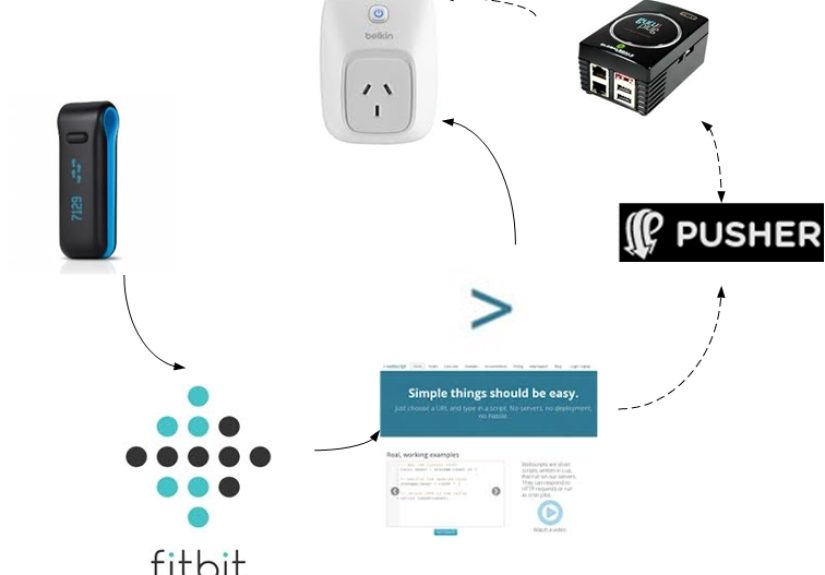
- Consumer wearables: Many smartwatches, fitness trackers, and rings estimate HRV and provide “stress” or “recovery” scores.
- Apps: Some apps use your phone camera and flash (photoplethysmography) to estimate HRV when you place your finger over the lens.
What to remember about HRV
- Look at trends over time, not single readings.
- Expect day-to-day fluctuations – sleep, illness, and exercise all affect HRV.
- Consumer devices may not be perfect, but they can still highlight useful patterns.
HR and HRV won’t tell you why you’re stressed, but they can confirm that your nervous system
is under more strain than usual and help you see whether relaxation, pacing, and self-care
are improving your baseline over weeks and months.
4. Biofeedback and Multi-Sensor Devices
Biofeedback takes physiological monitoring one step further. Instead of just collecting data,
it shows you your body’s signals in real time (on a screen or app) and guides you to change them with breathing,
relaxation, or other techniques.
Common signals used in biofeedback
- Heart rate and HRV: Learning to slow and smooth your breathing to improve HRV.
- Electrodermal activity (EDA): Small changes in skin conductance that reflect sweat gland activity and emotional arousal.
- Muscle tension (EMG): Surface sensors measure muscle activity in areas like the jaw, shoulders, or forehead.
Originally, biofeedback required specialized clinics and equipment. Now, some home devices and
wearables combine sensors for HR, HRV, EDA, and breathing, then display “stress scores” or give you
coached breathing exercises when your stress level spikes.
How biofeedback helps with stress management
The power of biofeedback is that it closes the loop: you can literally watch your heart rate or
skin conductance shift as you practice slow breathing or grounding techniques. Over time, your brain learns:
“Oh, this is what calm feels like in my body,” making it easier to get back there without equipment.
For some people, seeing the numbers change is motivating and reassuring. For others,
it can become a bit obsessive (“Why did my stress score go up three points?!”).
If you notice yourself spiraling about the data, that’s a sign to use it more gently or to pair it with a mental health professional’s guidance.
5. Cortisol and Other Biomarker Testing
When you’re stressed, your body’s HPA axis (hypothalamic–pituitary–adrenal system) releases
cortisol, often called the “stress hormone.” Cortisol helps you mobilize energy
in the short term, but chronically elevated or disrupted patterns can be concerning.
How cortisol is measured
- Blood tests: Often used in medical settings to check for hormonal disorders or very abnormal levels.
- Saliva tests: Less invasive and useful for tracking daily patterns (for example, morning vs. evening levels).
- Urine or hair tests: Sometimes used to estimate cortisol over longer periods.
Research has explored saliva-based cortisol as a practical way to monitor stress-related hormone changes
outside the lab. At the same time, scientists emphasize that cortisol is influenced by many factors
(sleep, medications, shift work, health conditions), so it’s not a simple “stress score.”
Cortisol testing: what it’s good for (and what it’s not)
Cortisol testing can be helpful when:
- A healthcare professional is evaluating possible adrenal or hormonal conditions.
- There’s a need to understand your daily hormone rhythm (for example, in certain research or specialty clinics).
But it’s not a DIY wellness gadget. Results need to be interpreted by a qualified clinician,
and cortisol alone doesn’t capture your whole stress experience. At best, it’s one piece of the puzzle,
usually combined with questionnaires, clinical interviews, and other tests.
If you’re curious about cortisol testing, it’s important to talk with your doctor rather than relying on
random mail-order kits or trying to diagnose yourself based on a single lab number.
Putting It All Together: Building Your Personal Stress Dashboard
No single method perfectly captures stress. Each one shines a flashlight at a different corner of the room:
- Questionnaires: Capture how stressed you feel.
- Stress diaries: Show when, where, and why stress hits – and what you do next.
- Heart rate and HRV: Reflect how your nervous system is handling life’s load.
- Biofeedback and wearables: Help you actively train your body to recover and regulate.
- Cortisol and labs: Offer deeper insight in medical or research settings when needed.
For everyday life, you don’t need a lab coat or a full-body sensor suit. A realistic “starter kit” for
stress monitoring might look like:
- A brief perceived stress questionnaire once a month
- A simple stress journal or mood-tracking app you update most days
- A wearable that tracks heart rate, sleep, and activity trends
Then, when life gets hectic, you’re not flying blind. You’ll have both numbers and narratives helping you decide:
Do I need a walk, a boundary, a conversation, or professional support?
Real-Life Experiences with Monitoring Stress (Extra Insights)
Data is nice. Real humans are nicer. So let’s talk about how this looks in actual lives – the messy,
busy, “I forgot my lunch and my password” kind of lives.
Case 1: The overcommitted professional and the “invisible” stress curve
Imagine Sam, a project manager who swears, “I’m fine, just busy.” Sam starts wearing a smartwatch
that tracks heart rate and sleep, and also fills out a brief stress questionnaire every Sunday night.
After a month, Sam notices a pattern: during weeks with three or more late-night work sessions,
the watch shows higher resting heart rate, lower HRV, and shorter, more fragmented sleep.
The self-rated stress score also jumps from “moderate” to “high.” Sam hadn’t realized how much
those after-hours emails were bleeding into recovery time.
With this information, Sam sets two boundaries:
- No email after 9 p.m.
- One “no-meeting morning” each week for deep work.
Over the next few weeks, Sam’s resting heart rate slowly drops, HRV improves,
and stress scores shift back toward “moderate.”
The job didn’t change – but the way Sam interacts with it did, guided by real data instead of guesswork.
Case 2: The student who discovered the power of a stress diary
Alex, a college student, feels “randomly anxious.” Some days are fine; others feel like a mental traffic jam.
A therapist suggests keeping a simple stress diary for three weeks.
Alex records three things whenever stress spikes: what happened, what they were thinking, and how intense it felt from 1 to 10.
The patterns that emerge are not random at all: stress is worst after long stretches on social media,
when skipping meals, or after staying up past midnight working on assignments.
With that awareness, Alex experiments:
- Phone in another room during study blocks
- Regular meals and a hard stop for schoolwork at midnight
- Short walks after classes when tension feels highest
A few weeks later, the stress ratings in the diary shift – spikes still happen, but are less intense and less frequent.
The diary didn’t magically erase stress, but it made it predictable and manageable instead of mysterious.
Case 3: When monitoring becomes too much
On the flip side, Taylor buys a new wearable ring, downloads three wellness apps, checks HRV every morning,
and constantly refreshes stress graphs. Instead of feeling calm and informed, Taylor becomes more anxious:
“Why did my score dip 5 points today? Am I doing something wrong?”
This is an important lesson: more data isn’t always more peace.
For some people, especially those prone to health anxiety or perfectionism,
over-monitoring can turn into another source of stress.
The healthy middle ground is to treat stress monitoring as a helpful tool, not a judgment or a test.
If you notice yourself obsessing over scores, it’s perfectly okay to:
- Check data less often (for example, weekly instead of hourly)
- Focus more on simple practices (breathing, movement, social connection)
- Talk about your concerns with a therapist or healthcare professional
The bottom line on experience
The most useful stress-monitoring setup is the one you’ll actually use without hating your life.
For some, that’s a full tech stack and charts galore. For others, it’s a notebook and an honest weekly check-in.
Start small, experiment, and adjust.
And remember: If your stress feels unmanageable, affects your daily functioning, or comes with symptoms like
persistent sadness, hopelessness, panic attacks, thoughts of self-harm, or major changes in sleep or appetite,
it’s important to reach out to a licensed mental health or medical professional.
No app, gadget, or scale can replace personalized care.
Conclusion: From “Always Stressed” to “Better Informed”
You don’t have to guess how stressed you are. With a mix of simple questionnaires,
stress diaries, HR/HRV monitoring, biofeedback tools, and (when appropriate) lab tests,
you can turn vague unease into something you can observe, track, and respond to.
Start with one or two methods that fit your lifestyle, keep your sense of humor handy,
and use the information as an invitation – not an accusation.
The goal isn’t a perfect score or zero stress; it’s a life where you notice stress early,
understand how it shows up in your body and mind, and have a plan for what to do next.